What is a Motion Controller
A motion controller is a specialized controller that manages the operation of electric motors. For example, it controls the motor to move an object upwards to a designated position using a limit switch to activate an AC contactor, then downwards again, or it can use a timer relay to control the motor’s forward and reverse rotation, pausing intermittently. The application of motion control in robotics and CNC machine tools is more complex than in dedicated machines, as the former involves more complicated motion patterns, typically referred to as General Motion Control (GMC).
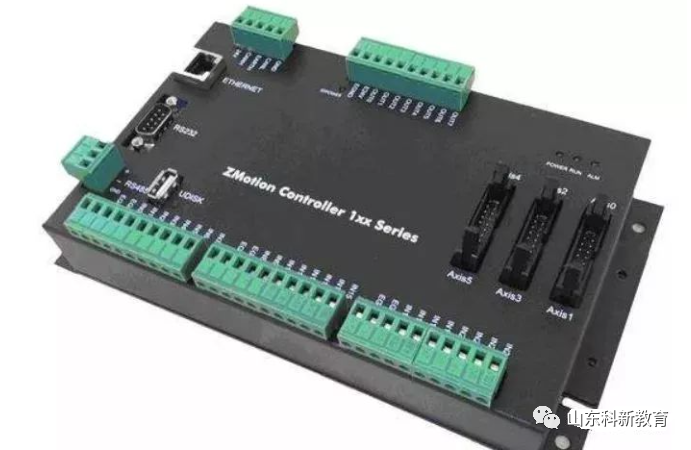
Characteristics of Motion Controllers
(1) Simple hardware composition, allowing the system to be formed by simply inserting the motion controller into the PC bus and connecting signal lines;
(2) It can utilize the rich software already available on PCs for development;
(3) The code portability and generality of motion control software are relatively good;
(4) There are many engineers who can carry out development work without needing extensive training.
Control Forms of Motion Controllers
Point-to-point motion control: This means there are only requirements for the endpoint position, regardless of the intermediate motion process or trajectory. Correspondingly, the motion controller must have a rapid positioning speed and employ different acceleration and deceleration control strategies during the acceleration and deceleration phases.
During acceleration, to enable the system to reach the set speed quickly, system gain is often increased and acceleration is amplified. In the final deceleration phase, an S-curve deceleration control strategy is used. To prevent vibration after the system reaches the position, the system gain is appropriately reduced after reaching the position. Therefore, point-to-point motion controllers often have the capability of online variable control parameters and adjustable acceleration/deceleration curves.
Continuous trajectory motion control: This control, also known as profile control, is mainly applied in traditional CNC systems and cutting system motion profile control. The corresponding motion controller must address how to ensure the system maintains profile accuracy during high-speed motion while keeping the tangential speed of the tool constant along the profile. For small segment processing, there are functions for preprocessing multiple program segments.
Synchronous motion control: This refers to the coordinated control of motion between multiple axes, which can either be synchronized throughout the entire motion or have local speed synchronization during the motion process. It is mainly applied in systems requiring electronic gearbox and electronic cam functionalities. Industries include dyeing, printing, papermaking, steel rolling, and synchronous shearing. The control algorithms of the corresponding motion controllers often use adaptive feedforward control, automatically adjusting the amplitude and phase of the control quantity to suppress periodic disturbances and ensure synchronized control of the system.
What is PLC
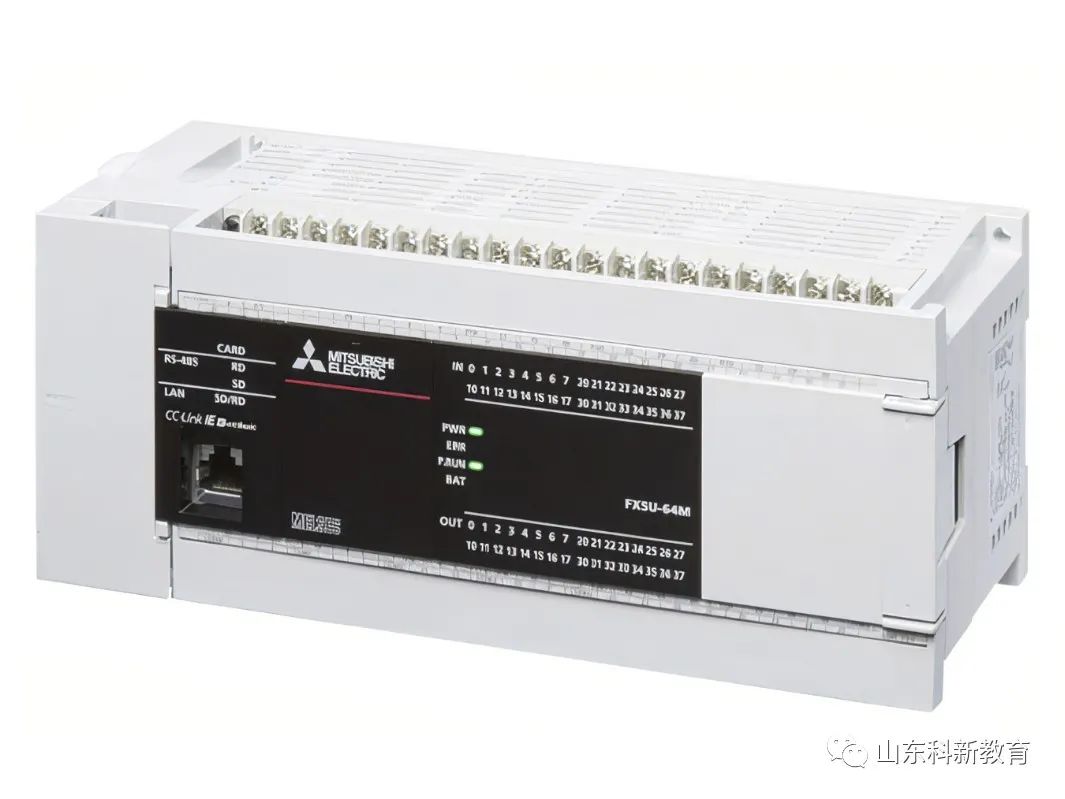
A Programmable Logic Controller (PLC) is a digital operation electronic system designed specifically for use in industrial environments. It uses a programmable memory to store instructions for executing logical operations, sequential control, timing, counting, and arithmetic operations, controlling various types of mechanical devices or production processes through digital or analog inputs and outputs.
Characteristics of PLCs
(1) High reliability. Most PLCs use single-chip microcomputers, resulting in high integration, coupled with protective circuits and self-diagnosis functions, enhancing system reliability.
(2) Easy programming. PLC programming often uses relay control ladder diagrams and command statements, which are significantly fewer than microcomputer instructions. Except for mid- to high-end PLCs, general small PLCs only have about 16 instructions. Because ladder diagrams are intuitive and simple, they are easy to master and convenient to use, even without computer expertise.
(3) Flexible configuration. PLCs adopt a modular structure, allowing users to easily combine components to flexibly change the functionality and scale of the control system, making them suitable for any control system.
(4) Comprehensive input/output function modules. One of the greatest advantages of PLCs is that they have corresponding templates for various field signals (such as DC or AC, digital or analog, voltage or current, etc.), allowing direct connection to industrial field devices (such as buttons, switches, current sensors, motor starters, or control valves) and connecting to the CPU motherboard through a bus.
(5) Convenient installation. Compared to computer systems, PLC installation does not require a dedicated machine room or strict shielding measures. When in use, it only requires correct connection of the detector devices to the actuators and the I/O terminal of the PLC to operate normally.
(6) Fast operating speed. Since PLC control is executed by program control, both reliability and operating speed are incomparable to relay logic control. In recent years, the use of microprocessors, especially with the widespread adoption of single-chip microcomputers, has greatly enhanced PLC capabilities, making the difference between PLCs and microcomputer control systems increasingly negligible, particularly for high-end PLCs.
Differences Between Motion Controllers and PLCs
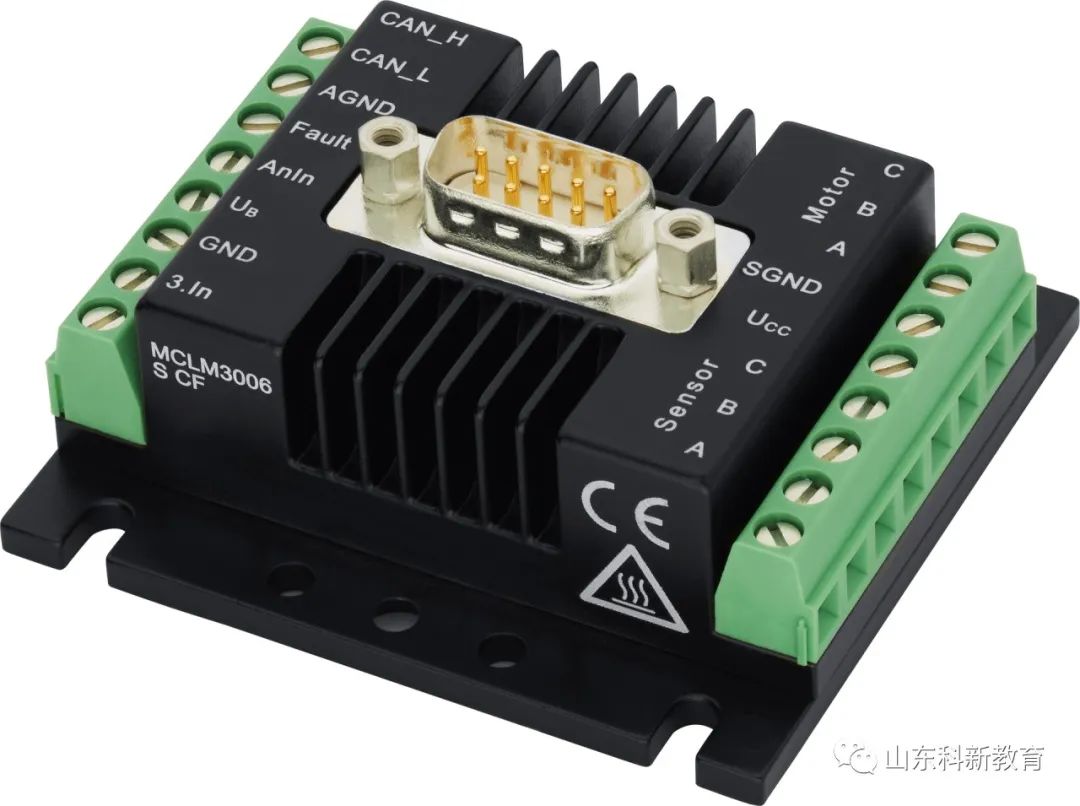
Motion control primarily involves the control of stepper motors and servo motors, with a control structure generally comprising: control device + driver + (stepper or servo) motor.
The control device can be a PLC system or a dedicated automation device (such as a motion controller or motion control card).
When the PLC system is used as the control device, it has the flexibility and certain universality of the PLC system. However, for high precision requirements, such as interpolation control and responsive demands, it may be difficult to achieve or programming may be very complex, and costs could be higher.
With technological advancements and accumulation, motion controllers have emerged, integrating many common and specialized motion control functions, such as interpolation commands. Users only need to configure and call these functional blocks or commands, which reduces programming difficulty and offers advantages in performance and cost.
It can also be understood this way: the use of PLCs is a form of general motion control device. A motion controller is a specialized PLC dedicated to motion control.
Source: This article is reprinted from the internet, and the copyright belongs to the original author. If there are any copyright issues, please contact us to delete it in a timely manner. Thank you!

Scan to Follow
WeChat ID|13615417996
Follow the left QR code to get it for free
[Siemens Data Collection]