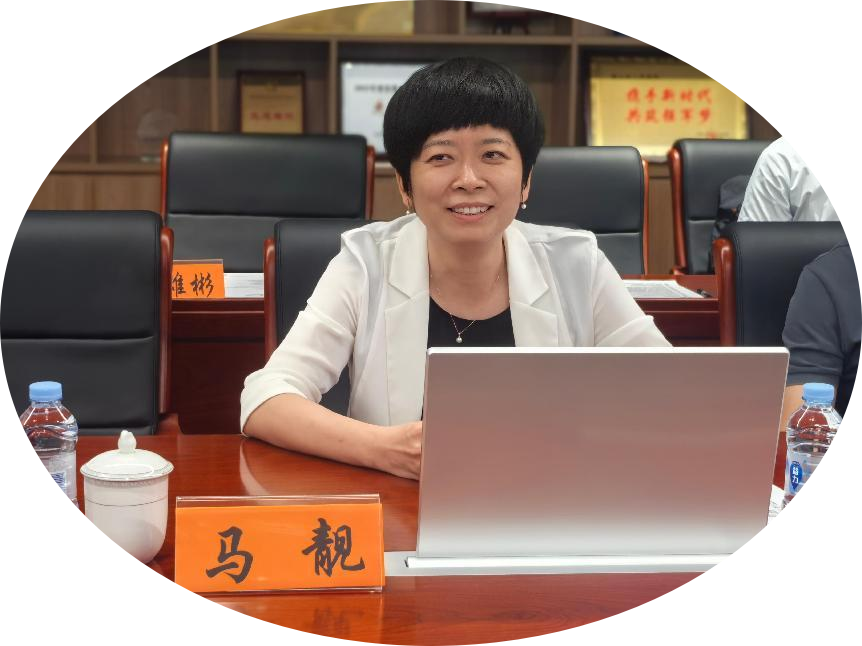
Recently, the “Hospital IoT Conference Series Public Welfare Activity [Walking Classroom]” visited Guangdong Station and entered Shenzhen for the “Hospital IoT Technology and Application Innovation Exchange Conference.” Ma Liang, Deputy Director of the Nursing Department at Nanjing Medical University Kangda College, Director of the Talent Office at Lianyungang Hospital Affiliated to Xuzhou Medical University (former Director of the Nursing Department), and Vice President of the Hospital IoT Branch of the China Medical Equipment Association, was invited to attend this exchange meeting. He provided an in-depth analysis of the empowering value of technology integration for the transformation of the medical ecosystem, focusing on the theme of “Dual-Core Drive of IoT and AI in Smart Hospital Construction.”

Policy Navigation: From “Optional” to “Essential” in Smart Hospital Construction
Currently, China is at a critical stage of comprehensively promoting the construction of a “Healthy China.” A series of significant policy documents, including the “Healthy China 2030 Planning Outline,” “Opinions on Promoting High-Quality Development of Public Hospitals,” “Three-Year Action Plan for New Infrastructure Construction of IoT (2021-2023),” and the “14th Five-Year Plan for National Health Informatization,” collectively outline a grand blueprint for transforming the medical and health industry driven by informatization and intelligence. In particular, the recent issuance of the “Opinions on Deepening the Implementation of the ‘Artificial Intelligence+’ Action” by the State Council clearly proposes to promote the extensive and deep integration of artificial intelligence with various industries and fields of the economy and society, injecting strong momentum into improving total factor productivity. This provides clearer strategic guidance and action framework for the work of the Hospital IoT Branch of the China Medical Equipment Association.
Under this national strategy and urgent policy guidance, the traditional medical model can no longer bear the mission of the new era. The construction of smart hospitals, as a key support for the implementation of the “Healthy China” strategy and the core path for the high-quality development of public hospitals, has shifted from being an “optional” choice to an “essential” one. It is not only a technological upgrade but also a profound reconstruction of medical service models, management concepts, and ecosystems. In this grand transformation, the Internet of Things (IoT) and Artificial Intelligence (AI), as the two pillars of the new generation of information technology, undoubtedly become the “dual-core engines” driving the construction of smart hospitals, and the value of their integrated application needs to be explored in depth. The branch will actively respond to the deployment of the “Artificial Intelligence+” action, focusing on the intelligent transformation of the medical field and promoting the deep integration and innovative application of IoT and AI technologies in hospitals.

IoT + AI: Deep Empowerment of Technology for Humanistic Care in Medicine
The combination of IoT and AI enables non-contact continuous monitoring of patients, ensuring safety and care are always present. Based on IoT, multimodal sensors (such as millimeter-wave radar, pressure sensing, infrared sensing, etc.) continuously collect raw data on patients’ bed status, breathing, heart rate, and body movement 24 hours a day, forming a system’s “perceptual neural network.” AI algorithms act as the “brain,” intelligently analyzing these real-time data streams: on one hand, accurately identifying whether the patient is in bed, sleep stages (light sleep, deep sleep, REM), number of times out of bed and duration, and generating structured sleep reports. This not only helps medical staff objectively assess the patient’s sleep quality but can also be shared with family members through mobile authorization, enhancing trust and connection between patients, medical staff, and families; on the other hand, by deeply learning the characteristic models of different fall postures, the system can effectively identify accidents such as tripping, slipping, and fainting, achieving second-level alerts and becoming an “electronic caregiver” that safeguards patient safety. Additionally, nurses can remotely view the overall status of all patients on a central monitoring screen, and in case of abnormalities, can initiate video calls with one click, significantly reducing the mechanical workload of rounds, truly achieving precise and humane smart nursing that “disturbs only when necessary and responds immediately when needed.” This not only enhances medical safety and efficiency but also reflects the deep empowerment of technology for humanistic care in medicine.

IoT + AI: Building Intelligent Infusion Closed-Loop Management for Enhanced Quality and Efficiency of Care
The deep integration of IoT and AI is fundamentally transforming the traditional infusion management model. Intelligent visual perception terminals based on IoT architecture use high-definition cameras to capture image data of infusion bottles/bags in real-time and employ AI visual algorithms for deep learning and precise recognition. The system can continuously monitor infusion levels and drip rates 24/7, intelligently judging and alerting for abnormal situations (such as drip rates being too fast/slow, infusion nearing completion, or completely stopping), issuing alerts through the nurse station screen and mobile terminals at the first instance, effectively preventing safety hazards such as patients adjusting drip rates on their own. At the same time, AI algorithms can automatically calculate the remaining infusion levels for each bed based on real-time monitoring data and support intelligent sorting functions, helping nurses plan their work routes reasonably and optimize nursing resource allocation. Most notably, the system can link with intelligent infusion devices to automatically stop infusion upon completion, fundamentally avoiding adverse medical events such as backflow. This not only liberates nurses from the heavy burden of manual inspections, significantly reducing their workload, but more importantly, through intelligent and precise management, it significantly enhances infusion safety and nursing quality, reflecting the true value of “technology empowering healthcare.”
IoT + AI: Promoting the Leap from Traditional “Perception” to Intelligent “Cognition” in Medicine
The “dual-core engine” formed by IoT and AI has deeply penetrated multiple core scenarios of smart hospitals: intelligent asset management and scheduling achieve resource optimization; smart drug management ensures medication safety and efficiency; digital twin hospitals assist in energy saving and refined operations; hospital infection prevention and medical waste tracing systems strengthen the medical safety defense line; monitoring solutions for infants and special patients provide comprehensive safety guarantees. These applications collectively promote the medical system’s leap from traditional “perception” to intelligent “cognition,” driving the digital and intelligent transformation of medical services in all aspects.

Dual-Core Engine: The Aggregation Effect of 1+1>2
The Internet of Things and artificial intelligence do not exist in isolation; their deep integration produces an aggregation effect of “1+1 far greater than 2.” IoT provides the “data fuel” for AI: the training and optimization of AI models rely on massive, high-quality data. The enormous, multidimensional, real-time data generated by IoT terminals every moment provides a continuous “fuel” for AI algorithms, enabling AI models to continuously learn and evolve, becoming smarter. AI injects the “decision-making soul” into IoT: the value of pure IoT data collection is limited, while AI can extract deeper insights and patterns from it, transforming raw data into valuable decision-making bases.
The bridge and link role of the Hospital IoT Branch of the China Medical Equipment Association gathers the strengths of industry, academia, research, and application to jointly promote the innovative application, standard formulation, and ecological prosperity of IoT and AI technologies in the healthcare field. The future is here, and only change is constant. Let us work together to fully unleash the tremendous power of this “dual-core engine” of IoT and artificial intelligence, steering towards a broader and brighter future for smart hospitals!