GitHub Trending List | Overview of Popular C++/C#/C Projects (2025.11.25) – 15 Projects Listed
Data statistics time: 2025-11-25 07:14:03
1. Snapchat/Valdi
 📊 Data Metrics:
⭐ stars : 13k | 🍴 forks : 437
🔗 https://github.com/Snapchat/Valdi
Project Overview
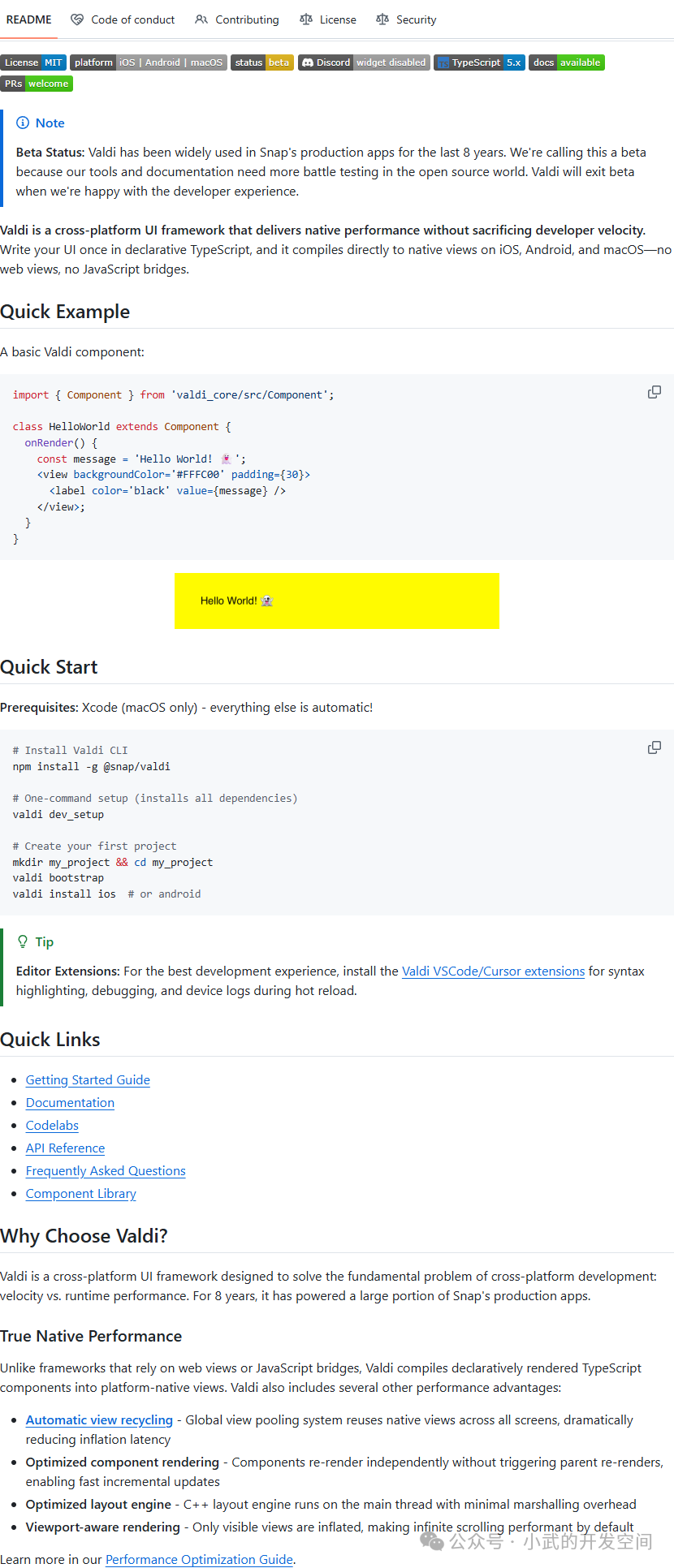
Valdi is a high-performance cross-platform UI framework designed to balance development efficiency and native performance. It allows developers to write interfaces using declarative TypeScript and compiles the code directly into native views on iOS, Android, and macOS without relying on WebView or JavaScript bridging technologies.
Core Features
The framework provides a true native performance experience, featuring automatic view recycling, an optimized layout engine, and viewport-aware rendering mechanisms to ensure smooth performance in complex scenarios. It also supports instant hot reloading, full debugging capabilities in VSCode, and a Flexbox layout system, significantly enhancing development efficiency.
Integration and Extensibility
Valdi supports flexible progressive integration, allowing it to be embedded into existing native applications or to introduce native components into Valdi interfaces. It supports multiple languages (Polyglot) including C++, Swift, and Kotlin, enabling high-performance logic and type-safe interactions.
Production Validation and Ecosystem Support
It has been stably running in multiple core features of Snapchat for 8 years, equipped with a mature animation system, gesture recognition, and testing framework. It provides CLI tools, Bazel build support, and rich documentation resources to help teams quickly get started and scale applications.
2. tony-btc0/seed-phrase-generator
 📊 Data Metrics:
⭐ stars : 267 | 🍴 forks : 45
🔗 https://github.com/tony-btc0/seed-phrase-generator
Project Overview
Software Overview
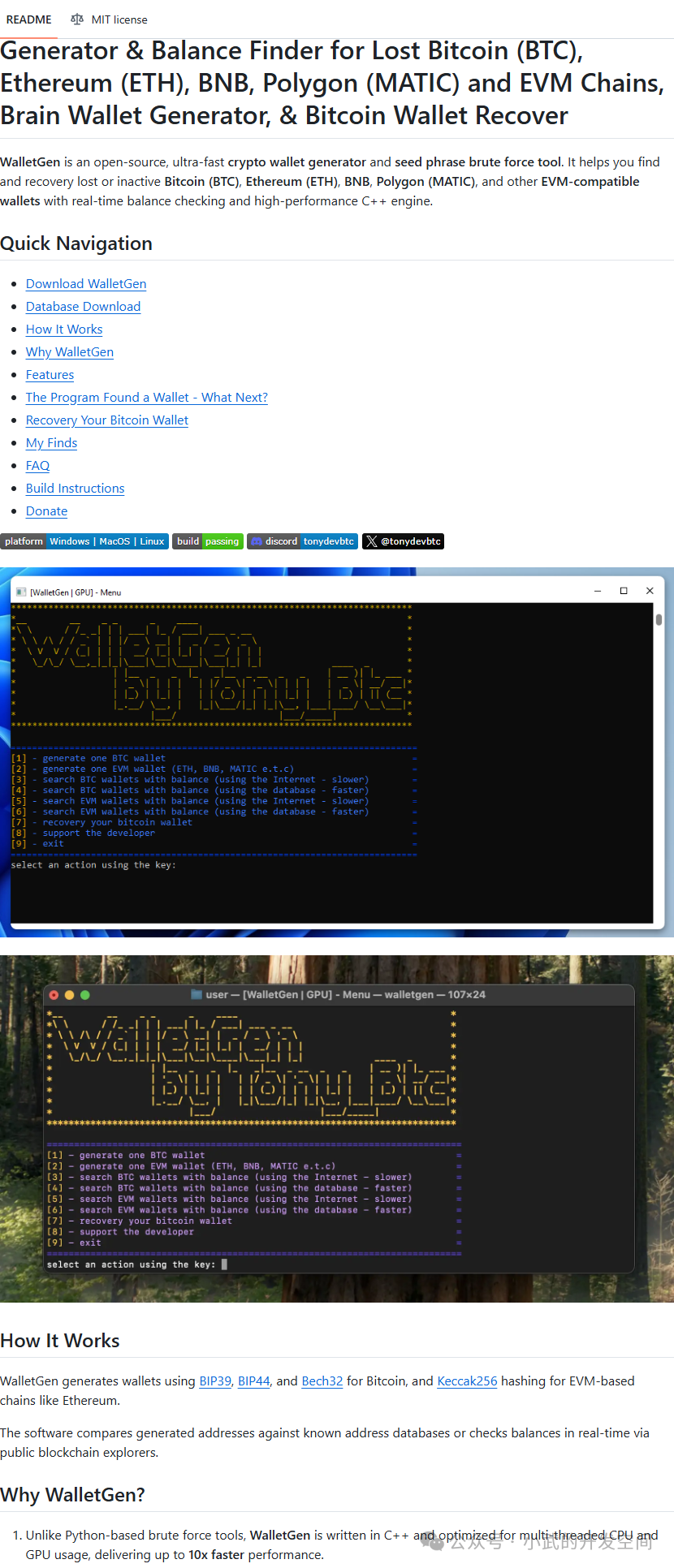
WalletGen (Seed Phrase Generator) is an open-source, high-performance cryptocurrency wallet generation and recovery tool focused on helping users recover lost or forgotten Bitcoin (BTC), Ethereum (ETH), BNB, Polygon (MATIC), and other EVM-compatible wallets through brute-force cracking and real-time balance detection techniques. The project is written in C++ and boasts high operational efficiency, supporting CPU and GPU acceleration to significantly enhance the speed of seed phrase generation and matching.
Core Features
This tool supports standards such as BIP39, BIP44, and Bech32, accurately simulating the key generation logic of mainstream wallets (like Electrum, MetaMask, Trust Wallet) and can traverse various address derivation paths. Users can search for wallet addresses with balances through either local database comparison or real-time blockchain queries, significantly improving the success rate of searches. It also supports brain wallet generation and verification, as well as recovery functionality based on partially missing seed words (replaced with *).
Use Cases and Community Feedback
WalletGen is suitable for personal wallet recovery, security research, and blockchain education. Developers continuously share successful recovery records, including multiple instances of discovering active wallets containing 0.05 to 1.2 BTC and 100 ETH, validating its practical effectiveness. The project encourages users to voluntarily donate after successfully recovering assets to support further development. The overall design emphasizes practicality and high performance, making it one of the few open-source tools capable of replicating real wallet generation patterns.
3. game1024/Speedy
 📊 Data Metrics:
⭐ stars : 13.3k | 🍴 forks : 935
🔗 https://github.com/game1024/Speedy
Project Overview
OpenSpeedy Overview
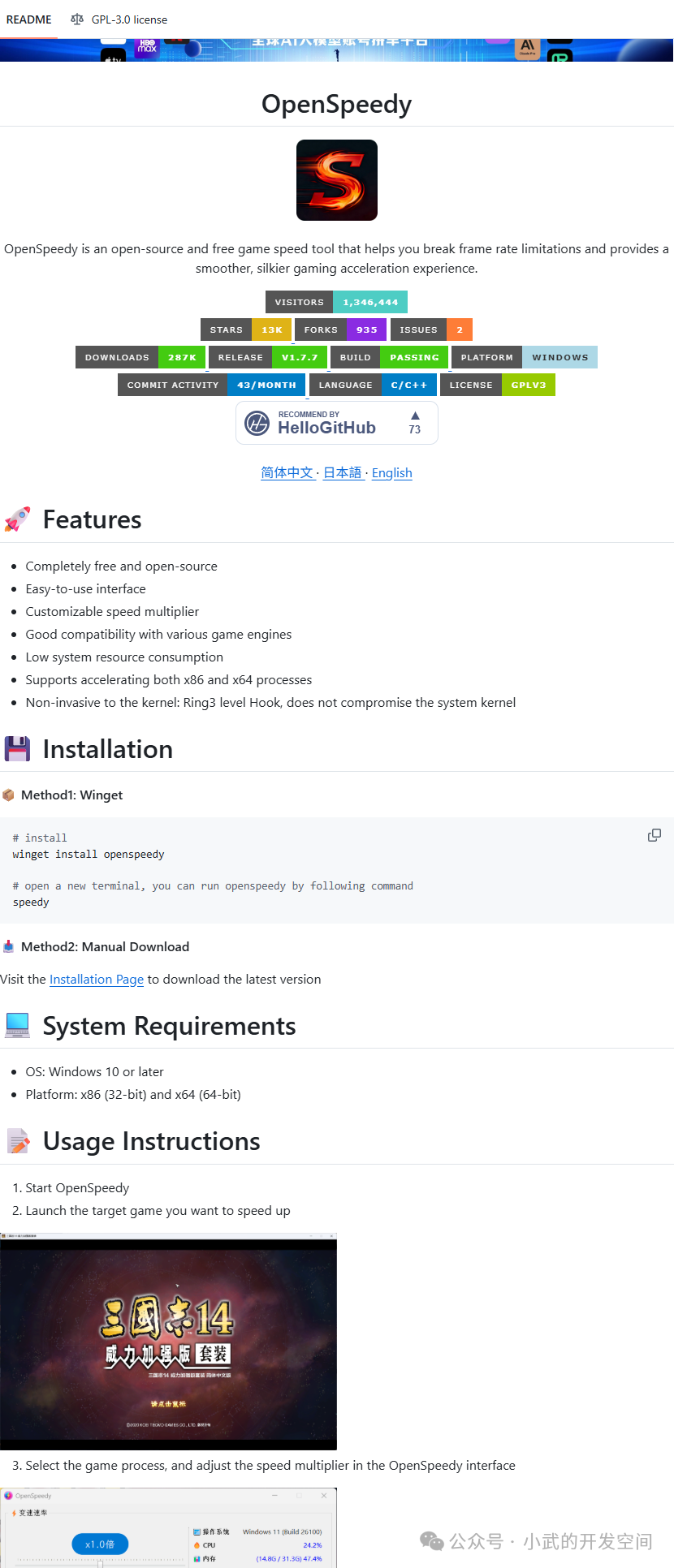
OpenSpeedy is a fully open-source and free game acceleration tool designed to help users break through game frame rate limits, achieving a smoother and more fluid gaming experience. It accelerates game running speed non-invasively by modifying the behavior of system time function calls, suitable for various games based on the Windows platform.
Core Features and Technical Characteristics
This tool supports custom speed adjustments, is compatible with both x86 and x64 architecture processes, has low resource usage, and features a simple and user-friendly interface. Its core technology is based on API Hooking at the Ring3 level, ensuring system security and stability without entering the kernel. The main hooked functions include Sleep, timeGetTime, QueryPerformanceCounter, and other key time-related APIs.
Usage Instructions and Precautions
Users can install via Winget or manually download and use it. After starting, select the target game process and set the acceleration multiplier to take effect in real-time. The project clearly states that it is for learning and research purposes only and is not recommended for use in online competitive games to avoid triggering anti-cheat mechanisms that could lead to account bans.
Open Source and Acknowledgments
OpenSpeedy follows the GPLv3 license, relies on open-source projects such as MinHook and Qt, and has received free code signing support from SignPath.
4. browseros-ai/BrowserOS
 📊 Data Metrics:
⭐ stars : 7.8k | 🍴 forks : 737
🔗 https://github.com/browseros-ai/BrowserOS
Project Overview
BrowserOS: The Future-Oriented Open Source AI Browser
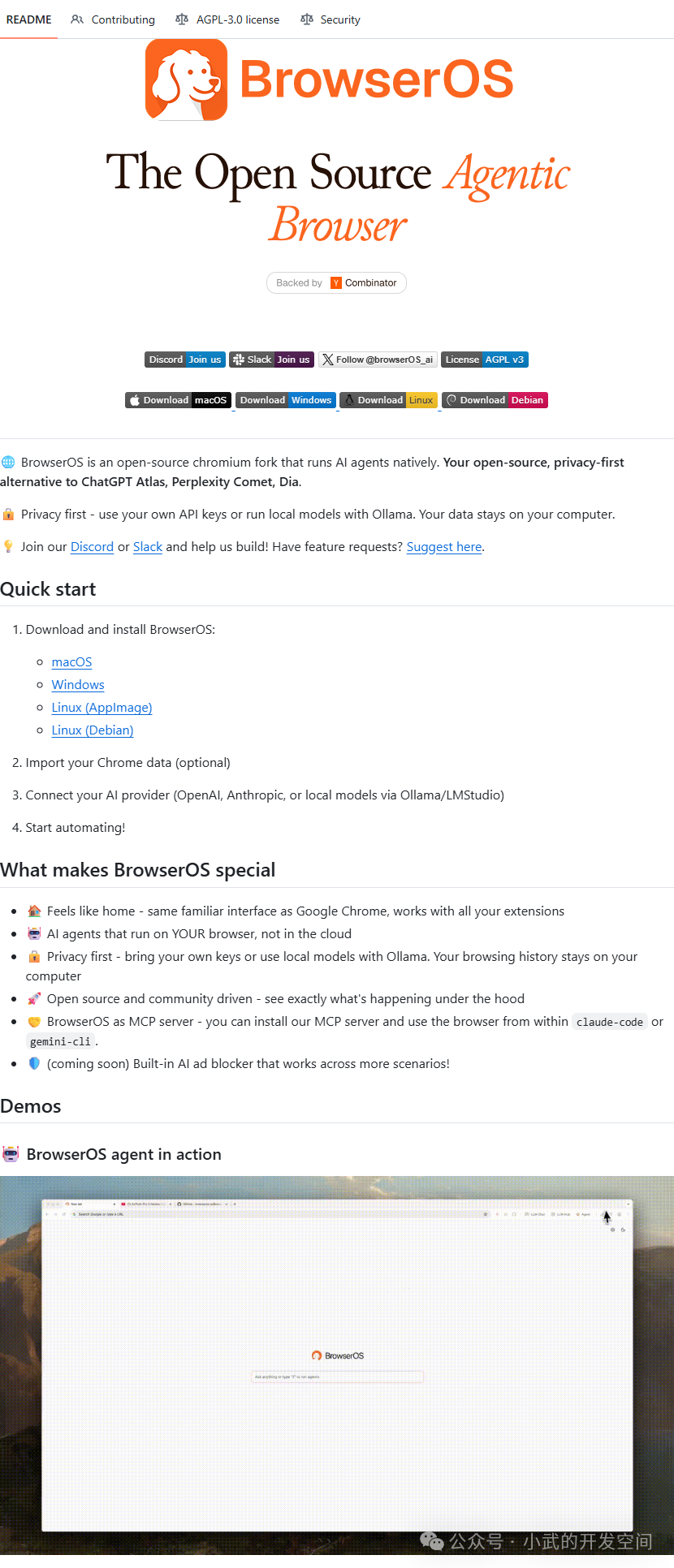
BrowserOS is an open-source browser based on Chromium, redesigned for the AI era. It deeply integrates AI agents into the browser, supporting local execution, allowing users to enjoy intelligent automation services while fully controlling their data privacy.
Core Features and Advantages
BrowserOS provides a familiar Chrome-like operating experience, is compatible with existing extensions, and supports importing data from previous browsers. Users can connect to APIs from OpenAI, Anthropic, etc., or run local large models through Ollama and LMStudio to automate tasks such as form filling, e-commerce ordering, and data scraping. All processing is done locally, ensuring that browsing history and sensitive information are not leaked.
Open Ecosystem and Community-Driven
The project adopts the AGPL-3.0 open-source license, encouraging community contributions. It supports acting as an MCP server, callable by claude-code or gemini-cli, to build cross-tool intelligent workflows. The team is committed to creating a transparent, auditable, and user-centric next-generation browser platform.
5. francescopace/espectre
 📊 Data Metrics:
⭐ stars : 3.3k | 🍴 forks : 219
🔗 https://github.com/francescopace/espectre
🛜 ESPectre
Project Overview
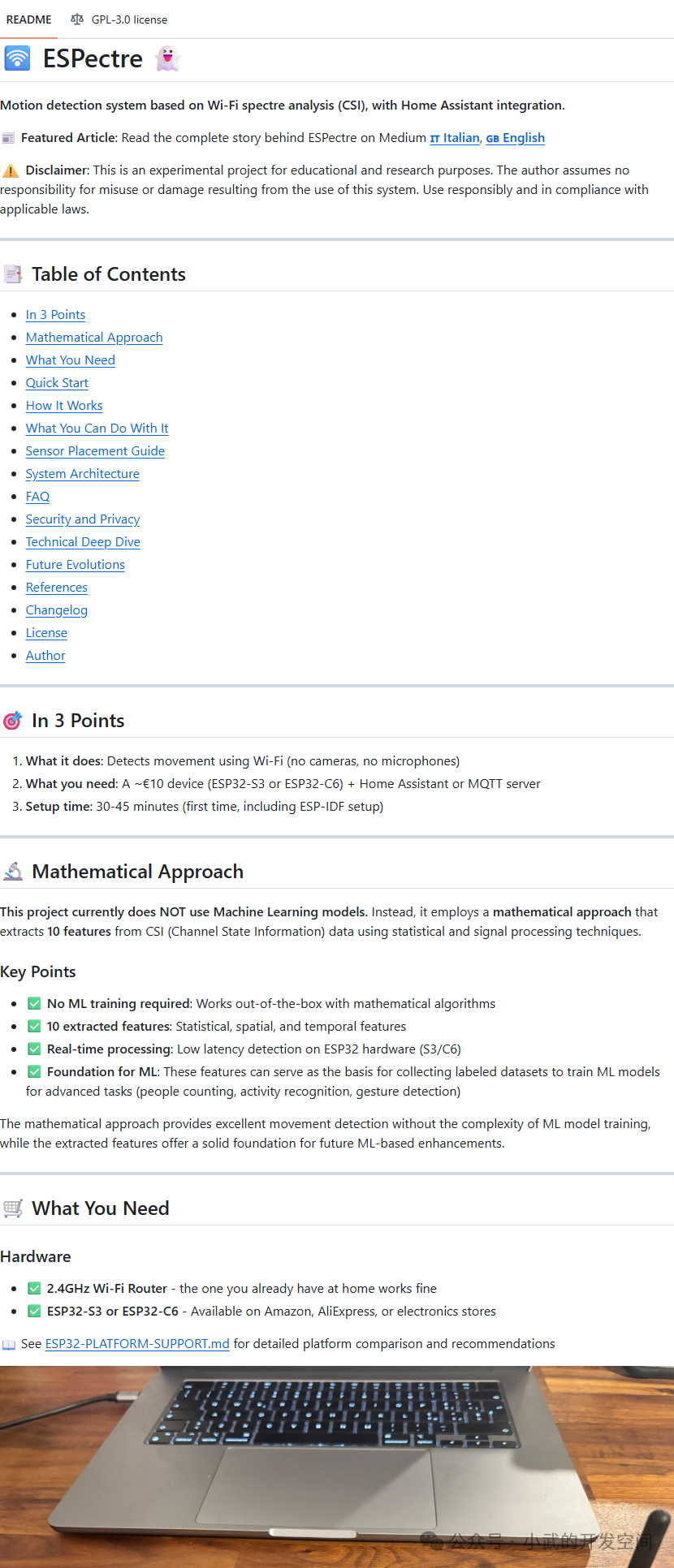
ESPectre is a passive motion detection system based on Wi-Fi Channel State Information (CSI), utilizing changes in signals within the environment to achieve high-precision motion perception. This system does not require cameras or microphones, protecting user privacy while being able to work through walls, suitable for home security, smart lighting, and energy management scenarios.
Technical Implementation
The project is developed based on ESP32-S3 and ESP32-C6 chips, implemented using the ESP-IDF framework in C language. By analyzing the amplitude and phase fluctuations in CSI data, combined with the Moving Variance Segmentation (MVS) algorithm for real-time motion recognition, the system extracts 10 mathematical features (including statistical, spatial, and temporal dimensions) and supports optional filtering to enhance stability.
System Integration and Extensibility
ESPectre supports seamless integration with Home Assistant via MQTT protocol, enabling sensor data reporting and automation linkage. Each device independently publishes its status, facilitating the construction of a multi-room monitoring network. In the future, it can collect labeled data to train machine learning models, expanding to advanced applications such as crowd counting and behavior recognition.
6. microsoft/agent-framework
 📊 Data Metrics:
⭐ stars : 5.4k | 🍴 forks : 798
🔗 https://github.com/microsoft/agent-framework
Project Introduction
Framework Overview
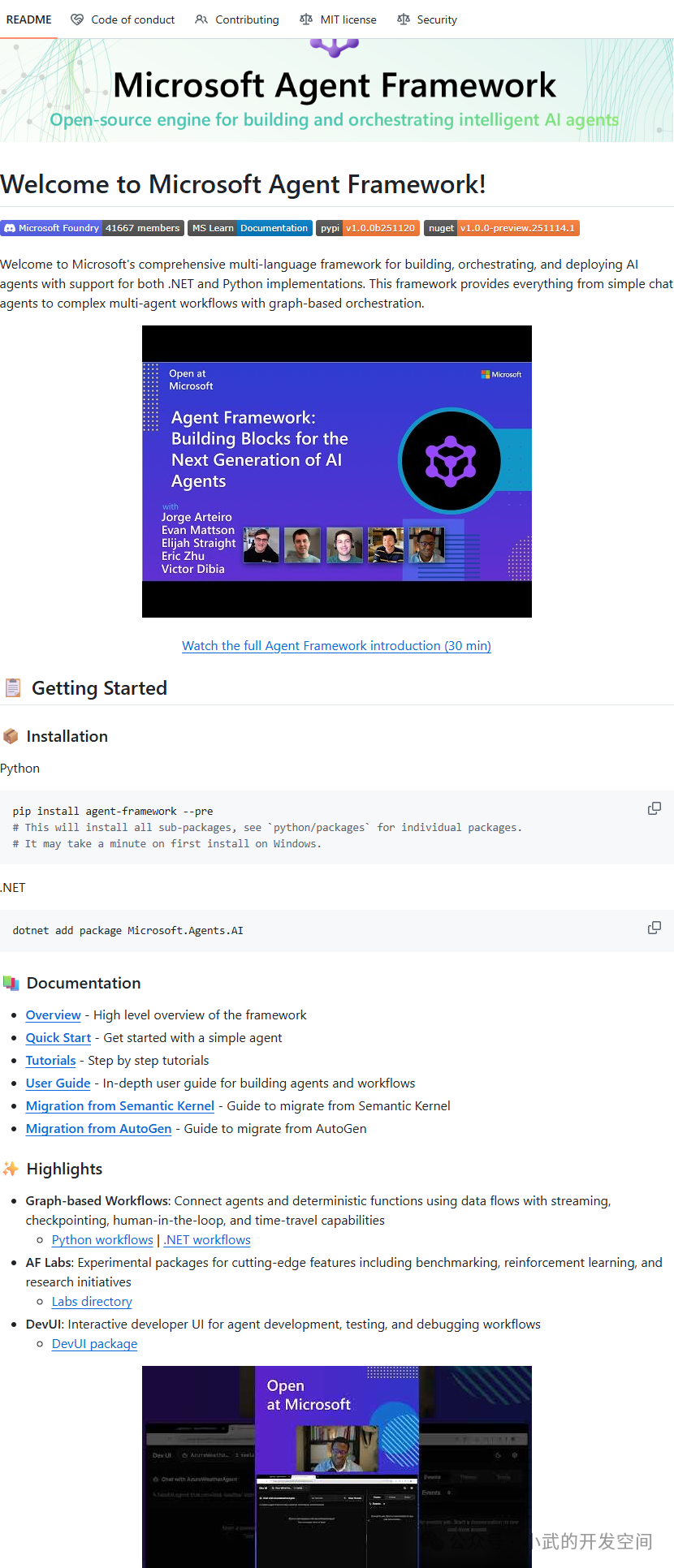
The Microsoft Agent Framework is a cross-language AI agent development framework launched by Microsoft, supporting both Python and .NET platforms. It provides a complete toolchain for building, orchestrating, and deploying various applications ranging from simple chatbots to complex multi-agent collaborative systems. The framework adopts a modular design, offering high scalability.
Core Features
It supports graph-structured workflow orchestration, enabling flexible connections between agents and functions, with capabilities for data flow control, streaming responses, checkpoints, human-machine collaboration, and state rollback. It includes a built-in DevUI developer interface for debugging and testing. OpenTelemetry integration provides full-link observability and is compatible with various LLM providers.
Development and Ecosystem
It offers a comprehensive documentation system and migration guides, supporting smooth transitions from Semantic Kernel and AutoGen. It includes rich sample code and experimental feature packages (AF Labs) to help developers get started quickly. Maintained publicly on GitHub, it encourages community participation and feedback, continuously driving the evolution of the framework.
7. ZyperWave/ZyperWinOptimize
 📊 Data Metrics:
⭐ stars : 5.2k | 🍴 forks : 282
🔗 https://github.com/ZyperWave/ZyperWinOptimize
ZyperWin++ 4.1 Project Introduction
Lightweight Windows System Optimization Tool
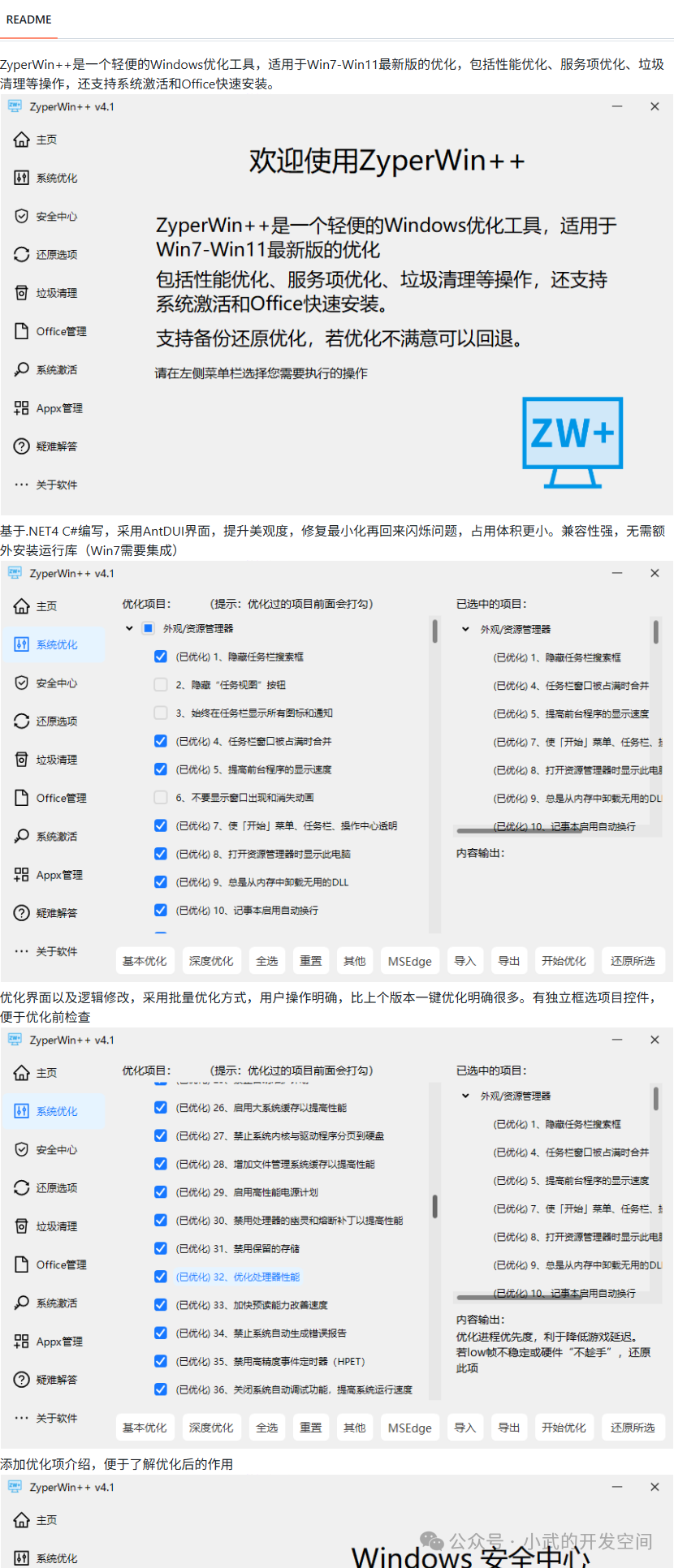
ZyperWin++ 4.1 is a lightweight optimization tool designed for Windows 7 to Windows 11 systems, developed based on .NET Framework 4 and C#, using the AntDUI interface framework, featuring a beautiful and smooth interface, stable operation, and no need for additional runtime libraries (except for Win7). The software is compact, ad-free, and suitable for quick deployment in personal and educational environments.
Multi-Functional Integrated System Optimization
It supports performance optimization, service item streamlining, junk cleaning, Defender disabling, and powerful uninstallation of Edge browser, among other functions. It adopts a batch selection optimization mode, allowing users to clearly view and customize optimization items, with transparent and clear operations. New optimization item descriptions help users understand the effects and impacts of each modification.
Configuration Management and System Maintenance Enhancements
It supports importing and exporting configuration files, automatically saving settings after optimization for easy restoration or migration of personalized schemes. It includes quick installation for Office and C2R uninstallation features, supports Appx application management, and can uninstall pre-installed applications. It integrates Defender’s native disabling module to avoid false positive issues caused by third-party tools, ensuring safety and reliability.
8. OHF-Voice/piper1-gpl
 📊 Data Metrics:
⭐ stars : 1.8k | 🍴 forks : 183
🔗 https://github.com/OHF-Voice/piper1-gpl
9. DearVa/Everywhere
 📊 Data Metrics:
⭐ stars : 3.5k | 🍴 forks : 194
🔗 https://github.com/DearVa/Everywhere
Project Overview
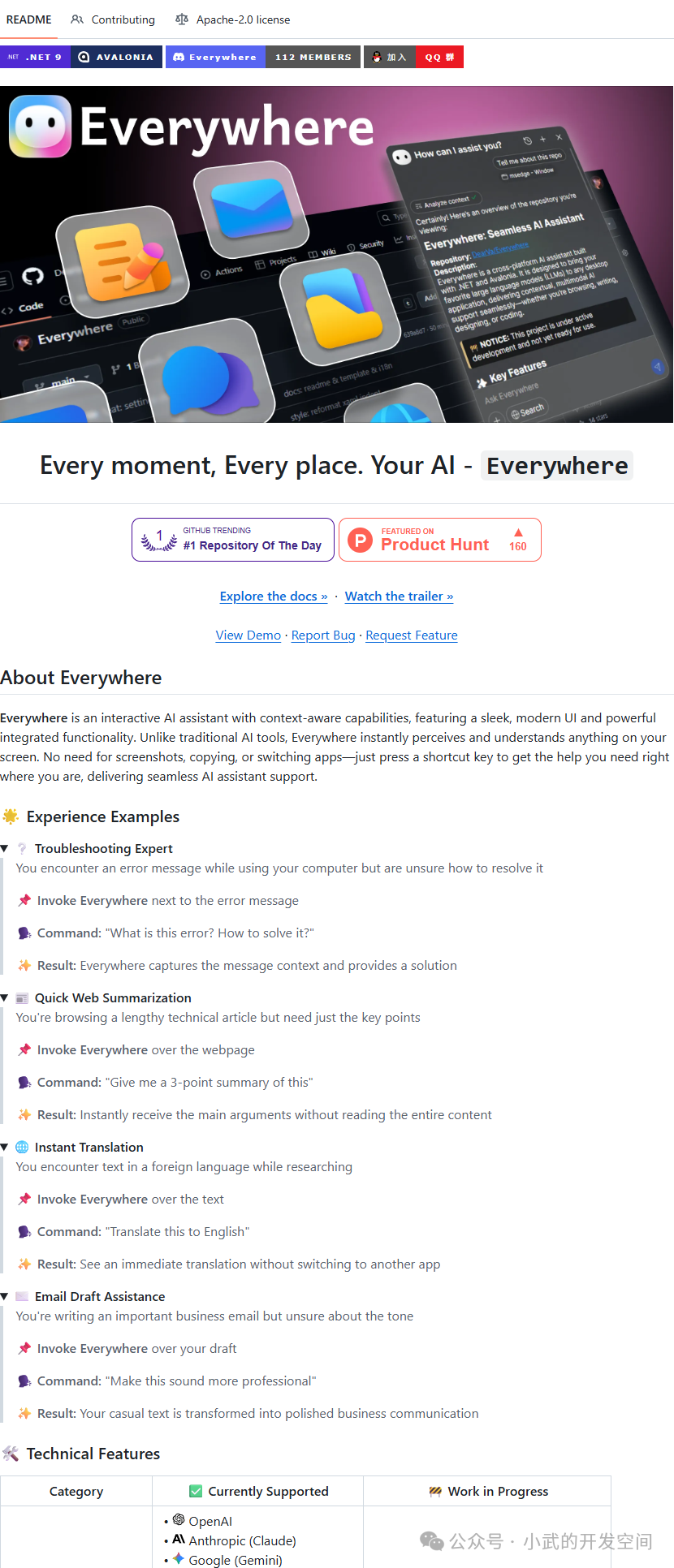
Everywhere: Your All-Scenario AI Assistant
Everywhere is a modern interactive artificial intelligence assistant with contextual awareness, capable of real-time understanding of screen content during user operations. No need for screenshots, copying, or switching applications; just press a shortcut key to get AI support on the current interface, achieving a truly seamless intelligent assistance experience.
Core Features and Technical Characteristics
This tool supports various mainstream large language models (such as OpenAI, Claude, Gemini, Ollama, etc.) and integrates commonly used tools like browsers, file systems, and terminals. Built using the Avalonia framework, it features a transparent frosted glass UI design, supports multi-language interfaces and shortcut operations, and is currently adapted for Windows platform, with macOS and Linux versions in development.
Rich Application Scenarios, Enhancing Work Efficiency
Everywhere is suitable for error troubleshooting, web summarization, instant translation, email polishing, and various other scenarios. Whether for technical problem diagnosis or cross-language communication, it can respond quickly and provide precise assistance. The project is open-source and continuously iterates, with an active community, recommended by Product Hunt, and supported by companies like 302.AI, aiming to create a cross-platform, all-weather intelligent assistant ecosystem.
10. vicinaehq/vicinae
 📊 Data Metrics:
⭐ stars : 4.5k | 🍴 forks : 102
🔗 https://github.com/vicinaehq/vicinae
Project Overview
Core Overview
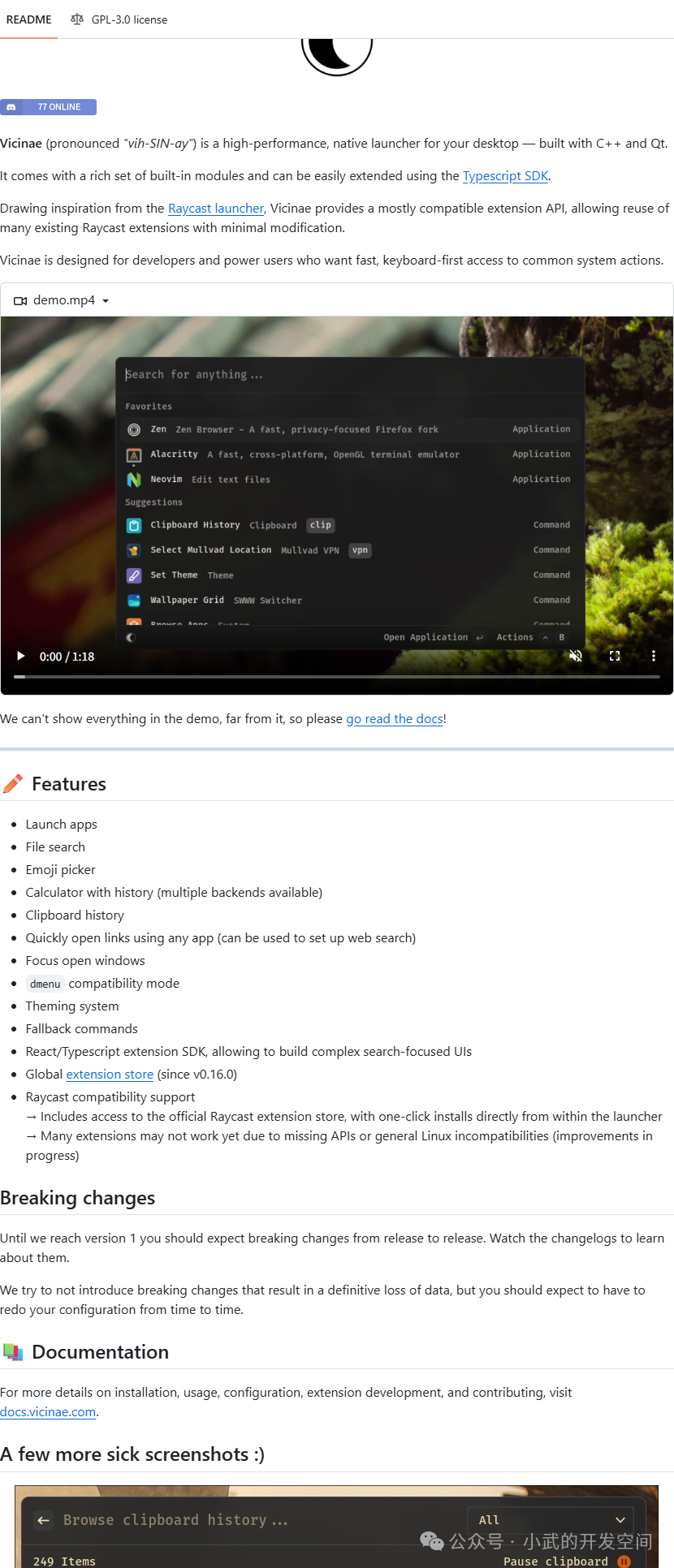
Vicinae is a high-performance, native desktop launcher built with C++ and Qt, designed for developers and advanced users. It provides a fast, keyboard-centric system operation access experience, supports a rich set of built-in functional modules, and can flexibly enhance functionality through an extension system.
Functional Features
It includes built-in application launching, file searching, emoji selection, a calculator with history, clipboard history, window focusing, dmenu compatibility mode, and a theme system. It supports command rollback and a global extension store, providing a React/TypeScript-based SDK for developing complex interactive interfaces.
Extensibility and Compatibility
Vicinae provides a TypeScript SDK and is compatible with Raycast extension APIs, allowing for the reuse of many existing Raycast extensions. Since version 0.16.0, it has integrated an official extension store, supporting one-click installation. Although some features are still being improved, especially the adaptation for Linux environments is continuously optimized.
11. oceanbase/seekdb
 📊 Data Metrics:
⭐ stars : 421 | 🍴 forks : 37
🔗 https://github.com/oceanbase/seekdb
Project Overview
Core Positioning
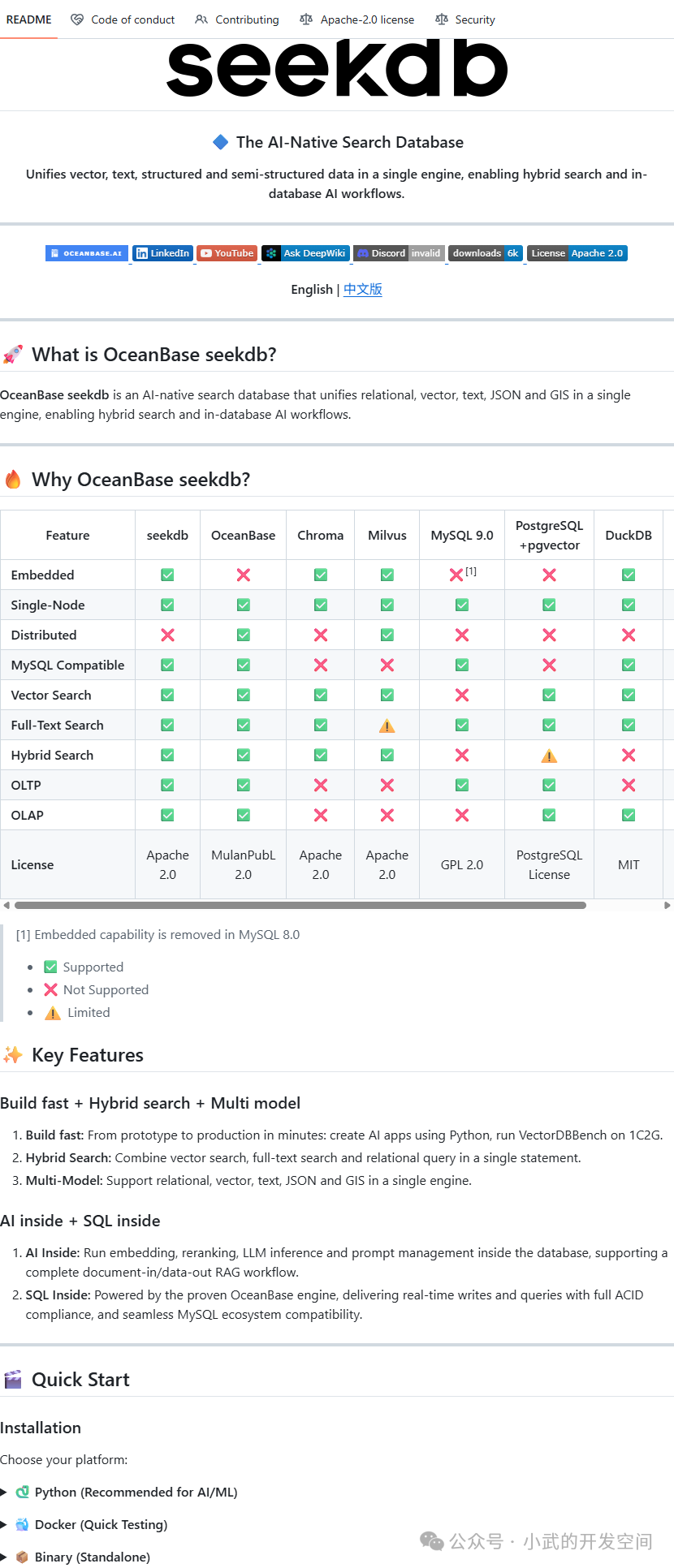
OceanBase seekdb is a native search database aimed at the AI era, dedicated to unifying the management of vector, text, structured, and semi-structured data within a single engine. It supports hybrid search and AI workflows within the database, suitable for modern applications requiring efficient semantic retrieval and real-time analysis.
Functional Features
It has embedded, single-node deployment capabilities, is compatible with MySQL protocol, and supports deep integration of vector retrieval, full-text search, and relational queries. With built-in AI capabilities, it can perform embedding generation, reordering, and LLM inference within the database, achieving a complete RAG process from document input to data output.
Application Scenarios
It is widely used in intelligent knowledge retrieval, semantic search engines, intelligent agent systems, AI-assisted programming, and edge device AI scenarios, especially suitable for enterprise-level Q&A, personalized recommendations, and localized AI application development.
Ecological Integration
It has been deeply integrated with mainstream AI frameworks such as HuggingFace, LangChain, LlamaIndex, Dify, and Coze, supporting various access methods including Python SDK, SQL, and Docker, facilitating rapid construction and deployment of AI applications.
12. UZDoom/UZDoom
 📊 Data Metrics:
⭐ stars : 1.3k | 🍴 forks : 72
🔗 https://github.com/UZDoom/UZDoom
Project Overview
Overview
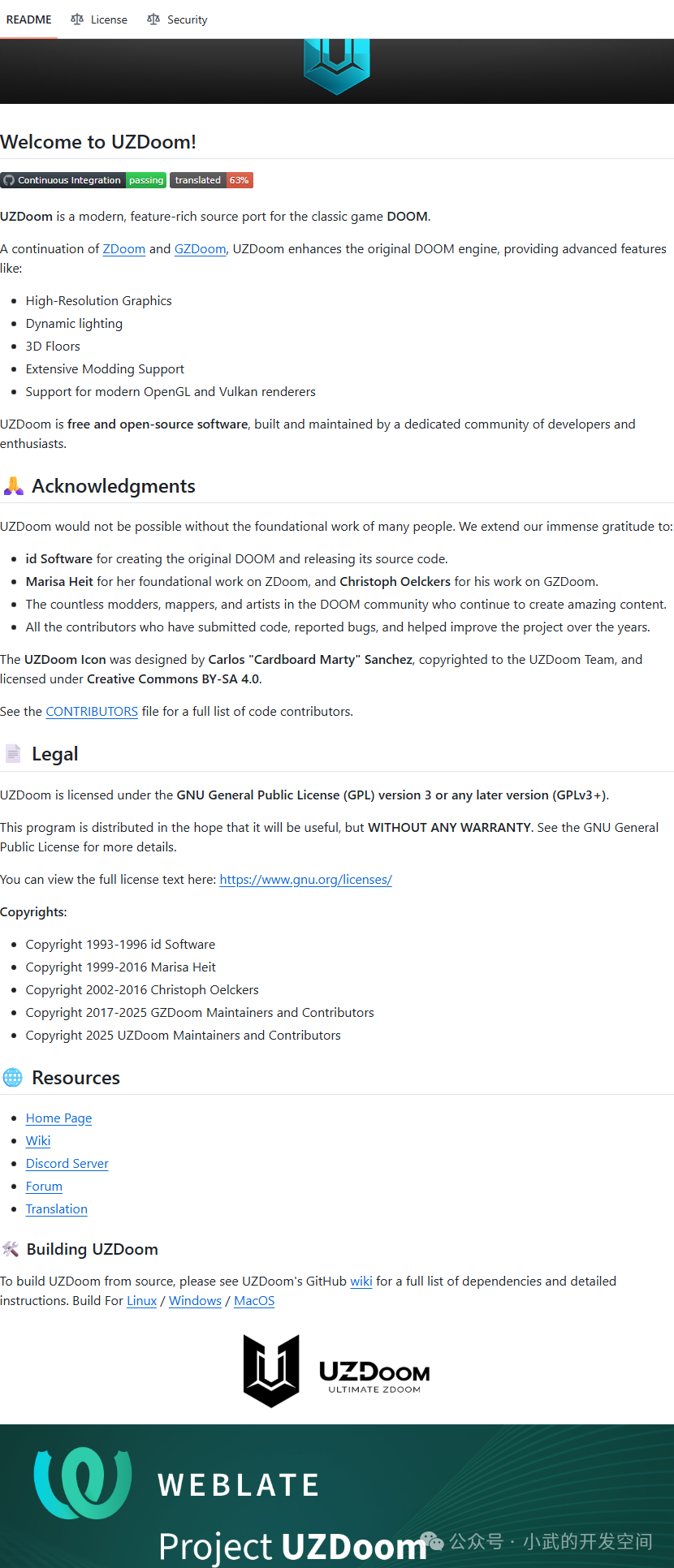
UZDoom is a modern, feature-rich source code port of the classic game DOOM, inheriting from the ZDoom and GZDoom projects. It significantly enhances the engine capabilities while preserving the essence of the original game, supporting high-resolution graphics, dynamic lighting, 3D floor effects, and modern OpenGL and Vulkan rendering technologies, providing players with a smoother and more stunning visual experience.
Functionality and Extensibility
UZDoom offers powerful mod support, allowing community creators to freely develop new content, including maps, weapons, characters, and complete game mods. Its flexible scripting system and advanced rendering features make it one of the most popular platforms in the DOOM community, continuously driving the modern revival of the classic game.
Open Source and Community
The project follows the GNU GPLv3+ license, maintained by a global community of developers and enthusiasts, completely free and open source. Thanks to the open-source contributions from id Software and the efforts of generations of developers, UZDoom has become a technical bridge connecting the classic and modern, with an active community continuously injecting vitality into it.
13. TheCherno/Architecture
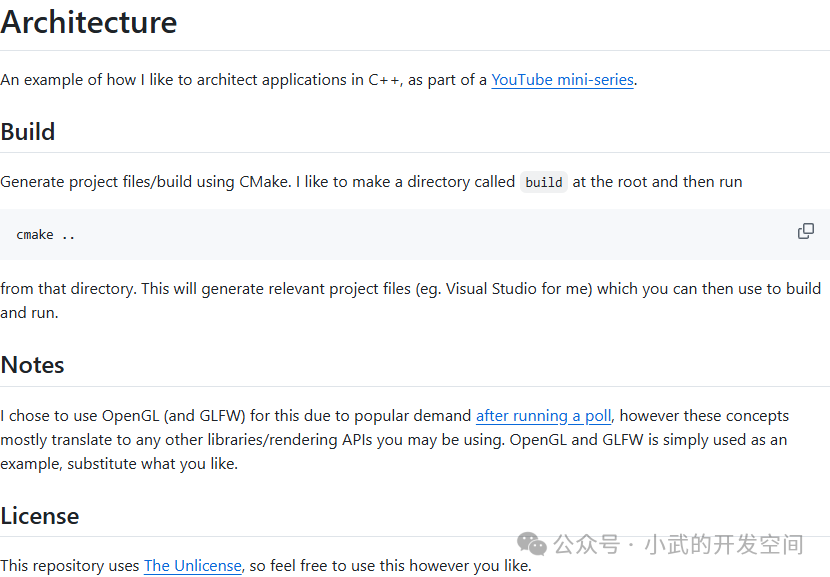 📊 Data Metrics:
⭐ stars : 195 | 🍴 forks : 17
🔗 https://github.com/TheCherno/Architecture
14. s1t5/mail-archiver
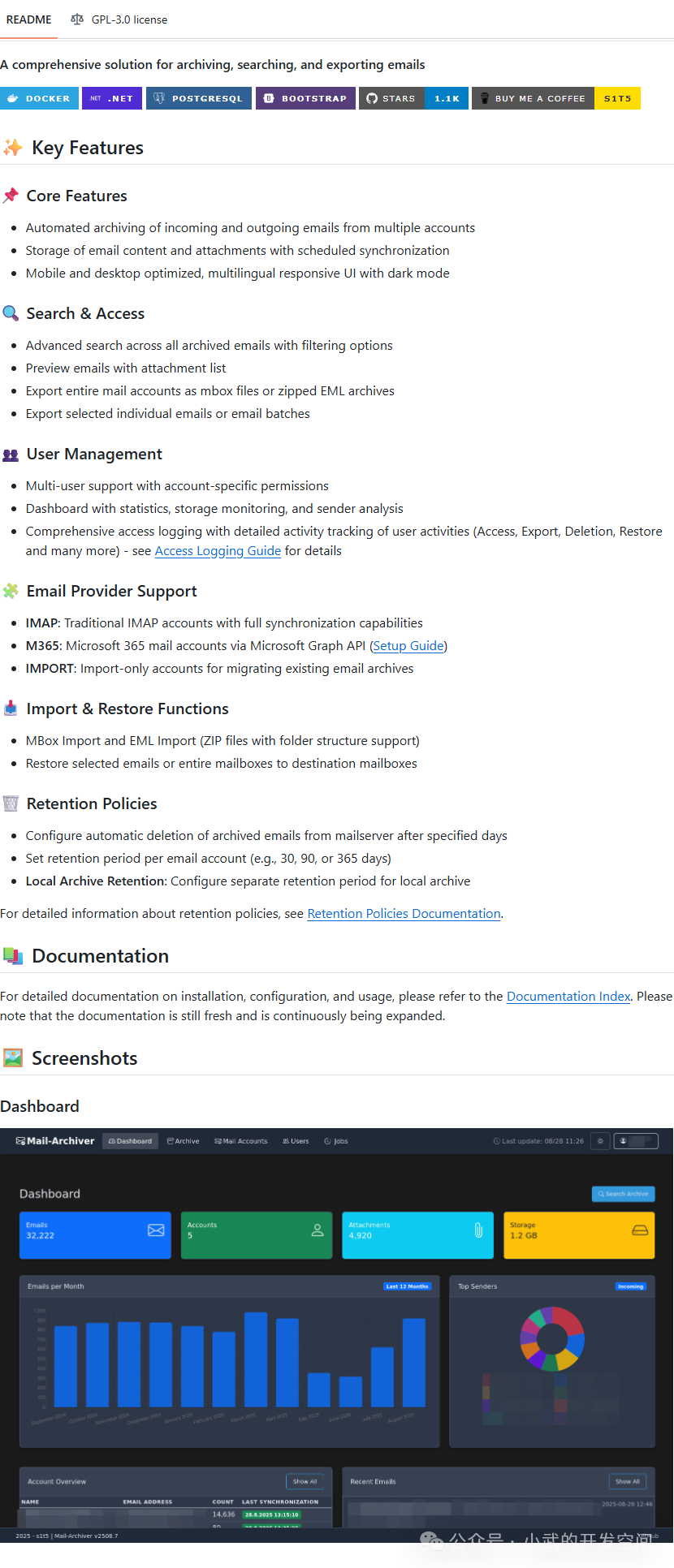 📊 Data Metrics:
⭐ stars : 1.1k | 🍴 forks : 36
🔗 https://github.com/s1t5/mail-archiver
📧 Project Overview
Core Features
Mail-Archiver is an email archiving system built on ASP.NET Core 8, supporting automatic archiving of sent and received emails from multiple email accounts. The system retrieves emails via IMAP, Microsoft 365 (Graph API), or import methods, securely storing content and attachments in a PostgreSQL database, supporting scheduled synchronization and multi-user permission management.
Search and Export Capabilities
It provides powerful full-text search functionality, supporting filtering by sender, subject, time, etc., and allows previewing emails and attachments. Users can export entire accounts as mbox files or ZIP-compressed EML packages, or selectively export single or multiple emails to meet compliance and backup needs.
Security and Maintainability
The system is deployed using Docker, with built-in access log recording (login, export, delete operations, etc.), supporting custom retention policies (e.g., automatic cleaning after 30/90/365 days). It requires enabling HTTPS with a reverse proxy to ensure secure transmission, suitable for enterprise internal email archiving and auditing scenarios.
15. keowu/Ryujin
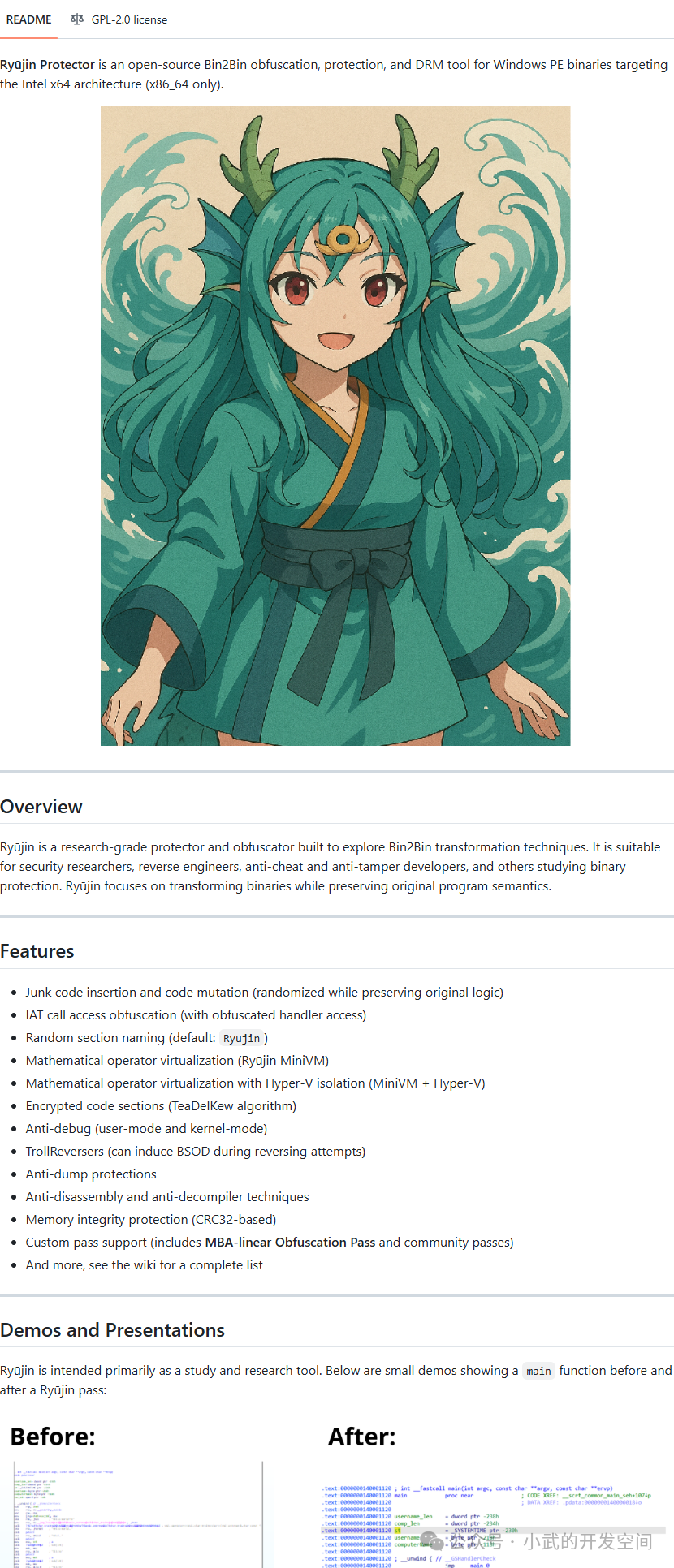 📊 Data Metrics:
⭐ stars : 241 | 🍴 forks : 32
🔗 https://github.com/keowu/Ryujin
Project Overview
Ryūjin Protector Overview
Ryūjin Protector is an open-source Bin2Bin binary obfuscation, protection, and digital rights management (DRM) tool designed for PE format executable files on the Windows platform, supporting Intel x64 architecture. This project is research-oriented, dedicated to exploring binary-to-binary transformation technologies, suitable for security researchers, reverse engineers, and developers of anti-cheat and anti-tampering systems.
Core Features and Characteristics
The tool provides various advanced protection mechanisms, including code virtualization (MiniVM), IAT call obfuscation, encrypted code segments, anti-debugging (user mode and kernel mode), anti-memory dumping, memory integrity checks (CRC32), and aggressive anti-analysis techniques such as inducing blue screens with “TrollReversers”. It supports functionality extension through custom plugins, such as community-contributed modules like MBA linear obfuscation.
Usage and Extensibility
Ryūjin supports both command-line (CLI) and graphical user interface (GUI) operation modes, catering to different needs from quick testing to in-depth research. Its modular architecture allows developers to inject custom obfuscation logic through simple callback interfaces, achieving precise function-level transformations combined with PDB symbol information, offering high flexibility and research value.