By/Heart of Rock
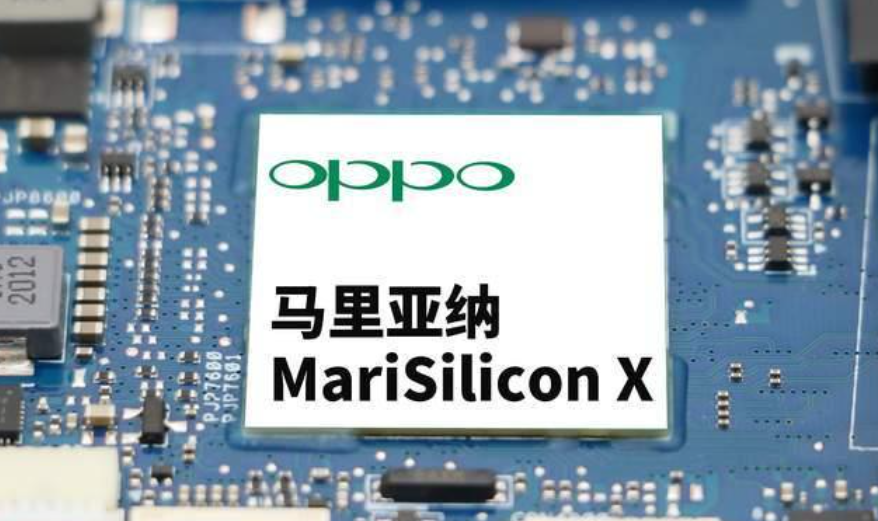
On the afternoon of December 14, OPPO launched the Marisilicon X chip, a 6nm NPU chip primarily aimed at enhancing the imaging capabilities of smartphones.
At the launch event, OPPO CEO Chen Mingyong stated, “A technology company cannot have a future without core underlying technologies.”
In the past two years, OPPO has emphasized its investment in underlying technology research and has revived its Find series flagship. To create flagship devices, one must possess technology. The reason Huawei can challenge Apple and Samsung in the high-end market is not merely due to patriotic marketing, but stems from Huawei’s breakthroughs in core technologies across chips, communications, and software.
Currently, the high-end smartphone market is largely controlled by Apple, which has become a company that wins by default. In this attractive high-end market, Huawei has been suppressed for well-known reasons. Who will take over Huawei’s position?
Everyone wants to take over. Honor, with its Huawei genetics, has been deeply cultivating underlying technologies. OPPO has also recognized the importance of technology. This NPU chip marks the beginning of OPPO’s research into underlying technologies and reflects the company’s attitude—determined to compete in the high-end market.
Even Xiaomi has picked up its long-abandoned Surge chip business, launching an ISP chip. Vivo has taken a similar path, recently introducing its own ISP chip.
So, what are the differences between OPPO’s NPU and ISP chips? ISP, short for “Image Signal Processor,” is a unit used to process output signals from front-end image sensors.
According to professionals, the specific processing flow of an ISP is as follows: The lens projects light signals onto the sensor’s photosensitive area, and after photoelectric conversion, the sensor sends the Bayer format raw image to the ISP. The ISP processes it through algorithms and outputs an image in the RGB color space to the back-end video capture unit.
On the other hand, the NPU is an embedded neural network processor. Compared to the ISP which handles photoelectric signal conversion and processing, this NPU chip possesses deep learning capabilities. For instance, it can perform precise optimizations based on different shooting scenarios and improve its optimization capabilities through self-learning.
Therefore, the NPU chip is considered more advanced than the ISP chip. Previously, Huawei integrated an NPU processing unit into the Kirin 970, significantly enhancing the photography capabilities of Huawei smartphones. Similarly, NPU processing units have also been included in Qualcomm’s Snapdragon series and MediaTek chips.
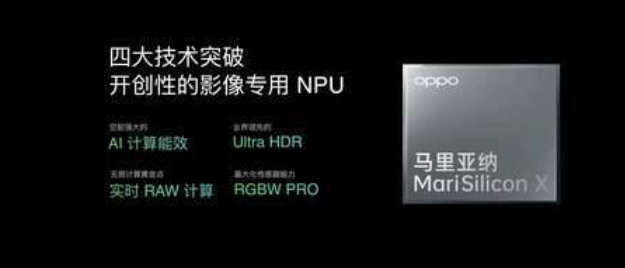
OPPO claims that its self-developed Mariana Trench NPU chip will be applied in the Find X flagship model to be released in the first quarter of 2022, which will become the first smartphone to feature dual NPU chips, with the other NPU being integrated into the SoC. (OPPO’s news states: “In the future, MariSilicon X will work with general platforms to form the left and right brains of mobile core computing, officially starting the ‘dual-chip’ era.”)
A new era of competition in underlying technology innovation has arrived, with smartphone companies launching their own chips. Additionally, innovations in software are also continuously advancing, such as Huawei’s HarmonyOS, Honor’s Fusion Photography technology, and OPPO’s Color OS ubiquitous services.
Domestic smartphone manufacturers have finally recognized the importance of technological innovation, which gives us more reasons to expect from them.