Click the blue text
Follow us
This public account is a non-profit MEMS technology dynamic and industry reporting platform under the Guangdong Microtechnology Industrial Research Institute. We publish in-depth reports on MEMS, track industry dynamics, and provide technical popularization every week. This article is a technical popularization and is the 151st article of the public account.
If you walk into a factory, you might see robotic arms accurately grabbing parts—this relies on visual sensors for “positioning”; the reason why your home vacuum robot can flexibly avoid sofa legs is due to its “obstacle recognition” capability; even the facial recognition unlocking on your smartphone depends on the contribution of small visual sensors.
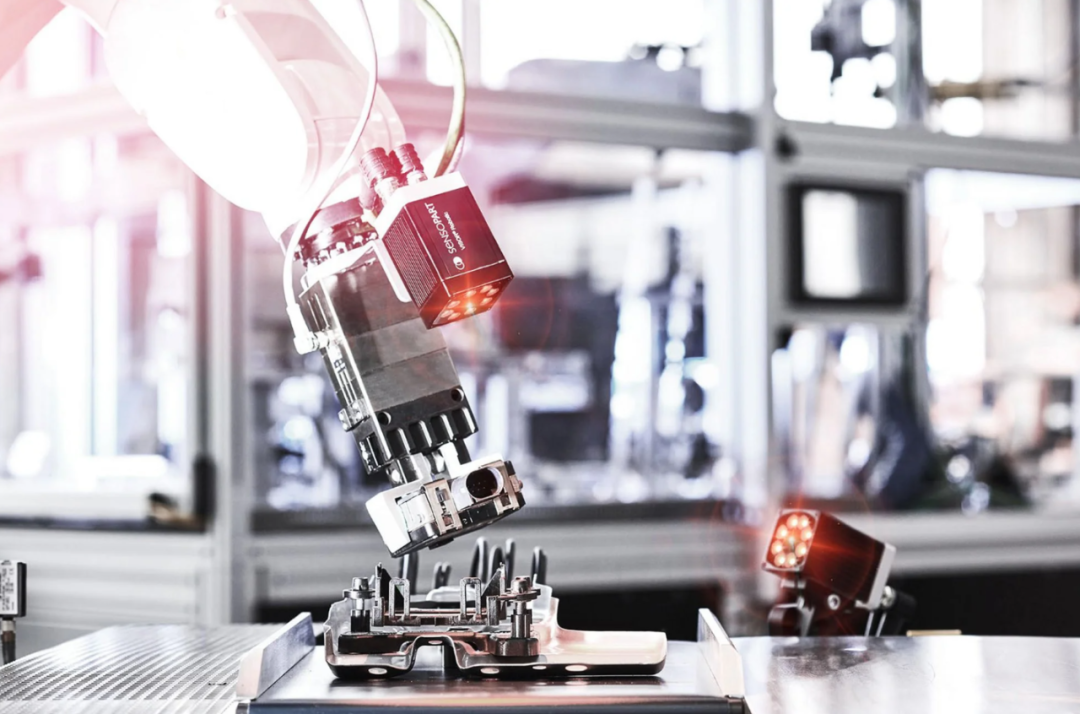
As the “eyes” of machines, visual sensors have infiltrated various fields such as industry, home, and healthcare. However, many people face the same dilemma: there are too many scenarios and too many parameters; how should one choose? Are domestic solutions reliable? Which scenarios can directly apply mature solutions? This article will help you find the answers.
01
Avoiding Pitfalls in Selection
To avoid the maze of parameters, focus on three core dimensions when selecting: task requirements, environmental conditions, and cost budget. Mastering this methodology will resolve most visual sensor selection challenges.
1
Select Based on Task Requirements
Different tasks correspond to different technical routes, which is the first step in selection.
Measuring Size/Identifying Defects For example, to check whether the dimensions of parts meet standards or if there are surface defects, high-precision requirements should prioritize CCD sensors. CCD traditionally excels in color reproduction and low-light performance, improving performance in low brightness and enhancing clarity, especially line-scan CCDs are suitable for continuous detection on assembly lines, while area-scan CCDs are suitable for inspecting the appearance of individual parts. If the budget is limited, mid-to-low precision detection can use CMOS sensors, which are sufficient for most scenarios due to their low power consumption, small size, and low cost, while meeting resolution requirements.
Object Recognition/Code Reading For example, reading barcodes during package sorting or recognizing product labels and codes, a 2D visual sensor is sufficient for these “recognition” tasks. A monocular 2D camera is inexpensive and fast in computation, suitable for static recognition; if distinguishing similar objects is needed, pairing with a light source can enhance image contrast and further improve recognition accuracy.
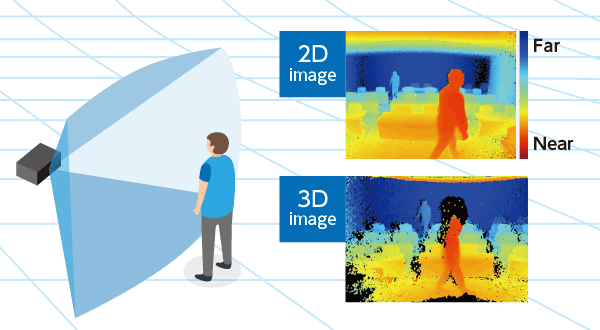
Obstacle Avoidance/Depth Measurement For example, a vacuum robot avoiding obstacles or a humanoid robot perceiving environmental depth must select a 3D visual sensor. For limited budgets, a structured light solution is suitable for close-range detection, commonly used in smart home scenarios; for medium to long-range distance measurement, a ToF solution can be selected, which has fast response, low power consumption, and long detection distance advantages, but for extremely long-range high-precision needs, laser radar should be considered; in industrial scenarios (such as robotic arms grabbing irregular parts), binocular vision can be considered, which has high resolution and precision advantages, but the algorithms are complex and sensitive to the texture of the measured object’s surface and ambient light—finding corresponding points in the image is necessary to calculate depth, and if the object’s surface reflectivity has no significant differences or obvious markers, matching becomes difficult, requiring parameter tuning based on the scenario.
2
Select Based on Environmental Conditions
The same sensor can perform differently in different environments, so pay attention to two key points when selecting.
Lighting In dark environments such as basements or at night, select low-light sensitive sensors, such as CCD sensors, which can improve performance in low brightness and work normally in dim environments; CMOS sensors require more light than CCD to generate bright images while reducing black noise.
Distance For close-range detection, select a structured light solution, which is suitable for close-range scenarios; for medium to long-range detection, a ToF solution can be selected, which has advantages in longer detection distances; for far-distance high-precision detection, laser radar may be needed, which can obtain target distance and position information by emitting laser beams, suitable for far-distance high-precision detection.
3
Select Based on Budget
Good news! Domestic visual sensors are gradually achieving import substitution in the mid-to-low-end market, and continuous breakthroughs are being made in the high-end market.
Low-cost scenarios
For example, household vacuum robots and small detection devices can select domestic CMOS sensors with domestic lenses, which are more cost-effective than imports and can meet the basic needs of such scenarios, aligning with consumer-level cost control requirements.
Mid-to-high-end scenarios
In fields such as industrial inspection and robot navigation, domestic 2D industrial cameras like Hikvision and Huari Technology can be selected. These products primarily use CMOS technology, which has significantly improved performance, with resolution and dynamic range metrics approaching CCD while being more cost-effective, standing out in mid-to-high-end 2D visual applications, and can provide localized after-sales support to meet the rapid response needs of industrial scenarios.
High-end scenarios
For example, semiconductor wafer inspection is still dominated by imported brands like Germany’s Basler, but domestic manufacturers like Lingyun Optics have launched similar products and are gradually replacing them.
02
Comprehensive Scene Implementation
From thousand-level clean rooms to smart locks, visual sensors have already penetrated various fields. This section summarizes verified solutions for four high-frequency scenarios: industry, robotics, home, and healthcare for your reference.
1
Industrial Scenarios
Industry is the main battlefield for visual sensors, focusing on solving three major problems: “detection, measurement, sorting”.
Defect Detection of Parts For example, to check whether the surface of parts has scratches, dents, or other appearance quality issues, a “CCD area camera + dedicated light source” solution can be used. The light source provides sufficient and uniform illumination for the visual system, avoiding shadows and ensuring imaging clarity and detail resolution, while the CCD area camera images the parts and converts them into electrical signals, which are then automatically recognized for defects through image processing algorithms.
Size Measurement For example, for online rapid measurement of part sizes on production lines, a line-scan CCD camera can be used. The line-scan CCD camera can quickly scan parts on the assembly line, and combined with the data analysis capabilities of image storage and computer systems, it can calculate the geometric dimensions of parts, meeting the rapid measurement needs in industrial scenarios.
Automatic Sorting For example, to classify products with different features, 2D visual technology can be used. 2D visual technology can obtain planar images of objects and extract features such as shape, labels, and codes. The camera recognizes these features and transmits the feature data to the computer system, which outputs judgment results based on preset rules, driving subsequent devices to complete automatic classification of products, improving sorting efficiency.
2
Robotic Scenarios
Whether it is industrial robotic arms or household robots, to “work flexibly,” 3D vision is essential.
Industrial robotic arms grabbing irregular parts (such as plastic or metal parts) use “binocular vision”; binocular cameras measure the position and posture of parts, and domestic solutions (such as UBTECH’s robotic arm + Orbbec’s 3D camera) can achieve stable grabbing.
Household vacuum robots use “ToF + 2D vision” for obstacle avoidance and route planning, where ToF measures the distance to obstacles, and 2D vision identifies the types of obstacles. Most mainstream domestic vacuum robots use this solution, significantly improving obstacle avoidance accuracy compared to pure 2D.
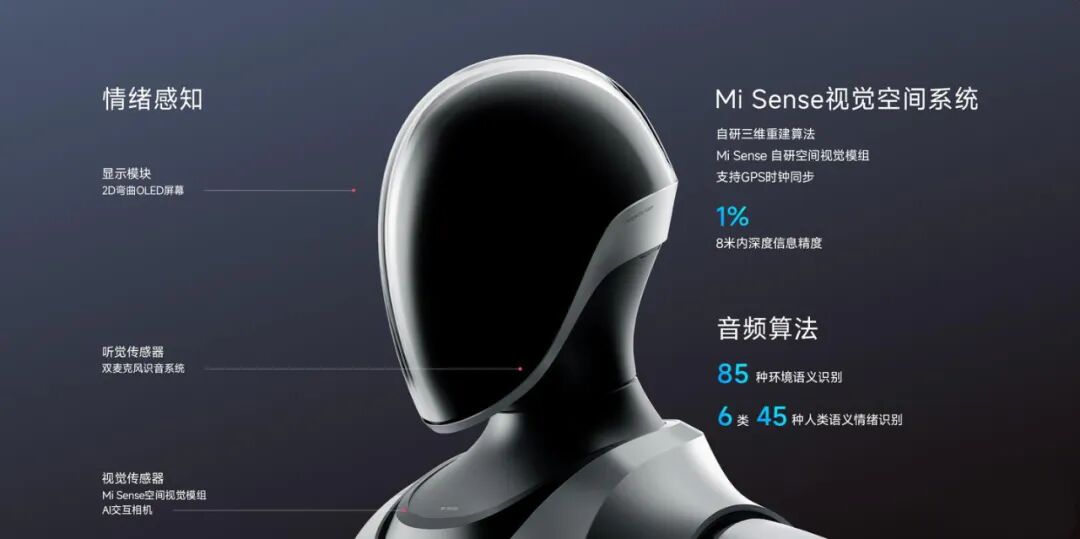
Humanoid robots such as Xiaomi’s CyberOne use the Mi-Sense vision system with iToF + RGB solutions, while UBTECH’s WALKERX uses “multi-eye 3D + AI algorithms” with RGBD cameras mounted on the head and waist, and four-eye vision on the chest, capable of recognizing faces and gestures while measuring environmental depth (such as determining step height). Companies like Orbbec have over 70% market share in the 3D vision field for service robots, and their 3D vision technology is gradually extending into humanoid robots.
3
Home and Consumer Scenarios
Consumer-grade scenarios are sensitive to cost and size, making compact and energy-efficient sensors more popular.
Smart Locks: Facial recognition uses “structured light 3D cameras,” which are compact and can prevent photo and video cracking, providing higher security, compatible with domestic 3D vision sensor solutions.
Smart Appliances: For example, smart cooking devices use visual sensors to recognize the shape and size of food, adjusting cooking parameters accordingly; smart devices’ “presence detection” uses low-power event cameras (such as Ruisi Zhixin’s ALPIX-Maloja), which only activate when someone approaches, with standby power consumption below 4mW, making them more energy-efficient than traditional cameras.
4
Medical and Traffic Scenarios
These scenarios have high safety requirements, and sensors must be stable and meet industry standards.
Medical Imaging such as ultrasound, CT, MRI, and gastroscopes use visual sensors to obtain image data, providing effective diagnostic tools for doctors to quickly and accurately identify lesions.
Traffic Monitoring such as vehicle recognition at intersections and license plate recognition, is achieved through visual sensors, which can also be used for vehicle monitoring and traffic flow detection, assisting traffic management.
03
Domestic Companies Worth Noting
In the past, when visual sensors were mentioned, people would first think of Germany’s Basler and Japan’s Keyence, but now domestic manufacturers have made breakthroughs in multiple fields, with market share increasing year by year. Choosing domestic not only saves money but also provides more convenient services.
1
Domestic Chips and Lenses Can Be Independently Produced
The “heart” of visual sensors is the image sensor (CIS), and the “eyes” are the lenses. Domestic manufacturers have gradually laid out and developed in these two core component areas.
CIS Chips account for over 17% of the global market share, with domestic manufacturers (such as OmniVision, Gekewei, and SmartSens) combined. High-end industrial inspection scenarios (such as ultra-high-speed and ultra-high-resolution requirements) still rely on specialized chips from manufacturers like Sony.
Lenses in the mid-to-low-end industrial lens (such as fixed-focus lenses) field, domestic manufacturers (such as Dongguan Pumisi) are relying on high cost-performance; Shenzhen Dongzheng Optics and Jiangsu Muteng Optics can now provide a full range of industrial lenses, expanding into high-end product areas; high-end industrial lenses were previously dominated by German and Japanese brands.
Light Sources Domestic light source manufacturers (such as Opto) have entered the first tier of the global machine vision light source market, capable of customizing different shapes of light sources such as ring and bar shapes to adapt to different detection scenarios, meeting the needs for moderate illumination and uniform brightness.
2
Leading Companies Have Formed “Full Industry Chain Capabilities”
Domestic leading companies not only produce sensors but also provide a complete set of solutions including “hardware + software + algorithms”.
Hikvision Robotics leads the domestic market share for 2D industrial cameras, with the combined shipment volume of Hikvision and Huari Technology exceeding 60% in 2023, dominating the domestic market; they have also launched 3D cameras and visual software platforms (VM algorithm library), forming a layout covering the entire product line of machine vision, maintaining a leading advantage in the industry.
Orbbec leads in 3D visual sensors domestically, with over 70% market share in China’s service robot 3D vision field, deeply collaborating with robot manufacturers such as UBTECH, Yunji Technology, and Stand. They have also launched solutions compatible with NVIDIA and Microsoft platforms (such as the 3D development kit PerseeN1 developed in collaboration with NVIDIA and the Femto series iToF cameras launched in collaboration with Microsoft), accelerating global layout.
Opto started with light sources and now provides a full-stack product of “light source + lens + camera + algorithm” (with its own product line covering visual algorithm libraries, deep learning, light sources, industrial lenses, industrial cameras, etc.); its products and solutions have been applied in over 20 countries and regions, with more than 30 service points globally, serving industry leaders such as Huawei and CATL, with high maturity in solutions for 3C electronics and new energy lithium batteries.
3
Domestic Production Will Accelerate
The national “14th Five-Year Plan” for digital economy clearly promotes the application of machine vision technology; at the same time, the upgrade of domestic manufacturing (such as new energy lithium batteries and semiconductor expansion) brings a large demand. In 2022, China’s machine vision market size was approximately 17.065 billion yuan, with domestic brands maintaining a market share of over 50% since 2020 and continuing to rise. It is expected to reach 56.565 billion yuan by 2027, with the domestic production rate further increasing.
04
Future Trends
As traditional vision encounters computational bottlenecks and power consumption ceilings, three major technologies—event cameras, integrated sensing and computing, and multispectral fusion—are opening new battlefields. How will they disrupt existing solutions? How should companies position themselves?
-
Event Cameras: A “New Choice” for Low Power and High-Speed Scenarios
Traditional cameras capture images at fixed frame rates, generating a lot of redundant data. Event cameras only capture “places with brightness changes,” such as moving objects, resulting in redundant data volume being only 10-20% of that of traditional image sensors of the same specification, reducing data volume by 80-90%, with power consumption as low as <4mW@1000FPS, such as Ruisi Zhixin’s ALPIX-Maloja, suitable for:
Smart Homes such as “presence detection” for smart devices, activating only when someone approaches, with long standby times;
High-Speed Scenarios such as obstacle avoidance for drones and factory high-speed assembly line inspections at 1000 frames per second, avoiding motion blur.
-
Integrated Sensing and Computing: Allowing Sensors to “Think” for Themselves
Traditional sensors only “capture” images, and data must be sent to a computer for processing. Integrated sensing and computing sensors can complete “sensing + storage + computation” within the chip, such as the “Feihong perception” chip from Xiling Vision, which can directly output judgment results such as “whether there is a defect,” without needing to connect to a computer, suitable for:
Edge Devices such as outdoor traffic cameras, which can directly recognize anomalies locally without transmitting large amounts of data to the cloud;
Low-Power Scenarios such as IoT devices, significantly reducing both computational power and power consumption.
-
Multispectral Fusion: More Resilient in Complex Lighting Environments
Current sensors mostly capture visible light, but in the future, they will combine near-infrared and other spectra. For example, the “visible light + near-infrared” fusion sensor developed by Hunan University in collaboration with Hong Kong Polytechnic University can accurately recognize objects in complex lighting environments, such as from bright daylight to dim night, or interference from road reflections or vehicle taillights, which is suitable for outdoor and complex lighting scenarios.
05
Summary
Faced with diverse visual sensor selection needs, the key is to clarify the priority of core scenarios. Whether pursuing micron-level precision in industrial inspection or requiring milliwatt-level power consumption in smart home devices, the following three dimensions can serve as basic decision-making references.
Define the Scenario First clarify whether it is “measuring size, recognizing objects, or avoiding obstacles,” and the usage environment (lighting, distance).
Select the Type In traditional high-precision industrial inspection scenarios, CCD is often used; if focusing on cost control and integration needs, and precision requirements are adaptable, CMOS is the preferred choice (CMOS technology has significantly improved, with resolution and image quality approaching CCD, gradually replacing CCD in multiple fields); structured light is commonly used in close-range scenarios, while ToF can be selected for mid-range scenarios (ToF has advantages in longer detection distances and low power consumption), and laser radar can be considered for long-range scenarios (mainstream being ToF-type laser radar).
Consider Domestic Options Prioritize domestic products (such as those from Hikvision, Orbbec, and Opto) for mid-to-low-end scenarios, and reassess imported brands for high-end scenarios, as domestic solutions offer better cost performance.
Industry data shows a clear path: the market share of local brands in China has continued to grow since surpassing 50% for the first time in 2020. With policy support and technological iteration driving the industry, fields such as industrial, robotics, and smart home are becoming advantageous battlegrounds for domestic solutions. When choosing, combine your own scenario to validate solutions to maximize the value of machine vision.
END
Welcome to reprint,
Please indicate the source from the public account “Smart Sensor Network”!