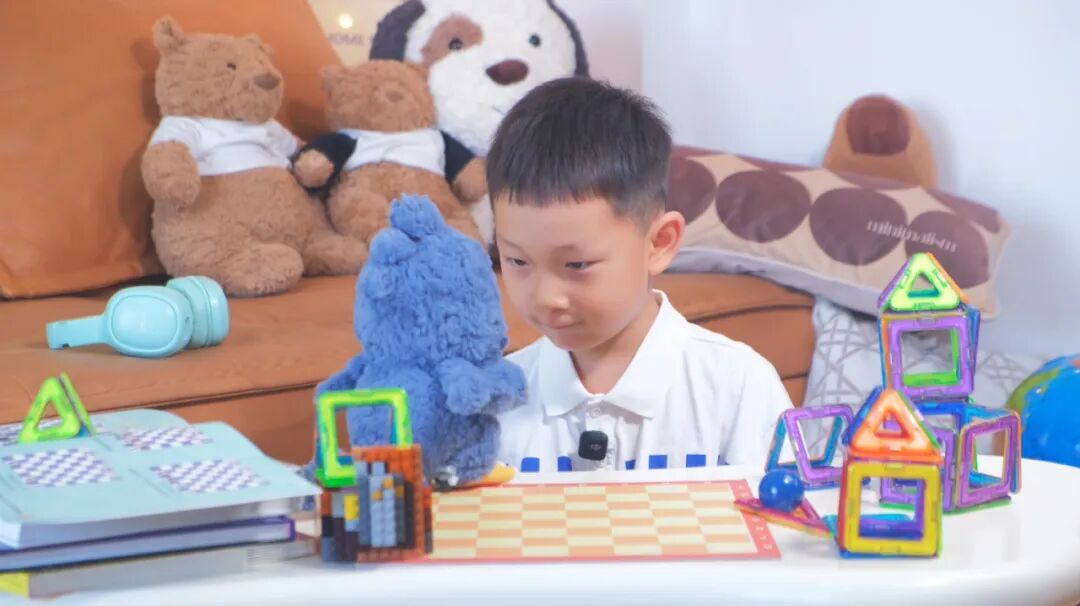
As the morning sun shines on the bedside, 6-year-old Xiaoyu hugs the AI smart doll “Little Thief Dragon” (dao dao), produced in collaboration by Zhuoshijia Technology and Renyou Cultural Innovation, and asks in a tender voice, “Little Thief Dragon, can we go to the park today?” The doll immediately responds in a cute dinosaur voice, “Today in Beijing, it’s sunny with a temperature of 18-25°C, perfect for feeding pigeons with mom and dad!” This intelligent doll, modeled after the “Gu’s Little Thief Dragon,” is becoming a “new growth partner” for children with its combination of “AI + emotion + science popularization.”
Product Features: Designed for Children from “Appearance” to “Experience”
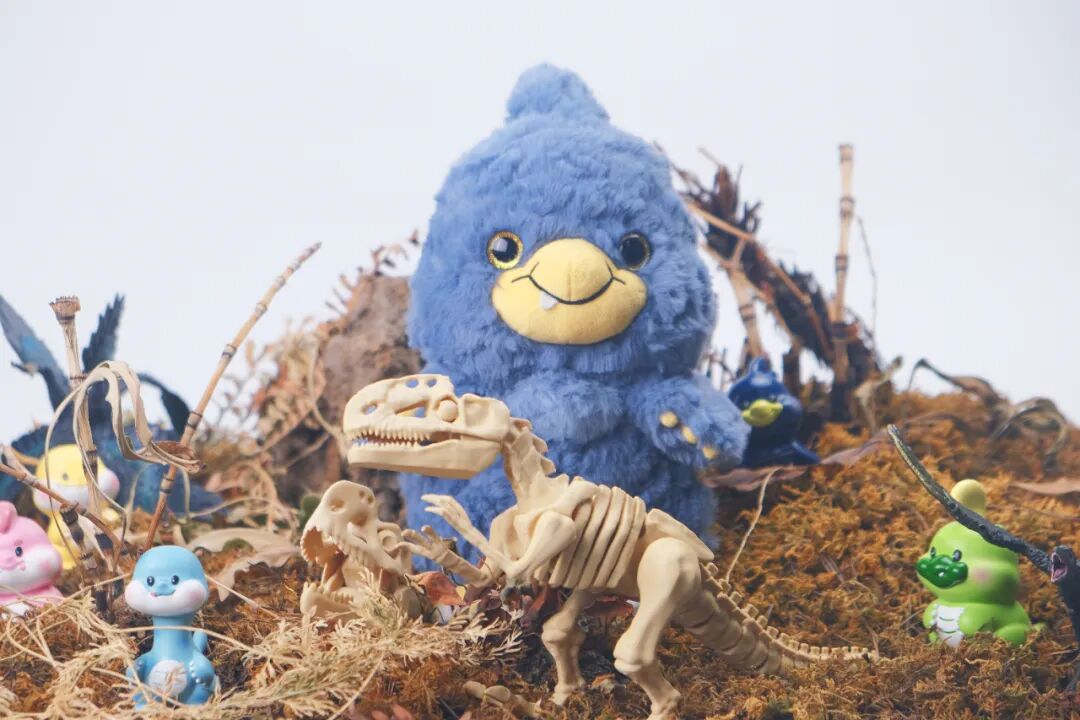
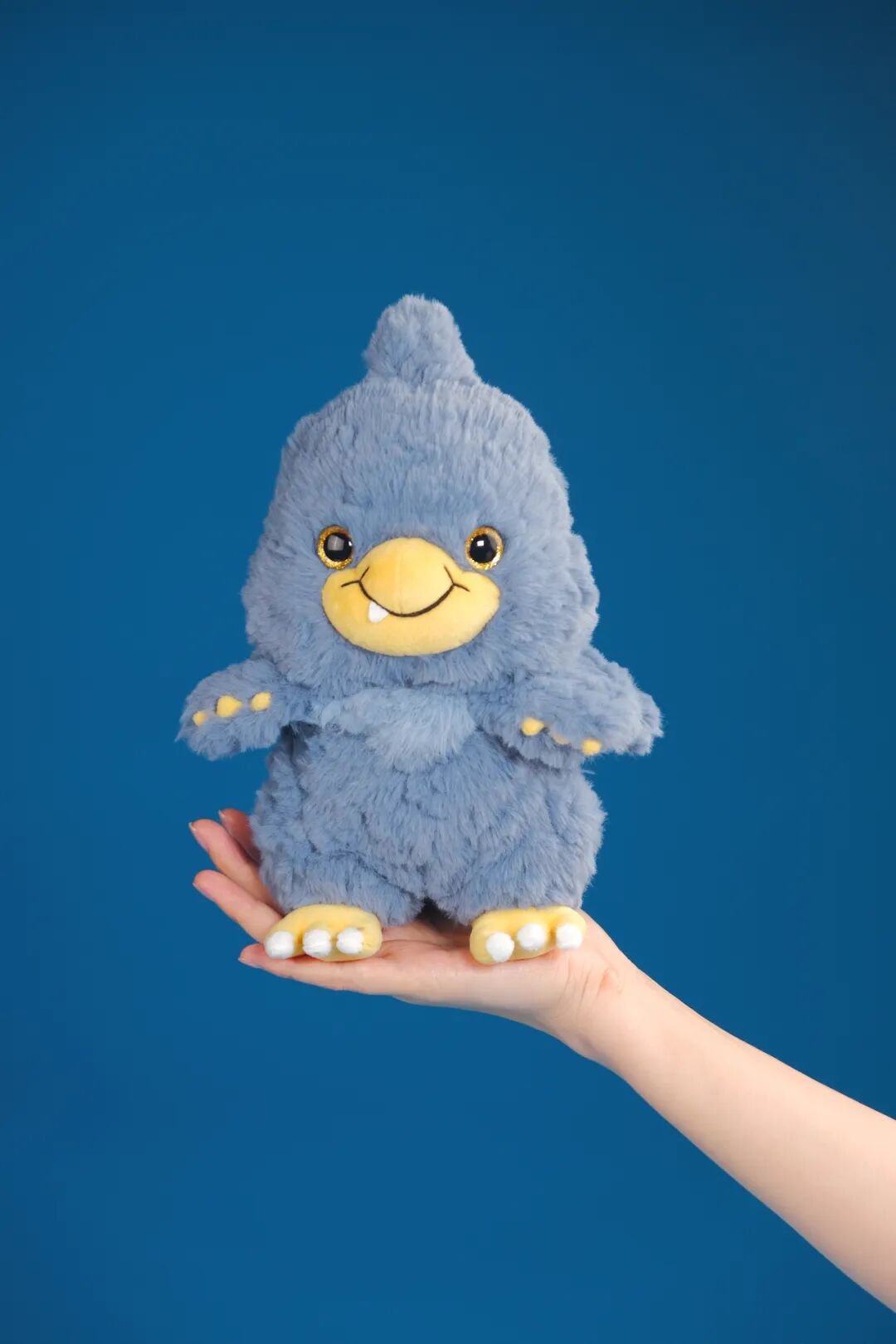
The design of “Little Thief Dragon” is inspired by the “Gu’s Little Thief Dragon” from elementary school Chinese textbooks, combining paleontological science with playful design—streamlined “wings” and a round body that not only replicate the characteristics of dinosaur fossils but also cater to children’s aesthetic preferences. The doll is made of high-quality plush fabric, soft and skin-friendly, and resistant to dirt, with a size just right for children aged 3-10 to grasp and hug, ensuring they won’t feel tired even after long periods of holding.
In terms of operation, the doll does not require downloading an app or connecting to complex devices; it can be awakened with a single button press, with a response time of less than one second, allowing children to quickly enter an interactive state. More thoughtfully, it supports “voiceprint recognition,” enabling each child to record their unique voiceprint for personalized interaction, enhancing the child’s sense of belonging.
To protect children’s eyesight, the doll features a “screenless design,” relying entirely on voice interaction to replace blue light devices like smartphones and tablets, helping children avoid screen dependency while “listening to stories, asking questions, and playing games.”
Core Competitiveness: AI is not a “tool,” but a “warm partner”
Unlike the common “smart speaker + doll” combinations on the market, “Little Thief Dragon” truly integrates “emotional companionship” with “intelligent interaction.” Based on the multimodal large model provided by Zhuoshijia Technology, it can recognize 26 emotions (such as happiness, sadness, curiosity, and irritability) and provide dynamic feedback: when a child cries because they couldn’t buy their favorite toy, it gently says, “I know you are very sad; how about I tell you a story about ‘Little Thief Dragon looking for mom’?”; when a child excitedly shares fun stories from kindergarten, it responds with a “dinosaur laugh”: “Wow, you helped your friend pick up a pencil today, that’s amazing!” This “high emotional intelligence” interaction transforms the doll from an “intelligent tool” into a “friend who understands children.”
Additionally, the doll’s “knowledge base” is jointly created by Zhuoshijia Technology and Renyou Cultural Innovation, encompassing content supported by authoritative institutions such as the People’s Posts and Telecommunications Publishing House and various museums in China. The content covers dinosaur evolution, astronomy, geography, and everyday knowledge, all expressed in “child-friendly language”—for example, when explaining “dinosaur extinction,” it says, “A long, long time ago, a small asteroid hit the Earth, the sky turned dark, and the dinosaurs couldn’t find food, so they slowly disappeared…” This “authoritative + fun” approach to science popularization allows children to learn while playing, achieving subtle “enlightenment education.”
For parents, “controllable technology” is another major highlight: the doll supports private deployment, allowing parents to customize the “character” (for example, changing the doll to have “grandma’s voice”) and set “content filters” (to block inappropriate questions), ensuring data security and privacy.
Core Functions: Covering Children’s Needs from “Home” to “Outdoor”
The functionality of “Little Thief Dragon” is designed around “children’s growth,” covering multiple scenarios including home, outdoor, and kindergarten:
-
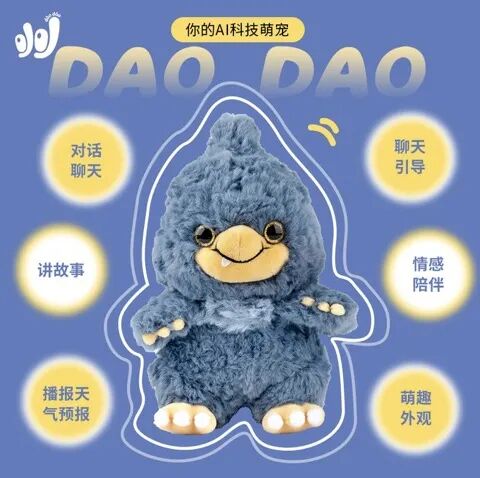
Science Teacher: Built-in with over 1000 dinosaur stories and 500 fun Q&A (such as “Can Little Thief Dragon fly?” “Why are dinosaur eggs round?”), allowing children to learn from “home to the museum”;
-
Life Assistant: Can check the weather and answer everyday questions (“Little Thief Dragon, why does it get dark?”) becoming the child’s “first window to understanding”;
-
Voiceprint Recognition: Supports 3 voiceprint recognitions, allowing Little Thief Dragon to focus on each child.
-
Emotional Support: Supports multi-turn dialogue (such as “Little Thief Dragon, I had a fight with my friend today”), emotional recognition provides emotional companionship, can sense your mood, and provide responses as an intelligent partner, and can even tell jokes (“Why does Little Thief Dragon’s tail stick up? Because it ate too many strawberries yesterday and its belly is as round as a ball!”), helping children release emotions;
-
Outdoor Portability: Built-in strap, weighing only 500g, supports Wi-Fi/hotspot connection, usable even in parks or at grandma’s house, transforming into a “mobile classroom”;
-
Bedtime Companion: Provides a “bedtime story” mode (with soft voice and warm dinosaur fairy tales), replacing blue light screens to help children fall asleep peacefully;
-
Social Enlightenment: Supports “role-playing” (such as “Little Thief Dragon, let’s play ‘Dinosaur Mom looking for baby’ game”), promoting children’s empathy and social skills.
Future Value: From “Product” to “Ecosystem,” Creating a “Flywheel Effect” in Children’s Companionship
As the children’s companionship market enters a “boom period,” the interactive AI smart doll “Little Thief Dragon” officially debuts, a cross-industry collaboration between Zhuoshijia Technology and Renyou Cultural Innovation. According to the “2023 China AI Emotional Companionship Market Report,” the Chinese AI emotional companionship market is expected to reach 59.5 billion yuan by 2028, with a compound annual growth rate of 148.74%, and the “children’s segment” accounting for over 40%. The “IP + technology + emotion” model of “Little Thief Dragon” precisely meets parents’ needs for both intelligence and warmth.
In the future, the product will develop towards “platformization”: on one hand, supporting multiple IP access (such as integrating popular IPs like “Peppa Pig” and “Superman”), making the doll a “carrier of IP”; on the other hand, launching “knowledge base subscriptions” (such as monthly updates of “museum special exhibition content”) and “data services” (such as sending parents “children’s interest reports”: “Your child has recently shown a strong interest in ‘dinosaur evolution’; we suggest taking them to the natural history museum”), achieving ecological profitability through “hardware + software + content.”
More importantly, “Little Thief Dragon” adopts a “flywheel effect” operational model: as hardware sales increase, costs will gradually decrease, attracting more users; as the user base expands, the penetration rate of software services (such as subscription content and personalized character settings) will increase, thereby enhancing user lifetime value (LTV); and the increase in LTV will feed back into hardware development (such as adding “tactile feedback”: when a child touches the doll’s “wings,” it vibrates and says, “These are my wings for gliding!”) and content upgrades, forming a “virtuous cycle.”
Conclusion: Making AI Companionship More “Human”
The emergence of “Little Thief Dragon” not only breaks the traditional model of “children’s smart toys = screen + voice” but also redefines the meaning of “companionship”—it does not “replace parents” but “assists parents,” using “warm AI” to help children solve “small troubles in growth” and “authoritative science popularization” to open the “door to understanding” for children. As the product manager said, “We hope this ‘Little Thief Dragon’ can become a ‘flying friend’ in children’s childhood, growing up with them.”
From “home” to “museum,” from “bedtime stories” to “outdoor exploration,” “Little Thief Dragon” is using technology to convey warmth, reshaping new scenarios for parent-child interaction. Perhaps this is the most touching aspect of AI—not being “smarter,” but being “more understanding of you.”
Zhuoshijia Technology
Zhuoshijia Technology was established in 2018 in Beijing, with founders and core R&D team members coming from Baidu’s AI product and R&D teams, possessing industry-leading capabilities in large model algorithms, data engineering governance, and mature AI product commercialization. The company adheres to the philosophy of “AI for All,” deeply engages in “AI to B,” empowering industrial digitalization, with core capabilities in full-stack industry large models, and deeply develops the MaaS and Agent dual-engine platform and scenario applications, covering enterprise services, industrial manufacturing, health care, and cultural education media. The company has obtained the first batch of large model filing qualifications from the National Internet Information Office, recognized as a key “little giant” in the national specialized and innovative enterprises, and a national high-tech enterprise, with over 100 invention patents in AI large models.