
Click the blue text to follow us
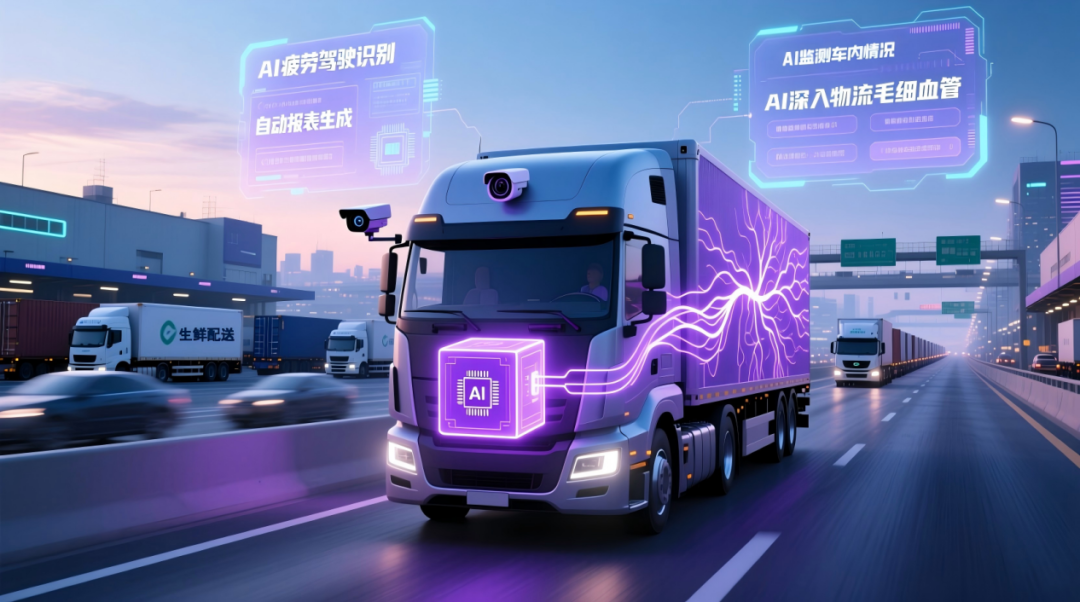 Written by | Li XinmaCover image | AI-generatedIf we view artificial intelligence as a technological revolution sweeping through human society, then the logistics industry, composed of a vast number of drivers, trucks, goods, and intricate traffic routes and storage nodes, is undoubtedly a deep water zone for AI reform.
Should we embrace AI? If so, how should the capillary networks of AI technology penetrate every vehicle and every driver?
Recently, at the 2025 Digital Logistics Conference hosted by G7 Yiliu, I witnessed the answer provided by this technology company that has been deeply involved in the logistics industry for many years.
01.
The AI+ Trend in the Second Half of Logistics
2025 is a special year for the logistics industry.
Zhai Xuehun referred to the past decade as the first half of the logistics industry, where the main growth came from the development of e-commerce and express delivery. In the second half, he believes that structural growth will come from four areas: instant retail, agriculture and animal husbandry, regional bulk goods, and combined rail and road transport.
This view is also supported by data; in 2025, China’s national freight index will rise for the first time in five years and stabilize around 5%. While the total volume increases, the average transport distance has shortened, and the proportion of short-distance transport has significantly increased. “Everyone is in surplus; for example, if Sam’s sells lamb chops and Hema also sells lamb chops, it depends on who is more efficient, delivering to your home without freezing and still cold, which requires extreme efficiency and experience to occur together.
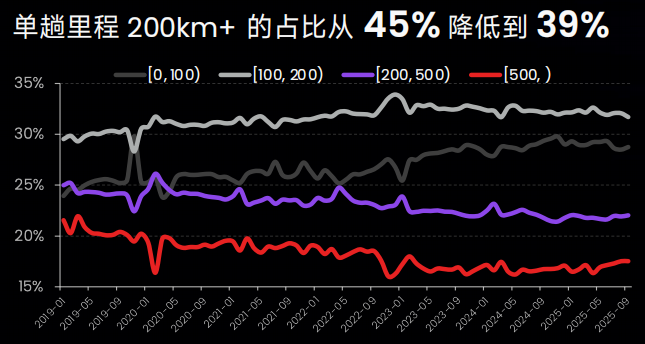
Image source: G7 Yiliu
Correspondingly, on the supply side, new energy vehicles have transitioned from niche to mainstream, especially in urban distribution, where the efficiency of new energy vehicles has already surpassed that of diesel vehicles.
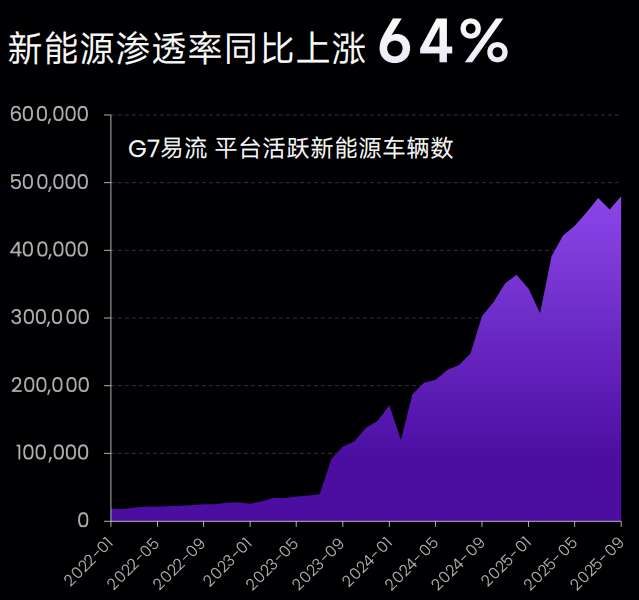
Image source: G7 Yiliu
However, since new energy vehicles are not only new in energy but also in model, they may not necessarily adapt to logistics scenarios. Many drivers are inexperienced, and fleets or logistics companies lack experience and coordination, leading to limited efficiency improvements and a decline in safety. Zhai Xuehun stated, “The operational level of new energy fleets is currently the biggest bottleneck.”
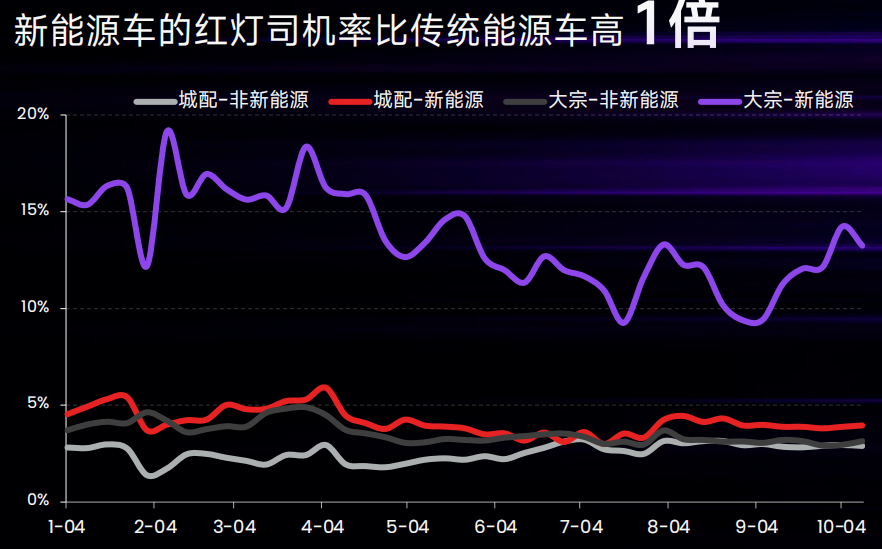
Image source: G7 Yiliu
He believes that new energy brings not only changes to trucks but also a new ecosystem. “People will soon see one thing—in the field of regional bulk goods, vehicles, assets, energy, and operational management will be integrated in new ways, forming an efficient system.”
Combining the changes on both the supply and demand sides, he provided a specific numerical forecast: there will be a demand for 5 million vehicles in the future, and this demand is for high-quality vehicles that require both efficiency and excellent stability, which is the foundation for profitability in the domestic logistics industry.
During his speech, Cai Jin, president of the China Federation of Logistics and Purchasing, mentioned that the logistics industry has become more agile and flexible in the process of supply chain transformation and upgrading.
The past business model of the logistics industry was “large volume, few batches, high inventory.” “(In the 1980s and 1990s) back then it was a shortage economy; if you could get 10,000 tons of steel, why would you do it in one-ton batches? It had to be 10,000 tons, 100,000 tons, or even millions of tons for major projects. Now it’s different; it’s an era of surplus, so the logistics model has shifted to ‘small batches, many batches, low inventory.’ Now, steel distribution is calculated by the truck, in tens or twenties of tons.”
In the “small batches, many batches, low inventory” logistics model, past manual methods are no longer suitable; advanced technology must be relied upon to promote a more agile and flexible logistics model. From resource integration, process optimization to logistics and supply chain collaboration, AI technology is indispensable.
Therefore, Cai Jin believes that “AI+ logistics” is both a response to the times and an inevitable direction for the transformation and upgrading of the logistics industry.
In this regard, Zhai Xuehun shares a similar view; he believes that the logistics industry has only two fundamental issues: efficiency and safety. All digitalization and intelligence in the logistics industry aim for these two purposes, and in the second half of the logistics industry, the challenges of efficiency and safety have increased.
02.
The Purple Treasure Box: The First Step Towards AI
The small box in front of us is G7 Yiliu’s first AI product—the Purple Treasure Box.

Photo by DoNews
Regarding this product, Zhai Xuehun, founder and CEO of G7 Yiliu, stated: “It has only one mission, which is to help everyone take the first step towards AI.” The Purple Treasure Box has two core capabilities: it can perceive a rich environment and has direct execution capabilities at the front line.
In the past, G7 Yiliu has developed at least 40 different types of vehicle-mounted hardware, as shown in the image below:
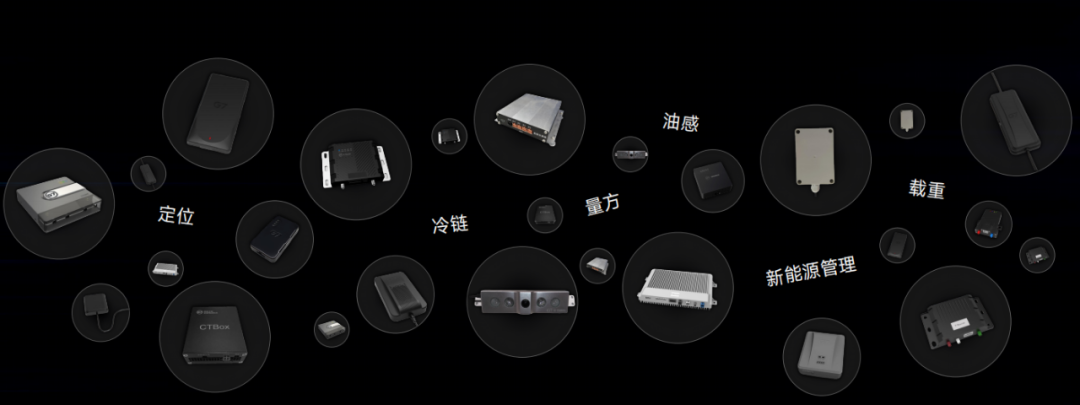
Image source: G7 Yiliu
The Purple Treasure Box is an “All in One” super gateway that can connect all sensing devices on the vehicle, such as cameras, sensors, and other brand hardware, to collect and transmit various data.
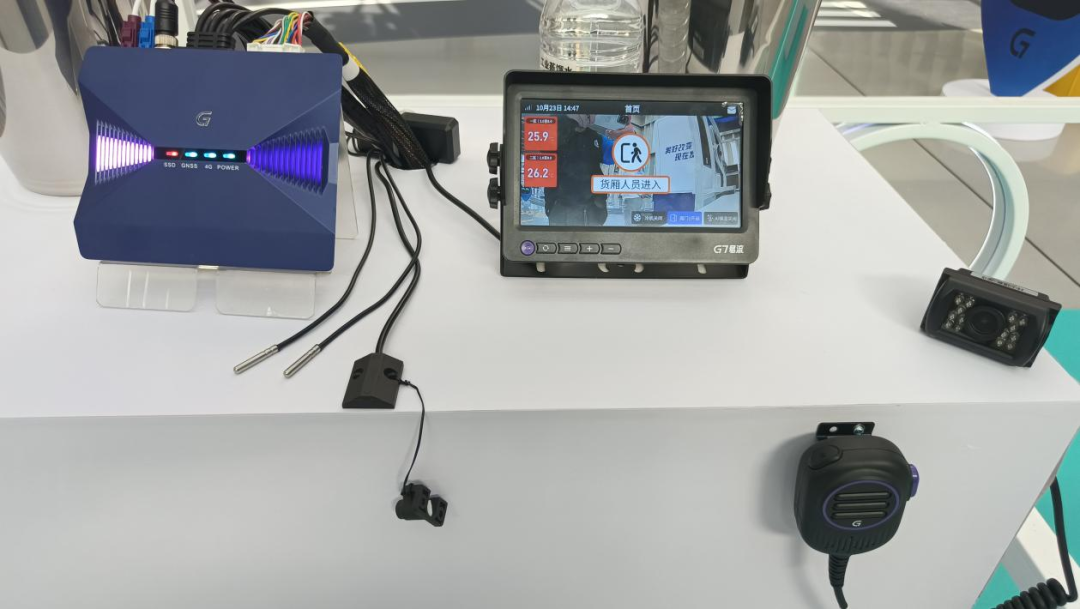
Simulated installation effect Photo by DoNews
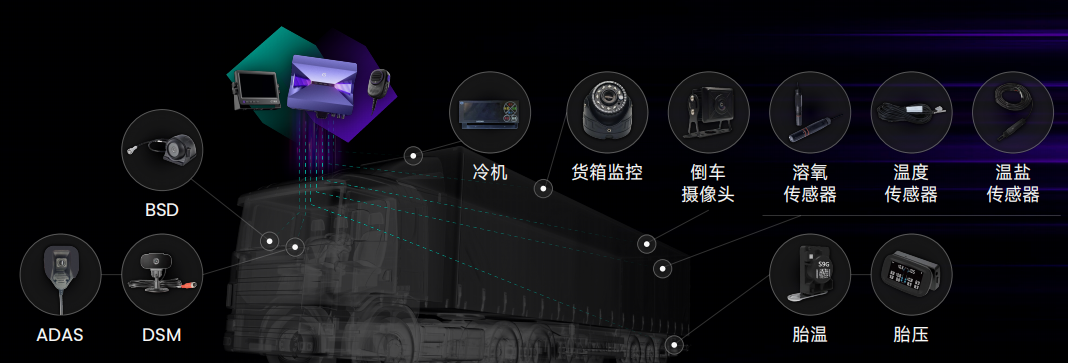
Concept image Image source: G7 Yiliu
On the other hand, it has a powerful edge-side AI brain. Zhai Xuehun stated that the Purple Treasure Box will identify, judge, and execute the acquired data, with 80% of the calculations occurring locally, “because sending it to the cloud is too slow.”
For example, if a driver is on the phone, smoking, or yawning, the machine will recognize these actions and issue warnings directly. I tested the effect on-site; when I held my phone to my ear and yawned, it took about one second to prompt me.
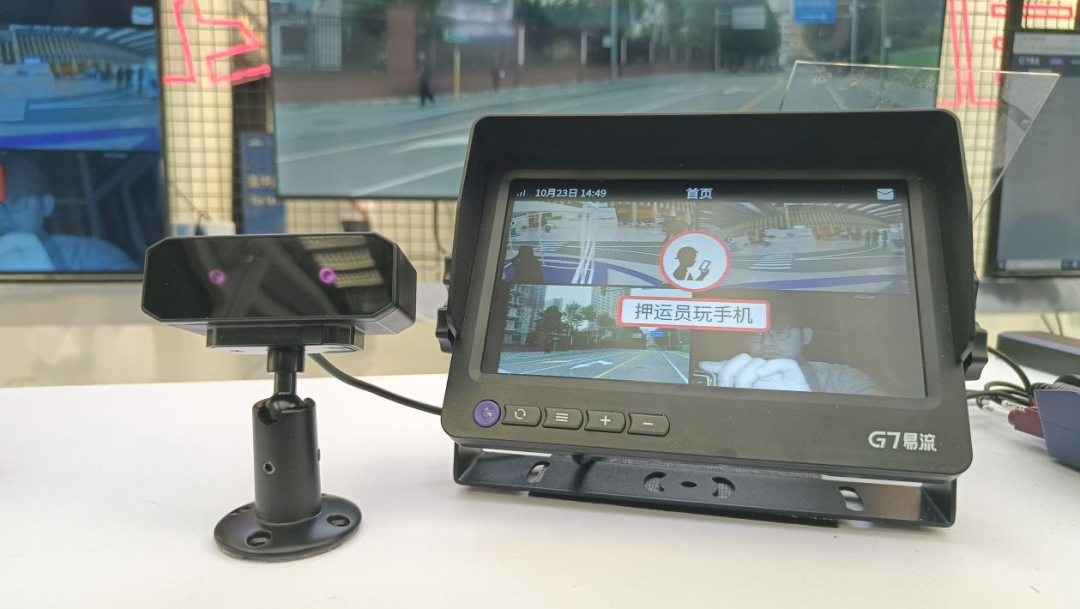
Photo by DoNews
According to the product manager, after connecting the Purple Treasure Box to G7 Yiliu’s training platform, algorithms can be upgraded and deployed at any time, optimizing management logic and quickly responding to vehicles.
The application of large model technology has greatly improved the speed of algorithm training. “It used to take 10,000 images to train an algorithm; now it may only take 100 images. After a year of development, the platform has launched over 100 algorithms capable of recognizing unique scenarios, more than in the past decade, such as suspicious personnel intrusion, loading and unloading, co-driver status, and abnormal parking on highways,” Zhai Xuehun said.
Furthermore, the Purple Treasure Box can automatically generate forms through intelligent agents. The logistics industry is closely tied to forms, and a logistics company may deal with thousands of different forms, including reimbursement forms, vehicle dispatch forms, fuel price forms, and vast amounts of data. Relying on manual entry is not only inefficient but also prone to errors, making automatic generation at the source far superior.
In a post-conference interview, Zhai Xuehun mentioned that he believes there are two types of work in the logistics industry that are not suitable for humans: one is analyzing data to draw conclusions, and the other is one-on-one voice communication.
He shared a case where a client purchased over 300 electric heavy trucks, and after more than six months of operation, their glasses prescription increased by 200 degrees due to the overwhelming amount of data needing analysis. “How to optimize routes? How to manage costs? How long should each station stay? Which drivers are safe and which are not? A lot of analysis is required.”
Another client directly told him that they could not accept G7 Yiliu’s solution, “With thousands of vehicles and so many cameras, out of ten thousand orders a day, how many actually pose a danger to the goods? I think it’s no more than 50.”
In the past, data digitization in the logistics industry improved safety levels, but the sheer volume of reports left many companies overwhelmed with data processing and analysis. “Those with a thousand vehicles really hired a whole room of people to handle data. Why do they need so many people? Because each person’s time and energy are limited, and communication has bandwidth costs.”
Both of these tasks can be handled by AI. Furthermore, Zhai Xuehun envisions that many middle managers’ main tasks are to relay information. When AI possesses strong communication and contextual abilities, these tasks can also be delegated to AI. In the future, logistics company executives may directly connect with grassroots drivers through AI, significantly enhancing industry efficiency.
Good products are born out of the demands of the times, and it seems that we are at a critical juncture for the emergence of new species.
03.
Why Start with AI Hardware Instead of Industry Large Models?
In fact, when it comes to the implementation of AI in the industry, the vast majority of companies’ first reaction is to create an industry large model. The threshold for this is not high; large companies have ample industry data, and there are mature open-source large models available in the market, with immediate effects. Initially, the industry large model was also one of G7 Yiliu’s first steps into AI.
However, the decision to start with AI hardware was based on an understanding of the industry and G7 Yiliu’s positioning.
Zhai Xuehun explained in an interview that their conclusion after extensive verification was that the logistics industry has not yet been AI-enabled not because the capabilities of large models are insufficient, but because the industry’s infrastructure does not meet the prerequisites for AI implementation, and significant improvements are needed in data foundations. “Last year, we conducted a lot of verification. Frankly, we hadn’t figured it out two years ago. Last year, we abandoned the strategy of starting with an industry large model and established the strategy of starting with the Purple Treasure Box hardware, using it as a foundation to create an intelligent platform for logistics.”
The essence of logistics operations is to perceive data, make decisions, and then execute. Zhai Xuehun summarized it as a “bowtie” with two long and fast wings: one side is the driver and vehicle, and the other side is the corresponding logistics service, with a vast amount of data converging, analyzing, and outputting in between.

Image source: G7 Yiliu
G7 Yiliu’s original positioning was to focus on information and digitalization, with over 80% of clients using G7 Yiliu’s data for monitoring and addressing issues themselves, which means they only handled one side of the bowtie. However, the other side may be more valuable. In the AI era, G7 Yiliu aims to expand to the other side because fundamentally, “after monitoring, isn’t it just to call the driver, open the refrigeration unit, or get that task done? So let’s just help you get it done directly.”
In the past year, G7 Yiliu has concentrated all its elite R&D teams to do a lot of work, such as adapting the Purple Treasure Box to hundreds of electric vehicle models, recognizing corresponding power and battery levels; developing algorithms for facial recognition, cargo box intrusion, etc.; and G7 Yiliu’s open platform has over a thousand interfaces that need to be called when creating agents… It may not be particularly difficult, but this Purple Treasure Box can be said to be the crystallization of G7 Yiliu’s technological accumulation.
Summarizing G7 Yiliu’s AI strategy, the first is “bottom-up,” solving the underlying data issues first; the second is “soft and hard integration,” because in the logistics industry, to perceive data, communicate, and execute, it is necessary to deploy edge AI hardware cost-effectively across all supply chain sites; third is achieving “unity of knowledge and action” from perception to execution, using AI capabilities to bridge the decision-making layer and grassroots execution.
Currently, the AI implementation in the logistics industry is continuously advancing in multiple areas, such as autonomous driving, which is also an important direction. At the event, there were also exhibits of unmanned trucks from Yingche Technology and unmanned urban distribution vehicles from New Stoneware, the former having secured numerous contracts with express delivery companies, and the latter reportedly reaching a total of 30,000 vehicles by the end of the year.
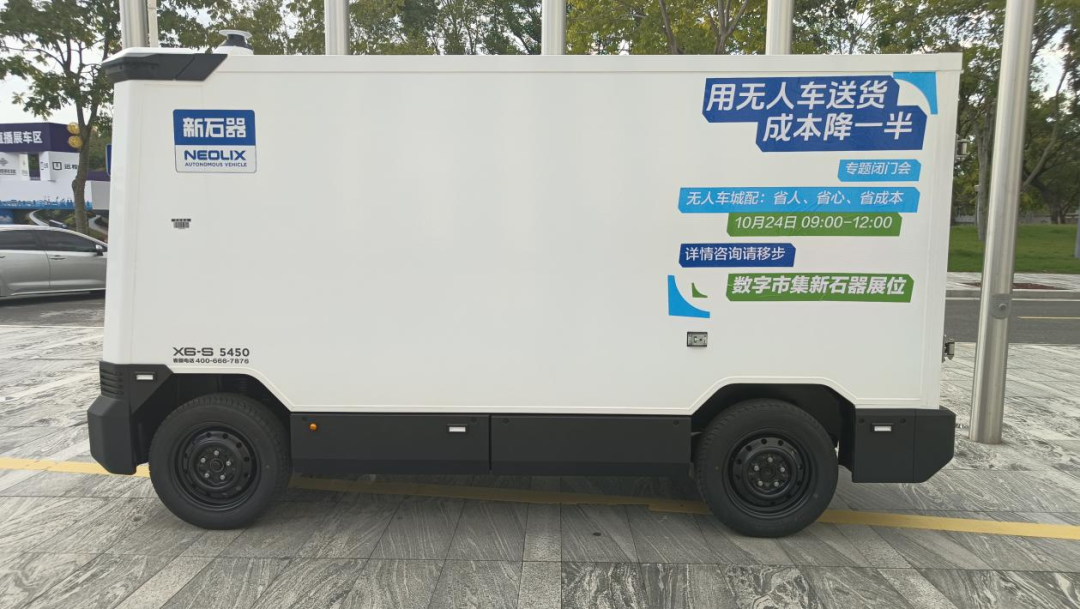
Photo by DoNews
At the end of the interview, Zhai Xuehun stated that every year G7 Yiliu sells many devices, but these devices come in dozens of different types. By this time next year, he hopes to reduce it to just one type. As for G7 Yiliu’s further plans in AI, they remain confidential.
He Xiaosheng
Great courage appears timid; great wisdom appears foolish.

“He Li” cares about what you care about ❤
“He Li” has opened the [Message] function, welcome to leave your paw prints~
Come and leave a messageabout the issues or content you care about, we will discuss and interpret them in subsequent content.
 Recommended Read