
Friends who have experience with high doses of vitamin C may have noticed a phenomenon:
When increasing the dosage for the first time, gas production in the gut seems to increase, but as the body adapts, this situation returns to normal.
Have you ever thought that this subtle change might indicate that vitamin C plays a regulatory role in the gut microbiome?
Previous studies have shown that about 70%-90% of the vitamin C we consume from daily food is absorbed by the body.
However, if we consume a large dose of vitamin C at once, a significant portion of it may not be directly absorbed before the body adapts.
This unabsorbed vitamin C may have a regulatory effect on the gut microbiome.
*
So, what impact does additional vitamin C have on the gut microbiome?
This is a very interesting question.
Surprisingly, in the years when research on gut microbiomes has surged, this question has not been adequately studied.
In fact, it wasn’t until 2021 that we saw preliminary research on this topic.
*
[Study One]
The first study comes from a team at the University Hospital Zurich in Switzerland.
They investigated the effects of five vitamins on the gut microbiome, including vitamin A (250ug daily), vitamin B2 (75mg daily), vitamin C (500mg daily), vitamin D (60ug), and vitamin E (100mg).
Moreover, they specifically used enteric-coated preparations to better observe the effects of various vitamins on the gut microbiome.
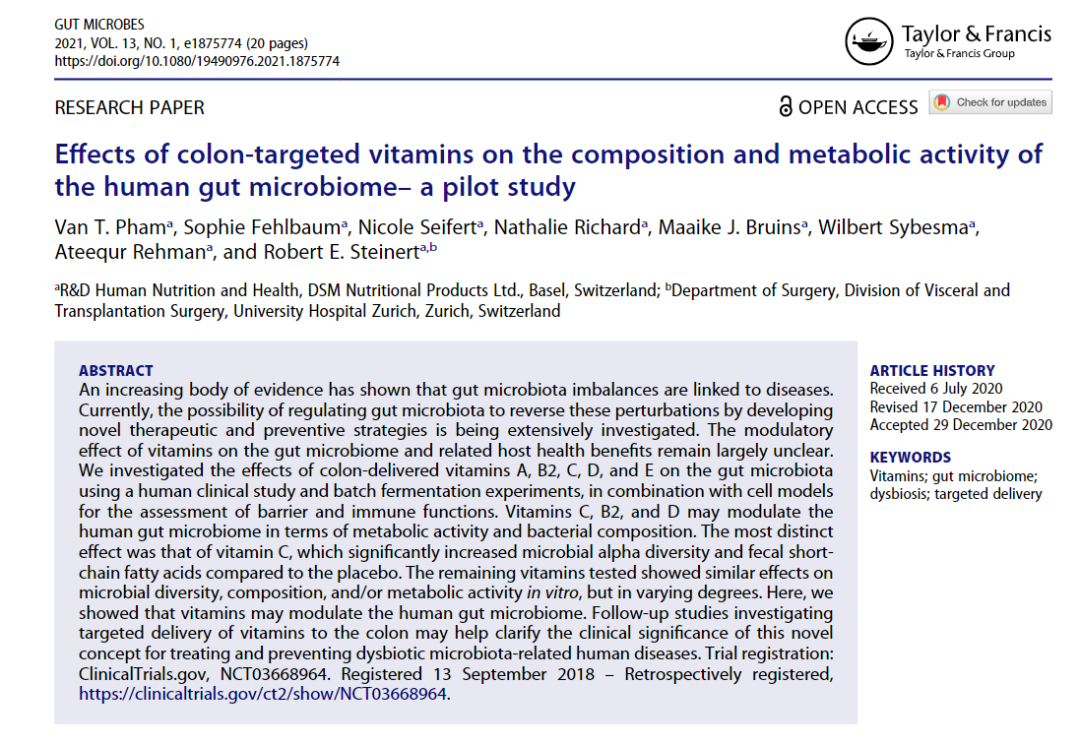
The results showed that while vitamin C, vitamin B2, and vitamin D all had regulatory effects on the gut microbiome, the effect of vitamin C was the most significant.
In the trial, the daily intake of 500mg of vitamin C significantly increased the diversity of the gut microbiome and raised the levels of short-chain fatty acids in the feces.
At the same time, the abundance of Collinsella bacteria in the gut also showed a significant increase.
Although the specific clinical significance still needs further investigation, the overall trend is positive.
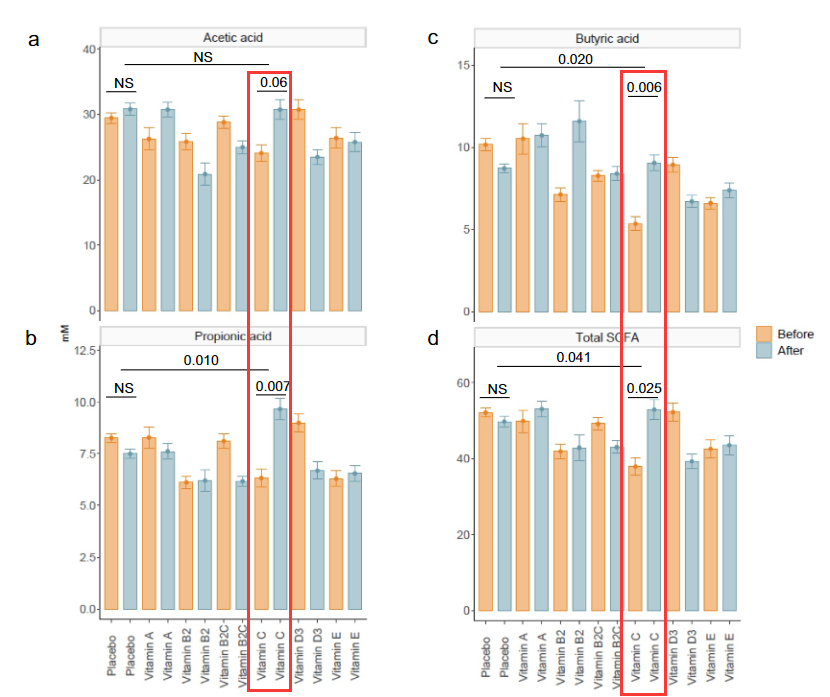
Figure: Changes in short-chain fatty acids in the gut before and after vitamin supplementation (orange bars represent before supplementation, green bars represent after supplementation)
[Study Two]
The second study comes from a team at the University of Groningen in the Netherlands.
Their research directly had participants supplement with 1000mg of vitamin C daily for two consecutive weeks.
A larger dose brought about more significant changes.
Statistically significant changes included: an increase in Lachnospiraceae bacteria, as well as decreases in Bacteroidetes, enterococci, and Gemmiger formicilis.
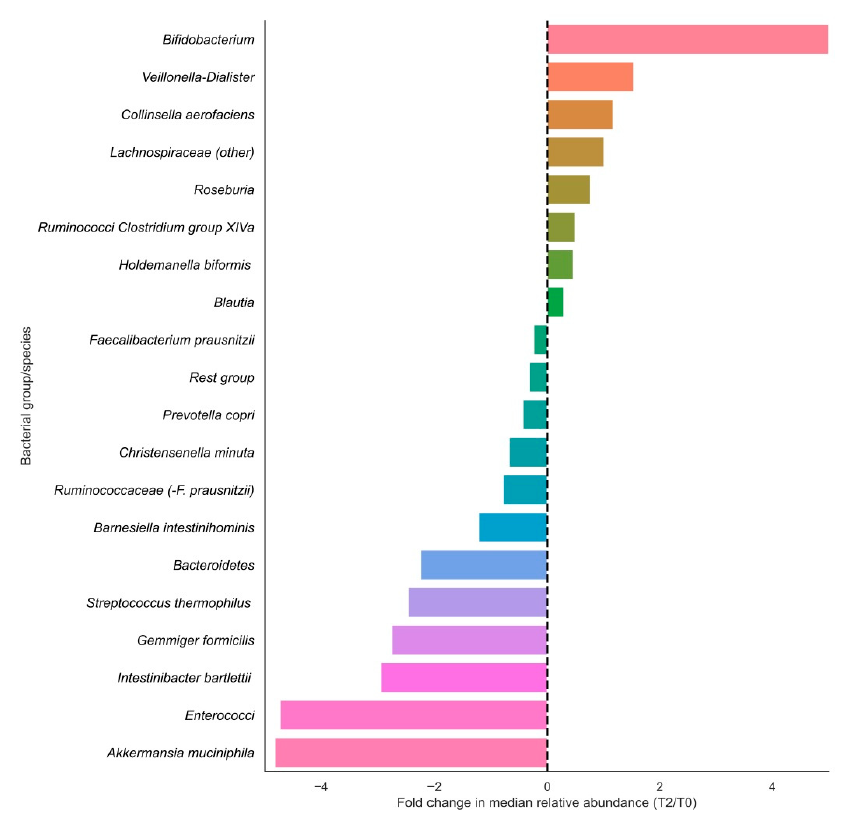
Figure: Changes in specific gut bacteria after supplementing with 1000mg of vitamin C daily (with Lachnospiraceae, Gemmiger formicilis, Bacteroidetes, and Enterococci showing significant statistical significance)
At the same time, although not statistically significant, there was a clear upward trend in Bifidobacterium.
After 14 days of intervention with 1000mg of vitamin C, the relative abundance of Bifidobacterium nearly quadrupled.
This trend was confirmed in a 2022 study.
[Study Three]
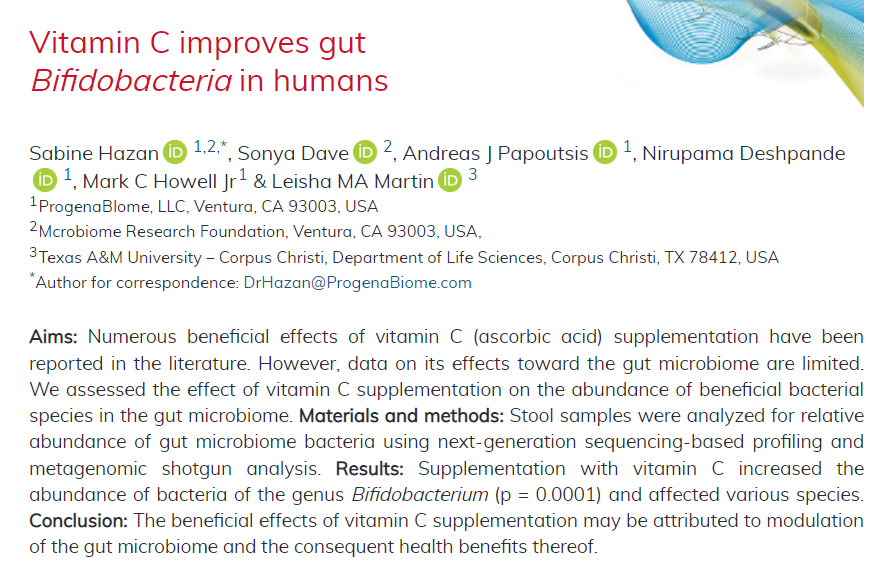
The last study’s title directly reveals its core finding: Vitamin C supplementation can increase the abundance of Bifidobacterium in the gut.
This was a study based on real-world data.
In this study, participants underwent metagenomic testing of their gut microbiomes before and after vitamin C intervention—doses ranged from 3g to 25g (including oral and intravenous administration).
The study design was somewhat rough, but the changes in the microbiome were consistent with the findings of the previous studies.
They observed an increase in Bifidobacterium and Lachnospiraceae bacteria after vitamin C intervention—consistent with the findings of the second study.
At the same time, they also observed an increase in specific Collinsella bacteria—also aligning with the results of the first study.
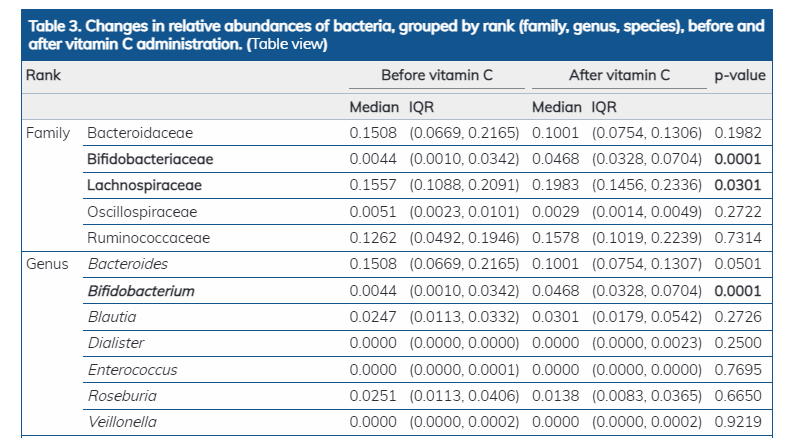
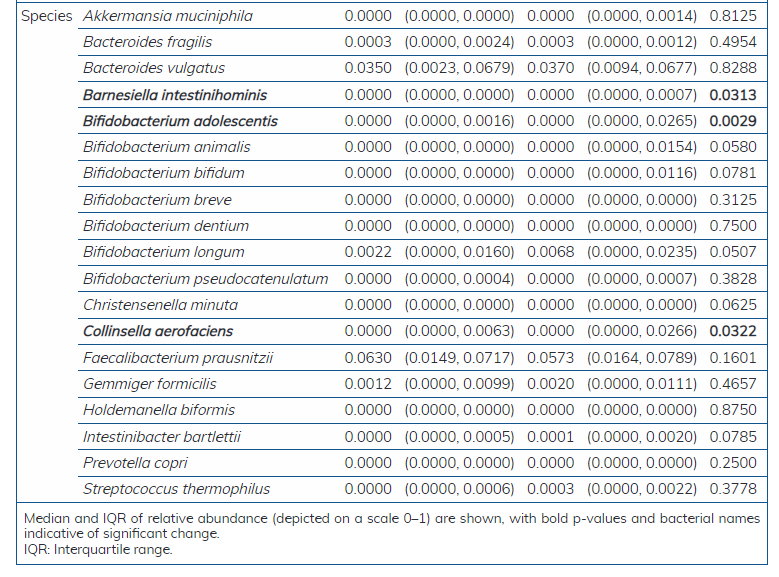
Figure: Changes in the gut microbiome before and after vitamin C supplementation (bold indicates statistically significant items)
So, how does the gut microbiome change after vitamin C supplementation?
Current research is still in its preliminary stages, and some trial designs are somewhat rough, but we can draw the following preliminary conclusions:
Vitamin C supplementation may increase the diversity of the gut microbiome and elevate the levels of short-chain fatty acids.
At the same time, it may enhance the levels of Bifidobacterium, Lachnospiraceae, and specific Collinsella in the gut.
How to better utilize this regulatory effect still requires more research and practice.
But this suggests to us that the ability to regulate the microbiome is not limited to probiotics and prebiotics; basic nutrients like vitamin C may also play a crucial role in microbiome regulation.
-END-
Related Reading:What Changes Occur in a Healthy Person’s Brain After Taking 1000mg of Vitamin C Daily?