Imagine this: a 20-story building with Wi-Fi signal boosters installed in every corner, ensuring that you can smoothly reply to messages, video calls, and meetings even in the bathroom, stairwell, basement, or elevator—this is the network coverage solution for modern buildings.

In modern cities, we have long been accustomed to ubiquitous network coverage. However, when we drive out of the city, the situation is completely different. In vast mountainous areas, endless deserts, or deep underground spaces, traditional ground communication networks often come to a halt, turning vehicles into information islands.
Dangerous Scenarios
When Your Car Goes into ‘Offline Mode’
The risks associated with communication interruptions in modern vehicles are far more severe than just losing signal on a mobile phone. In the event of a landslide in mountainous areas, those trapped may completely lose their means of calling for help; when smart assisted driving vehicles traverse long tunnels, the loss of GPS signals can lead to serious deviations in positioning systems; and in remote areas such as oceans or polar regions, communication blind spots are a long-standing reality. Statistics show that over 80% of the world’s land area is not effectively covered by ground communication networks, meaning that most wilderness areas are at potential risk of communication interruptions.

What is even more concerning is that as the intelligence of cars continues to increase, their dependence on communication networks deepens. Modern smart cars are no longer just simple transportation tools; they are mobile intelligent terminals that integrate navigation, smart assisted driving, emergency rescue, and other functions. Once network connectivity is lost, not only are basic functions limited, but it may also endanger driving safety. Traditional ground base stations are limited by construction costs and geographical environments, making it difficult to achieve true comprehensive coverage. To break through this dilemma, we must look to higher solutions—low Earth orbit satellite networks.
Unlike ground base stations, low Earth orbit satellites are not obstructed by mountains, rivers, or seas, allowing for the construction of a truly global communication network. By coordinating multiple satellites, it is like deploying a series of ‘signal relay stations’ in space, ensuring that vehicles anywhere on the Earth’s surface can maintain communication. This integrated communication architecture is redefining the ‘network resilience’ of smart cars, making the vision of ‘never losing connection’ a reality.
Technical Solutions
How Low Earth Orbit Satellites Ensure Safety
The ‘Space Signal Station’ in the Automotive Industry
In the long history of automotive safety technology development, we have witnessed milestone innovations such as seat belts, airbags, and ABS. Today, a more revolutionary safety upgrade is taking place 400 kilometers above our heads—low Earth orbit satellite technology is redefining the boundaries of automotive safety.
The ‘Signal Lighthouse’ in Space
In low Earth orbit, 500-2000 kilometers from Earth, this once unreachable domain has now become key to solving ground communication blind spots. Compared to other satellites, low Earth orbit satellites have the most advantageous characteristic of ultra-fast response speed—less than 0.05 seconds of latency, meaning that when you press the emergency button in an uninhabited area, the signal reaches the rescue center ten times faster than you can blink.
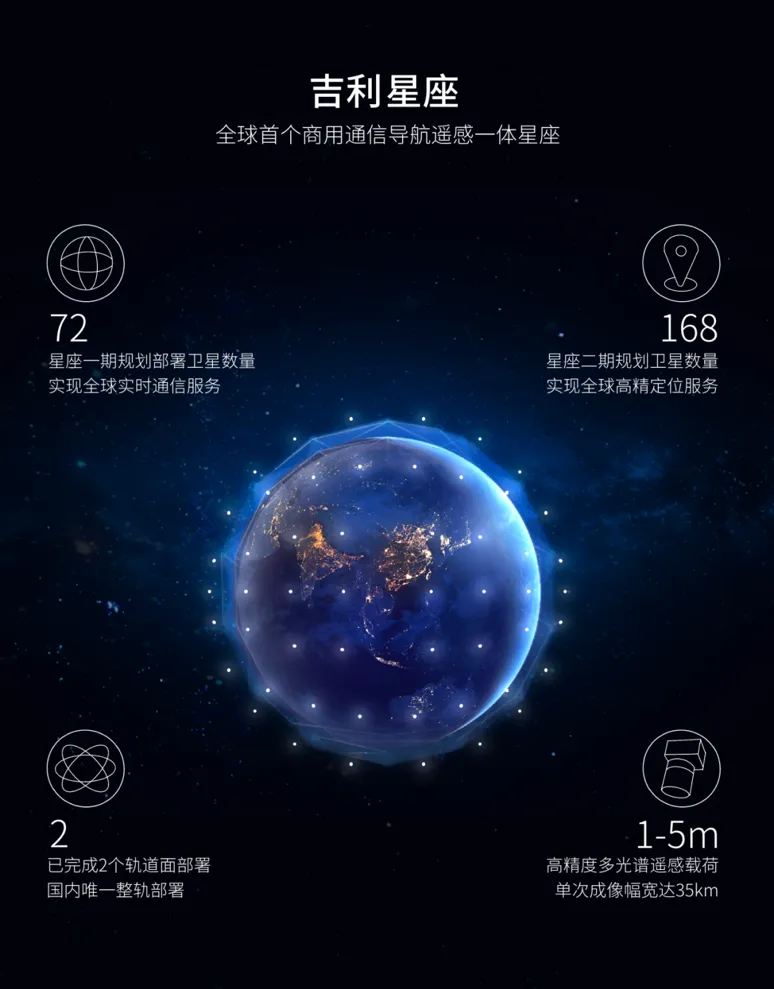
Geely Constellation, as China’s first low Earth orbit communication constellation serving globally, plans to deploy 72 satellites in its first phase, aiming to achieve continuous coverage of 90% of the globe by 2025. Just like placing streetlights in a city, it’s not about having more, but ensuring there are no dark spots. Currently, 30 deployed satellites, through carefully designed orbits, achieve a ‘safety frequency’ where any location on Earth is covered by a satellite every 10 minutes. This time interval is cleverly designed: it ensures continuity of network coverage, provides uninterrupted communication assurance, and avoids resource waste.
Redefining ‘Safety Redundancy’
In engineering, there is an important concept called ‘redundant design,’ and satellite communication is arguably the most extreme redundancy solution in automotive safety systems. Traditional automotive safety systems focus on the vehicle itself, but satellite technology extends safety protection to the dimension of space.
This ‘dual insurance’ design philosophy is increasingly becoming the safety foundation for vehicles. When the ground network fails, the satellites in the sky immediately take over; when GPS signals drift, the satellite-based augmentation system provides centimeter-level positioning. This dual assurance mechanism makes safety no longer a ‘this or that’ proposition. Just as an excellent pilot trusts both instruments and intuition, smart cars should also trust both ground and space systems.
Practical Applications
How Satellites Empower Smart Cars?
From ‘Passive Protection’ to ‘Active Warning’
On the road of automotive safety technology evolution, we are witnessing the arrival of a critical turning point. Traditional safety systems operate like isolated islands, while the introduction of satellite technology is connecting these dispersed ‘safety islands’ into a three-dimensional protective network, already demonstrating its value in practical applications.
In rescue scenarios in uninhabited areas, the value of this system is particularly evident. Models such as Geely’s Zeekr 001 and Galaxy E8 equipped with satellite communication functions have compressed emergency rescue response times to under 3 seconds, faster than refreshing a chat app.
This number reflects a precise emergency response mechanism: when the vehicle enters a no-signal area, the system automatically switches to satellite communication mode, maintaining real-time connection with the command center. In a test conducted in Inner Mongolia’s grasslands in 2024, a test vehicle, having completely lost ground network, successfully sent precise coordinates and simultaneously transmitted vehicle status data, allowing the rescue team to complete positioning and rescue within 22 minutes. This improvement in response efficiency is redefining the ‘golden time’ standard for emergency rescue.
The predictive protective capabilities of satellite technology demonstrate even deeper value. Through continuous geological monitoring, Geely Constellation satellites can identify millimeter-level deformations of the Earth’s surface. When the system detects potential risks, it initiates a multi-level response mechanism: first, it issues a warning to the driver through the onboard system, while simultaneously assessing surrounding road conditions and planning the optimal escape route. If necessary, the system will actively intervene in vehicle control to ensure a quick exit from the danger zone. This shift from passive response to active prevention represents a fundamental innovation in automotive safety philosophy.
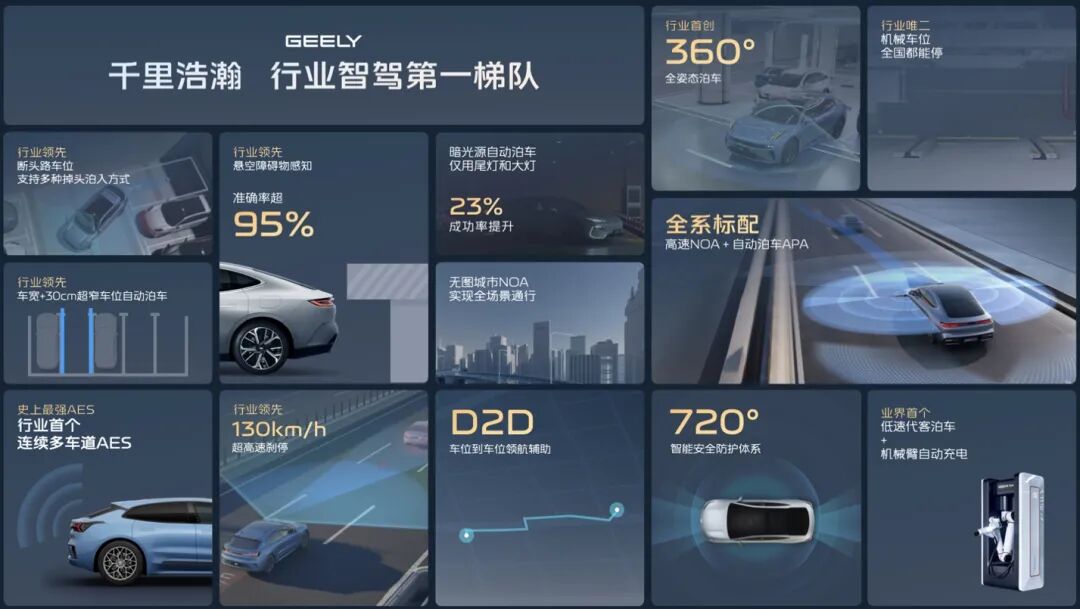
In the near future, the upcoming dedicated satellites will not only serve as communication relay stations but also as ‘space sensors’ for intelligent driving, providing vehicles with real-time terrain scans, weather warnings, and other critical data, giving the entire intelligent assisted driving system a ‘God’s eye view.’ This dedicated satellite will further enhance the system’s ‘integrated capabilities,’ especially achieving a qualitative leap in reliability in areas without network coverage.
From a technical implementation perspective, these innovative applications share a common characteristic: satellite technology is not merely an additional feature layered on existing systems, but a foundational capability deeply integrated into the vehicle’s overall architecture. This deep integration brings system-level performance improvements, enabling smart cars to truly possess ‘global intelligence’ characteristics that transcend environmental limitations. As safety protection evolves from passive response to active prevention, and driving experiences are no longer constrained by network coverage, we are witnessing the dawn of a new phase in the intelligentization of automobiles. This is not only a technological advancement but also a significant innovation in the concept of travel safety.
Future Outlook
Universalization of Satellite Technology
From ‘High-End Exclusivity’ to ‘Safety Equality’
In the new stage of intelligent mobility development, Geely is redefining the standards and boundaries of automotive safety through a ‘Universal AI + Universal Safety’ technology layout. As the only automotive company globally to complete a universal AI intelligent layout, Geely’s ‘Smart Automotive Universal AI System’ is achieving a leap from single vehicle intelligence to three-dimensional ecological intelligence. This system spans C-end user experiences, B-end industry applications, and integrated air-ground ecosystems, covering every aspect from vehicle development to the entire industry chain.
Technological Universalization: Breaking Safety Barriers
2025 will mark a watershed moment for intelligent automotive safety standards. With Geely’s entire Galaxy series of models standardly equipped with satellite communication functions, this ‘life-saving technology’ once exclusive to high-end models will truly enter the homes of ordinary people. Even more groundbreaking is that through self-developed satellites and terminal modules, Geely has systematically reduced manufacturing costs, allowing intelligent driving models to fully enjoy basic satellite services. This cost control capability is backed by Geely’s ‘Universal AI’ system—bringing efficiency improvements that surpass industry levels through self-control of the entire industry chain from chip design to constellation operation.
Even more exciting is the breakthrough in direct satellite connectivity for mobile phones. Traditional satellite communication requires dedicated terminals, while Geely is developing an innovative solution that allows existing smartphones to connect to satellite networks through software upgrades. This means that in the future, even if you are driving an ordinary family car, your smartphone can serve as a ‘safety backup.’
Ecological Expansion: From Mobility to Life
In the Zhoushan fishing grounds of Zhejiang, the ‘Blue Star Guardian’ project is using satellite technology to protect the ocean by monitoring harmful biological spread such as floating garbage and red tides through satellite remote sensing, while also monitoring marine oil spill incidents. Fishing boats equipped with Geely satellite terminals can not only upload pollution data in real-time but also receive precise rescue when in distress.
Records of satellite services provided to fishing boats in Southeast Asia in 2024 show that rescue response efficiency has significantly improved, which is the most direct manifestation of technology empowering people’s livelihoods. With the deployment of 264 satellites in the second phase, this system will further expand into personal wearable devices, logistics transportation, education, healthcare, and other fields, building a truly ‘all-scenario safety network.’
Geely’s ‘Universal Safety’ development concept is setting new industry standards. Through the collaborative operation of four major safety domains and nine major safety systems, it has achieved a complete safety vision of ‘zero casualties, zero health hazards, zero property losses, and zero privacy leaks.’
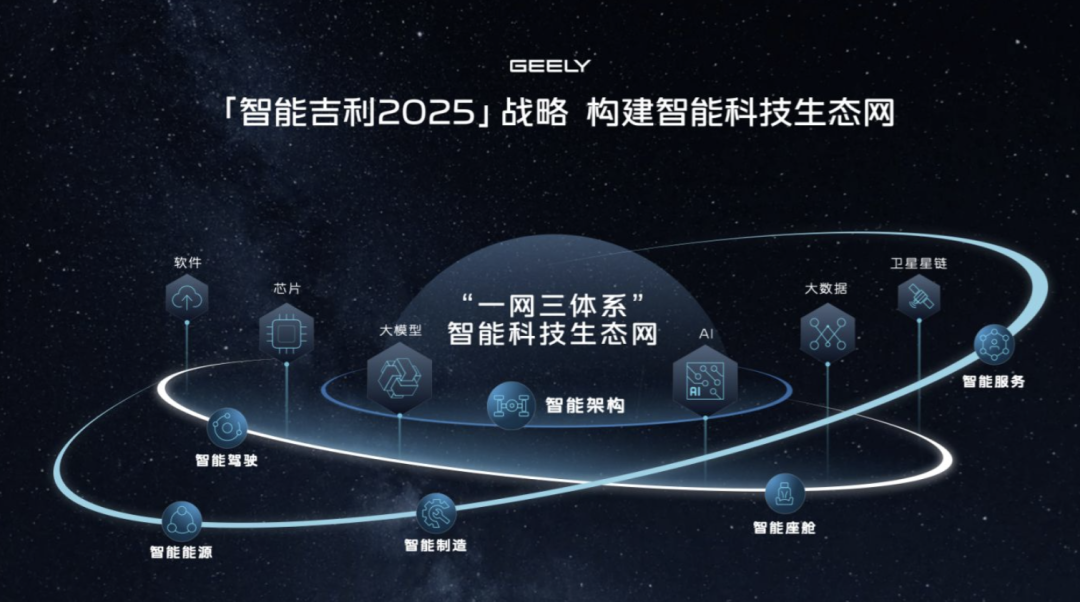
As China’s first low Earth orbit satellite constellation to achieve global operation, Geely Constellation represents a significant breakthrough in China’s commercial space sector. Unlike other satellite systems that focus on single functions such as communication or navigation, Geely has chosen a path with greater social value—transforming aerospace technology into a universal safety infrastructure. This ‘integrated air-ground’ technological route not only showcases the company’s foresight in technological innovation but also reflects its responsibility to serve public safety with cutting-edge technology.
From technological layout to ecological construction, from product innovation to standard formulation, Geely is driving intelligent mobility towards a safer and more equitable direction through the dual engines of ‘Universal AI + Universal Safety.’
When satellite technology is no longer an exclusive feature of luxury cars, and safety guarantees can equally cover every user, we see not only the technological strength of an automotive company but also a vivid practice of technology for good. This may be the most valuable direction of innovation in the new era of intelligent mobility—achieving true safety equality and transforming technological breakthroughs into a sense of security for everyone.
– Jointly produced by Guoke Commercial Technology Communication –