Satellite Network with Strong CapacityVisit to the Long March 8A Carrier Rocket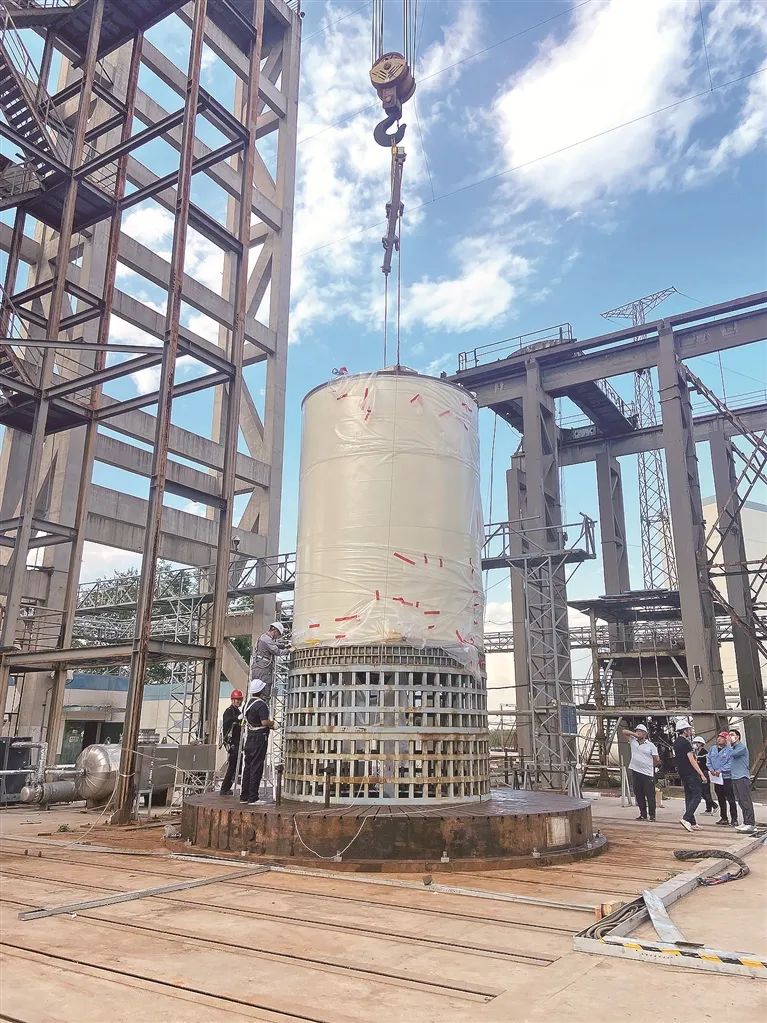 General hydrogen-oxygen upper stage storage tank undergoing test preparation. Photo provided by the interviewed unit.
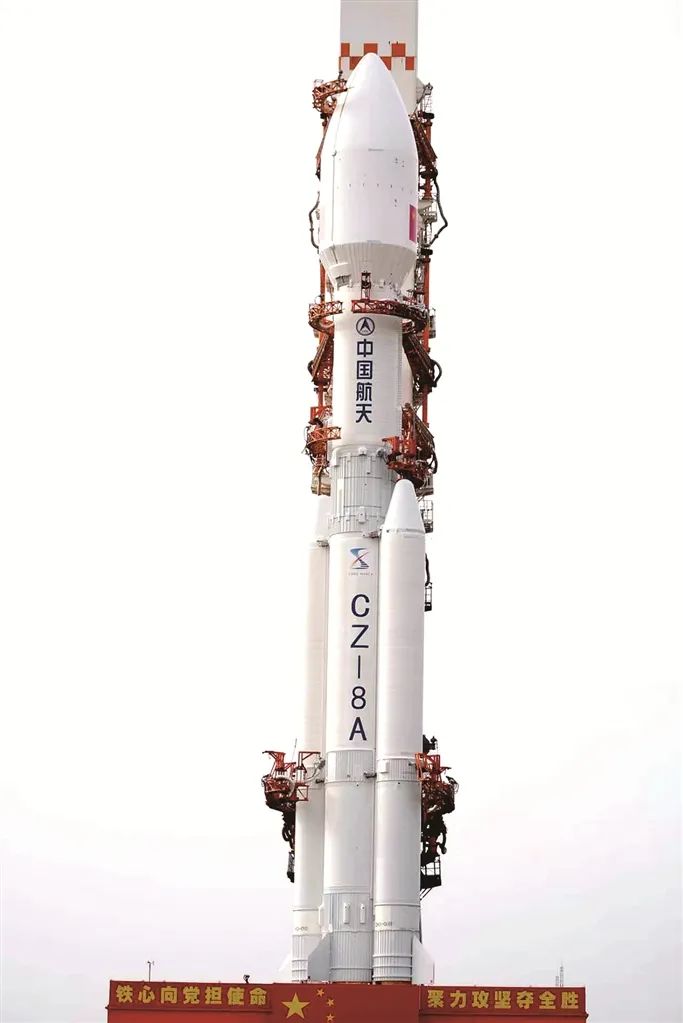 Long March 8A rocket fairing and core stage two. Photo provided by the interviewed unit.
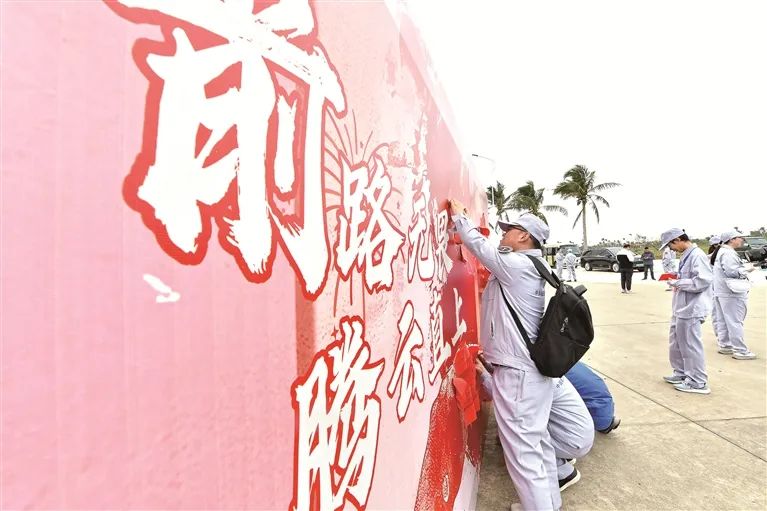 Test team members signing on the wall. Photo provided by the interviewed unit.
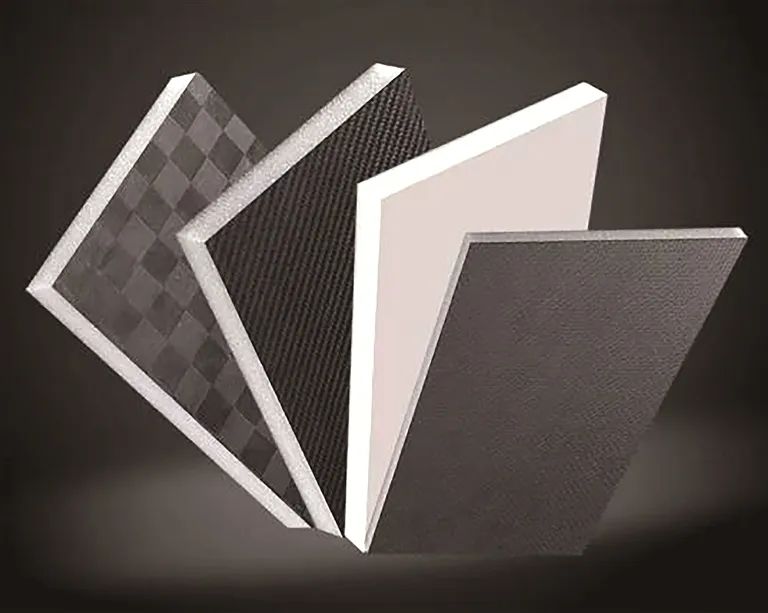 General hydrogen-oxygen upper stage common base material schematic. Photo provided by the interviewed unit.
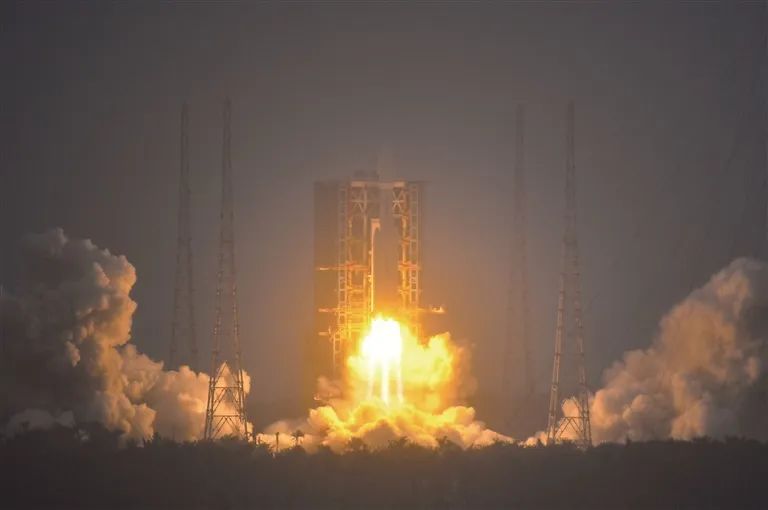 On February 11 at 17:30, the Long March 8A rocket launched the satellite internet low-orbit group 02 satellites into space. Photo by Xinhua News Agency reporter Guo Cheng.
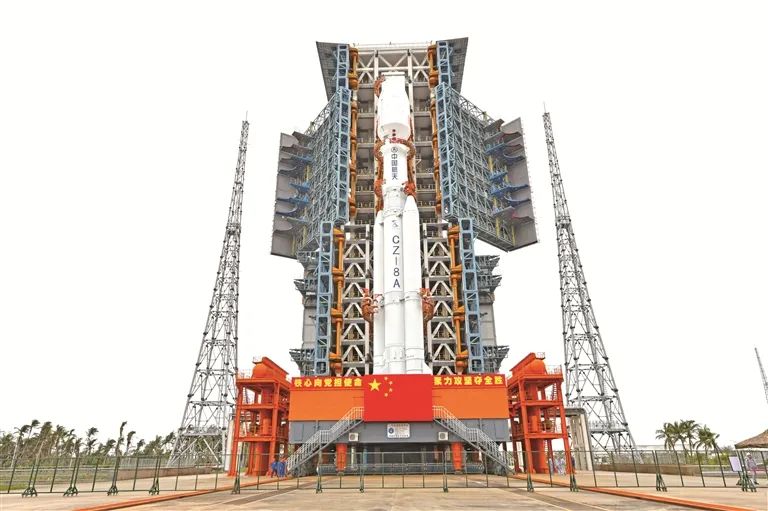 Long March 8A rocket moving to the launch site. Photo provided by the interviewed unit.Ignition, liftoff, soaring into the sky, first flight successful!On February 11, 2025, at 17:30, the Long March 8A carrier rocket, developed by the China Academy of Launch Vehicle Technology (hereinafter referred to as “the Rocket Academy”), successfully ignited and launched from the Wenchang Space Launch Site in China, successfully sending the satellite internet low-orbit satellites into the designated orbit.The Long March 8A rocket was developed based on the Long March 8 carrier rocket (hereinafter referred to as “the Long March 8 rocket”), specifically designed to meet the launch requirements for future large-scale constellation networks in medium and low orbits.With its “big head” and “thick neck”, the Long March 8A rocket not only has a unique appearance but also boasts strong capabilities, with a payload capacity of 7 tons to a 700-kilometer sun-synchronous orbit, meeting the launch needs for future mainstream orbits, especially medium and low orbit missions. It, along with the basic model of the Long March 8 rocket and the non-booster series configuration, forms the Long March 8 series rockets, creating a payload capacity tier of 3 tons, 5 tons, and 7 tons for sun-synchronous orbits, significantly enhancing China’s medium and low orbit satellite network launch capabilities.3.35-Meter Diameter General Hydrogen-Oxygen Upper Stage Makes Its Domestic DebutStronger Payload Capacity, More Varieties of PayloadsWith its 5.2-meter diameter “big head”, the Long March 8A rocket immediately attracted attention upon its debut.Compared to its sibling, the Long March 8 rocket, the Long March 8A rocket is even more “robust”. It retains the core stage and boosters of the Long March 8 rocket, while the core stage two features a newly developed 3.35-meter diameter general hydrogen-oxygen upper stage, which can be equipped with a 5.2-meter or 4.2-meter diameter fairing; this time, a 5.2-meter diameter fairing was used, which is that striking “big head”.As the first rocket in China to use a 3.35-meter diameter upper stage combined with a 5.2-meter diameter fairing configuration, the Long March 8A rocket boasts a stronger payload capacity, higher efficiency, and better adaptability for missions.“Big head”—the larger diameter fairing provides more space for the satellites it carries, accommodating a greater variety and larger volume of satellites, enhancing payload capacity.“Thick neck”—the newly developed 3.35-meter diameter general hydrogen-oxygen upper stage can carry more liquid hydrogen and liquid oxygen fuel. It also employs new technologies, products, and processes such as a new foam sandwich common base storage tank, a closed-loop expansion cycle engine, and a new electric control overflow valve, significantly enhancing payload capacity and overall performance.This launch marks the first flight of the general hydrogen-oxygen upper stage module developed by the Rocket Academy. Why was a generalized design chosen for the hydrogen-oxygen upper stage module?Rockets using liquid hydrogen and liquid oxygen as fuel have high specific impulse characteristics, allowing them to achieve significant thrust with less fuel. In the planning of China’s new generation of medium-sized launch vehicle types, the main configurations for future medium and high orbit launch vehicles will all use hydrogen-oxygen upper stages. Before the introduction of the general hydrogen-oxygen upper stage, China only had a 3-meter diameter hydrogen-oxygen upper stage, which could not meet the development needs of the new generation of medium-sized launch vehicles in terms of vehicle diameter and power system optimization.Rocket Academy expert Liu Lidong explained that during the development of the general hydrogen-oxygen upper stage, the Rocket Academy adopted a comprehensive integrated design technology, employing generalized designs for electrical, mechanical, fluid, and ground interfaces. This optimized the functionality of various systems, unified machine interfaces, streamlined production processes, simplified procedural states, and utilized large-diameter hydrogen-oxygen common base storage tanks to accommodate large-scale batch production designs.“Previously, the 3-meter diameter hydrogen-oxygen common base storage tank had a non-fully sealed cavity structure at the base, which, if an emergency propellant leak occurred, would cause the base temperature to rise, leading to the risk of the base structure being damaged due to the expansion of the air sucked back in.” said Song Zhengyu, chief designer of the Long March 8A rocket.The Long March 8A rocket’s large-diameter hydrogen-oxygen upper stage common base storage tank employs a completely new sandwich foam composite material structure, independently developed by the Rocket Academy, which not only reduces the weight of the storage tank but also ensures structural strength and rigidity.The design of the general hydrogen-oxygen upper stage meets China’s need for standardized specifications for the new generation of medium rockets, improving production efficiency and further reducing costs. The reduction in structural weight directly enhances the rocket’s payload efficiency, allowing it to carry heavier satellites or probes into the designated orbit when executing medium-low orbit satellite launch missions.Compared to the Long March 8 rocket, the Long March 8A rocket’s near-Earth orbit payload capacity has increased by about 2 tons, equivalent to the weight of a small delivery truck; the payload capacity to a 700-kilometer sun-synchronous orbit has increased by about 1.5 tons, reaching the 7-ton level, which can cover the launch needs of future mainstream orbit missions.As a mature module, the 3.35-meter diameter general hydrogen-oxygen upper stage will also be available for other rocket models to enhance the payload capacity of the Long March series rockets.Electro-Hydraulic Servo Mechanism Used for the First Time in a Carrier RocketAccelerating Rocket Launches, Faster and Safer ResponseAs an important component of the carrier rocket, the servo mechanism is akin to the steering wheel of a car, playing a crucial role in thrust vector control.Carrier rockets have extremely high requirements for servo mechanisms; they must be compact, lightweight, responsive, reliable, and able to withstand harsh working environments with high vibrations and temperatures.Most existing carrier rockets use traditional hydraulic solutions or simple electric drive solutions, but the former has a complex design, while the latter has lower reliability. The electro-hydraulic technology effectively combines the advantages of both, being simple to use while significantly improving reliability. However, to apply this technology to carrier rockets, technical challenges such as miniaturization, lightweight design, and endurance in extreme environments must first be addressed.The dual-redundancy electro-hydraulic servo mechanism used in the Long March 8A rocket is independently developed by the Beijing Institute of Precision Electromechanical Control Equipment, a part of the Rocket Academy. This is the first time this technology has been applied in a carrier rocket on an international scale.“Compared to traditional electro-hydraulic servo mechanisms, the electro-hydraulic servo mechanism has fewer components and a simplified configuration, which is conducive to meeting the demands for mass production, acceptance, and delivery, and is easy to implement redundant control,” explained Song Zhengyu.Meeting the stringent flight control requirements of rockets, it is safer and more reliable, lighter, smaller, responds faster, and is more convenient to use… The dual-redundancy electro-hydraulic servo mechanism used in the Long March 8A rocket has overcome a series of technical challenges and boasts multiple advantages.It has a new level of control precision. It integrates a new generation control platform, enhancing the timeliness and accuracy of servo control under various working conditions.It releases a new powerful force. The integrated coaxial high-speed servo motor pump embeds the motor and hydraulic pump components within the hydraulic mechanism, achieving a rotational speed of over 20,000 RPM, setting a new industry record for “small, fast, and light”.It achieves a new height of integration. A single mechanism integrates over 1,000 components, more than 2,000 electronic components, and thousands of lines of embedded program code, weighing less than 20 kilograms, with a high degree of electromechanical fluid control integration, achieving “precision, strength, and robustness”.Its application provides a “one-click acceleration” for carrier rocket launches.In the face of the new situation of high-density launches of carrier rockets, the advantages of the electro-hydraulic servo mechanism are even more pronounced. “The dual-redundancy electro-hydraulic servo mechanism eliminates bottleneck components such as electro-hydraulic servo valves, hydraulic pump variables, and pressure regulation mechanisms in manufacturing, enabling rapid production,” said Lan Tian, head of the servo mechanism for the Long March 8A rocket. “Moreover, it can operate continuously year-round without interruption, completely solving the traditional hydraulic products’ issues of heat generation and limited working time on the ground.”What impressed the field operators at the launch site was how much time and effort it saved: “Previously, two people had to carry it, now one person can carry it,” and “Installation that used to take one day is now reduced to half a day.”Lan Tian explained: “While ensuring reliability, the weight of the dual-redundancy electro-hydraulic servo mechanism is reduced by 30%-40% compared to traditional electro-hydraulic servo mechanisms, and its appearance is more streamlined, making it easier and faster for staff to operate.”Furthermore, the dual-redundancy electro-hydraulic servo mechanism can achieve self-locking, allowing it to be transported with the rocket and used right after being plugged in. After loading the rocket, it can be tested with the entire rocket system, eliminating pre-launch work and further simplifying the launch site testing process, effectively supporting various rocket launch modes and facilitating high-density launches.Multiple Innovative Technologies Enhance Overall PerformanceDriving High-Density Launches, Moving Towards All-Weather and All-Time LaunchesThe successful first flight of the Long March 8A rocket has opened the curtain on high-density launches of the Long March 8 series rockets.In 2025, the Long March 8 series rockets plan to execute more than 10 launch missions, with the Long March 8A rocket scheduled for 5 to 6 missions.This high-density launch capability relies on the enhancement of overall performance through multiple “firsts” and “innovations” in technology.The Long March 8A rocket features China’s first large-diameter hydrogen-oxygen common base storage tank. It employs a seamless spinning technology without bottom holes, making it lighter, thinner, and with a shorter production cycle. Moreover, it requires no operational maintenance at the launch site, simplifying the launch process and making it more suitable for rapid batch launches. The new foam sandwich at the bottom, only about 60 millimeters thick, completely isolates liquid hydrogen and liquid oxygen. Thus, there is no need to arrange personnel for vacuum extraction and gas composition testing, greatly saving equipment, manpower, and costs at the launch site, enhancing safety and efficiency of operations.The application of closed-loop pressurization technology in the domestic hydrogen-oxygen upper stages is a first. Traditional open-loop pressurization technology wastes propellant, affecting payload capacity, while closed-loop pressurization allows liquid hydrogen to be supplied as needed, improving utilization. The new electric control overflow valve can open or close according to instructions throughout the rocket’s flight process, enhancing the rocket’s safety and reliability. The application of closed-loop pressurization technology makes the storage and fueling of liquid hydrogen in low-temperature environments safer and more efficient.For the first time in China, integrated design methods have been applied to rocket structures, integrating the functions of satellite brackets, adapters, and instrument cabins into a multifunctional cabin, reducing the rocket’s weight by 200 kilograms and improving its payload efficiency.A new YF-75DA hydrogen-oxygen engine based on expansion cycle technology has been adopted. Compared to traditional gas generator cycle engines, this engine has higher propellant utilization efficiency and significantly improved performance, enhancing the rocket’s payload capacity and reliability, and increasing its adaptability to more complex launch tasks.In addition, the Rocket Academy has conducted the first test of the hydrogen-oxygen module power system in a decade and the first test of the common base module power system in 30 years, employing multiple new technologies, enabling the Long March 8A rocket to possess a super capability—being able to launch even 24 hours after the low-temperature propellant is loaded, greatly increasing the probability of launch under adverse conditions…From the first launch to the Nth launch, achieving high-density launches requires a closed loop formed by batch production, regular launches, and cost reduction.Currently, the Long March 8A rocket and its sibling rockets in the Long March 8 series are based in Tianjin and Hainan, capable of efficient, flexible, and highly automated pulse assembly, with an annual production capacity of no less than 50 launches, meeting the high-density launch needs for large-scale networking and emergency replenishment.The Long March 8 series rockets will adopt an “improved three-vertical” rapid measurement and launch mode at commercial launch sites, meeting the rapid measurement and launch demand of 7-10 days, and can also be compatible with other medium-sized rocket launch sites, enhancing launch capabilities across different sites.Rocket Academy expert Fan Chenxiao explained that in the future, the Long March 8 series rockets can execute launch missions at the Wenchang Space Launch Site in China and the Hainan Commercial Space Launch Site. They will also gradually optimize the measurement and launch processes, achieving a 7-day launch and 7-day recovery at the Hainan Commercial Space Launch Site, further enhancing high-density launch capabilities and continuously moving towards all-weather and all-time launches. (Reporter Chu Yingjie)
Editor: Zhou Yuhan
Proofreader: Zhou Caicai
Reviewer: Chen Doudou
Source: China Discipline Inspection and Supervision News