One day during an outdoor activity, Bingbing came running towards me with a big smile, holding a bouncy ball, and said, “Teacher Sun, let’s play ball together!” I happily agreed. At first, we played a turn-taking ball game (one person bounces the ball three times, then the other person continues to bounce three times, and so on). Bingbing shouted, “One, two, three, switch!” I responded, “One, two, three, switch!” Bingbing’s ball control wasn’t as good as an adult’s, and the ball often went astray while bouncing. I always paid close attention to the ball’s direction, ensuring she could successfully continue the relay each time.
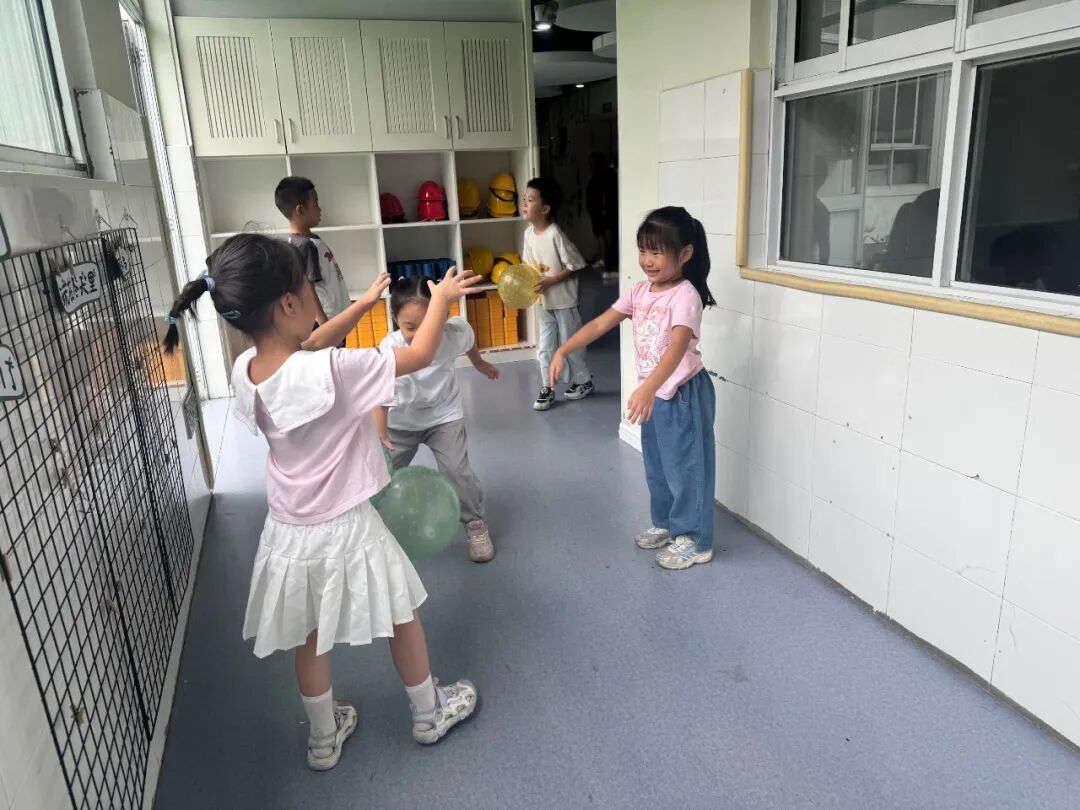
To make it more interesting, I proactively upgraded the game to a continuously moving relay ball game. As we became more engaged and the game became more fun, it attracted the attention of other children. Qianqian and Sisi saw us, holding a ball and smiling, and unknowingly stood side by side behind Bingbing, eager to join in. Just as I was about to throw the ball to Bingbing, Qianqian suddenly threw a ball over. The ball came unexpectedly, and I picked it up, meeting Sisi’s gaze, and said, “Kids, why don’t you team up and play together?” I tossed the ball back to Qianqian, while Bingbing still held onto her ball. I gestured to her, saying, “You can go play with the other kids.” But when she hesitated and turned to look at Qianqian and Sisi, she found they were already preparing to leave.
Similar situations are not uncommon in my interactions with children. For example, when we play passing games, if I temporarily step out and then return, I find the children have already dispersed; or during area games, when I give way to a child wanting to join the Ludo game, the children quickly lose interest once I step back…
What is the problem?
I couldn’t help but reflect: why is this happening? The children have good skill levels in these games, but why do the games quickly fall apart when the teacher “withdraws”? Through observing the interactions of experienced teachers with children, I gained new insights. In fact, I wasn’t “doing it wrong”; I was too “successful”—I made the games too enjoyable, leading the children to feel that “only playing with you is worthwhile.”
Recalling various moments, I realized that my past “high-performance” had raised the difficulty and fun threshold of the games too high. Once the children were away from adults, they immediately felt “boring.” My role inadvertently became the “only referee + supply station,” and the children focused on “how to continue attracting the teacher” rather than “how to cooperate with peers.” Issues in the game like “the ball bounced away” or “the pieces weren’t placed correctly” could only be resolved when I was present, and they lacked opportunities to clean up the mess or adjust the rules themselves.
Thinking of this, I decided to “dismantle” my charm.
How to “gracefully step back”?
However, I also understand that “dismantling” is not simply withdrawing; a sudden “exit” like in the previous ball game would only cause the game to stop abruptly. True “stepping back” requires finding a way to smoothly transfer the “engine” of the game from me to the children. The opportunity soon arose again.
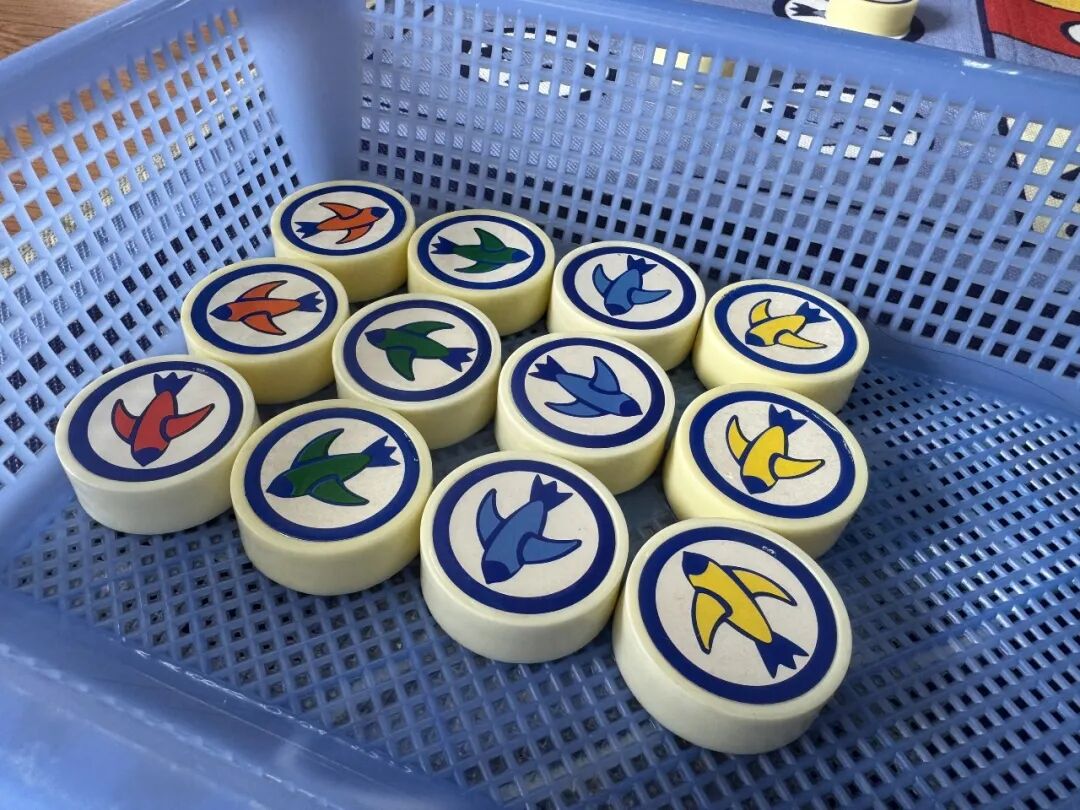
That day, the children invited me to play Ludo again. I naturally led them in choosing the colors of their pieces, but then I suddenly realized that my presence was a bit too strong, so I made a mental note to tone it down. Sure enough, the next moment, the game encountered a problem—an impatient older brother grabbed the dice, and with a loud bang, the pieces were knocked all over the place. Little Li angrily put the pieces back in place, but soon the order of rolling the dice became chaotic again. Just as Little Li and Haohuo were about to give up, I, remaining silent, gently tapped the box with two fingers: “Listen— the airport is calling for a commander, who will go?” “I will!” Haohuo’s eyes lit up, and he quickly gathered the scattered pieces and lined them up again. “Haohuo, how did you line them up?” I asked. “I put the red piece first, the green second, the blue third, and the yellow fourth,” Haohuo replied. Little Li leaned in, pointing at the green piece: “Then I will be the second to take off?” The older brother also chimed in: “I’m the red piece first, OK!”
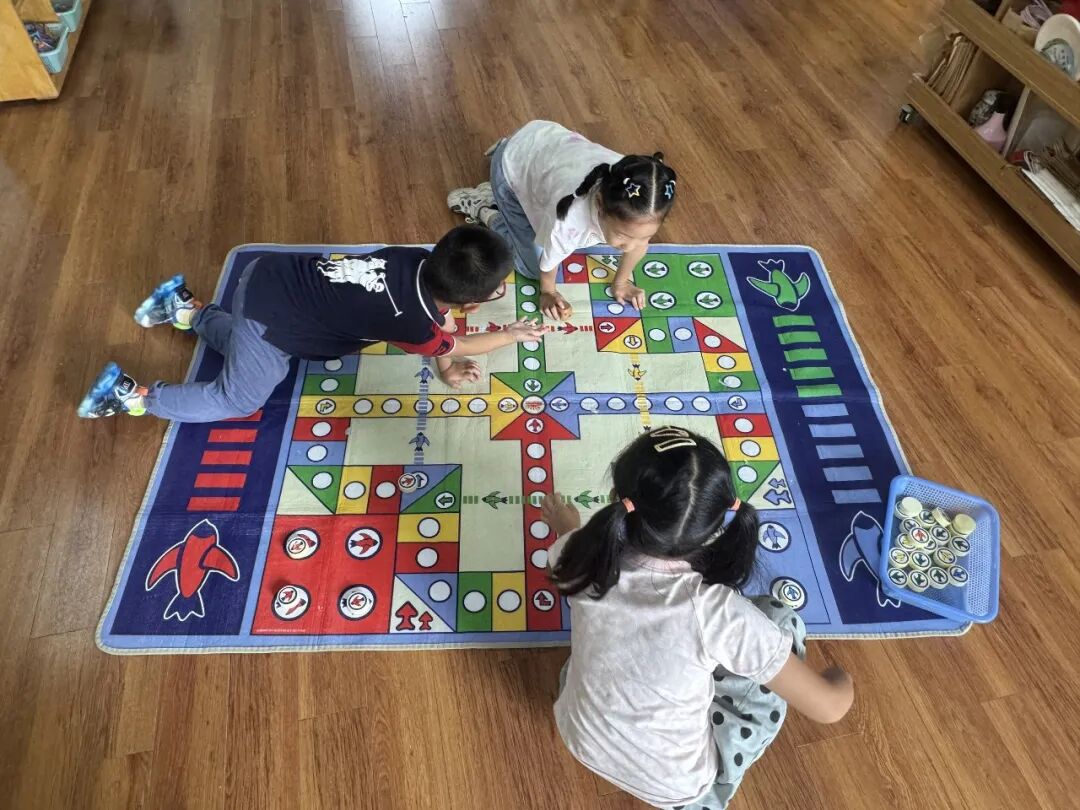
The new rules became a pivot for communication. When the older brother was anxious, the other children could point to the “rules”; while waiting, they could also look at the “rules” to remind themselves, “Is it my turn?” “How many people are in front of me?” They could also remind others, “It’s your turn” and “You throw after me, wait a moment.”
Let the game sprout on its own
This round of Ludo, from the start, was not dominated by adult thinking in a “clockwise” manner, but was participated in by everyone, with the children themselves setting the rules. Although the teacher still provided some help in formulating the rules, that “help” was just a gentle nudge—I presented the issues, handed over the tools, and subtly shifted the spotlight on the stage, allowing the true beam to shine on the children themselves.
Once the rules were articulated by them and acted upon, it was like injecting a battery that belonged solely to them into the game: next time, even if I am completely absent, the dice will still roll along the “red-green-blue-yellow” path; even if new friends join, they will confidently point to that row of little planes and say, “Don’t rush, let the planes line up first!”
I step back a step, and they step forward a step—adult charm quietly fades, and peer attraction officially takes center stage.
Text | Sun Zinan
Review | Huang Yunjia
Layout | Xu Chenli
Images | Class 3, Taiboyuan
 Meicun Central Kindergarten
 Cao Yulan Studio
Copyright ©️
All articles and images in this public account are original works of Meicun Central Kindergarten,
Copyright belongs to Meicun Central Kindergarten,
Any unit or individual is prohibited from using for commercial purposes,
Infringement will be pursued.