01
Overview
On September 11, the Ministry of Education announced the whitelist of events for 2025-2028, adjusting the number from 44 to 47. Thirteen events were removed, and sixteen new events were added, such as: the National Youth Artificial Intelligence Competition, reflecting the country’s emphasis on the field of artificial intelligence. Today, I will introduce an artificial intelligence chip – voice recognition.
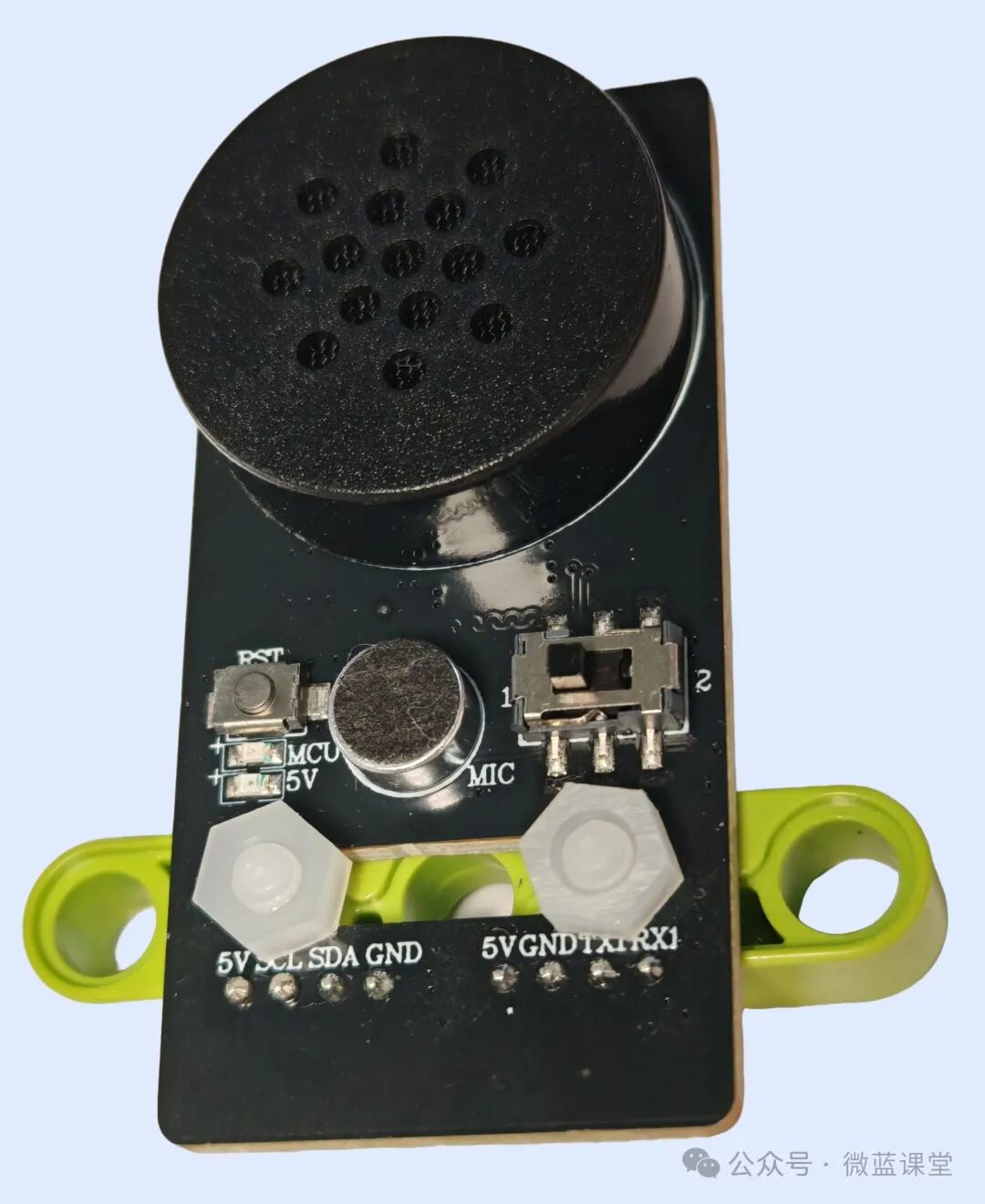
This voice recognition module integrates a high-performance neural network intelligent voice chip, using 3rd generation hardware BNPU technology, supporting DNN, TDNN, RNN, CNN, and other neural networks as well as parallel vector operations. It can achieve voice recognition, voiceprint recognition, command word self-learning, voice detection, and deep learning noise reduction, and supports multiple global languages such as Chinese, English, and Japanese.
It uses the CI1302 chip, which has a brain neural network processor core (BNPU), supports offline NN acceleration and hardware acceleration for voice signal processing, with a CPU clock frequency of up to 220MHz, capable of offline far-field voice recognition, and has 2MB of built-in FLASH storage, supporting up to 300 command words.
Note:
- Power supply with 5V voltage; exceeding 5V will damage the module.
- The usage environment should be quiet; noisy environments will affect recognition accuracy.
- When speaking the command words, the voice should be loud and the speed should not be too fast; it is recommended to keep within 5 meters of the module.
What are its features:
- Supports serial communication and I2C communication.
- AI neural network model training, recognition rate can reach 99%.
- 5 meters far-field recognition.
- Advanced noise suppression algorithms effectively filter background noise.
- No need to flash firmware; command words can be modified directly by voice.
02
Principle
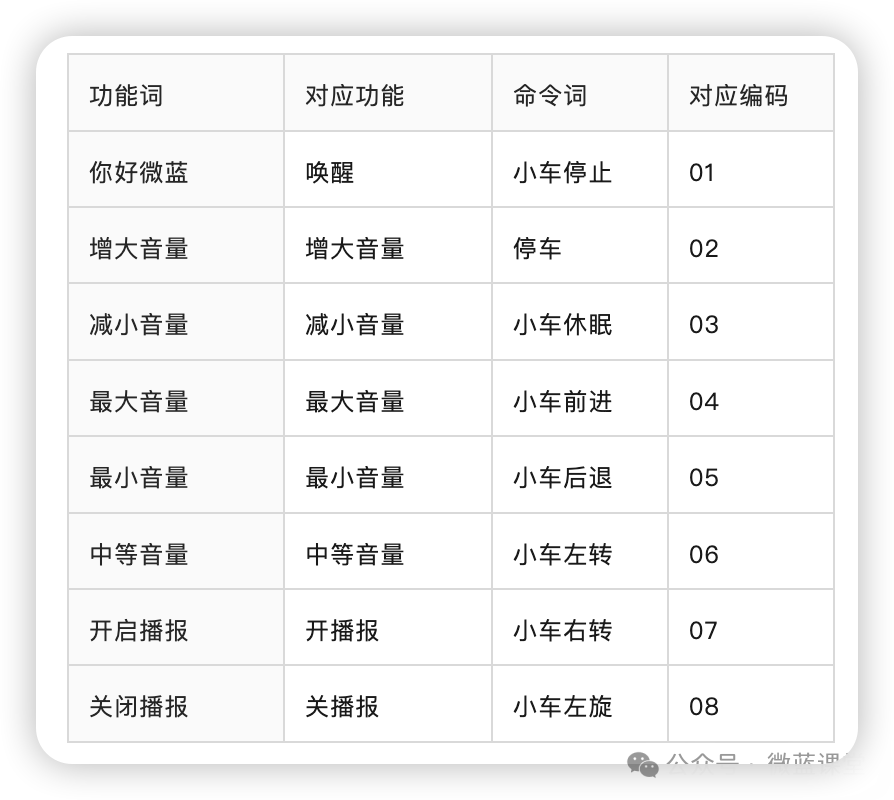
The module uses a wake word mode; the user needs to say the preset wake word to activate the voice interaction module. After activation, voice recognition can proceed, such as calling “Hello, Weilan”. If no voice is recognized after 20 seconds, the module will enter sleep mode, and it needs to be reawakened for further use.
After waking up, when the corresponding voice command is recognized, the corresponding code is sent out through the serial or I2C interface, and feedback is provided.
03
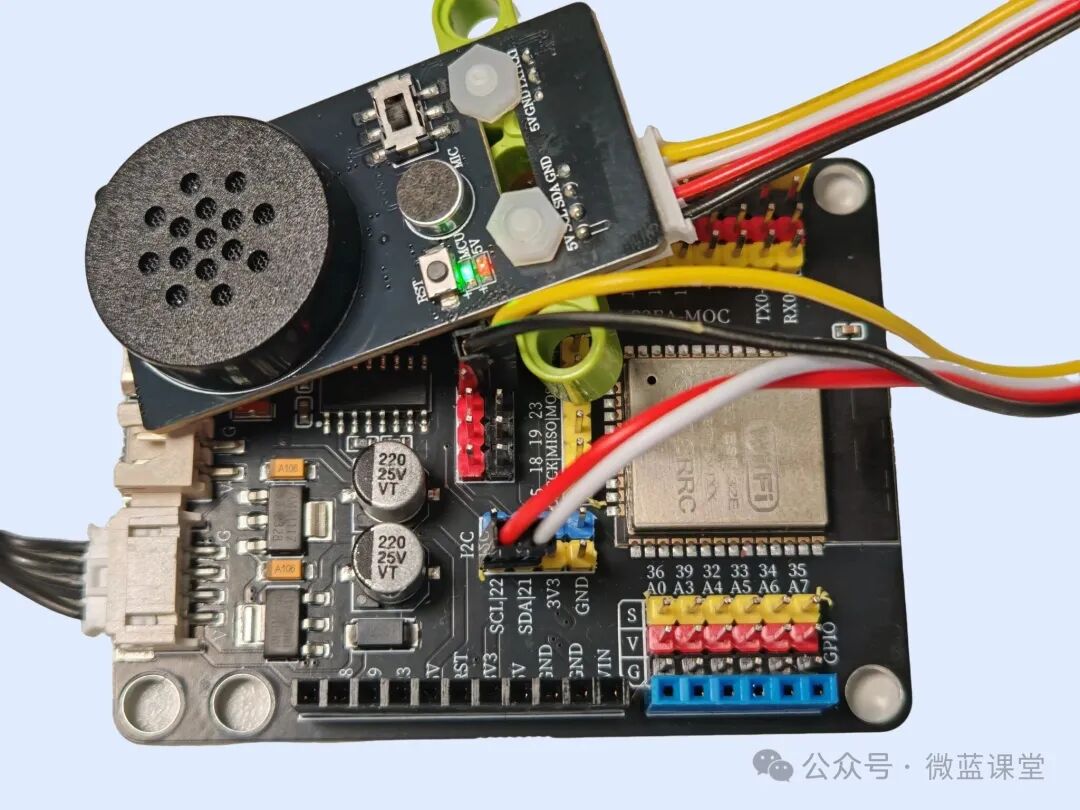
Wiring
04
Program
-
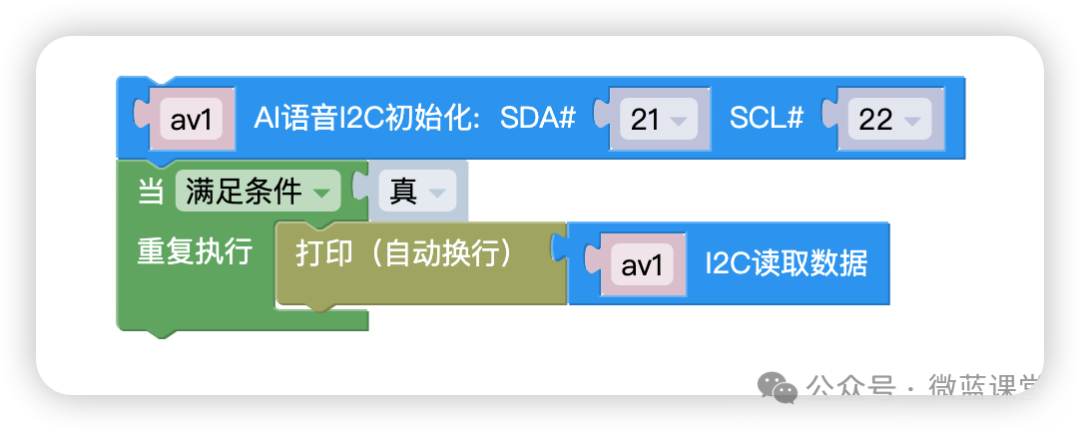
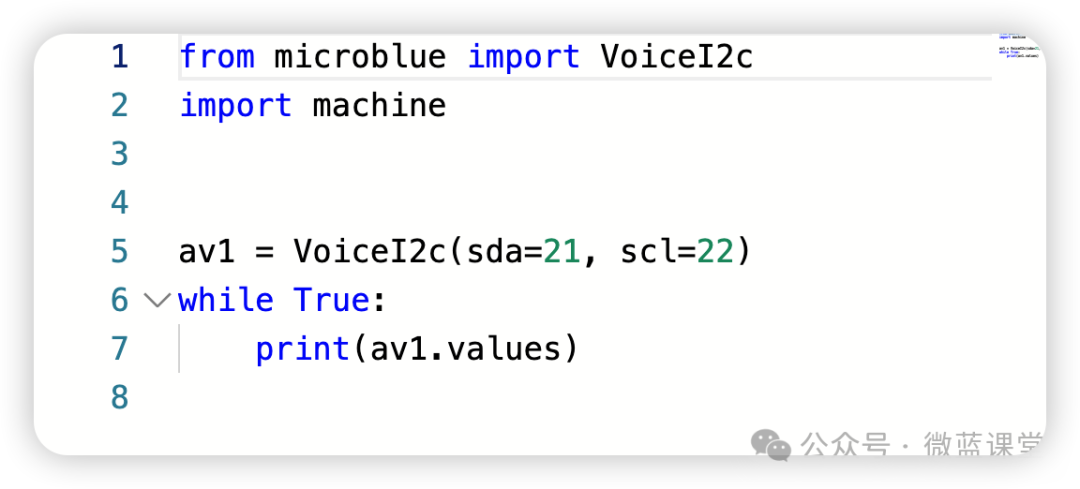
First, import the voice recognition module from the extension library, then initialize by setting the SDA and SCL pins, and finally loop to read data.
05
Demonstration
Students who need accessories can purchase them from my Taobao store under the same name.
 Follow me for more sharing|Weilan Classroom