In the wave of upgrading the electronic manufacturing industry, PCB (Printed Circuit Board) companies are facingthe dual challenges of rising energy costs and green transformation. As the “skeleton” of electronic products, energy consumption during the PCB production process has always been a pain point in the industry, with the lamination and solder mask curing processes being the major energy consumers aside from electroplating.
Electricity sales companies, leveraging their energy service advantages, are becoming important partners for PCB companies in solving energy-saving challenges, injecting new energy-saving momentum into these two high-consumption areas through precise strategies.
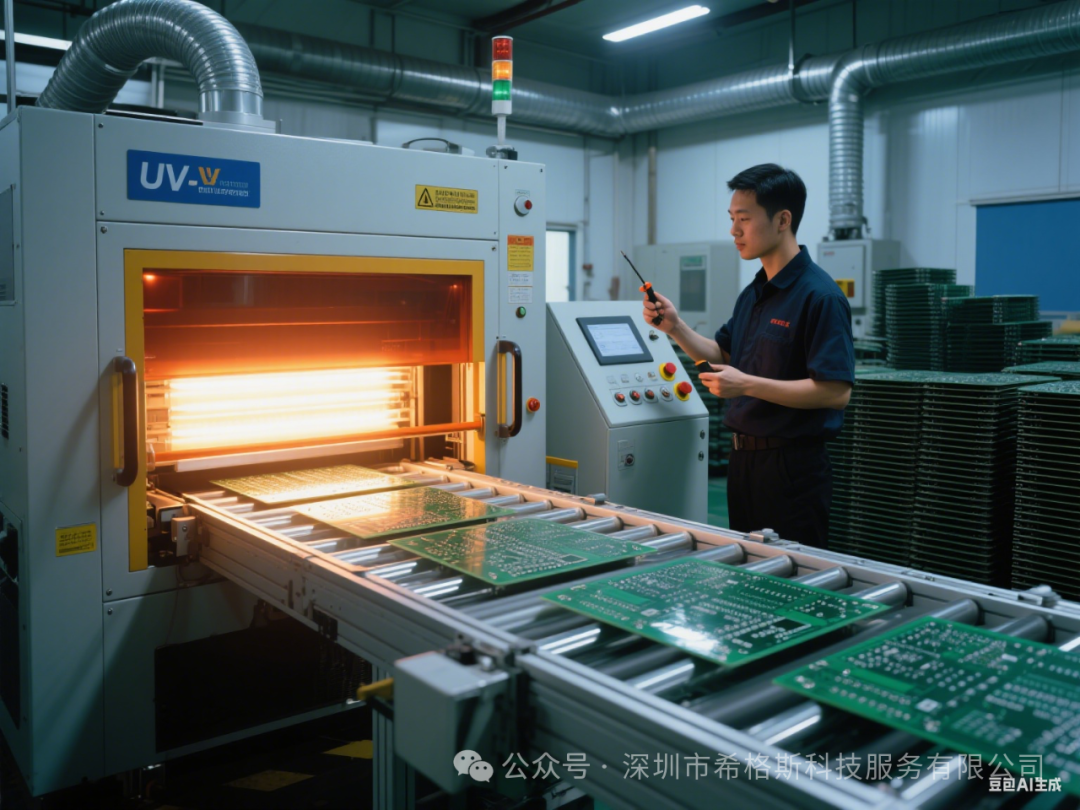
01 Lamination Process: The Energy Consumption “Hard Nut” Under High Temperature and Pressure
The lamination process, as the core step in the manufacturing of multilayer PCBs, is a true “energy-consuming giant.” This process requires curing and bonding multilayer substrates with adhesive materials under conditions of over 150℃ and specific pressure, forming a stable circuit carrier structure.
Industry data shows that the energy consumption per unit area in the lamination process reaches 4.2-5.1kWh/m², accounting for about 28% of the total energy consumption in PCB production, making it the most energy-intensive production step after electroplating.
The Dilemma of Tradition:
-
Low Thermal Efficiency: Most companies still use resistance heating methods, with thermal efficiency only 60%-70%, resulting in significant heat loss through equipment shells and pipelines.
-
High Idle Energy Consumption: Hydraulic and vacuum systems operate at industrial frequency for long periods, causing substantial energy waste during non-full-load production.
Energy consumption monitoring data from a PCB company shows that a single traditional press consumes over 800 kWh per day, with 30% of energy consumption attributed to ineffective heat dissipation.
Solutions:
The electricity sales company demonstrates professional value in energy-saving transformations for the lamination process.
1. Intelligent Monitoring + Technology Replacement
By deploying intelligent energy monitoring terminals, real-time data is collected to build energy consumption analysis models that accurately identify energy-saving opportunities. The use of electromagnetic induction heating technology replaces traditional resistance heating, increasing thermal efficiency to over 90%, with annual electricity savings of 12,000 – 20,000 kWh per device.
2. Variable Frequency Control
By integrating a variable frequency control system to adjust the output power of hydraulic pumps, energy consumption during non-production periods can be further reduced by 30%.
3. Waste Heat Recovery
Guiding companies to use high-temperature waste gas generated during the lamination process to heat fresh air or preheat production water through heat exchangers achieves cascading energy utilization.
Practical Results:
After implementing this solution, a company not only reduced the load on the workshop air conditioning system but also met the preheating needs for daily cleaning water, achieving a comprehensive energy-saving rate increase of 15%, with annual electricity cost savings exceeding 500,000 yuan.
02 Solder Mask Curing: An Energy-Saving “Gold Mine” in Technological Innovation
The solder mask curing process, as a key step in PCB surface treatment, contains enormous energy-saving potential. Traditional processes use mercury lamp UV curing technology, which not only has high energy consumption and short lifespan but also poses a risk of mercury pollution.
Data shows that the energy consumption per unit product of traditional mercury lamp curing equipment is 3-4 times that of new equipment, with a lamp replacement cycle of only 3-6 months, leading to high operational costs.
Solutions:
1. UVLED Technology Innovation
The UVLED curing technology promoted by the electricity sales company is reshaping the industry landscape. Compared to traditional mercury lamps, UVLED equipment reduces energy consumption by over 70%, extends lifespan to over 20,000 hours, and eliminates the risk of mercury pollution.
In a customized transformation plan for PCB companies in East China, a UVLED module with an illuminance of 10,000 mW/cm² was used, reducing curing time from several tens of seconds in traditional processes to just a few seconds, enhancing production efficiency by 40% and achieving annual electricity cost savings exceeding 100,000 yuan.
2. Intelligent Transformation
Introducing an intelligent temperature control system that automatically adjusts UVLED output power based on different substrates and ink types avoids energy waste. By deploying IoT sensors to monitor curing environment parameters in real-time and optimizing with AI algorithms, energy utilization efficiency increases by 25%.
After applying this system, a company saw a 25% reduction in energy consumption per unit product in the solder mask process, along with a 3 percentage point increase in yield.
3. Collaborative Optimization of Materials and Processes
Using modified epoxy solder mask ink with higher photosensitivity, combined with UVLED equipment to achieve “low-temperature rapid curing,” reduces thermal energy consumption and minimizes the risk of substrate deformation. Digital coating equipment increases ink utilization to 94%, reducing energy consumption from reprocessing due to material waste.
03 Full-Chain Empowerment: Building an Energy-Saving Ecosystem for PCBs
The energy-saving services of electricity sales companies go beyond single-step transformations, instead constructing a “Diagnosis – Solution – Implementation – Operation and Maintenance” full-chain service system to provide comprehensive energy solutions for PCB companies.
1. Innovative Business Model
Introducing a “Energy Saving Benefit Sharing” cooperation model, where the electricity sales company bears part of the transformation costs and recovers investments from energy savings over time, reducing initial investment pressure on companies.
In a cooperation case, a company recouped all transformation costs within just 18 months through energy savings, with stable annual energy savings exceeding 800,000 yuan thereafter.
2. Digital Management
Establishing an energy monitoring center can monitor energy consumption data in key areas in real-time, generating analysis reports and energy-saving recommendations. Through strategies such as peak and valley electricity price optimization and demand management, companies can reduce electricity costs; one company reduced its monthly electricity expenses by 12% through this approach.
Conclusion
With the advancement of the “dual carbon” goals, the green transformation of the PCB industry is imperative. Electricity sales companies, with their professional energy service capabilities, are becoming the “energy managers” for PCB companies in energy saving and cost reduction.
From efficient heating in the lamination process to technological innovations in solder mask curing, every energy-saving transformation is creating tangible benefits for PCB companies.
In the future, with the implementation of new service models such as virtual power plants and green electricity trading, electricity sales companies will build a greener and more economical energy ecosystem for the PCB industry, supporting the high-quality development of the electronic manufacturing sector.