The interest payments on national debt have surpassed military spending, and the U.S. is accumulating debt at a rate of $1 trillion every 100 days. Musk’s prescription: Artificial Intelligence and Robotics.
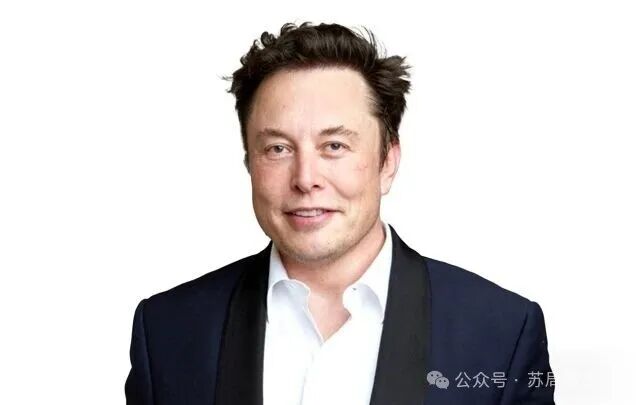
“The U.S. is heading towards bankruptcy.” Elon Musk has issued this warning more than once. In a recent program, he bluntly emphasized: “The only way to get out of the debt crisis and prevent the U.S. from going bankrupt is through Artificial Intelligence (AI) and robotics.”
This warning is backed by a cold reality: on the first day of the new fiscal year, the U.S. federal debt surged by $204 billion, reaching a staggering total of $35.669 trillion.
This figure has continued to climb, and by October 2025, the total U.S. federal government debt is expected to exceed $38 trillion for the first time.
01 Debt Crisis Alarm
The U.S. national debt is growing at an astonishing rate. Analysts at Bank of America warn that the national debt is increasing at a rate of $1 trillion every 100 days. This accumulation of debt has made interest payments a heavy burden for the federal government.
Musk pointed out that the interest payments on national debt now exceed major federal expenditures, including the military budget, ringing alarm bells for everyone.
Analysis from the Congressional Budget Office indicates that if this trend continues, the U.S. debt could reach an astronomical $150 trillion by 2055.
Even more concerning is the political polarization between the two parties regarding the debt issue, which exacerbates the situation. When Musk privately met with Salvadoran President Nayib Bukele, experts pointed out that the two major parties in the U.S. have consistently been unable to address the debt crisis.
This political deadlock led to the longest “shutdown” crisis in U.S. history, lasting 43 days in 2025, further aggravating the fiscal predicament.
02 The Potential of AI and Robotics to Break the Deadlock
In the face of this grim situation, Musk proposed a solution rooted in technological optimism. He believes that traditional political tools are insufficient to solve the problem: “You can make it better in direction, but ultimately you cannot completely fix the system.”
In Musk’s view, “the debt crisis cannot be resolved without economic expansion”, and only advanced automation can provide large-scale economic expansion.
This perspective is rooted in his decades of practical experience in capital-intensive industries. The robotic technology used in Tesla’s mass production and the automation systems relied upon by SpaceX for rocket reusability reflect his firm belief that technology can compensate for structural inefficiencies.
Musk predicts that AI will surpass individual human intelligence by 2026 and exceed the total human intelligence by 2030. In the next 5-6 years, traditional smartphones and apps will completely disappear, and most of the content consumed by people will be generated by AI.
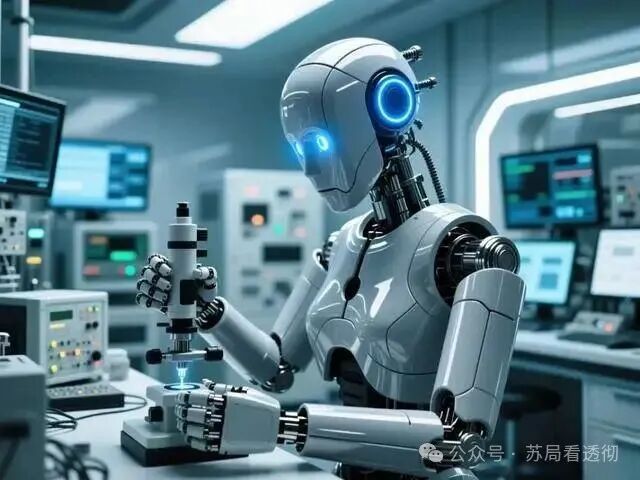
This technological revolution will bring a leap in production efficiency.
03 A New Engine for Economic Growth
AI and robotics not only bring efficiency improvements but also fundamentally transform economic growth models. Zhang Jun, chief economist at China Galaxy Securities, predicts that the Chinese AI industry will enter a period of rapid development over the next decade, with an optimistic scenario estimating that by 2035, the Chinese AI market could reach 36.63 trillion yuan.
AI reshapes the foundational efficiency of industries, spawns clusters of emerging business formats, and optimizes macro governance efficiency, injecting powerful momentum into economic growth. On a micro level, AI has triggered a profound “efficiency revolution,” significantly enhancing total factor productivity.
Musk believes that work will gradually shift from “survival needs” to “self-selection” as humans will have a production system composed of robots and AI. While this transition may lead to a wave of unemployment, it also presents an opportunity to raise the income levels of the entire population.
With robots handling basic production and service labor, humans can maintain a high level of well-being and channel their creativity into technology, culture, education, and exploration.

04 Strategic Layouts of China and the U.S.
In the face of the historic opportunities brought by AI, major global economies are accelerating their layouts. Musk calls for “AI to save the country” across the ocean, while China has proposed the concept of “new quality productivity.” This indicates that the top-level logic globally is changing, as human economic development has reached a bottleneck, and technological innovation has become the key to breaking the deadlock.
China has released the “Opinions on Deepening the Implementation of the ‘Artificial Intelligence+’ Action Plan,” deploying six key actions for “Artificial Intelligence+”. The National Development and Reform Commission stated that it will continuously optimize the layout of intelligent computing resources and continue to issue “AI vouchers” in areas such as computing power, promoting the reduction of R&D costs for innovative entities.
In terms of computing power infrastructure, China’s total computing power has reached 302 EFLOPS, ranking second in the world. Huawei has deployed the largest CloudMatrix384 super node in Gui’an, setting a benchmark for the East Data West Computing project.
These investments lay a solid foundation for the widespread application of AI technology across various industries.

05 Challenges and the Future
However, the development of AI and robotics also faces numerous challenges. Musk points out that the issue with AI is not a matter of motivation but of controllability. When a system can automatically optimize its own models and parameters, it will no longer rely on human manual adjustments for training, making it difficult for humans to predict its behavior.
Musk believes that “safe AI” must be able to accept external constraints from humans, rather than relying solely on training data to infer “human values.” Humans need to retain a kind of “stop button” that allows them to decide whether the system should continue operating, even when its capabilities far exceed those of humans.
In addition to technical risks, the social pains of transformation cannot be ignored. As AI replaces tasks such as email processing and telephone customer service, and expands into programming and content creation, the countdown to job replacement has begun. This requires a profound adjustment of the labor structure, and the education and training systems need comprehensive reform.
Musk’s warnings are not alarmist. The U.S. is standing on the edge of a fiscal cliff, and traditional political means can no longer solve the structural debt problem.
Artificial intelligence and robotics may indeed bring significant productivity improvements, but this path is fraught with uncertainty.
Whether technological innovation can outpace the debt growth curve will depend on policy guidance, social adaptability, and global cooperation. At this critical turning point, human civilization faces unprecedented challenges and opportunities.