Click the blue text to follow us
SUBSCRIBE to US
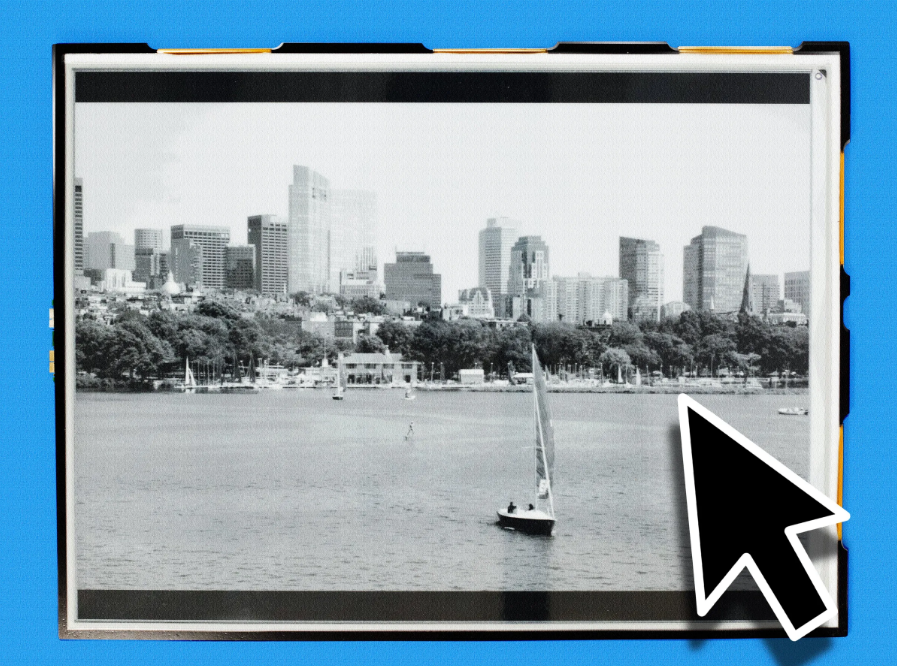
Source image: Modos
Electronic paper displays are highly regarded for their readability and low power consumption, but have long been considered too slow for everyday computing use.
Modos, a two-person startup rooted in open hardware, believes it has solved part of the problem — launching a development kit capable of driving electronic paper displays at refresh rates of up to 75 Hz, setting a record.
The Modos Paper Monitor and development kit are now crowdfunding on Crowd Supply, combining standard electronic paper panels with an FPGA-based open-source display controller. While the kit provides a complete solution for enthusiasts and developers (including the electronic paper display, display driver, and hardware adapter), it also serves as an entry platform for experimenting with different types of electronic paper displays.
“Rather than saying we have a secret formula, we have,” said co-founder Alexander Soto. “You don’t even need to use the panels we provide. You can use different panels and still achieve a 75 Hz refresh rate.”
75 Hz Electronic Paper
Most electronic paper panels have refresh rates of about 10 Hz or lower. (Electronic paper is a generic term for screens that mimic the appearance of ink on paper — the most famous brand is E Ink products.) Some displays do not even specify a refresh rate and may take a full second to refresh.
A higher refresh rate means the display can show more frames per second, providing smoother and more realistic dynamic effects. Modern digital video typically plays at 30 or 60 frames per second, which was previously difficult for electronic paper displays to achieve. This is precisely where electronic paper has lagged behind LCD displays — which typically start at refresh rates of 60 Hz and can go higher.
Modos is able to achieve refresh rates of up to 75 Hz on a 13-inch electronic paper panel with a resolution of 1600×1200. (Additionally, there is a 6-inch electronic paper panel with a resolution of 1448×1072, also supporting a 75 Hz refresh rate.) Increasing the refresh rate also reduces latency, which is crucial as it allows electronic paper displays to be used in latency-sensitive scenarios, such as computer or tablet screens.
“When many people think of e-readers or electronic paper, they automatically assume it’s slow and will always flicker,” Soto said. “Our challenge is to attend various conferences and events to show people… electronic paper can be very fast.”
Open-Source Electronic Paper Display Controller
The claimed 75 Hz refresh rate by Modos is currently the highest record for electronic paper displays, but it may not be its most critical innovation. Some competitors have already launched electronic paper displays with refresh rates of up to 60 Hz, which, while slightly lower, is very close (https://shop.dasung.com/products/dasung-paperlike-103-the-worlds-first-60hz-e-ink-monitor?srsltid=AfmBOorlsMmiegZ0giXwX251IS66vU2ndubmx7sO-in0dfuYmove1fdS).
Modos’ true “secret weapon” is Caster, an open-source electronic paper display controller compatible with various electronic paper panels. This display controller, based on the AMD Spartan-6 FPGA, differs from traditional electronic paper controllers through pixel-level display management.
Modos co-founder Wenting Zhang stated, “Traditional electronic paper display controllers use a single state machine to control the entire panel, with only two states: static and update. Caster handles each pixel individually rather than treating the entire panel as a whole, allowing for localized control of pixels.”
This FPGA display controller is paired with Modos’ Glider Mega Adapter, which features four different display interfaces and is compatible with dozens of electronic paper displays ranging from 4.3 inches to 13 inches. Soto mentioned that the adapter can also be used to repurpose displays salvaged from older e-readers, such as the Amazon Kindle.
Modos also provides an application programming interface (API) written in C, allowing applications to dynamically select display driving modes. As shown in the video above, a Linux window manager can render text in a low-latency binary color mode, display maps in a more detailed but still responsive grayscale mode, and play video in the highest fidelity grayscale mode — all simultaneously on the same screen.
The code and schematics for Caster, Glider, and the API are all open-source and available on GitHub.
Crowdfunding for Electronic Paper Innovations
Modos’ crowdfunding campaign will end on September 18. Orders are expected to ship in January 2026, although (like many crowdfunding projects) this timeline cannot be guaranteed.
It took several years to reach this stage. The company founders initially aimed to create an electronic paper laptop — the Modos Paper Laptop, which was announced in January 2022. However, the realities of electronic manufacturing presented complex challenges early in the project, and the laptop ultimately did not go to market.
“Part of the reason is that most laptop casings have an aspect ratio of 16:9 and 16:10, while electronic paper displays have an aspect ratio of 4:3. So we either had to customize the casing or the panel, both of which were prohibitively expensive,” Soto said.
Panel procurement was also a barrier. The production of electronic paper is primarily aimed at e-readers and signage, meaning most panels are not suitable for computers. However, the Modos Paper Monitor and development kit found a practical compromise in the recently launched 13-inch electronic paper display, where many displays have resolutions similar to those developed for laptop LCD and OLED panels.
From this perspective, the development kit continues Modos’ original goal. While creating a mature electronic paper laptop may not be realistic, the high refresh rate, open-source display controller, and API of the development kit give ambitious users the opportunity to create their own low-latency electronic paper computer displays — or any creative ideas they can think of.

WeChat ID | IEEE Electrical and Electronics Engineers Society
Sina Weibo | IEEE China
Bilibili | IEEE China
· IEEE Electrical and Electronics Engineers Society ·
Previous
Recommendations
Modern Railways: Two Hundred Years Towards a New Era
IEEE Supports Engineers in Developing Technological Solutions for Sustainable Development of the Earth
How Energy Harvesting Technology Without Batteries Shapes the Future of IoT?
3D Printing Food: Future Cuisine or Dark Cooking?