
The internet giants’ changes in biweekly holidays can trend, but many heavier jobs go unnoticed. Quality inspectors for electronic devices typically need to complete over 10,000 manual inspections of parts every day, averaging a few dozen products per minute, and it’s not uncommon to work continuously for over 10 hours.
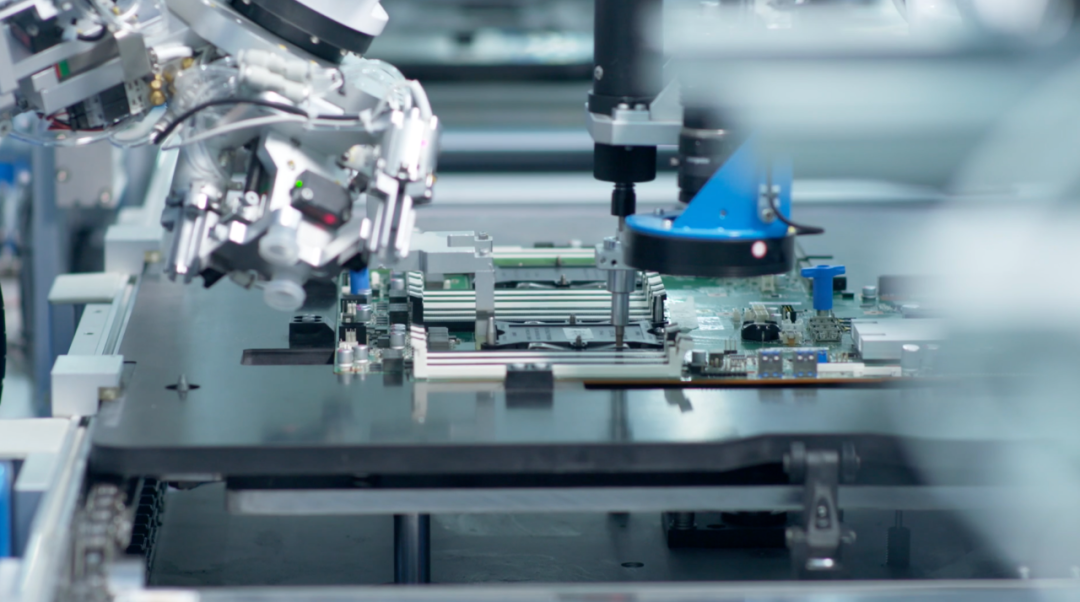
High workloads lead to workers struggling to keep up, making missed and incorrect inspections inevitable. Finding ways to alleviate the pressure on quality inspectors and improve product quality in manufacturing enterprises has become an urgent problem to solve.
Inspur, in collaboration with Simo Technology, has developed an edge industrial intelligent quality inspection solution based on deep learning algorithms. It reads quality inspection images in real-time, inferring and locating defective products, and providing immediate feedback on defect types, sizes, and handling suggestions. Additionally, this data is fed back to the cloud to further optimize the AI quality inspection model algorithm.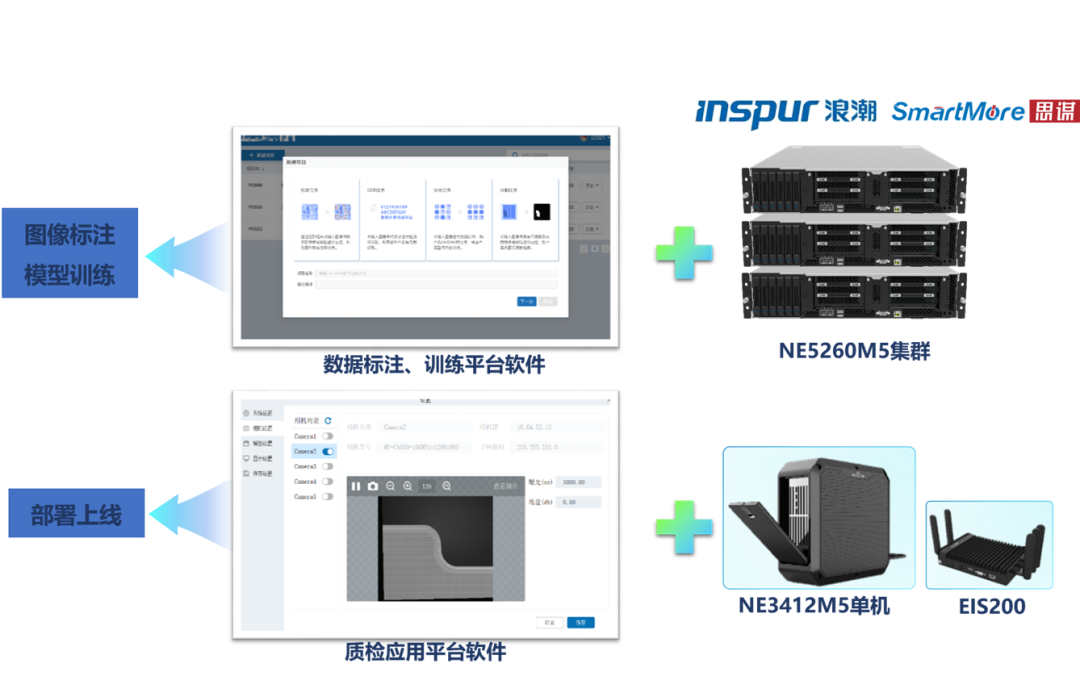
According to IT Creation Journal, this solution has been applied in smart factories across industries such as steel, 3C electronics, and automotive, improving the defect detection rate from 90% to 99%, ensuring no defects are overlooked, with a pass rate of ≤3%, avoiding a large number of ‘false positives’, while significantly increasing the average daily processing volume of products, greatly benefiting product quality control and production efficiency optimization.
The role of edge computing in smart manufacturing is akin to that of a sword-wielding guardian in ancient times. Patrols, night checks, and guarding warehouses are the daily duties of a sword-wielding guardian, and in critical moments, serving as a ‘human shield’ to protect the emperor is an unmissable responsibility. Edge computing acts like a close guardian of smart manufacturing, using its keen eye to detect problems, monitor environments, and achieving collaboration with the cloud through its acute hearing. In the event of sudden situations, it steps up to ensure the smooth operation of smart manufacturing.
Smart manufacturing faces multiple challenges.
According to data from the China Business Industry Research Institute, the output value of China’s smart manufacturing equipment reached 2.09 trillion yuan in 2020. The overall prosperity of the manufacturing sector remains high, laying a solid foundation for the rapid development of smart manufacturing.
Compared to developed countries in Europe and America, there is still considerable room for development in China’s smart manufacturing. Research by Yiou Think Tank shows that currently 90% of manufacturing enterprises are equipped with automated production lines, but only 40% have achieved digital management, 5% have connected factory data, and 1% use intelligent technologies. It is expected that by 2025, the proportions of digital, networked, and intelligent manufacturing enterprises will reach 70%, 30%, and 10% respectively.
The future of smart manufacturing is vast, but the road ahead is not smooth.
First, we must face the challenge of complex and diverse computing power.With the continuous development of deep learning, classification algorithms like AlexNet require 720 FLOPS to analyze images of size 224×224, taking about 1 second to process with an industrial computer; meanwhile, the computational requirements for video processing using ResNet50, commonly used in actual production, are dozens of times that of AlexNet, with increasing complexity and a growing structural gap in computing power becoming increasingly apparent.
Secondly, there are obstacles to the seamless integration of massive data.From 2015 to the present, the number of robots installed in China surged from 250,000 to 1 million, while the market scale of CNC machine tools and PLCs grew from 140 billion to over 200 billion. The system platforms have expanded from ERP and CRM centered around humans to IIOT, MES, PLM, and others centered around objects. The massive emergence of intelligent equipment, various production lines, and cross-domain system platforms has led to exponential growth in factory data volumes, making the integration and deep mining of massive data a significant challenge.
Furthermore, the surge in demand for real-time processing of high concurrency also poses challenges.The smart manufacturing process widely uses assembly robots, raising higher requirements for the real-time and complexity of target recognition and trajectory planning for intelligent robots. A single camera in an industrial site can generate about 330G of video data daily; completely transmitting it to the cloud not only consumes bandwidth but also fails to meet real-time (millisecond-level) business needs.
Edge computing comes at the right time.
To address the diverse challenges faced by smart manufacturing, systematic solutions are needed, and edge computing may be the most powerful tool available.
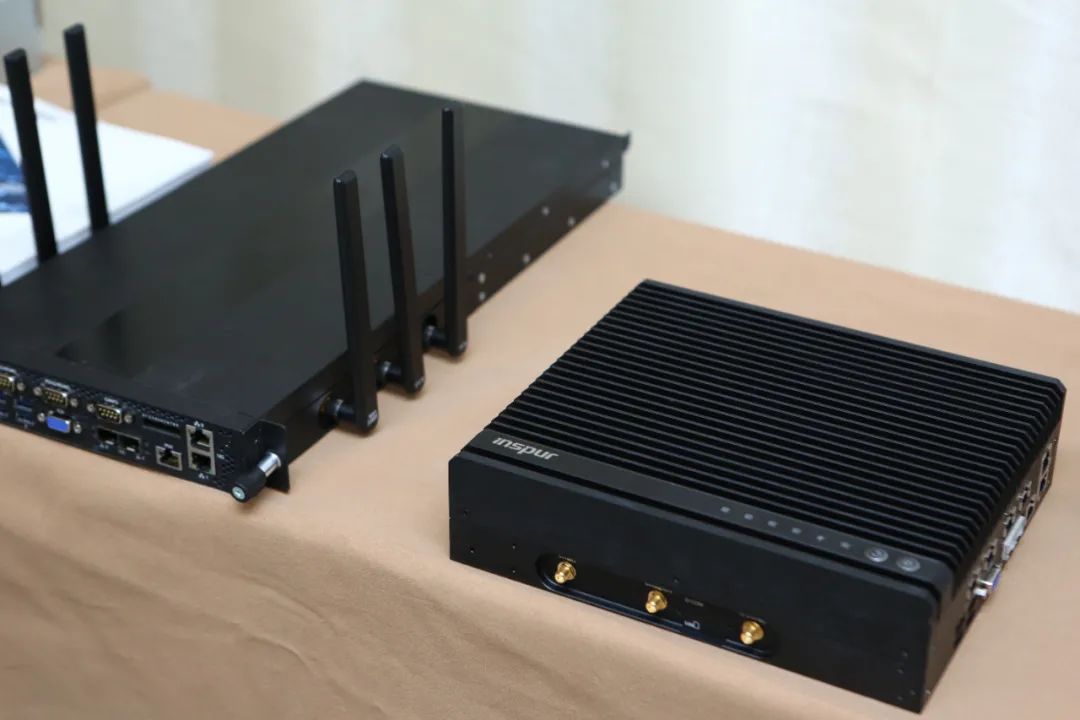 Inspur’s edge computing products
Internationally renowned research agency IDC classifies the digital maturity of enterprises into five stages: beginners, explorers, organizers, transformers, and disruptors. Currently, Chinese manufacturing enterprises are generally in the middle stage, with very low proportions in the fourth and fifth stages. In the process of applying technologies such as artificial intelligence and the Internet of Things in the manufacturing industry, enterprises urgently need strong computing power support from the edge to develop smart manufacturing, which is the most evident shortcoming in the domestic market.
A set of data also corroborates this judgment: in 2020, over 50 billion devices were connected, and each factory collected over 1.44 billion data points daily, indicating unprecedented expectations for computing capacity and service speed at the edge.
Edge computing provides computing and storage services close to the data source, effectively alleviating the pressure on network bandwidth and data centers, enhancing service responsiveness, and protecting privacy data within the factory, thus improving data and production security. Through interaction and collaboration with the cloud, overall system intelligence can also be achieved.
Dr. Song Ping, senior project manager at the Internet Center of the China Academy of Information and Communications Technology, believes that edge computing is a technology empowerment platform that can be deeply integrated with new generation ICT technologies such as AI, big data, and blockchain, driving various industries towards networked, digital, and intelligent transformation and upgrading.
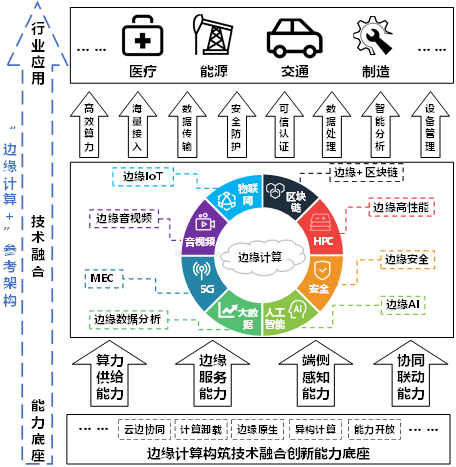
As a ‘sword-wielding guardian’, edge computing provides a strong response to the threefold challenges faced by smart manufacturing:
Intelligent operational management at the control layer:Complex optimization methods represented by deep learning have many applications in automation. Edge computing can provide the necessary infrastructure to ensure that related computational tasks are completed safely, quickly, and efficiently. For example, in chaotic production scenarios with random orders, edge intelligence can construct multiple intelligent agent systems to enhance autonomous decision-making capabilities through behavioral interactions among different agents, improving the adaptability of the production process.
Massive data analysis and mining at the integration layer:The data integration layer requires computing nodes distributed at the edge to collaborate and achieve the mining of massive industrial data. In industrial production, products and components flow on conveyor belts, and data information also flows. Utilizing edge computing can quickly perceive abnormalities in various equipment and products within the factory and use technologies such as RFID and Bluetooth to locate and assess the quality of products flowing on the production line.
Lower latency diagnosis and early warning at the perception layer:Fault diagnosis and defect monitoring at the data perception layer are the most widely applied areas for edge computing. Based on scenarios such as part recognition and defect detection on factory production lines, bearing fault diagnosis, thermal anomaly detection in steel furnaces, and power equipment maintenance, edge computing can provide lower latency diagnosis and early warning, improving production detection efficiency and shortening order delivery cycles.
The troubles and countermeasures of the ‘sword-wielding guardian’
In the process of upgrading the smart manufacturing industry, edge computing undoubtedly plays a crucial role. However, the ‘sword-wielding guardian’ also has its own troubles, facing several constraints that hinder its full potential.
First and foremost is the disconnect between the AI technology chain and the manufacturing industry chain. According to research by consulting firms such as Accenture, over 70% of research institutions and tech companies with AI technology lack knowledge and data about demand scenarios and industry fields. At the same time, over 70% of industry users lack technical talent and the capability to implement AI platforms, which severely restricts the speed of smart manufacturing development.
Hou Lizheng, chief architect at Simo Technology, deeply resonates with this: ‘Many of our R&D personnel come from research institutions or internet companies, mastering advanced algorithms but lacking practical experience in the entire industrial field. The application scenarios for smart manufacturing are quite fragmented; the same client may have significant differences across different production lines. Initially, due to a lack of data support, we needed to approach it case by case; after encountering more similar scenarios, we could extract corresponding core algorithms.’
The lack of a comprehensive resource management and task scheduling solution for cloud-edge collaboration is also a core issue. The essence of edge computing is to push analysis and decision-making to the network edge, requiring users to achieve systematic breakthroughs in the integration of software and hardware across algorithms, cloud platforms, edge resource management platforms, and hardware products.
The instability of consumer-grade computing products has become a headache for smart factories. Many edge computing devices have low maturity and poor stability. For instance, many industrial computers used in factories need to go offline for 10 minutes after a week of operation—these devices use desktop-grade chips in their design, making it impossible to ensure stable and reliable continuous operation in outdoor deployment environments.
In response to the disconnect in the industry chain and the fragmentation of the ecosystem, some perceptive companies have begun to attempt ‘breaking the circle’. The smart factory case mentioned at the beginning of this article is a prime example of strong partnerships. Inspur, which dominates the domestic AI and edge computing server field, collaborates with Simo Technology, which is dedicated to implementing AI system architecture in the smart manufacturing industry, to facilitate the counterattack of edge computing through cross-industry collaboration.
As early as 2016, Inspur began laying the groundwork for edge computing, and after years of deep cultivation, substantial results have been achieved. Focusing on scenarios such as smart manufacturing, smart energy, and smart transportation, Inspur has developed four major product lines: edge micro servers, portable AI servers, edge servers, and edge micro centers, gathering partners in systems, algorithms, and applications in the smart manufacturing field to form various smart manufacturing solutions.
The intelligent inspection of industrial robots is a typical application with demonstrative effects. Inspur and Zhanwan Technology jointly developed an ‘intelligent inspection model’ that can monitor the health parameters of robots in smart factories in real-time. By using ‘IoT + algorithm model’, it monitors and predicts potential faults in robot systems online, shifting from traditional time-based maintenance to managing equipment status—providing analysis charts based on equipment health parameters to replace problematic equipment in advance, avoiding unplanned downtime of robots and ensuring the continuous, stable, and efficient operation of fully automated production lines.
The 24-hour online ‘safety supervisor’ is also a relatively mature solution. Currently, safety supervision at work sites across various industries is still primarily managed manually, unable to achieve real-time and uninterrupted monitoring. Leveraging edge computing technology for intelligent supervision throughout the production process has become a priority development direction for ensuring safety across industries. AI-based intelligent supervision using computer vision can collect site videos through cameras, relying on algorithms for monitoring safety helmets and protective clothing, face detection, etc., to determine whether workers’ behaviors comply with safety regulations, automatically alerting and recording violations.
Sun Bo, general manager of Inspur’s edge computing division, believes that supporting different scenarios of edge computing through a flexible development model is key to Inspur’s emergence in the smart manufacturing field.
‘We adopt a modular architecture design at the product development end, integrating different customers’ differentiated needs; at the supply chain end, we achieve flexible production with small-scale customization, even if only one server is needed, we can supply according to customer needs.’ Sun Bo reveals the secret—actively seeking change in a complex array of scenarios may be the survival strategy for edge computing.🖋
—— The More You Look, The More Wonderful It Is ——
【IT Creation Journal】 focuses on enterprise-level technology ecosystems, strategies, and business knowledge. You can find the same-named text column and the 【IT Creation Journal · Short Video】 column on major media platforms. If you have relevant content you wish to share, remember to let us know in the public account.