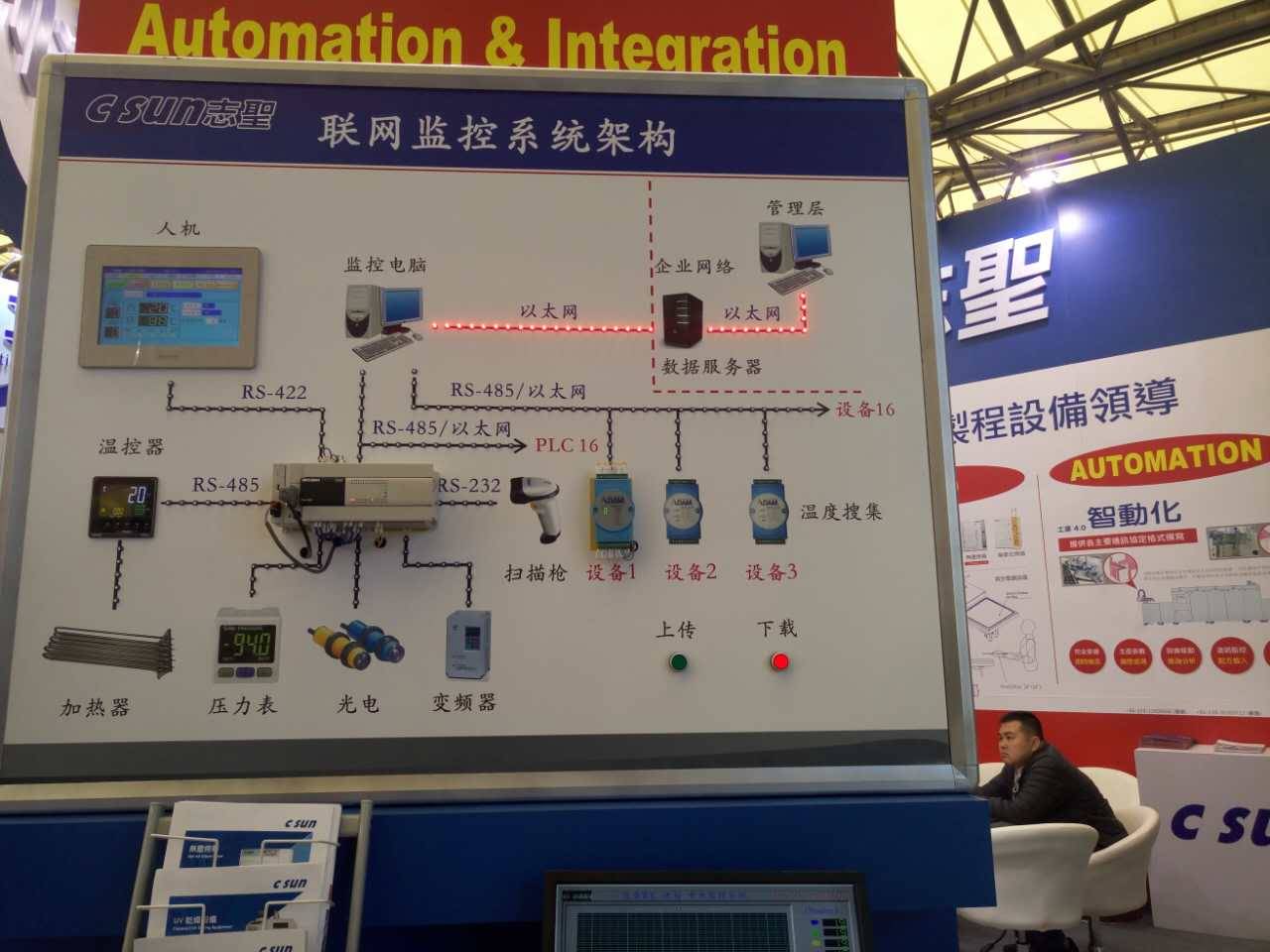
Despite the fact that dozens of industrial field bus protocols are still in use in the field of machine automation, industrial Ethernet is replacing many of these protocols with its superior characteristics.
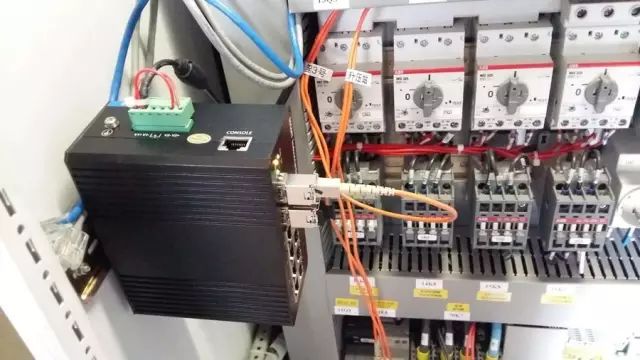
In earlier years, there were some basic open communication serial standards, such as RS232 and RS422/485. These standards, including Modbus, became the foundation for many industrial protocols. Modbus uses serial communication standards as its basis and became the dominant protocol in the industrial field.
At that time, Ethernet was not mature, and field bus protocols provided sufficient performance and reliability in many application areas. However, field bus technology is usually expensive and difficult to install, and different protocols are not compatible in terms of hardware and software.
Many initially implemented field buses were used to connect remote I/O and Programmable Logic Controllers (PLCs). Many communication standards are based on the RS422/485 standard, but before transitioning to independent foundations and becoming open, most were proprietary protocols. For example, DeviceNet, Modbus, and Profibus DP were initially proprietary protocols belonging to Rockwell Automation, Schneider Electric, and Siemens, respectively. Now, each protocol has ultimately become an open standard managed by an independent foundation.
[PROFINET and PROFIBUS are two field buses launched by the PNO organization. The two are not comparable; PROFINET is based on industrial Ethernet, while PROFIBUS is based on the RS485 serial bus. The two protocols are completely different due to the different media, with no relation to each other. They are similar in that they both have good real-time performance, due to their use of a streamlined stack structure. Any development based on standard Ethernet can be directly applied to the PROFINET network. There are far more developers of Ethernet-based solutions in the world than PROFIBUS developers, so there are more available resources for innovative technology.]
Today, there are several optional field buses available to connect PLCs and remote I/O, as well as simple devices such as motor starters, sensors, and pneumatic valve manifolds.
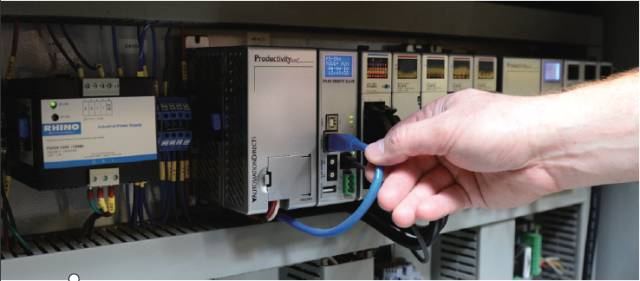
Figure 1: Ethernet widely used in industrial automation systems helps industrial users achieve a variety of connections.
1.Popular field buses and industrial Ethernet or real-time Ethernet at home and abroad include:
FF, CIP, PROFIBUS, P-Net, SwiftNet, WorldFIP, INTERBUS, CAN, Lonworks, CC-Link, HART and other field buses.
PROFINET, TCnet, EtherCAT, Ethernet Powerlink, EPA, Modbus-RTPS, SERCOS, VNET/IP, SERCOS III, HSE and other industrial Ethernet or real-time Ethernet.
Each bus has its background and application field. Buses are developed to meet the needs of automation, and since different fields have their specific automation requirements, the bus technology generated in a certain field generally has a higher satisfaction level, more applications, and better applicability.
Field buses and industrial Ethernet have been widely applied in process control in metallurgy, petroleum, chemical, pharmaceutical industries, manufacturing, buildings, transportation, agriculture, robotics, drive products, and smart grids.
How to deeply learn and master field buses and industrial Ethernet and apply them to actual engineering projects is a challenge faced by every reader.
Field buses belong to the category of local area networks. To learn field buses, one must first master knowledge in computer networks, understand the ISO/OSI communication reference model and the basics of data communication, the correspondence between the communication models of field buses and the ISO/OSI model, and the network topologies adopted by field buses.Regardless of which field bus or industrial Ethernet, they all adhere to the OSI communication reference model. The implementation of the field bus communication interface is generally completed through a communication controller (dedicated ASIC), which typically integrates the physical layer, data link layer, etc. of the field bus, while the application layer is implemented by the user through software.
2. Evolution of Ethernet Technology
Many people still believe that industrial Ethernet is different from field buses, but if you think about what traditional field bus technology accomplished in the past and what today’s Ethernet can do, you will find they are actually the same thing. Field bus technology often prides itself on having highly deterministic data transmission characteristics, while Ethernet can achieve the same thing by increasing speed and using low-level time synchronization methods. Many field bus cables can supply power to devices, and Ethernet can also achieve power over Ethernet.
In early Ethernet networks, determinism was poor, and timing errors were significant, which slowed down processing speeds. Using less intelligent network devices like simple Ethernet hubs often led to data collisions and retries. With the emergence of cost-effective industrial Ethernet, unmanaged switches, and managed switches, data collisions have become less of an issue. Today’s Ethernet has enhanced processing capabilities, and latency levels for data transmission in most applications have significantly decreased.
Even using standard, off-the-shelf Ethernet chips, the timing errors are low enough for most applications due to the timing arrangement mechanisms used in EtherNet/IP for level 1 I/O information transfer. For applications with stricter timing requirements, protocols like EtherCAT use precision time protocol synchronization (IEEE1588).
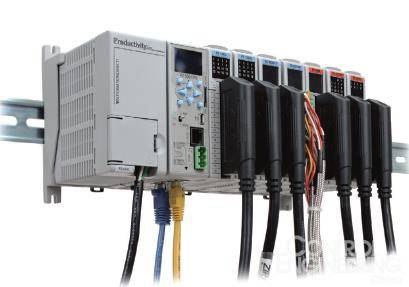
Figure 3: A variety of PLCs and other controllers support EtherNet/IP.
Most Ethernet networks adopt a star topology, with Ethernet switches or multiple switches forming the center, while other devices form branches. Many devices, including switch ports, use multiple RJ-45 interfaces, making daisy-chain connections more economical and effective.
3. Selection of Industrial Communication Protocols
Unlike other communication technologies, Ethernet allows multiple protocols to run on the same network. Some mainstream Ethernet protocols include EtherCAT, EtherNet/IP, Modbus TCP, Powerlink, Profinet, and SERCOS. Automation suppliers usually recommend users choose an Ethernet protocol suitable for the application; different suppliers tend to favor different protocols.
Most suppliers lean towards a specific Ethernet protocol, but they often are not limited to just one. Using the protocol recommended by the supplier generally brings more benefits, as it will provide the best support and the widest range of compatible products. If an application requires using two different suppliers, and there are optional controllers and field devices for both protocols, timing and speed requirements usually become the deciding factors.
The application scenario will determine which field bus technology to use. In many applications, using multiple protocols may be more reasonable, applying each protocol at the most suitable level. Using mixed protocols and communication architectures to connect field devices to controllers, connect controllers to human-machine interfaces (HMIs), and connect HMIs to higher-level computing systems is usually the right choice. To achieve this, it is necessary to select controllers that support multiple protocols.
For large-scale production and warehouse conveyor applications, the long distance between controllers and field devices can be achieved using gateways located in the EtherNet/IP network. Using common managed and unmanaged switches also helps distribute Ethernet connections.
For connections between controllers or between controllers and HMIs, some variants of Ethernet are better options; hardware support will determine which protocol to choose.
Ethernet dominates in higher-level connections, while for lower-level connections between controllers and remote I/O and field devices, this can be achieved through IO-Link, DeviceNet, Profibus DP, or some variants of Ethernet.
Source: Control Engineering Chinese Version 侵删
Link: Engineers Teach You How to Tame the “Robot Girl”
We are not just porters of dry goods

Just a step away from the industrial robot master only need to follow
Guide Car Robot Academy, cradle of robotic craftsmen
< Previous Classic Articles >
-
Foxconn Automation Production Line Video, A Feast for the Eyes!
-
Non-standard automation, you are only one cognition away from the BOSS, in-depth great article!
-
Exploring the Largest Mobile Phone Manufacturer in Dongguan, the Scene After Machine Replacement!
-
China Acquired this German Company for 30 Billion, the Whole of Europe is Alarmed…
-
Huawei Automation Production Line, Shocking!
-
Automated Conveyor Belt, So Advanced!
-
What Does the Future Intelligent Workshop of Steel Mills Look Like?
-
Fully Automated Cigarette Production Line, Astonishing!
-
Working Principles of Various Sensors Animated GIFs, Dry Goods!
-
10 Workers + 386 Robots, 80 Cadillacs a Day!
-
Automated Chicken and Pig Slaughtering is Nothing, Come and See Automated Fish Slaughtering!
-
Five Major Misconceptions in Factory Automation Transformation, Don’t Touch!