Twenty years ago, the first 5.5-generation TFT-LCD production line in mainland China began operations in Beijing. Twenty years is just a moment in the history of human development, yet it has been a remarkable twenty years for China’s large-size display industry. By the first half of 2024, China’s production capacity for large-size LCD panels accounted for over 80% of the global total, with shipments making up about 70%, firmly holding a dominant position in the market for ultra-large panels of 85, 98, and over 100 inches.
In these twenty years, how has China’s semiconductor display industry evolved from nothing to strength? What kind of challenges and advancements has it experienced during this time?“Dialogue”takes you into the “time machine of Chinese display technology” with senior entrepreneurs and experts in the industry.
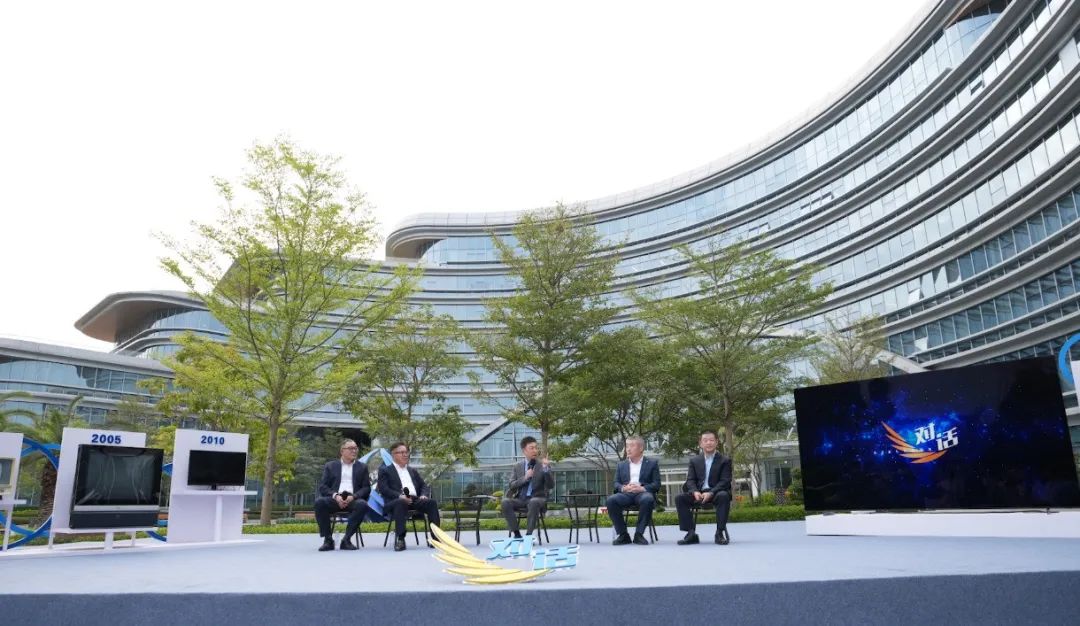
They are:
Li Dongsheng, Founder and Chairman of TCL
Ma Yuguang, Academician of the Chinese Academy of Sciences
Zhang Haibin, CEO of AGC Display Glass China
Zhao Jun, CEO of TCL Huaxing
Hao Yabin, Executive Vice President of China Electronic Video Industry Association
Xie Qinyi, General Manager of Omdia Display Industry Research

LCD Display Technology
How Long Can It Last?
Li Dongsheng:Some opinions in the industry suggest that the next generation of display technology will replace LCD in a relatively short period. However, based on our own development experience, we believe that no technology can currently replace LCD in large-screen displays. In the future, LCD will certainly remain mainstream in large-screen displays, bolstered by innovations in new technologies such as Mini LED or other quantum dot technologies, extending the product lifecycle and enhancing competitiveness.

How Was LCD Display Born?
Ma Yuguang:Initially, scientists discovered a material in plants that exhibited colorful colors when light passed through it and possessed crystalline properties. In the 1960s, advancements in semiconductor technology enabled control of the electric field in small areas, leading to the utilization of the optical properties of liquid crystals, which resulted in the creation of LCD displays.

How Does Your TV Screen
Get Bigger and Thinner?
Zhao Jun:Currently, Chinese semiconductor display companies have made significant progress in both fundamental management and technological advancements. For example, the 11th generation production line used to produce this 115-inch television employs a glass substrate measuring 2.9m x 3.1m, which is much taller than a person. We need to perform precision processing on millions of transistors on the substrate, with a precision of a few micrometers, which is akin to making a hole-in-one in golf from Guangzhou to Shenzhen.

The Evolution of Semiconductor Display Glass Substrates
What Role Does It Play in Industry Development?
Hao Yabin:Some believe that I am a baker and do not necessarily need to produce flour. However, this logic or corporate decision will not lead to a position of medium to high added value in the future within the industry chain. Therefore, in 2009, the Chinese television industry faced a crossroads: whether to continue following the internal experts’ advice of processing trade or to decisively advance upstream and seize the initiative for independent development. Panel investment requires continuous investment, with no turning back.

What Position Does China’s Semiconductor Display Technology Hold Globally?
Xie Qinyi:Currently, China’s semiconductor display technology holds a leading position in the world. In terms of LCDs, it accounts for about 70% of the global market share. Panels are the face of all consumer electronics, and consumers worldwide are gradually recognizing that the screens made in China are not only strong in quantity but also increasingly accepted globally in terms of quality and image.
More Exciting Content
Please FollowCCTV Finance “Dialogue”
Broadcasting on November 16 at 21:30
“The Transformation of the Display Industry”