Recently, I took a look at the Xiaomi air conditioner remote control at home and was curious about how Xiaomi would design the entire solution, so I decided to disassemble it.
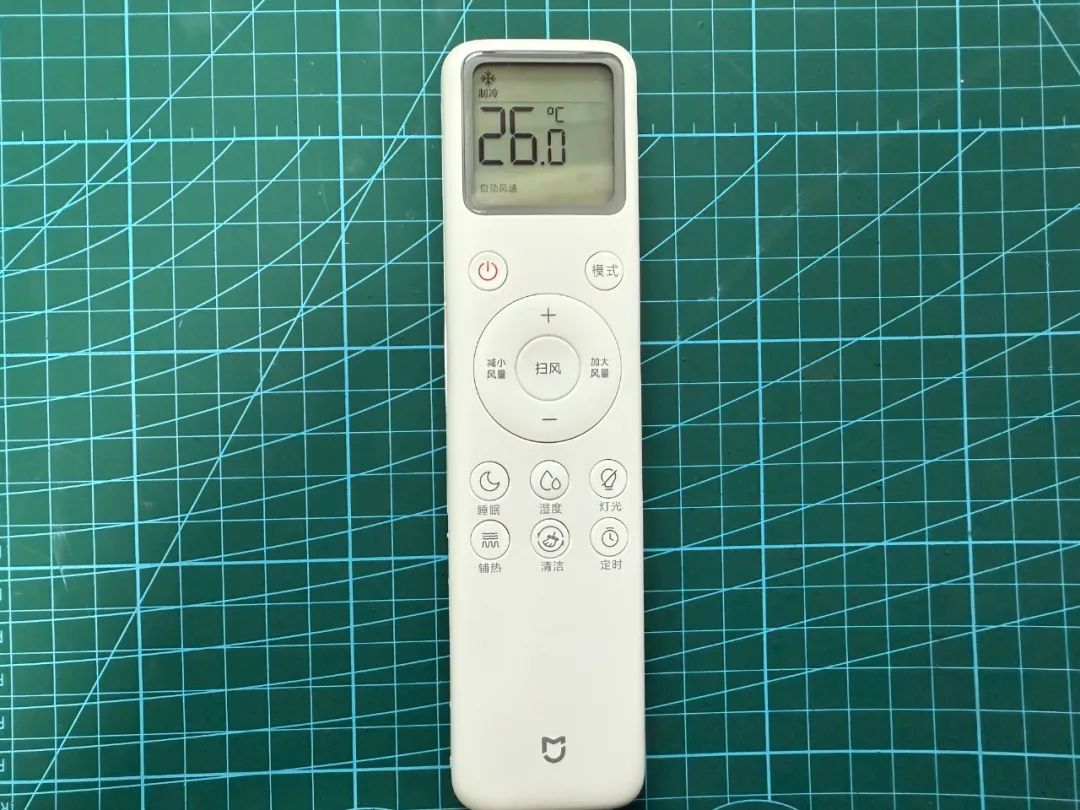
Upon disassembly, I found that there was no independent LCD segment display driver, no LDO, and no infrared transmission driver circuit. The core chip inside is an MCU named ADKT51P48, along with a few resistors and capacitors, making it quite simple.
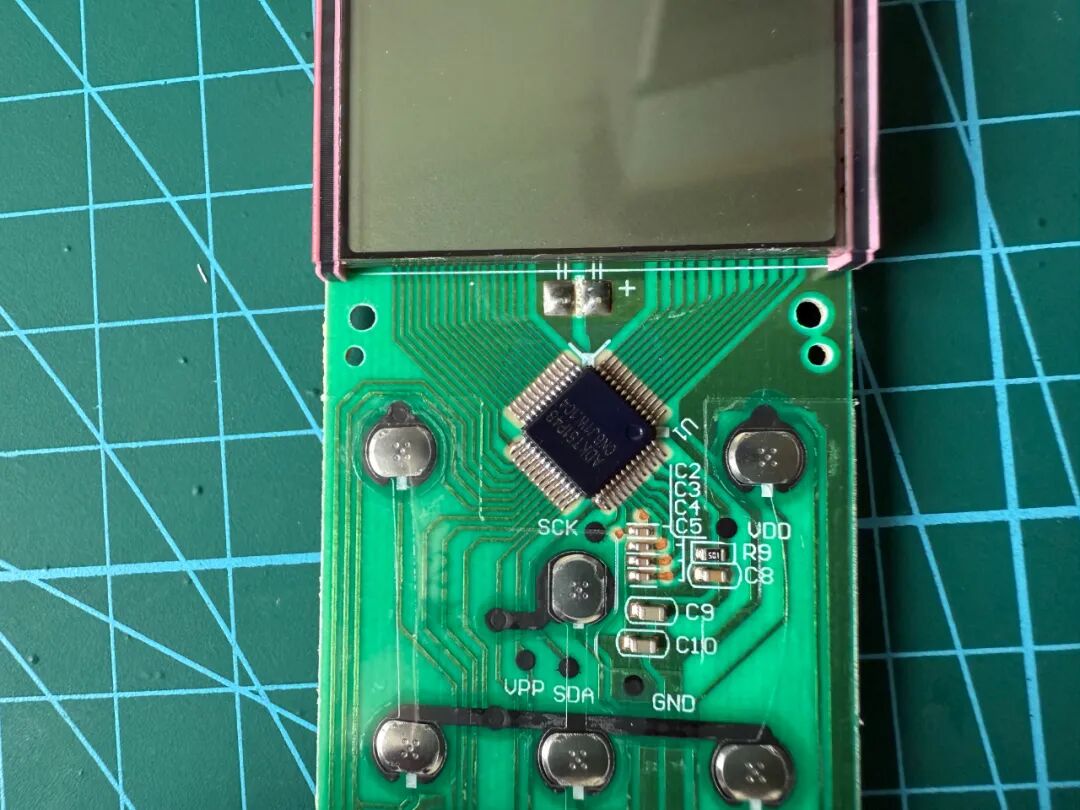
After searching online, I found that this is a dedicated infrared remote control chip from Anguang Electronics. Despite its small size, it can handle all the functions of the remote control:
- Built-in LCD driver (4×30 segments (1/4 duty, 1/3 bias)), directly driving the segment display to show temperature, mode, and wind speed.
- Integrated infrared transmission driver, with one I/O capable of sourcing 500mA without needing an external transistor to drive the infrared LED.
- Includes a remote control carrier generator, making it very convenient to generate infrared signals.
- Also integrates low-power circuits, with extremely low standby current, making it very suitable for remote control applications powered by two AAA batteries.
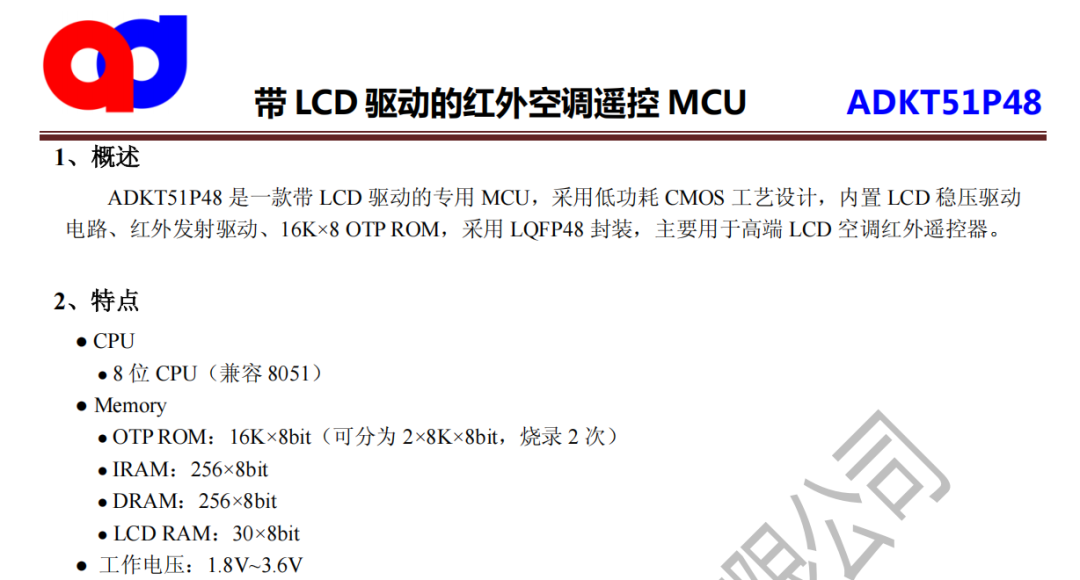
It can be said that this type of chip is “born for infrared remote controls”, being specialized, low-cost, and stable.
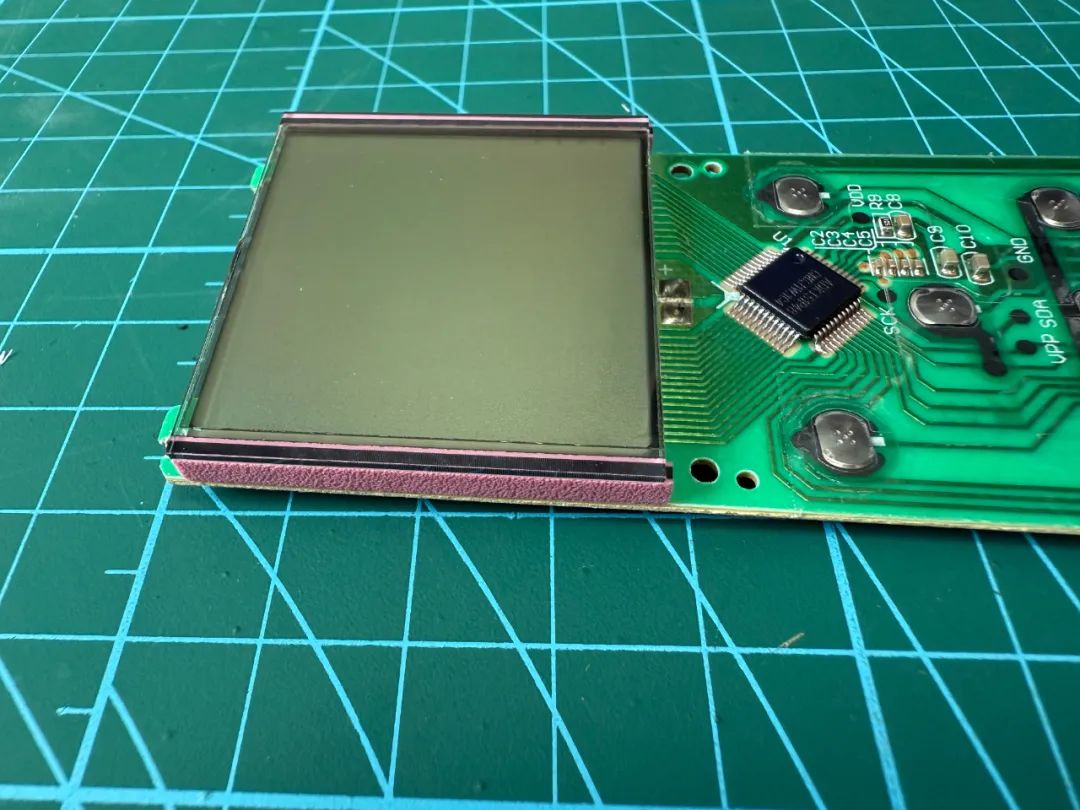
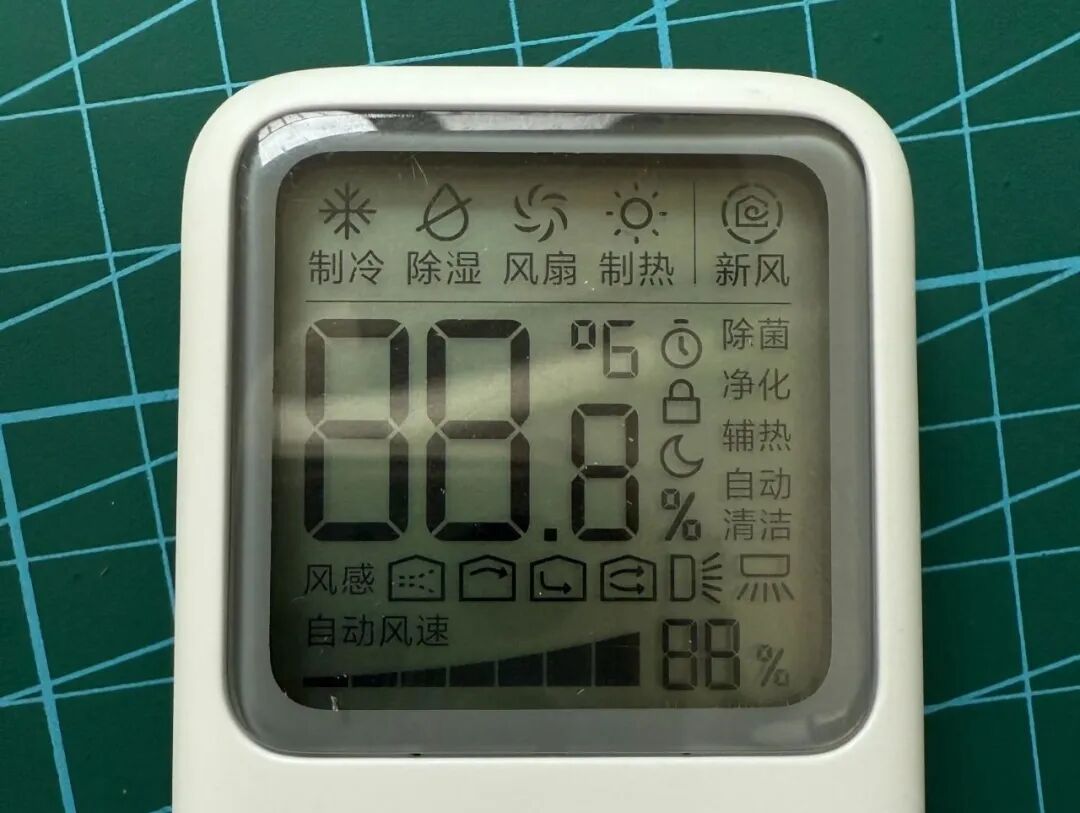
From other angles of disassembly, the overall solution is very simple, with an LCD conductive rubber strip that supports a maximum of 4×30 segments (1/4 duty, 1/3 bias) or 5×29 segments (1/5 duty, 1/3 bias).
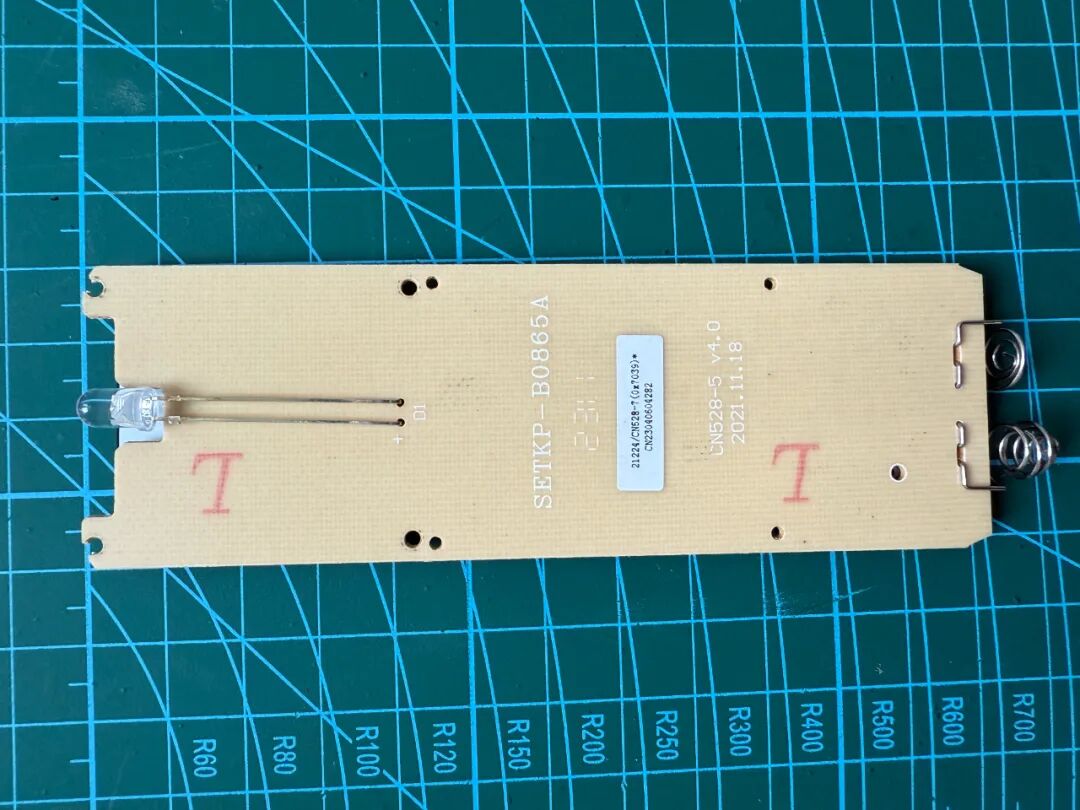
 The back has just a plug-in infrared LED and battery contact.
 The buttons use a membrane switch, which is cost-effective.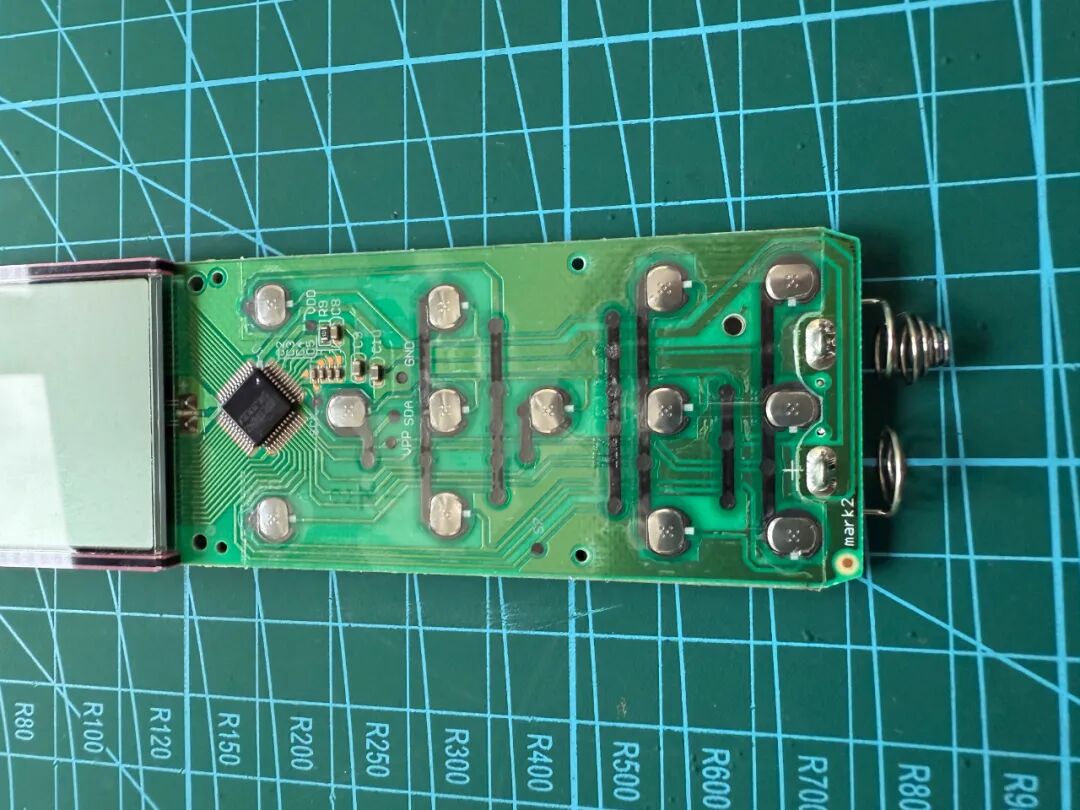
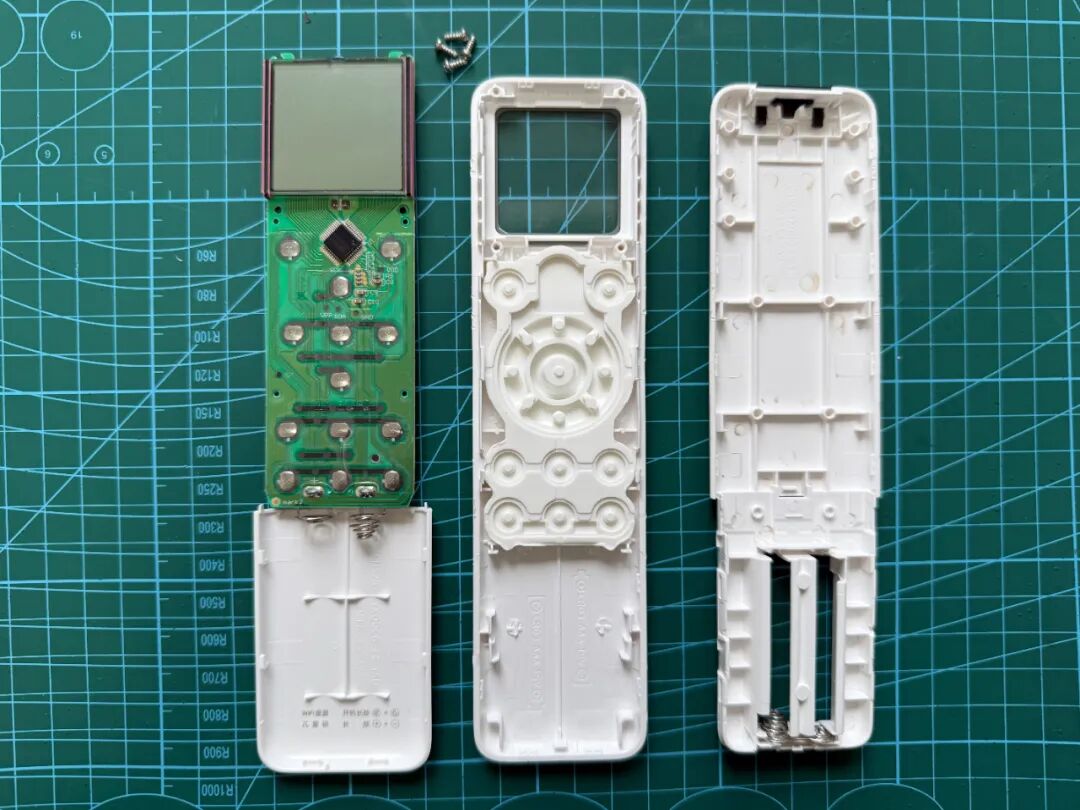
A family photo, the buttons use silicone buttons, which feel good, and there are three plastic parts from different molds.
But what if the requirements go beyond a regular remote control?
With the development of smart home appliances, manufacturers hope that a remote control can do more than just “turn on/off and adjust temperature.” For example:
- Multi-protocol control: In addition to infrared, it can also interconnect with other devices via 433, Bluetooth, Zigbee, etc.
- Complex human-machine interaction: LCD displays more content, even with icons and animations.
- Smarter low-power management: Not only can it stay in standby for a long time, but it can also work with an RTC for scheduled wake-ups, supporting more standby scenarios.
- Sensor integration: For example, temperature detection, light detection, to achieve more complex control logic.
At this point, specialized MCUs seem a bit “overwhelmed”.
A More Powerful Option: CIU32L051R8T6TY
Recently, while working on some “products with LCD segment displays”, I discovered a very useful MCU, which I would like to recommend: the CIU32L051R8T6TY from Huada Electronics.
It is based on a 48MHz Cortex-M0+ core, with performance far exceeding traditional 8-bit MCUs, and it has a wealth of built-in resources:
-
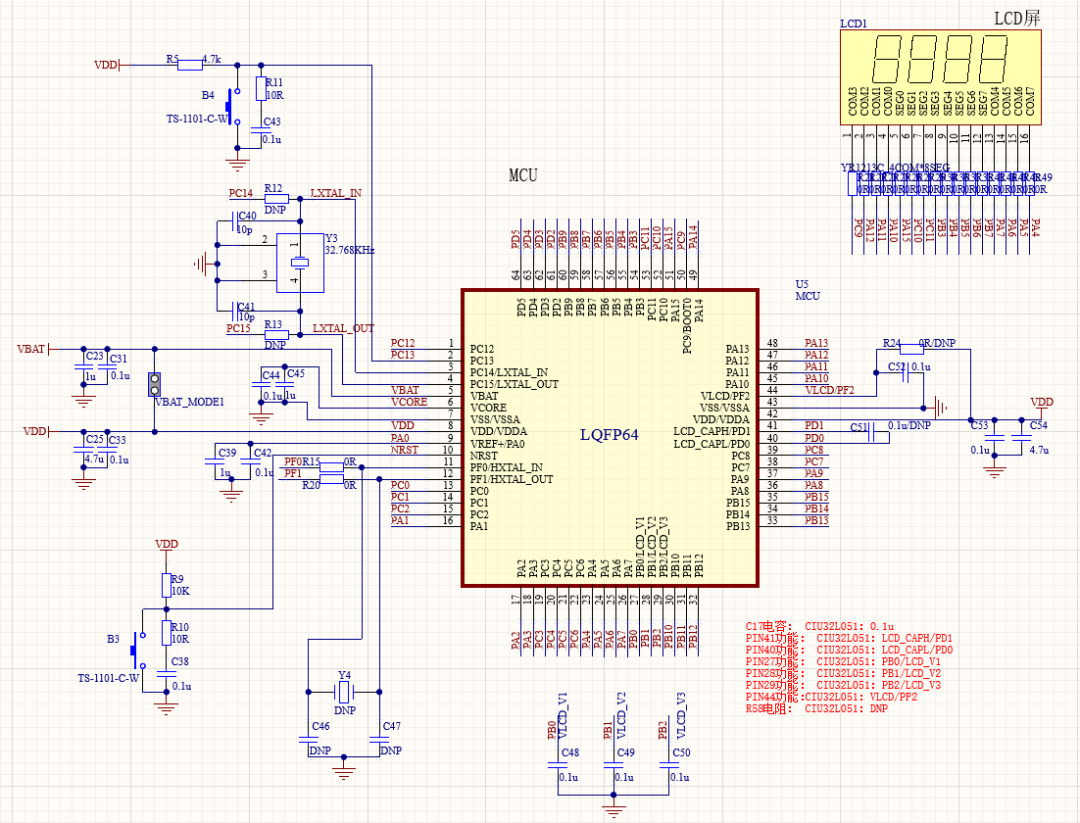
LCD driver: Supports a maximum of 8COM x 32SEG, and it has a built-in charge pump, not limited by VDD, maintaining optimal display quality even when battery voltage drops, with adjustable contrast, and no need for external capacitors. The following image shows the very simple circuit for the MCU driving the LCD.
-
Outstanding low-power performance:
- 1μA level Stop mode
- 0.95μA VBAT mode + RTC
- 60μA/MHz @ 48MHz efficient operation
-
Rich peripherals:
- UART / LPUART / I2C / SPI are all included
- Infrared TIM support, allowing remote control protocols to be implemented at the hardware level
- 12-bit 1Msps ADC, 2 ultra-low power comparators, built-in temperature sensor
-
Security and reliability: AES co-processor, TRNG random number generator, 96-bit Unique ID, supports tamper resistance and encryption.
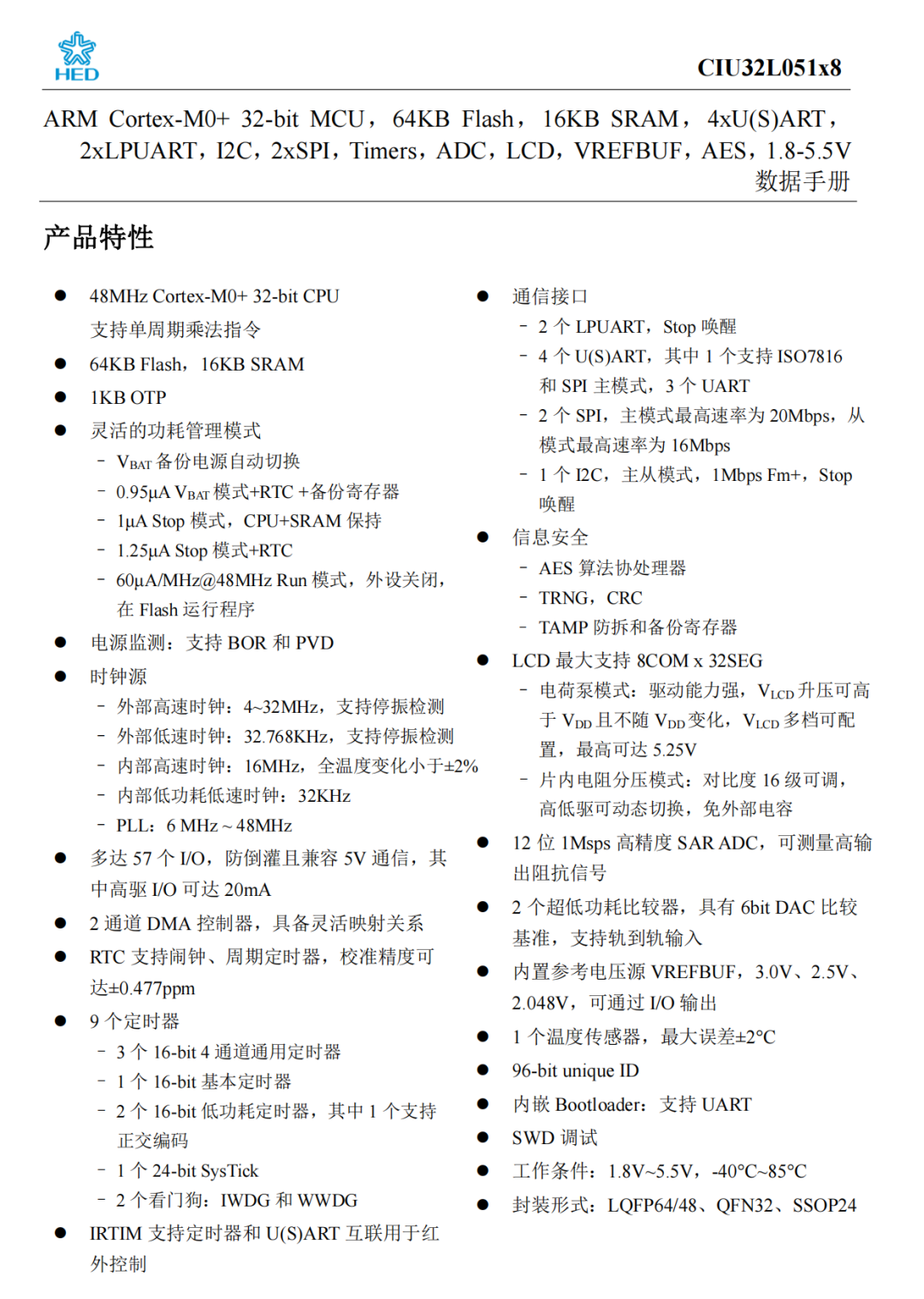
These configurations mean that it can not only serve as an air conditioner remote control but can also be expanded to:
- Smart appliance control display board (thermostat)
- Low-power products with LCD display (electric meters, water meters)
- Battery-powered sensor nodes (various alarms)
- Access control or small payment terminals with security encryption
Engineer’s Choice
If you are just making a regular remote control, using a specialized MCU like the ADKT51P48 is undoubtedly the most cost-effective option.
However, if you want the product to have more expandability, or even become a part of the home ecosystem,CIU32L051R8T6TY is undoubtedly more suitable, and importantly,it offers great value for money!
As an engineer, I would consider it as a candidate chip for the next generation of “MCUs with LCD drivers” applications.
Interested friends can visit the Huada Electronics official website or click the end of the article to read the original text for more details.
 Click here to read the original text