Design of an Electronic Piano Control System Based on STM32 with Proteus Simulation (Simulation + Program + Design Report + Explanation Video)
Simulation Diagram: Proteus 8.9
Compiler: Keil 5
Programming Language: C
Design Number: C0120
1. Main Functions



1. Design Objectives
(1) Master the specific process of software development using KEIL MDK5;
(2) Master the design methods of hardware circuits;
(3) Master the program design and code writing methods for STM32 microcontrollers.
2. Design Requirements and Scoring
Simulation Requirements:
(1) Use Proteus for functional simulation to achieve electronic piano functionality.
(2) Set up seven keys, so that when a key is pressed, the buzzer can play one of the seven notes: high, medium, low (1/2/3/4/5/6/7).
(3) When a key is pressed, the corresponding LED light turns on, and when the key is released, the LED light turns off; at the same time, the digital tube displays the notes of high, medium, and low.
Download link for materials (clickable):
File shared via cloud: KEY_C0120
Link: https://pan.baidu.com/s/1iLaarl6OBJG-SECdIsNnzA?pwd=yc3s
Extraction code: yc3s
2. Simulation Demonstration



Open the simulation project, double-click the microcontroller in Proteus, select the hex file path, and then start the simulation. The default is low tone mode, and the digital tube displays L.
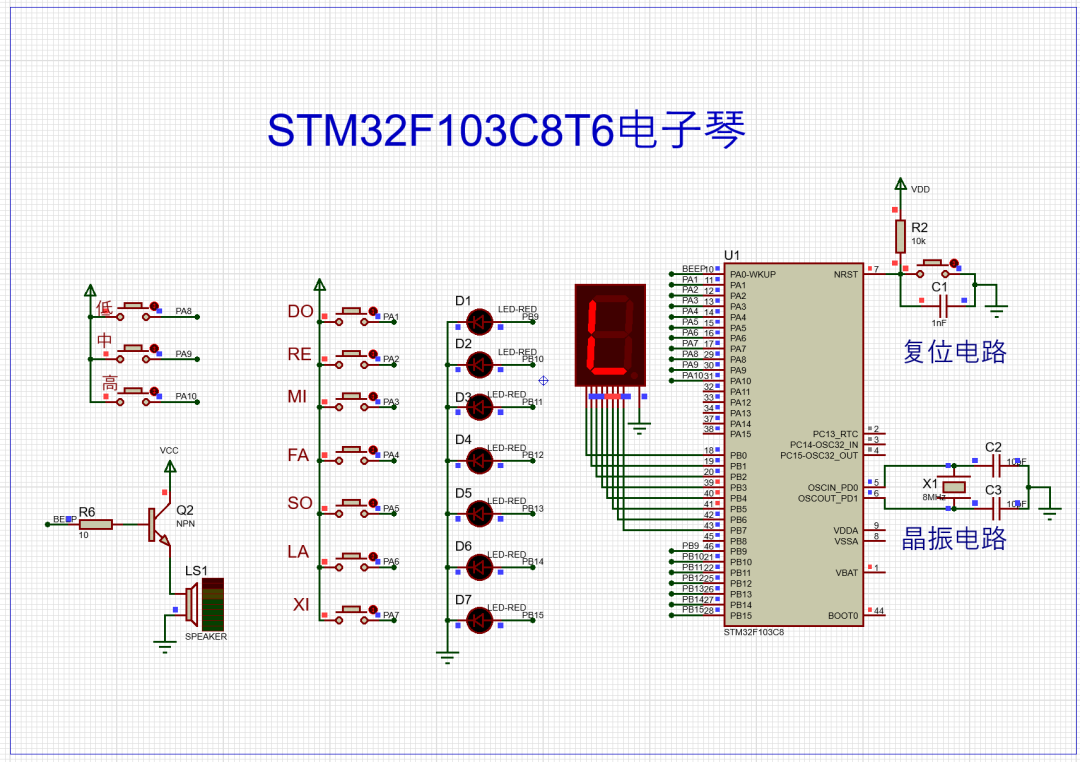
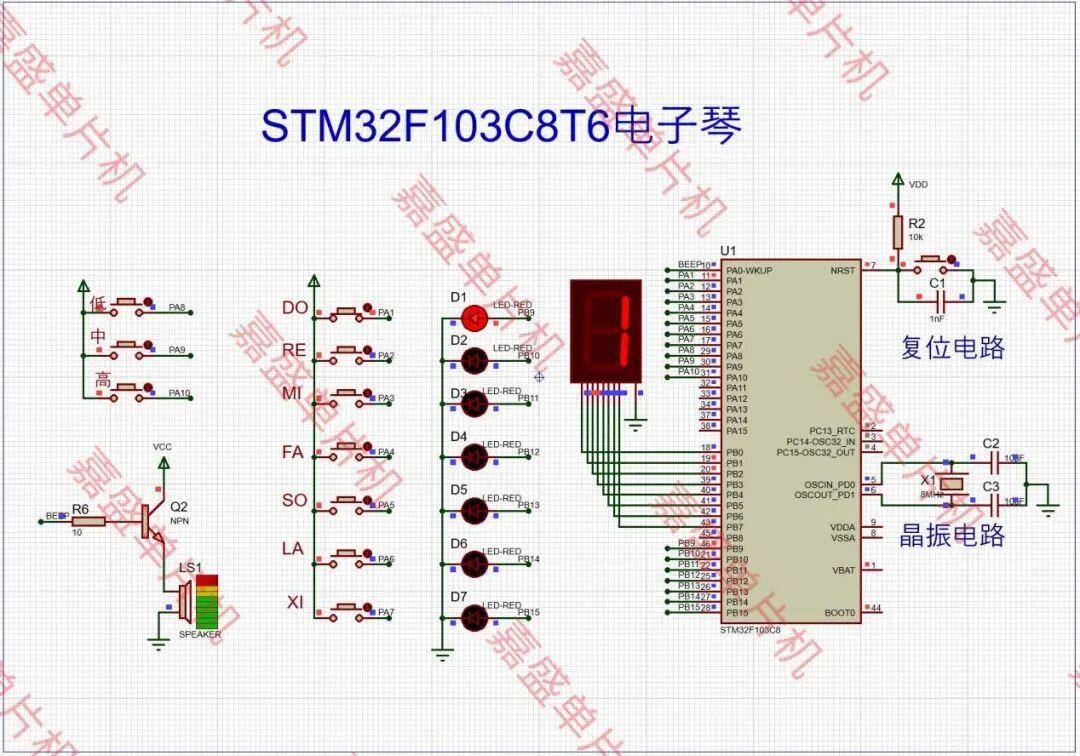
When a key is pressed, the corresponding audio note is displayed, for example, pressing DO shows 1, and the indicator light turns on.
3. Program Design



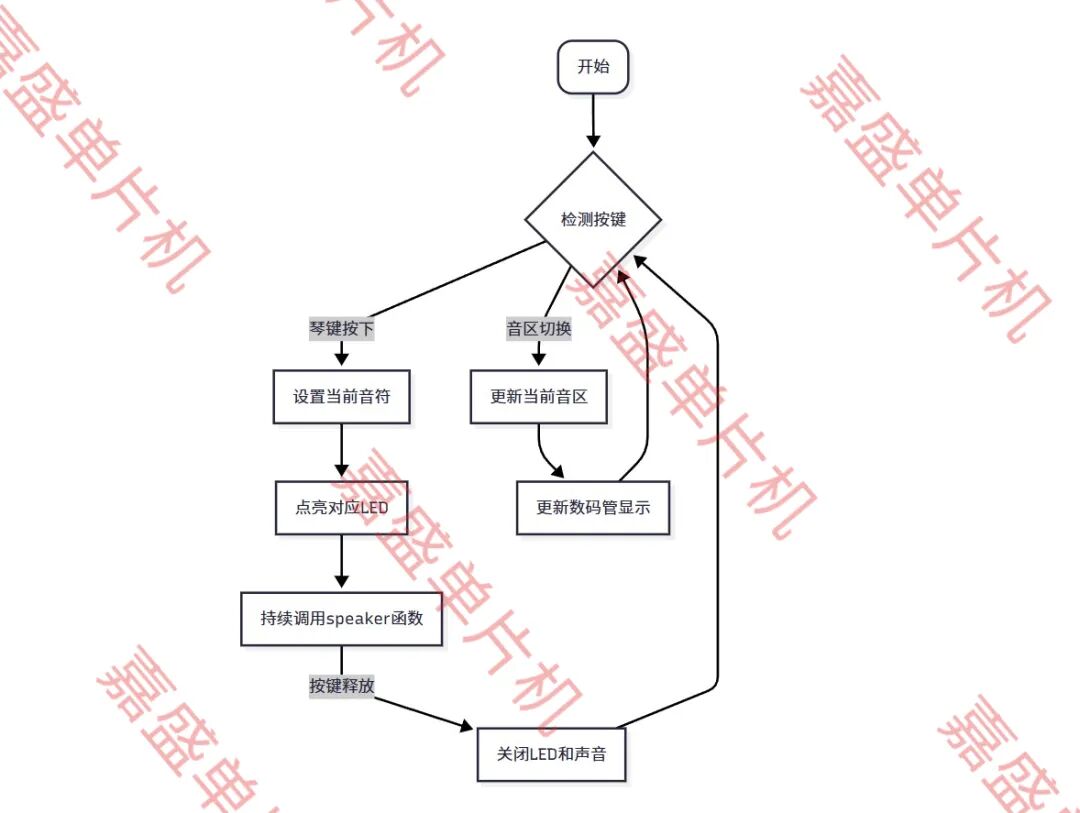
The program is opened with Keil 5 MDK version. If there are issues opening it, verify the version of Keil. The program is written in HAL version and has an STM32CubeMX configuration file. There are comments to help understand in conjunction with the explanation video. Program flowchart:
4. Design Report



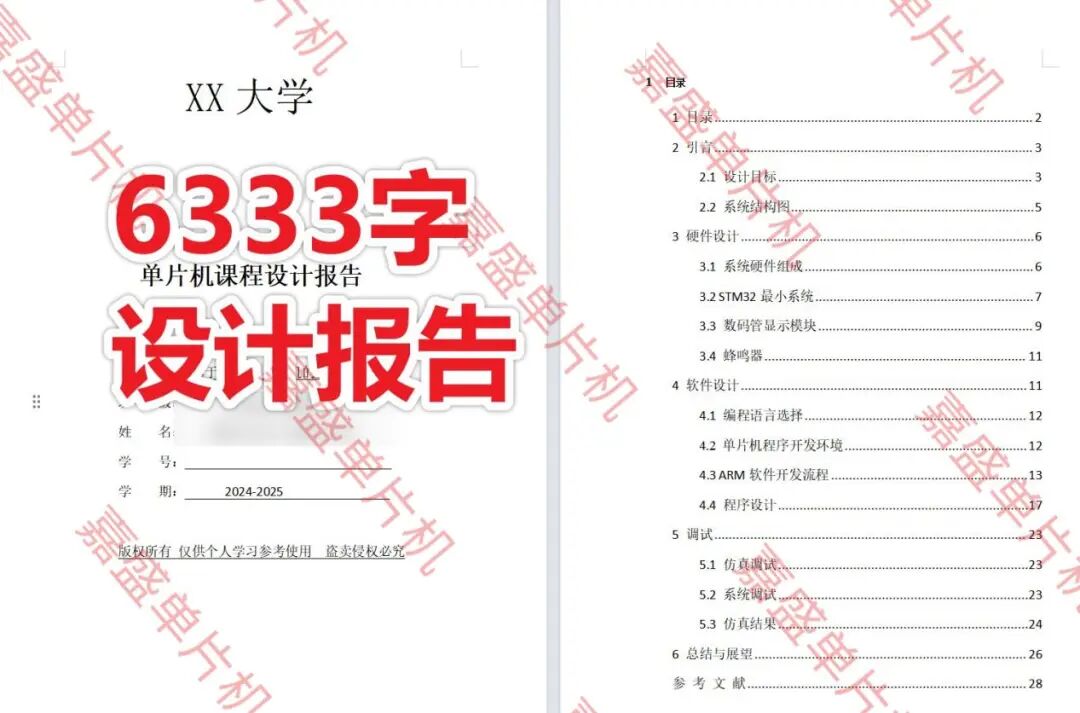
Design report of 6333 words, including hardware design, software design, conclusions, etc.
This design implements a fully functional electronic piano control system based on the STM32 microcontroller. The system controls the buzzer to play different notes (low, medium, high) through seven keys, uses LED indicator lights to provide real-time feedback on key status, and displays the current note or pitch on a digital tube. The system fully utilizes the PWM function of the STM32 timer to generate audio signals with precise frequencies, achieving the core functionality of the electronic piano. This design not only meets the basic functional requirements but also provides a good user experience through reasonable hardware layout and optimized software architecture.
This design is based on the STM32F103 series microcontroller, combined with key, digital tube display, and buzzer control modules, to build a low-cost, high-reliability electronic piano control system. The system functionality is verified through Proteus simulation, providing a theoretical basis and technical solution for practical engineering applications, with high academic value and practical significance.
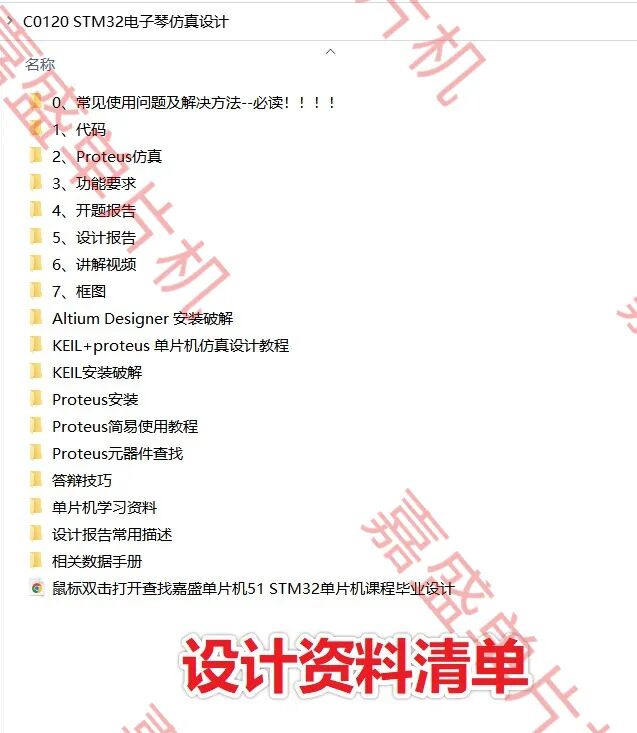
5. Material List & Download Links



0. Common Usage Issues and Solutions – Must Read!!!!
1. Program Code
2. Proteus Simulation
3. Functional Requirements
4. Project Proposal
5. Design Report
6. Explanation Video
7. Block Diagram
Altium Designer Installation and Crack
KEIL + Proteus Microcontroller Simulation Design Tutorial
KEIL Installation and Crack
Proteus Component Search
Proteus Installation
Proteus Simple Usage Tutorial
Microcontroller Learning Materials
Related Data Sheets
Defense Skills
Common Descriptions in Design Reports
Double-click to open and find the Jiasheng Microcontroller 51 STM32 Microcontroller Course Graduation Design.url
File shared via cloud: KEY_C0120
Link: https://pan.baidu.com/s/1iLaarl6OBJG-SECdIsNnzA?pwd=yc3s
Extraction code: yc3s
More resources click the link below:
https://docs.qq.com/sheet/DS0xIa0llTmtNakRW


WeChat Official Account
Jiasheng Microcontroller
Website|www.eemcu.cn