Scan to follow our official account↓↓↓

Have opinions, have attitudes
This is the 615-1 article of the Medical Industry Observation official account
Introduction:
The GeneXpert PCR analyzer is a flagship product of Danaher’sCepheid company. Today, we will introduce you to the development history ofCepheid and its products. Let’s first appreciate the elegance ofGeneXpert:
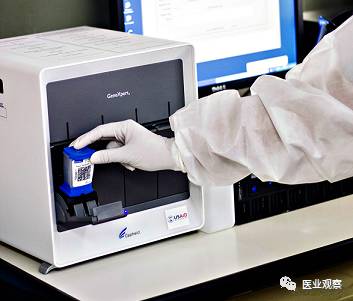
The machine and the blue box in the picture are the GeneXpert and the test kits.
Scholarly Entrepreneurship
Cepheid, known in Chinese as 赛沛, is a leading company in the global molecular diagnostics industry, dedicated to the research and production of clinical rapid molecular diagnostic products.
In March 1996,Cepheid was co-founded in California by Thomas L. Gutshall, Bill McMillan, Dr. Kurt Petersen, Dr. Greg Kovacs, Dr. Allen Northrup and Steven Young. Among the six founders, three are PhDs and one is a microbiologist, making it a team of scholars.
Although the molecular diagnostic technology based on the PCR instrument platform is widely used and technically mature, it also has limitations: complex operational processes requiring professional operators; and susceptibility to contamination, leading to “false positive” results.Cepheid was founded with the aim of addressing these pain points ofPCR technology. With the support of venture capital, the company began operations, and its R&D was based on the rapidPCR technology from Lawrence Livermore National Laboratory, which underwent significant improvements.
Three Joys Arrive
Thanks to the scholarly team,Cepheid made breakthroughs in product, financing, and market layout just four years after its establishment: In May 2000, the Smart Cycler was released, the company’s first DNA amplification and detection system; In June, it successfully went public on NASDAQ; that same year, it completed strategic layouts in developed countries, partnering with Fisher diagnostics in North America, and granting exclusive rights to Japan, South Korea, and Taiwan to Takara Shuzo in Japan, while Eurogentec was given exclusive rights in Western Europe.
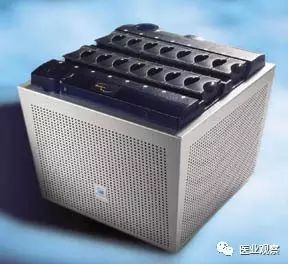
SmartCycler system
Emerging Prominently
The anthrax terror attack in 2001 provided further development opportunities forCepheid. At that time, Smart Cycler was one of the few instruments capable of rapidly and accurately detecting biological DNA. Federal agencies usedCepheid‘s equipment to detect the spread of anthrax and identify potential sources.Cepheid collaborated with the arms giant Northrop Grumman to install anthrax detection equipment in the U.S. postal system. In 2001,Cepheid sold a total of 370 Smart Cyclers and 1.2 million test tubes, with users including the U.S. military, CDC, and FBI.Cepheid entered the fast lane of development.

Anthrax bacillus
In 2002, John Bishop becameCepheid‘s CEO, having previously served as CEO and President of Vysis and possessing rich management experience in genetic diseases and biotechnology. Later developments proved that John Bishop was an excellent leader.
In 2003, sales of anthrax detection peaked at $58 million,Cepheid began to refocus on the clinical diagnostic market.
Stunning Debut
In 2005, Cepheid finally released the GeneXpert PCR analyzer and Xpert GBS (Group B Streptococcus) test kit.GeneXpert is the world’s first quantitativePCR instrument that fully integrates sample preparation, amplification, and detection, allowing even non-professionals to perform complex molecular testing.
The GeneXpert system adopts a separate i-CORE modular design, where the reagent kit concentrates enzymes, deoxyribonucleotides, buffers, etc., into a microbead, while primers, fluorescent probes, and internal references are contained in another microbead.
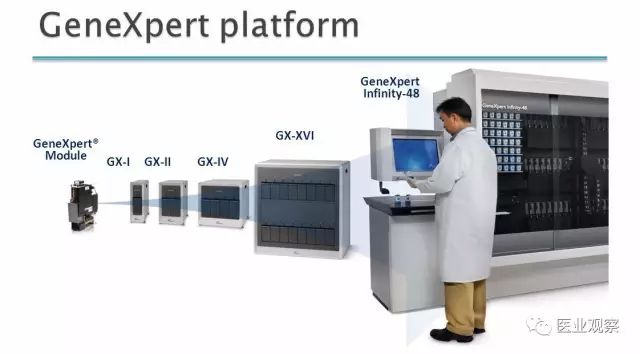
GeneXpert series models

GeneXpert test kits
The main advantages of GeneXpert include:
-
Integration: unifying sample preparation, amplification, and quantitative detection;
-
Comprehensive: capable of testing various environmental and human tissue samples;
-
Quick: providing accurate experimental results within 120 minutes;
-
Flexible: modular design for convenient combinations of temperature control reaction modules and detection systems;
-
Safe: separate test kits enhance the safety of the equipment, reducing contamination and environmental interference.
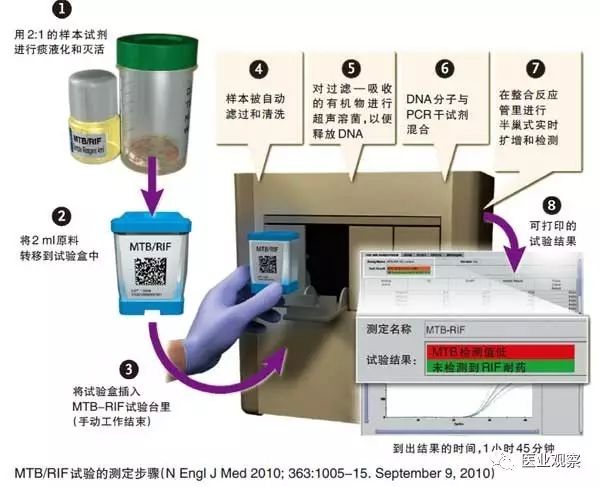
GeneXpert testing steps (taking MTB/RIF as an example):
However, the downside of GeneXpert is its expensive machine and test kit prices, leading management to carefully consider the choice of development testing projects. After thorough consideration,Cepheid identified opportunities in rapid diagnosis of hospital-acquired infections, leading to a successful series of developed test projects, which were later expanded to infectious diseases, women’s health, and viruses.
Currently, GeneXpert has over 30 reagent kits on the market, capable of testing for the following:
B group streptococcus, enterovirus, leukemia, methicillin-resistant Staphylococcus aureus, drug-resistant Mycobacterium tuberculosis, chronic myeloid leukemia fusion genes, hepatitis C virus, breast cancer, melanoma, anthrax, plague, tularemia, and more.
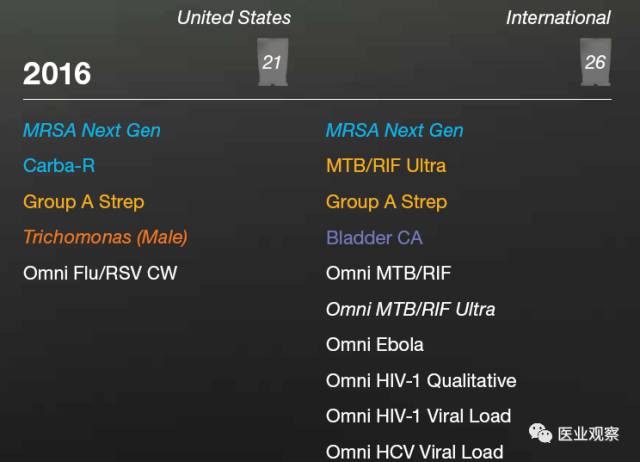
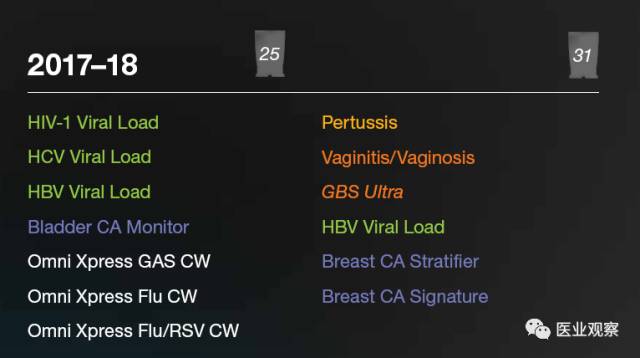
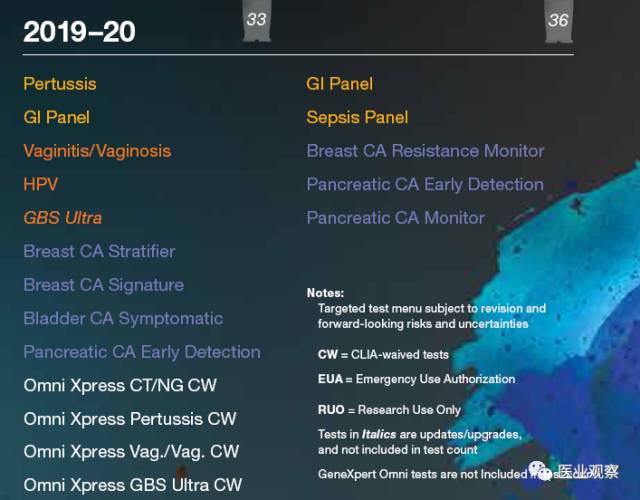
It is interesting to note in Cepheid’s annual report that they list the products expected to be released in the coming years. In the medical industry, it is rare to see such a situation. The analysis suggests two reasons: first, confidence in their R&D capabilities, and second, that Cepheid has been in a state of loss; this move aims to reassure investors by showing them future prospects.
The following are the expected test projects from Cepheid from 2016 to 2020:
MTB Triumph
Among the many testing projects, GeneXpert’s most successful products are the test kits for detecting drug-resistant Mycobacterium tuberculosis(Xpert MTB/RIF) and methicillin-resistant Staphylococcus aureus(Xpert MRSA), particularly the R&D and marketing process ofXpert MTB/RIF is especially commendable.
The lack of rapid and accurate diagnostic methods has long been a bottleneck in global tuberculosis prevention and treatment, and one of the significant reasons for the spread of drug-resistant tuberculosis worldwide. For over 100 years, sputum smear microscopy has been the traditional method for diagnosing Mycobacterium tuberculosis infection, with limitations including poor sensitivity and a high missed detection rate of 40%, and the time taken to obtain test results is relatively long. By the time the test results are available, the patient’s tuberculosis may have invaded other organs, making rapid diagnosis crucial.
The development of the Xpert MTB/RIF test kit was commissioned by the Innovative Diagnostics Technology Foundation, withCepheid and the University of Medicine and Dentistry of New Jersey collaborating on it. The R&D was completed in 2009 and launched in 2010. This test kit can simultaneously detect Mycobacterium tuberculosis and rifampicin resistance, with a detection time of less than 2 hours.
Starting in 2009, the WHO (World Health Organization) conducted a rigorous evaluation lasting 18 months in countries such as South Africa, India, Azerbaijan, and Peru. By the end of 2010, the WHO deemed this new rapid detection method a significant breakthrough for global tuberculosis diagnosis and treatment, urging countries to implement it comprehensively.
Considering the expensive price of GeneXpert instruments andXpert MTB/RIF test kits, the Innovative Diagnostics Technology Foundation invested $25.9 million, purchasing 220 GeneXpert instruments and 1.4 million test kits, distributing them to 21 countries in Africa, Eastern Europe, and Asia.
In early 2011,Cepheid initiated the HBDC (High Burden Developing Countries) program to promoteXpert MTB/RIF testing for tuberculosis prevention and control.
In 2012, a series of agreements were signed with the Bill & Melinda Gates Foundation, the U.S. President’s Emergency Plan for AIDS Relief, the U.S. Agency for International Development, and the Global Fund, aiming to reduce the individual test price ofXpert MTB/RIF test kits in high-burden countries to $9.98, with the aforementioned organizations collectively investing $10 million.
The Xpert MTB/RIF test kit can be regarded asCepheid’s classic work:
-
The product was developed at the commission of the Innovative Diagnostics Technology Foundation, in collaboration with research institutions, with funding sourced from the Bill & Melinda Gates Foundation and U.S. national laboratories;
-
Strong support from the WHO. After the successful R&D of the project, it underwent strict evaluation by the WHO, leading to global promotion. Subsequently, the WHO continued to track the project, studying aspects such as the target populations and how to better promote the test, as well as how to involve more public and private entities and how to treat patients based on test results. The WHO’s support established a significant competitive barrier forXpert MTB/RIF test kits, making it difficult for industry giants like Roche and bioMérieux to surpass;
-
Although the Xpert MTB/RIF test kit is expensive, the widespread impact of tuberculosis globally has led many non-profit organizations to cover the costs of the instruments and test kits, makingCepheid both famous and profitable.
Maintaining Integrity and Innovation
In addition to professional academic promotion,Cepheid has also been creative in marketing, with two examples:
First,Cepheid collaborated with Paul Jr. Designs to develop aCepheid motorcycle, perfectly integratingCepheid’s company logo, GeneXpert and its test kits into the design, showcasing the GeneXpert technology’s advantages and molecular diagnostics.

Cepheid motorcycle
Seeing this motorcycle, I was tempted to get one to try out.
Second, in 2015, GeneXpert made a guest appearance in the American sci-fi film Harbinger Down. The film tells the story of a group of graduates who board a trawler to pursue a white whale located by GPS, but unexpectedly salvage a piece of Soviet space debris from the seabed, awakening a mysterious unknown creature. Here are some screenshots from the movie:


Mixed Feelings
Currently, GeneXpert has installed over 11,000 units globally, accounting for the highest share among molecular diagnostic devices in U.S. hospitals, close to 25%, surpassing industry giants like Roche, BD, and bioMérieux.
The financial data from the past 10 years: (unit: million dollars)
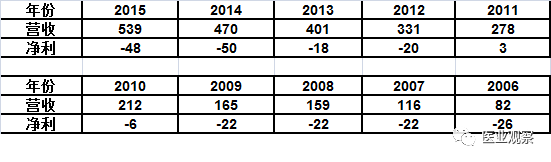
From 2006 to 2015, Cepheid achieved a 20% compound annual growth rate in revenue, but apart from 2001 when it made a profit of 3 million dollars, the remaining years were all losses, and the losses have been expanding in recent years. This is mainly due toCepheid‘s substantial and continuous investment in R&D. By the end of 2015, Cepheid had accumulated financial deficits of 342 million dollars, and the 2015 annual report clearly stated that there was no hope for profit in 2016, and whether it could be profitable in the following years depended on the situation.……
Having been in continuous losses for 20 years since its establishment, I couldn’t help but think of iSTAT, which was acquired by Abbott. No wonderCepheid‘s stock price has been stagnant in recent years, laying the groundwork for its later acquisition.
Falling to Danaher
On September 6, 2016, Danaher announced plans to acquireCepheid for $4 billion, with the transaction expected to be completed in the fourth quarter of 2016. The transaction price was $53 per share, a premium of 54% compared to Cepheid’s share price on September 2. The medical industry believes that given Cepheid’s potential value, this price is not unreasonable.
Danaher Corporation is a multinational company founded in 1969, primarily engaged in industrial instruments and equipment, with sales of $20.56 billion in 2015, growing 7.4%, ranking first among global instrument companies. In 2004, Danaher entered the in vitro diagnostics industry by acquiring Radiometer’s blood gas business in Denmark. In 2011, it shocked the industry by spending $6.8 billion to acquire Beckman Coulter, which had sales of around $3.7 billion at that time. Danaher excels in mergers and acquisitions, integrating over twenty companies, including Radiometer, Beckman, Gendex, Molecular Devices, Hemocue, and Iris among other well-known brands.
Through this acquisition, Danaher significantly improved its layout in molecular diagnostics and POCT, enabling it to compete comprehensively with Roche, Abbott, and Siemens in clinical diagnostic product lines.Cepheid thus partnered with a wealthy entity and will no longer have to endure investor skepticism; however, its autonomy will be restricted, and post-acquisition, it will become challenging for outsiders to understandCepheid‘s marketing data and operational status, as the saying goes, “Once you enter the Danaher gate, it’s deep as the sea, and you can hardly see the beauty of the company again.”
Path to Success
Analyzing the reasons behind Cepheid‘s GeneXpert success, there may be the following reasons:
-
Given the high R&D threshold of microfluidics and the complexity of microbial detection, the scholarly entrepreneurial team is the cornerstone of its success;
-
The management team, represented by Thomas Gutshall and John Bishop, is adept at seizing opportunities at the right time, which is a guarantee ofCepheid‘s success;
-
Having experienced angel investments, venture capital, NASDAQ, and ultimately being acquired by industrial capital, a diversified financing channel has propelled its rise;
-
Consistent large investments in R&D over twenty years are key to its sustained industry leadership;
-
Extensive cooperation with WHO, NGOs, research institutions, and other companies is an important factor that keepsCepheid ahead in R&D and marketing.
This article is dedicated to the six founders ofCepheid: Thomas L. Gutshall, Bill McMillan, Dr. Kurt Petersen, Dr. Greg Kovacs, Dr. Allen Northrup and Steven Young!
References:
-
Cepheid Annual Reports: 2001-2015
-
Cepheid Official Website
-
WHO Official Website
Author: Medical Wood Heart
WeChat ID: Medwoodheart
This article is published by Medical Industry Observation with the author’s permission. The views expressed in this article are solely those of the author and do not represent the position of Medical Industry Observation.
Issue 17: Introduction to the Molecular Diagnostics Series
Copyright Statement
Copyright belongs to the author. Personal reposting and sharing are welcome. Any other media or website that needs to reprint this copyrighted content must obtain the author’s authorization and prominently indicate that it is from “Medical Industry Observation” along with the author’s name.
 We adhere to originality and provide insightful and opinionated articles in the medical industry.
Feel free to contact the editor anytime
Editor WeChat: medwoodheart
Submission Email: [email protected]