Introduction: This article provides a comprehensive introduction to the four major levels of the IoT industry (including: perception layer, transmission layer, platform layer, application layer), the internal operation methods, their roles in the entire industry chain, as well as the advantages of key enterprises in each level, the competitive landscape, presenting the overall development trend, application scenarios, and development directions of the IoT industry in the form of a map.(Report produced by: Tianfeng Securities, Tang Haiqing, Pan Yan, Miao Xinjun)
1 IoT – Connecting Everything, A Trillion Dollar Market
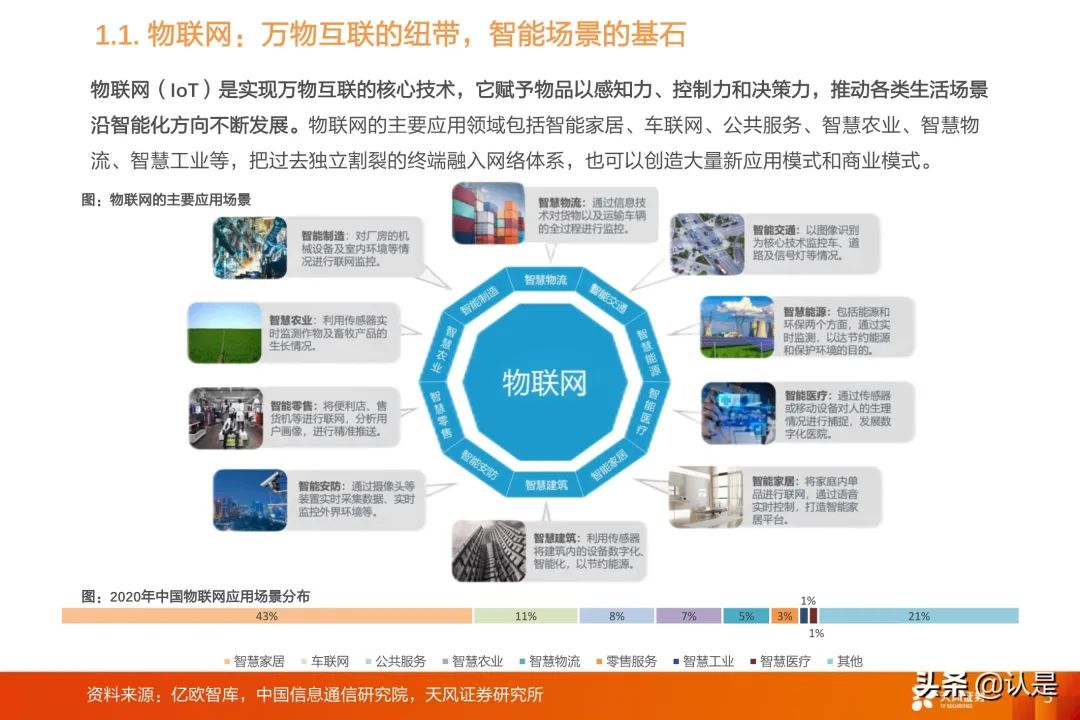
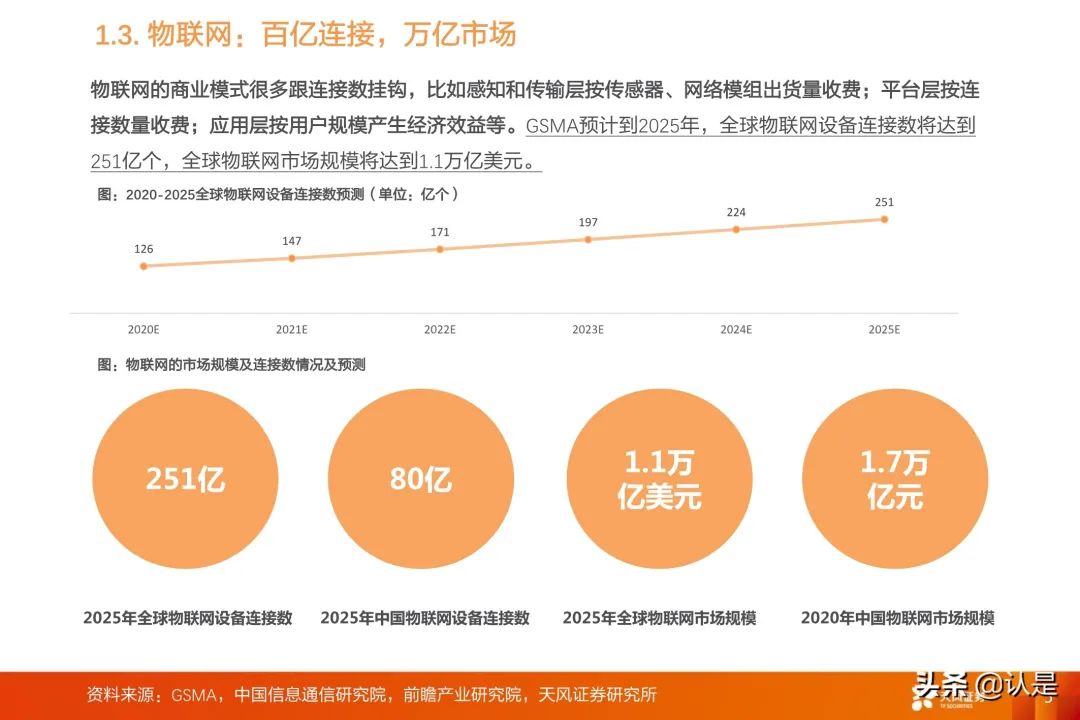
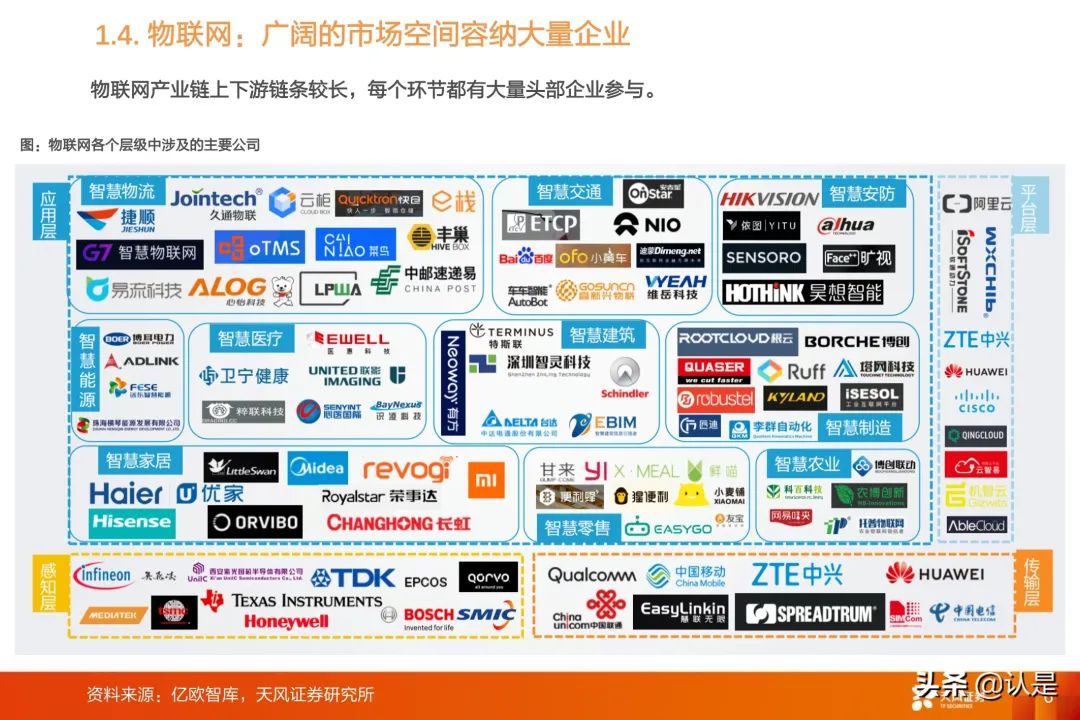
The Internet of Things (IoT) is the core technology for connecting everything. It endows objects with perception, control, and decision-making capabilities, driving various life scenarios towards continuous intelligent development. The main application areas of IoT include smart homes, vehicle networking, public services, smart agriculture, smart logistics, and smart industry, integrating previously isolated terminals into a network system, which can also create a large number of new application models and business models.Many IoT business models are linked to the number of connections, for example, charging based on the shipment of sensors and network modules in the perception and transmission layers; charging based on the number of connections in the platform layer; generating economic benefits in the application layer based on user scale, etc. GSMA predicts that by 2025, the number of global IoT device connections will reach 25.1 billion, and the global IoT market size will reach 1.1 trillion USD.
2 Perception Layer – The Hub of Physical Perception
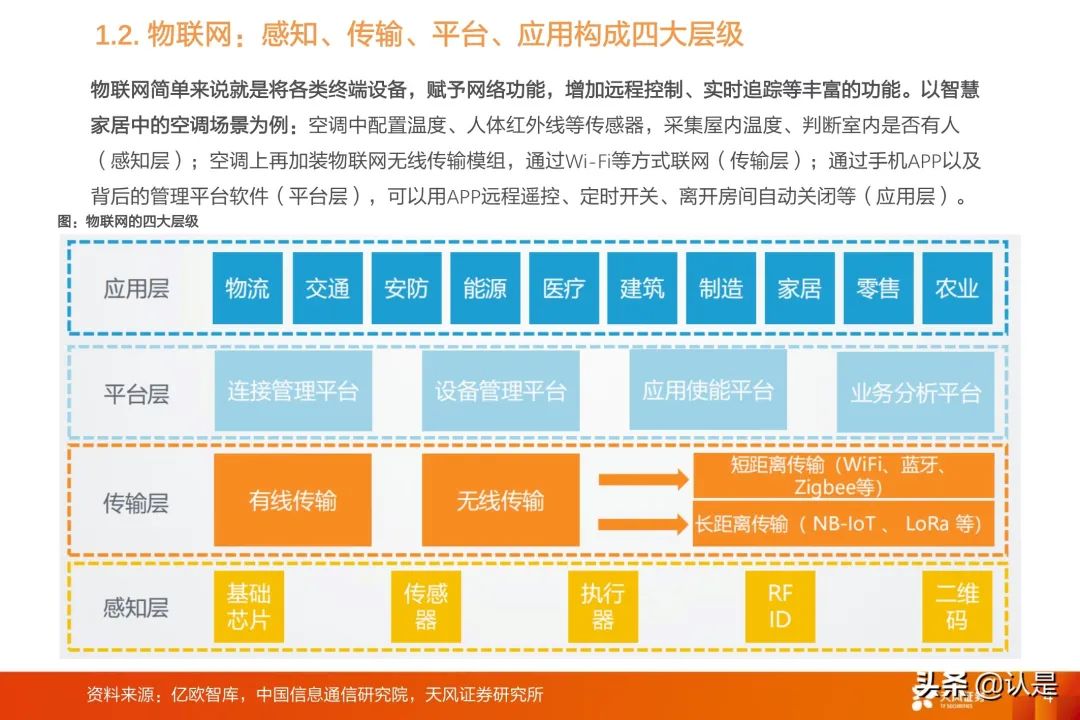
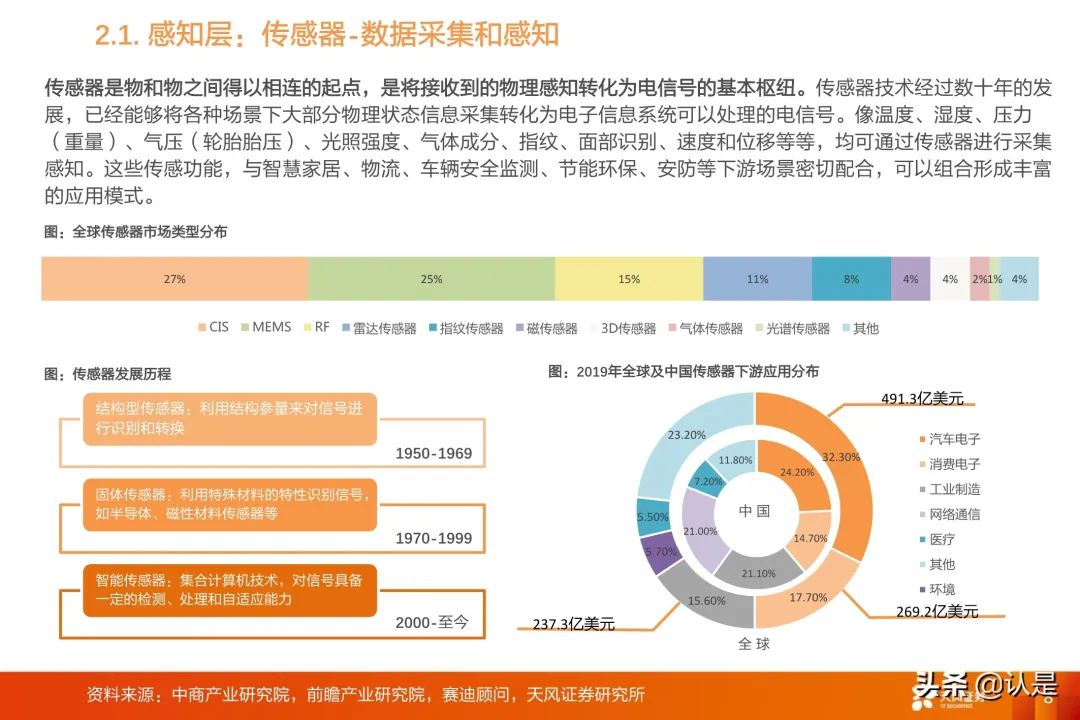
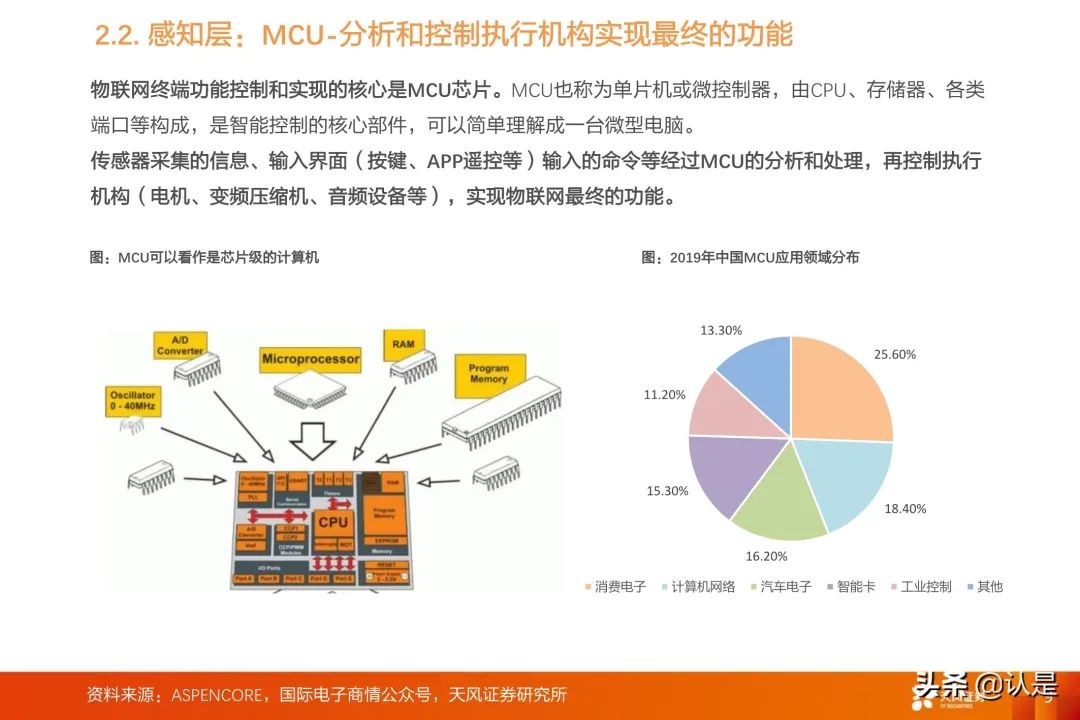
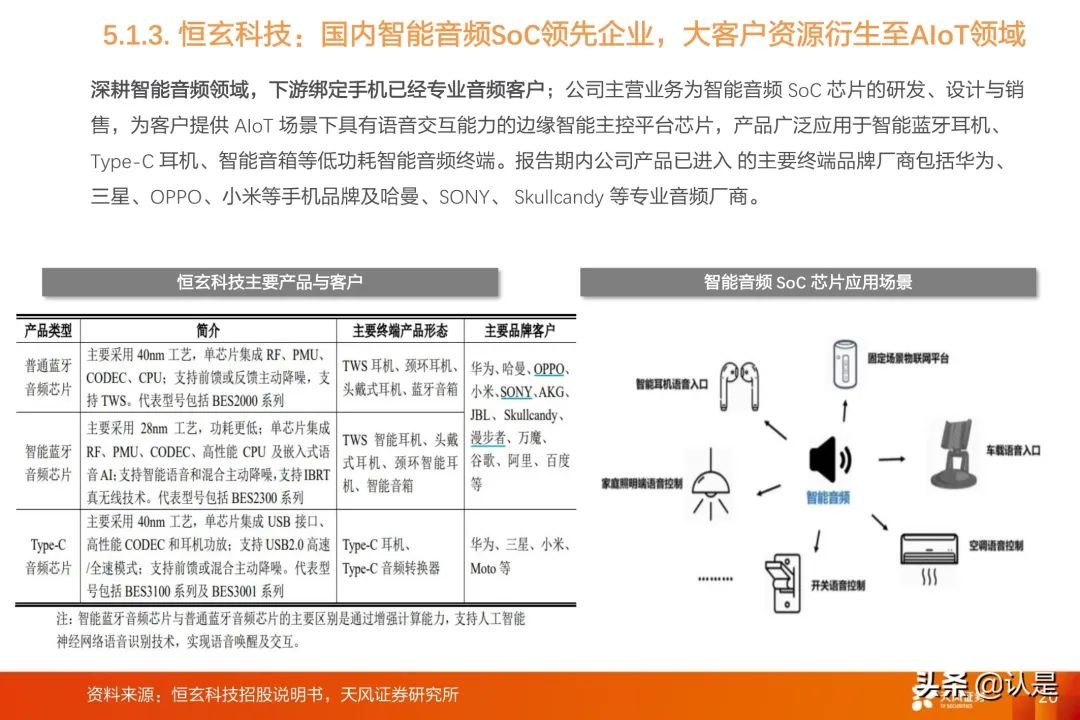
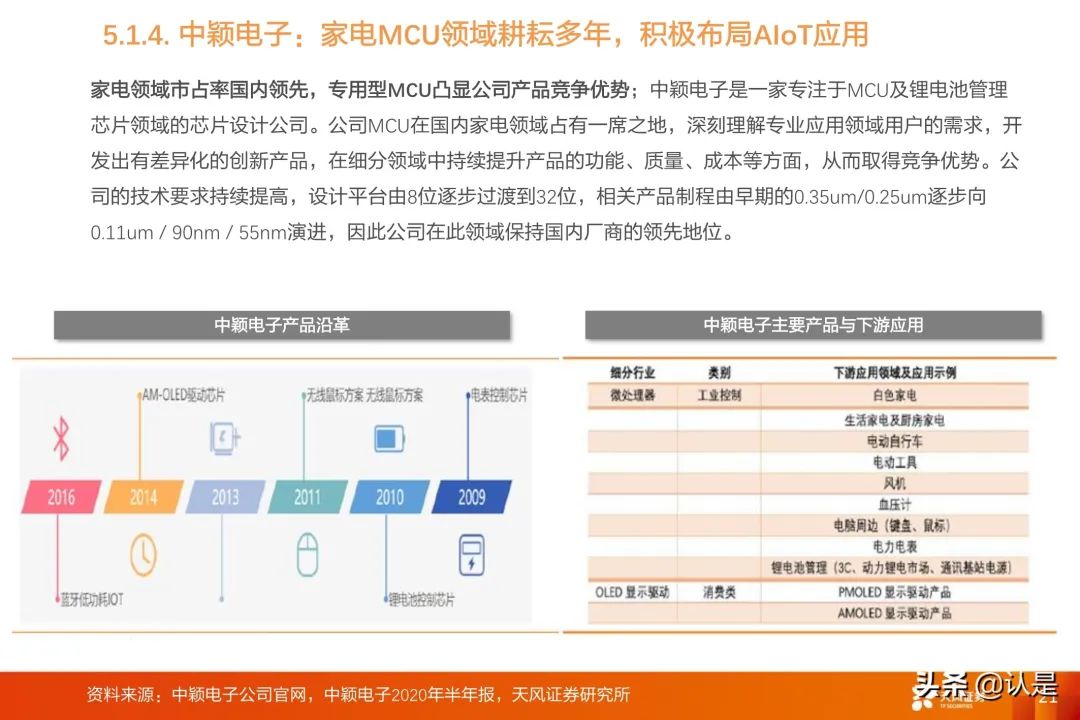
Sensors are the starting point for connecting objects, serving as the basic hub that converts received physical perceptions into electrical signals. After decades of development, sensor technology can now collect and convert most physical state information in various scenarios into electrical signals that electronic information systems can process. Information such as temperature, humidity, pressure (weight), atmospheric pressure (tire pressure), light intensity, gas composition, fingerprints, facial recognition, speed, and displacement can all be collected through sensors. These sensing functions closely cooperate with downstream scenarios such as smart homes, logistics, vehicle safety monitoring, energy conservation and environmental protection, and security, forming a rich array of application models.The core of controlling and implementing IoT terminal functions is the MCU chip. The MCU, also known as a microcontroller, consists of a CPU, memory, various ports, etc., and is the core component of intelligent control, which can be simply understood as a miniature computer. The information collected by the sensor, commands input through interfaces (buttons, APP remote control, etc.), are analyzed and processed by the MCU, which then controls the execution mechanisms (motors, variable frequency compressors, audio devices, etc.) to realize the final functions of the IoT.
3 Transmission Layer – The Pipeline for Information Transfer
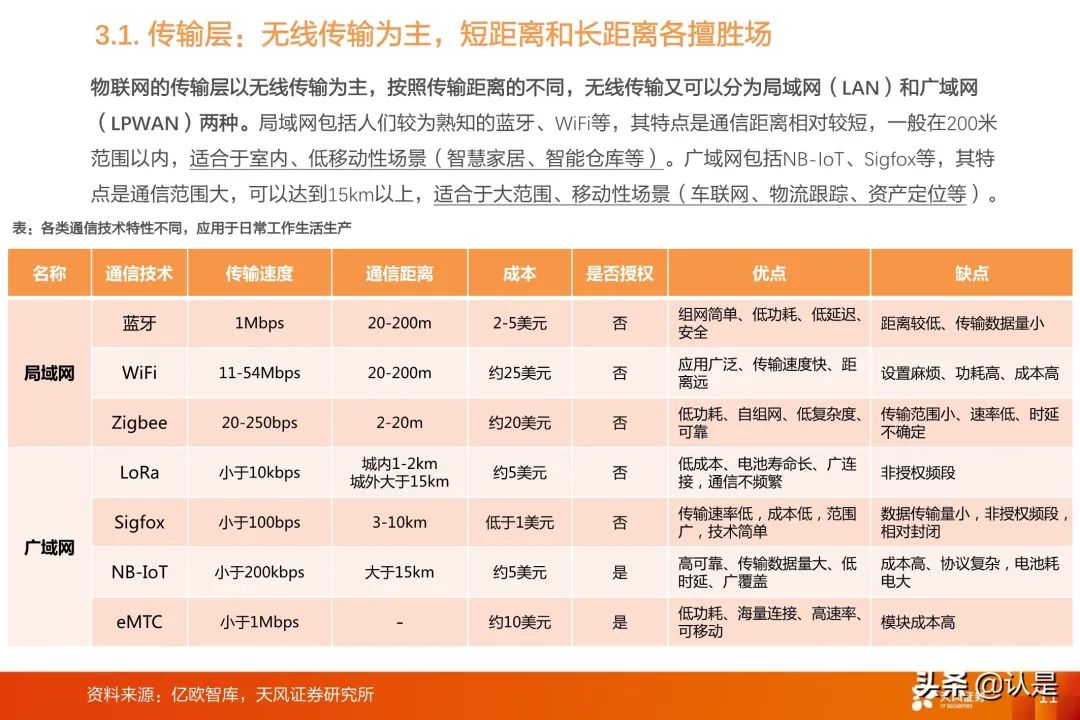
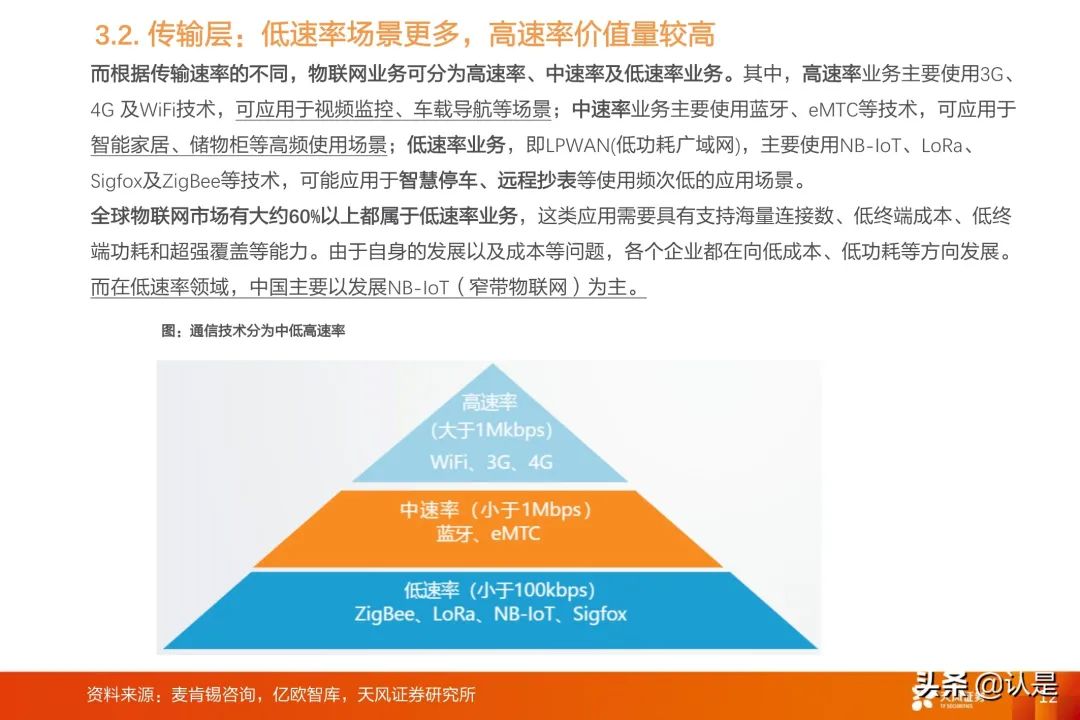
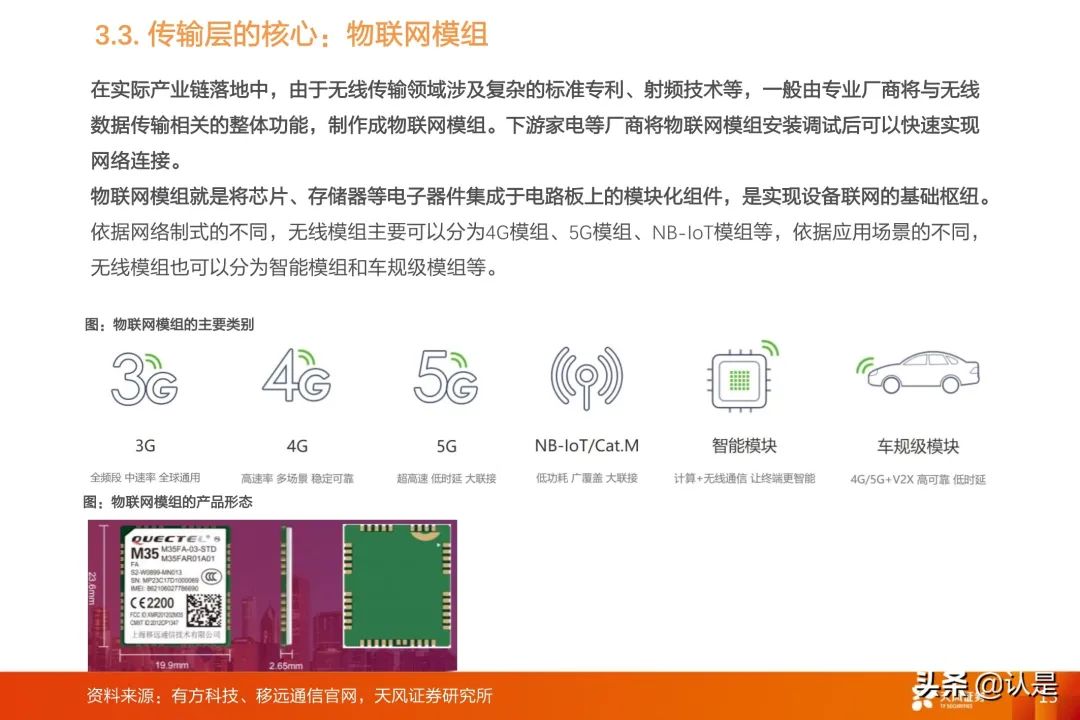
3.1. Mainly Wireless Transmission, Short and Long Distances Each ExcelThe transmission layer of IoT is mainly based on wireless transmission. Depending on the transmission distance, wireless transmission can be divided into local area networks (LAN) and wide area networks (LPWAN). Local area networks include well-known technologies such as Bluetooth and WiFi, characterized by relatively short communication distances, generally within 200 meters, suitable for indoor and low mobility scenarios (smart homes, smart warehouses, etc.). Wide area networks include NB-IoT, Sigfox, etc., characterized by a large communication range, which can exceed 15 km, suitable for large-scale, mobile scenarios (vehicle networking, logistics tracking, asset positioning, etc.).3.2. More Low-Speed Scenarios, High-Speed Value is HigherAccording to the different transmission rates, IoT services can be divided into high-speed, medium-speed, and low-speed services. High-speed services mainly use 3G, 4G, and WiFi technologies, applicable to scenarios such as video surveillance and in-vehicle navigation; medium-speed services mainly use Bluetooth, eMTC, etc., applicable to high-frequency usage scenarios such as smart homes and storage lockers; low-speed services, namely LPWAN (Low Power Wide Area Network), mainly use NB-IoT, LoRa, Sigfox, and ZigBee technologies, applicable to low-frequency usage scenarios such as smart parking and remote meter reading.About 60% of the global IoT market belongs to low-speed services, which require capabilities to support massive connection numbers, low terminal costs, low terminal power consumption, and strong coverage. Due to their own development and cost issues, various enterprises are moving towards low-cost, low-power directions. In the low-speed domain, China mainly focuses on developing NB-IoT (Narrowband IoT).3.3. The Core of the Transmission Layer: IoT ModulesIn the actual implementation of the industry chain, due to the complex standards, patents, and radio frequency technologies involved in wireless transmission, professional manufacturers generally produce IoT modules that integrate the overall functions related to wireless data transmission. Downstream manufacturers of home appliances can quickly achieve network connectivity after installing and debugging the IoT modules.IoT modules are modular components that integrate chips, memory, and other electronic devices on a circuit board, serving as the basic hub for achieving device networking. Depending on the network standard, wireless modules can mainly be divided into 4G modules, 5G modules, NB-IoT modules, etc. Depending on the application scenario, wireless modules can also be divided into smart modules and automotive-grade modules.
4 Platform Layer – The Bridge for Application Realization
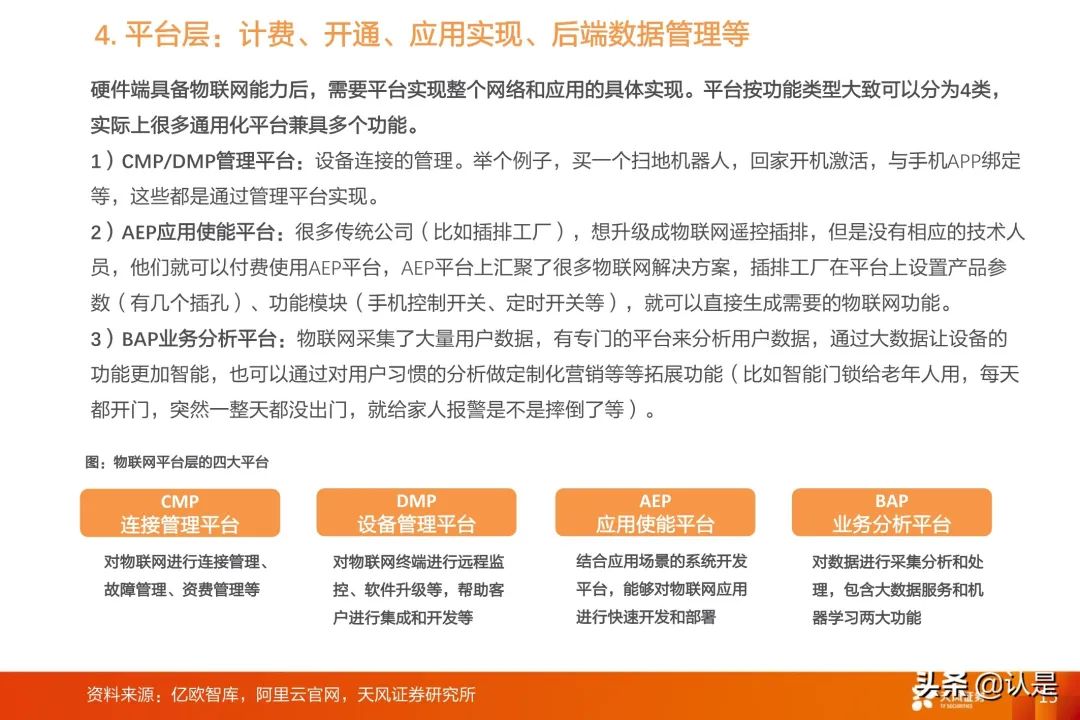
Billing, activation, application realization, backend data management, etc.Once the hardware has IoT capabilities, a platform is needed to realize the entire network and application. Platforms can be roughly divided into four types based on functional types, and many generalized platforms actually have multiple functions.1) CMP/DMP Management Platform: Management of device connections. For example, buying a robot vacuum cleaner, turning it on at home, activating it, binding it with a mobile APP, etc., are all realized through the management platform.2) AEP Application Enablement Platform: Many traditional companies (such as power strip factories) want to upgrade to IoT remote-controlled power strips but lack the corresponding technical personnel; they can pay to use the AEP platform, which aggregates many IoT solutions. The power strip factory can set product parameters (how many sockets), functional modules (mobile control switch, timed switch, etc.) on the platform to directly generate the required IoT functionality.3) BAP Business Analysis Platform: The IoT collects a large amount of user data, and there are specialized platforms to analyze user data. Through big data, the functionality of devices can be made smarter, and customized marketing can also be done by analyzing user habits, etc. (for example, if a smart lock used by the elderly does not open the door all day, it can alert family members to check if they have fallen).
5 Application Layer – A Flourishing Industry Chain Development
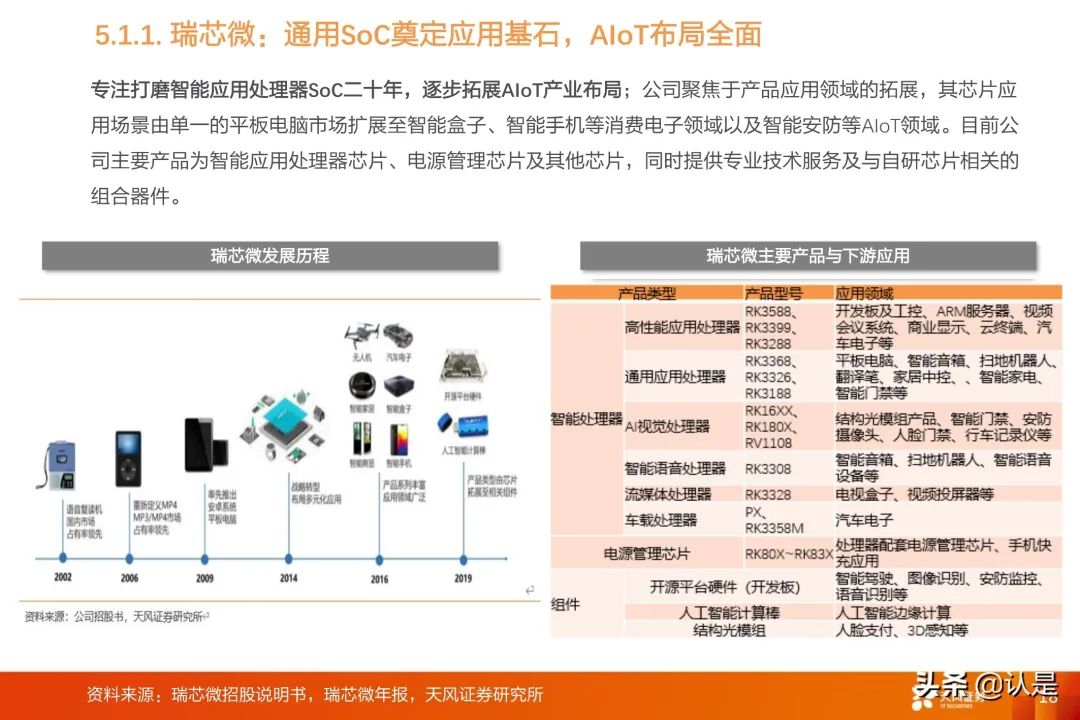
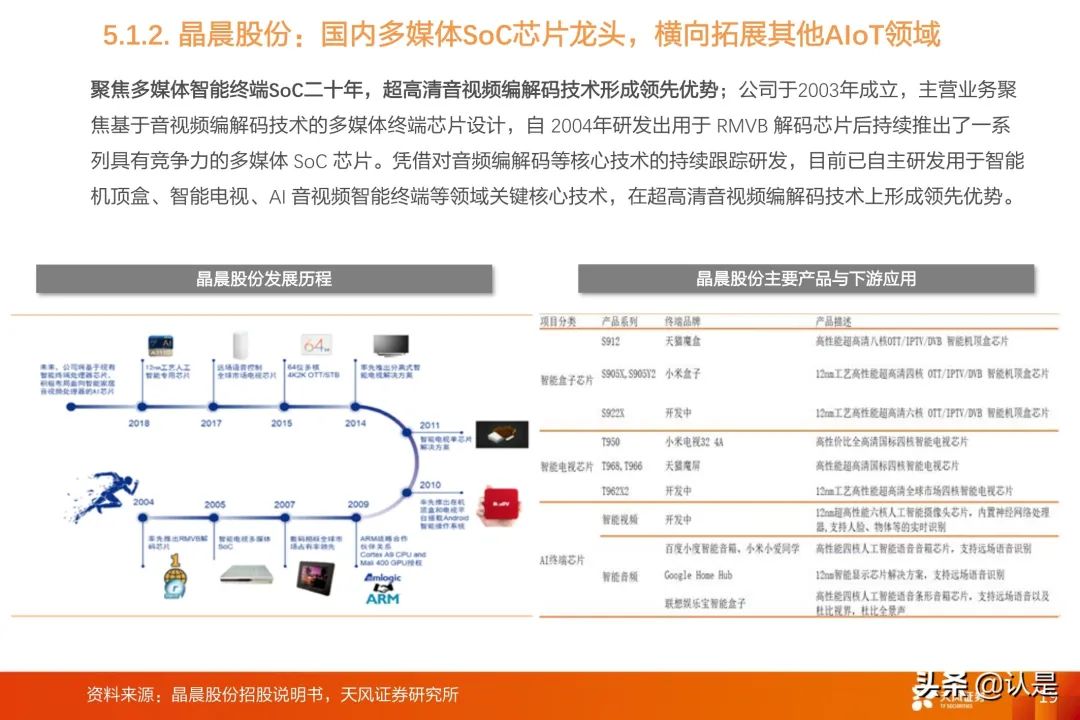
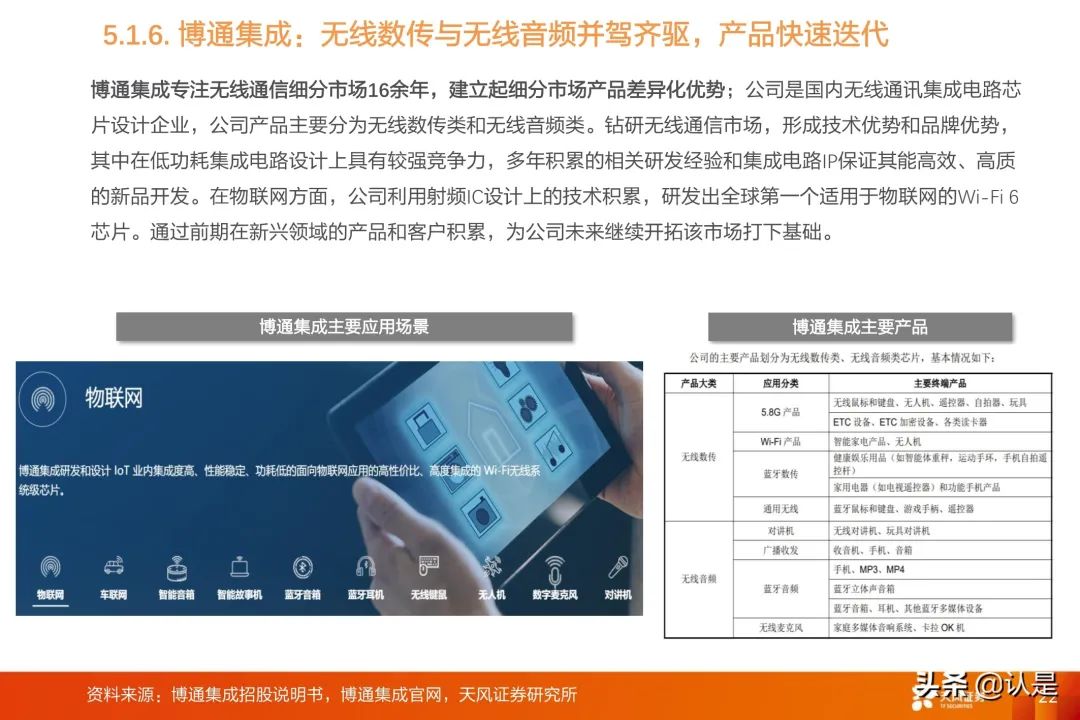
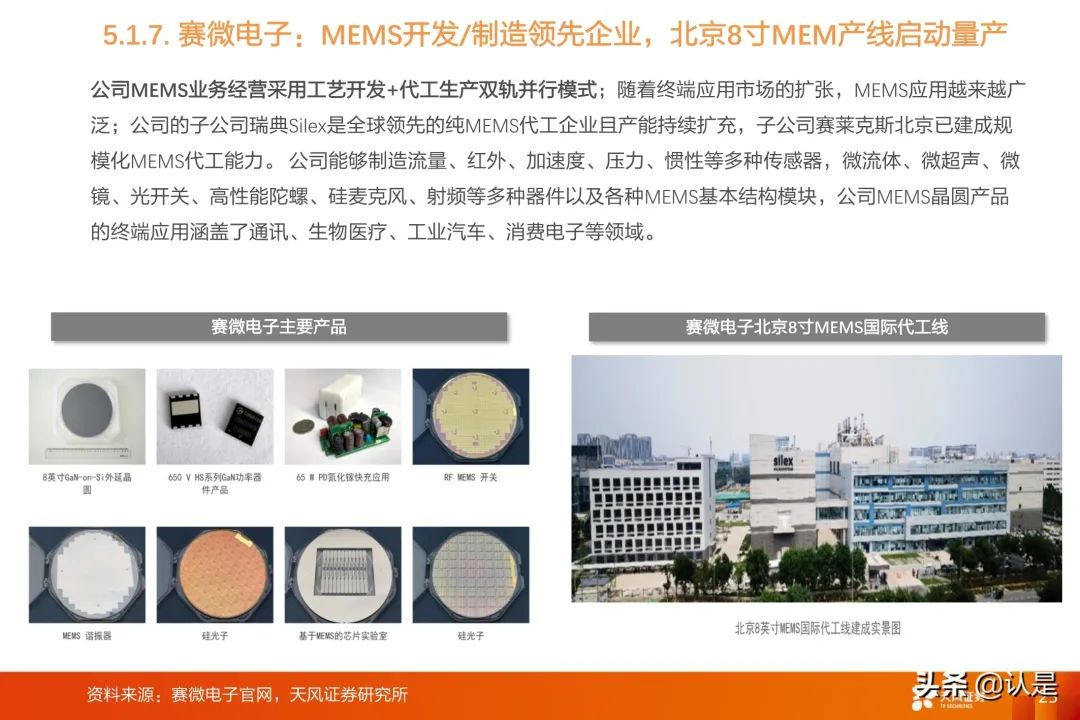
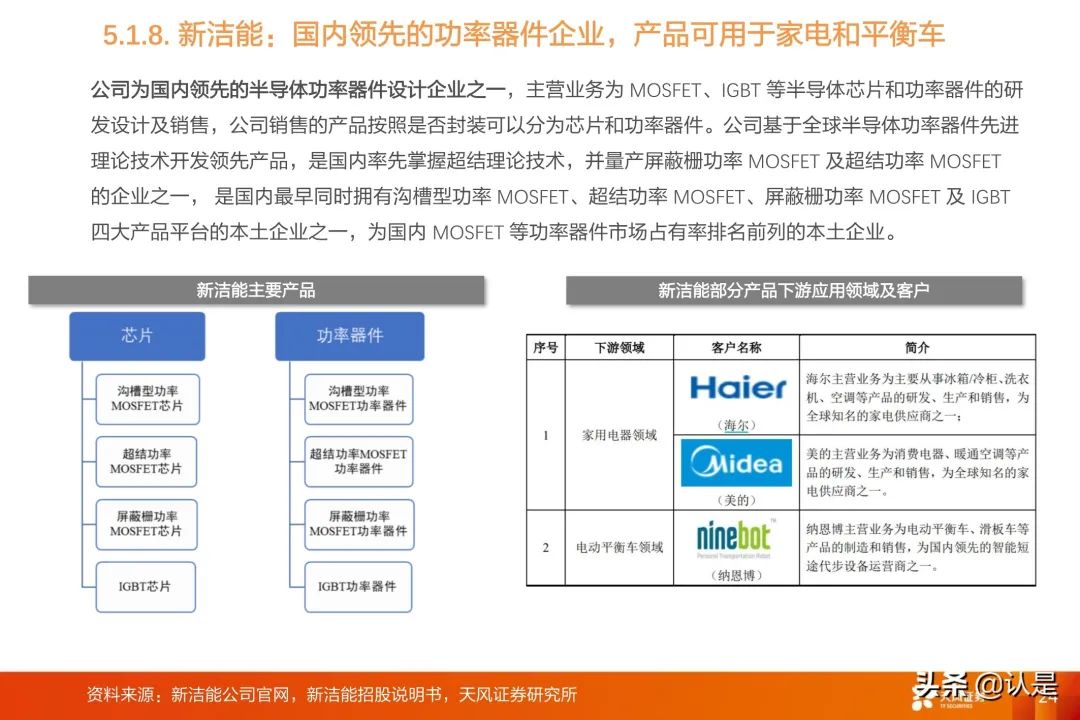
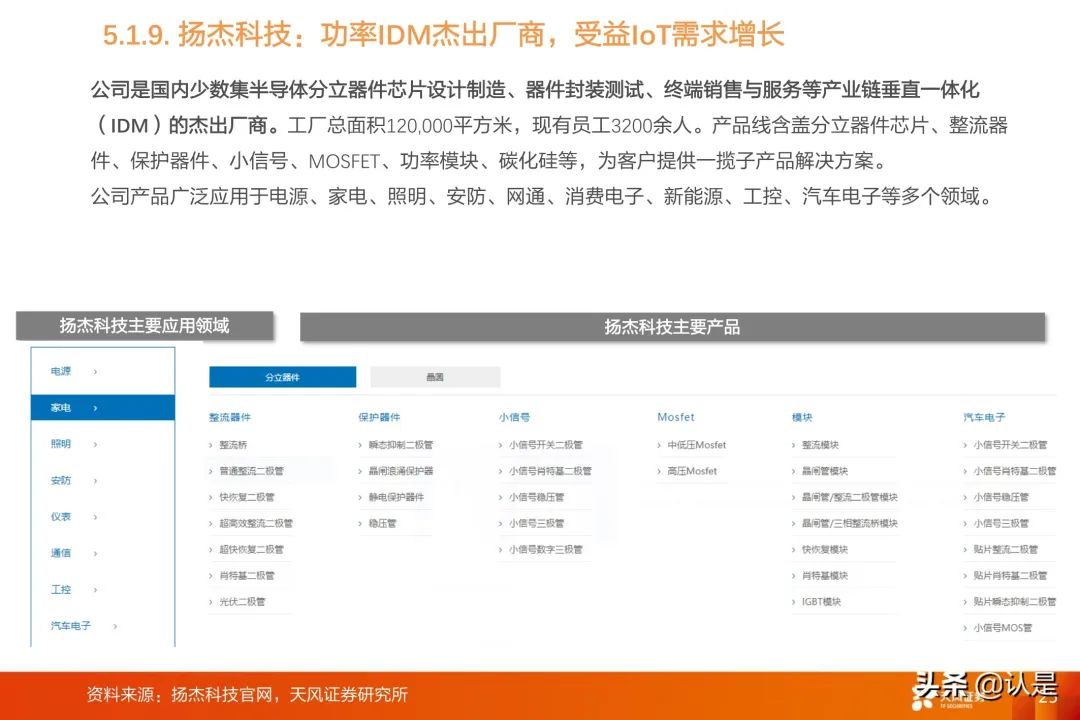
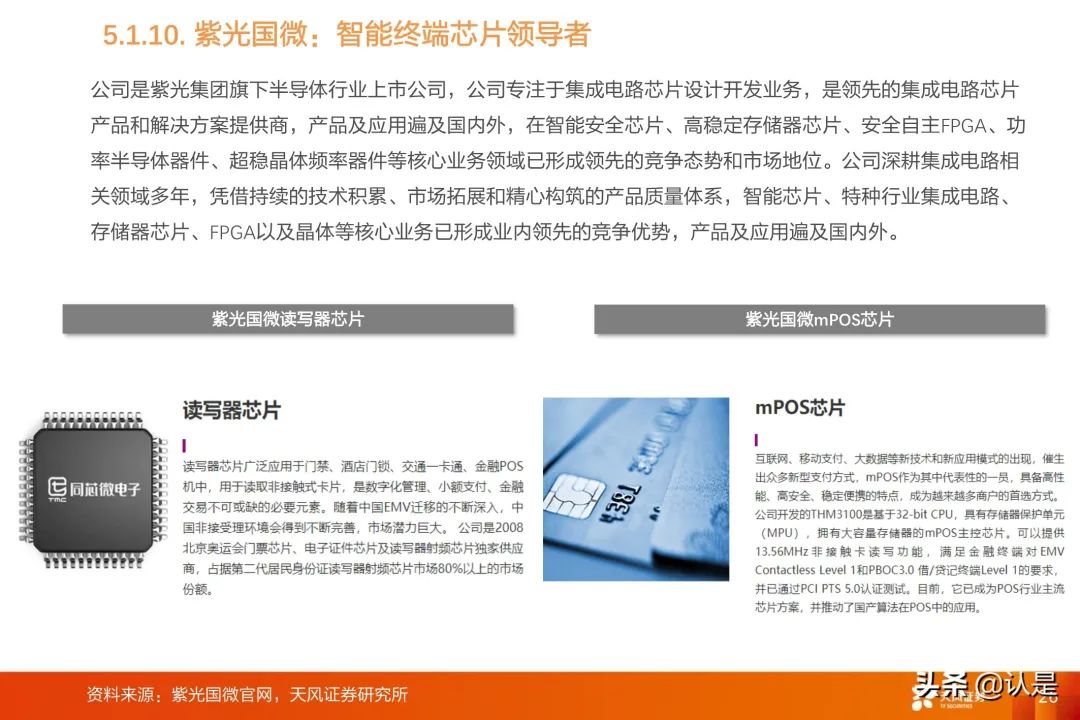
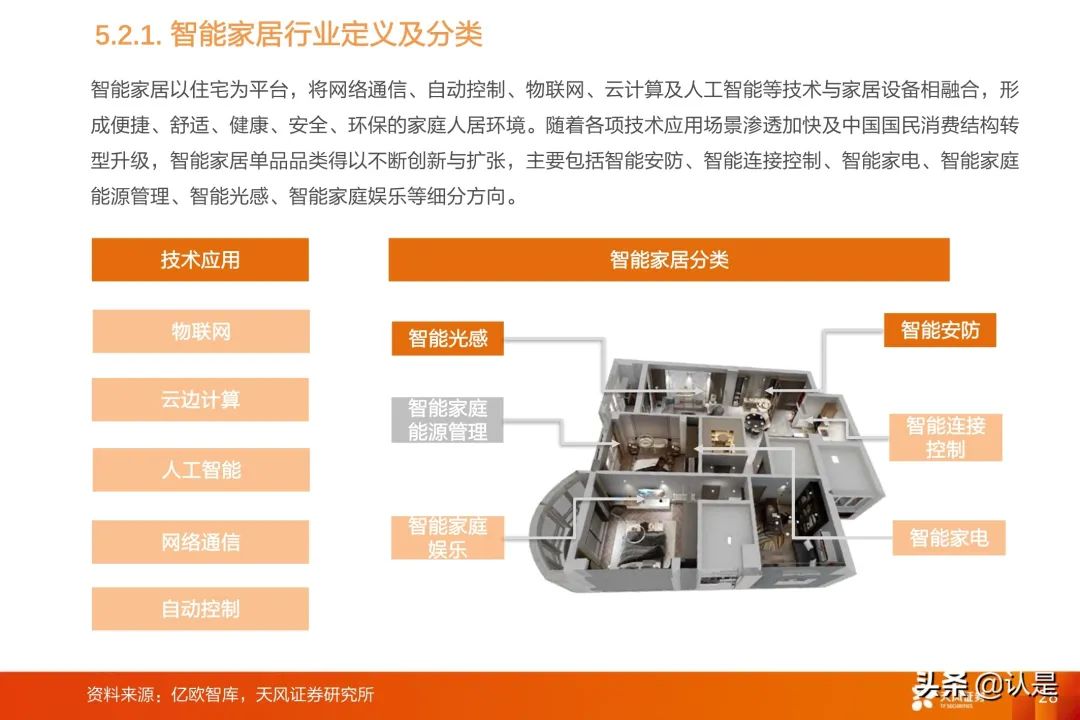
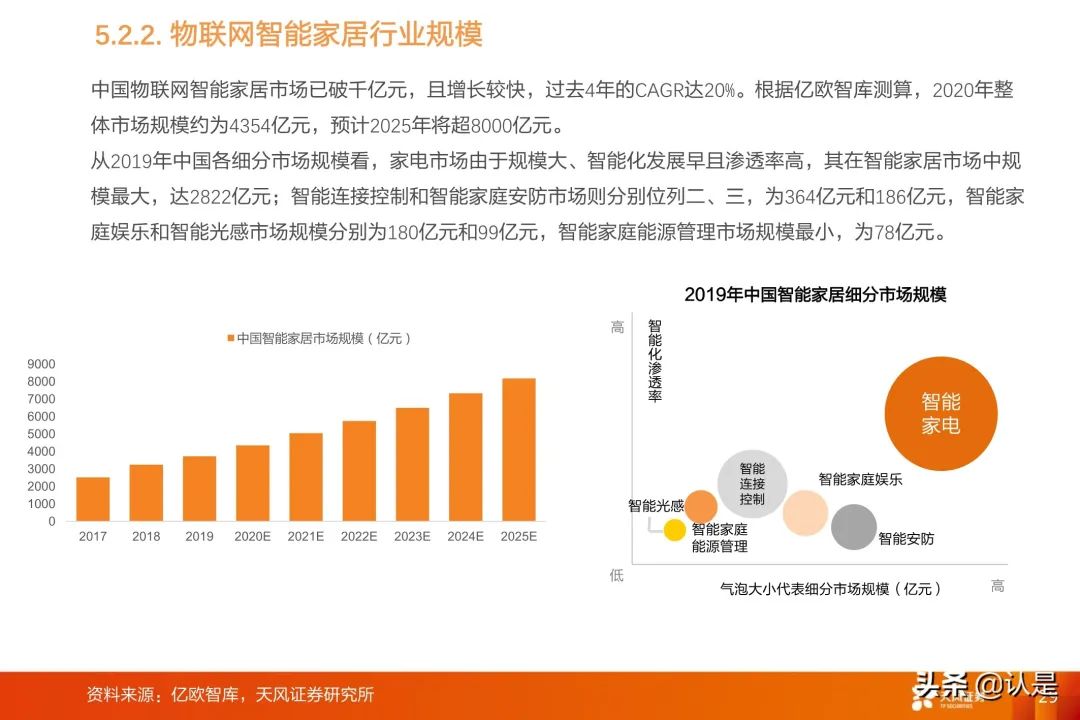
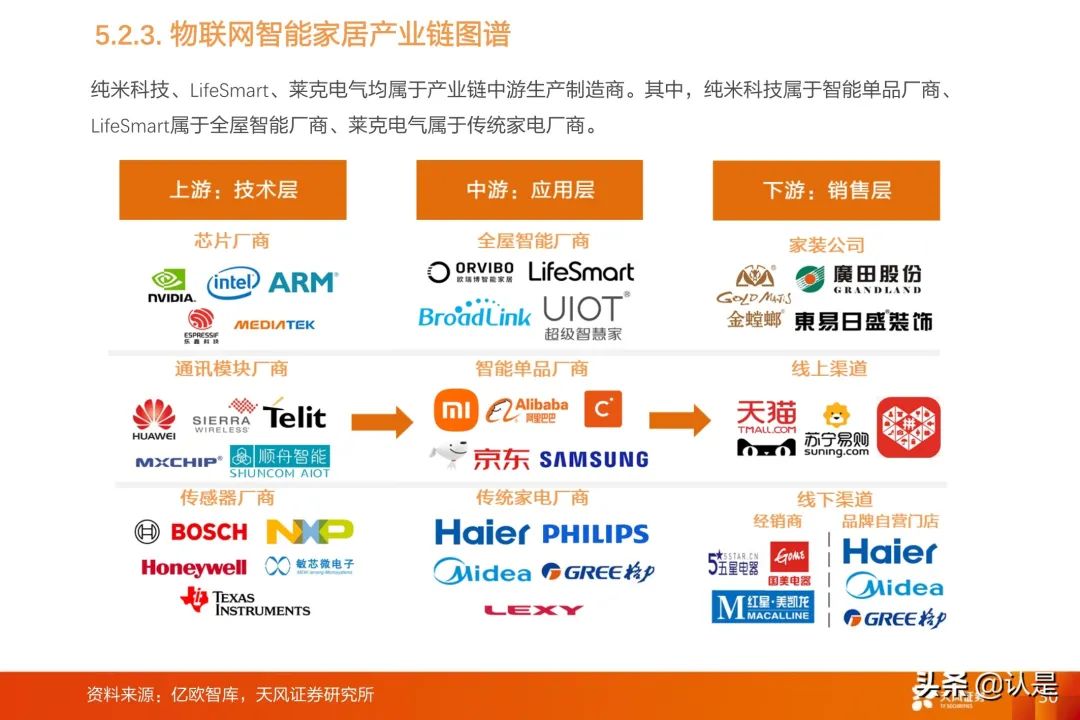
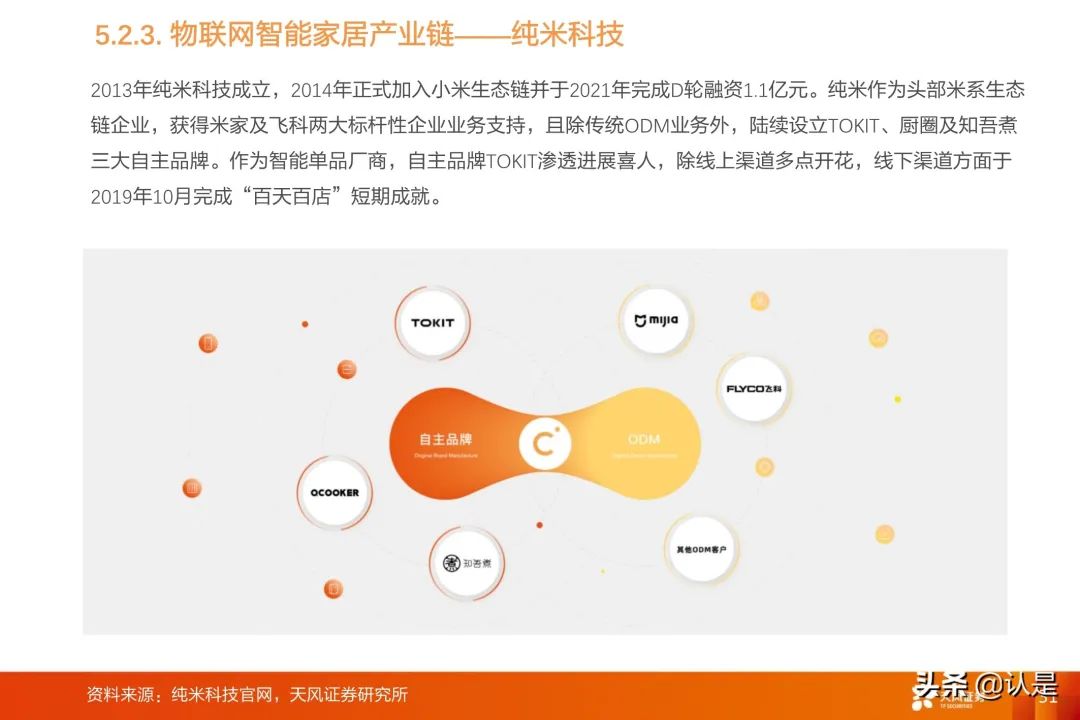
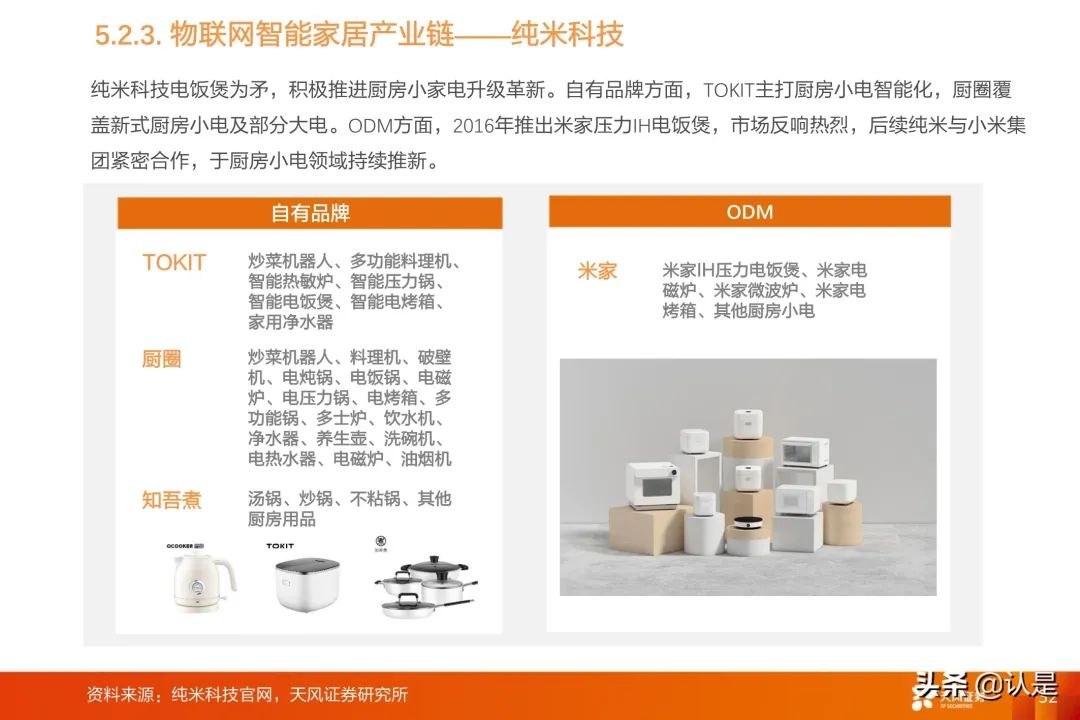
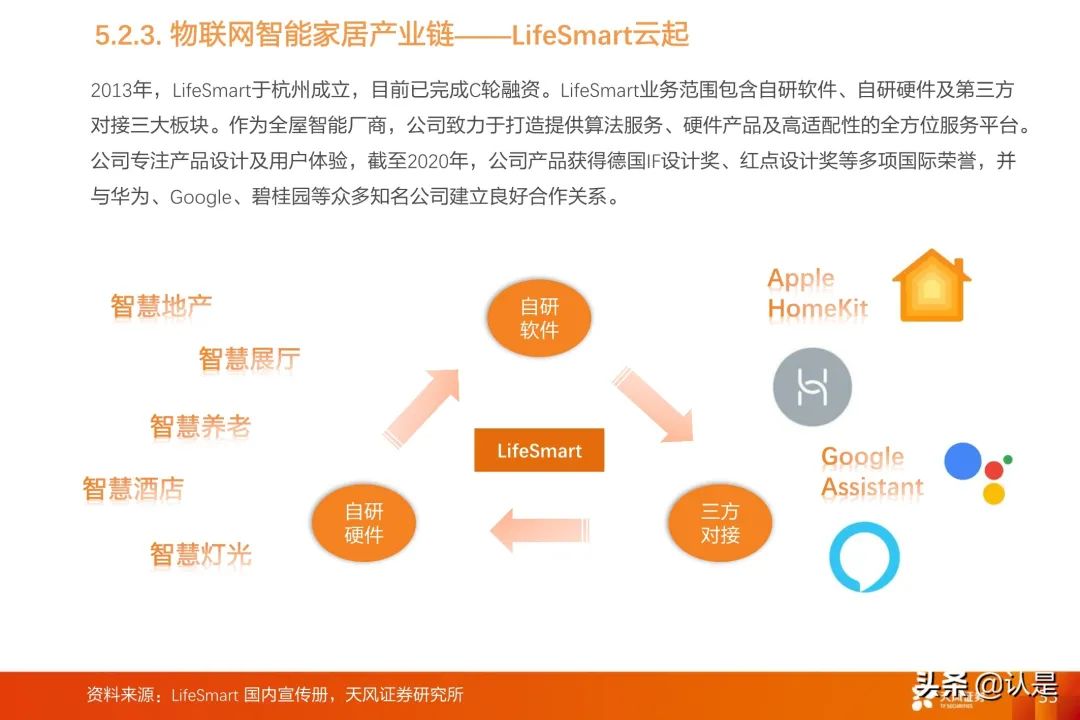
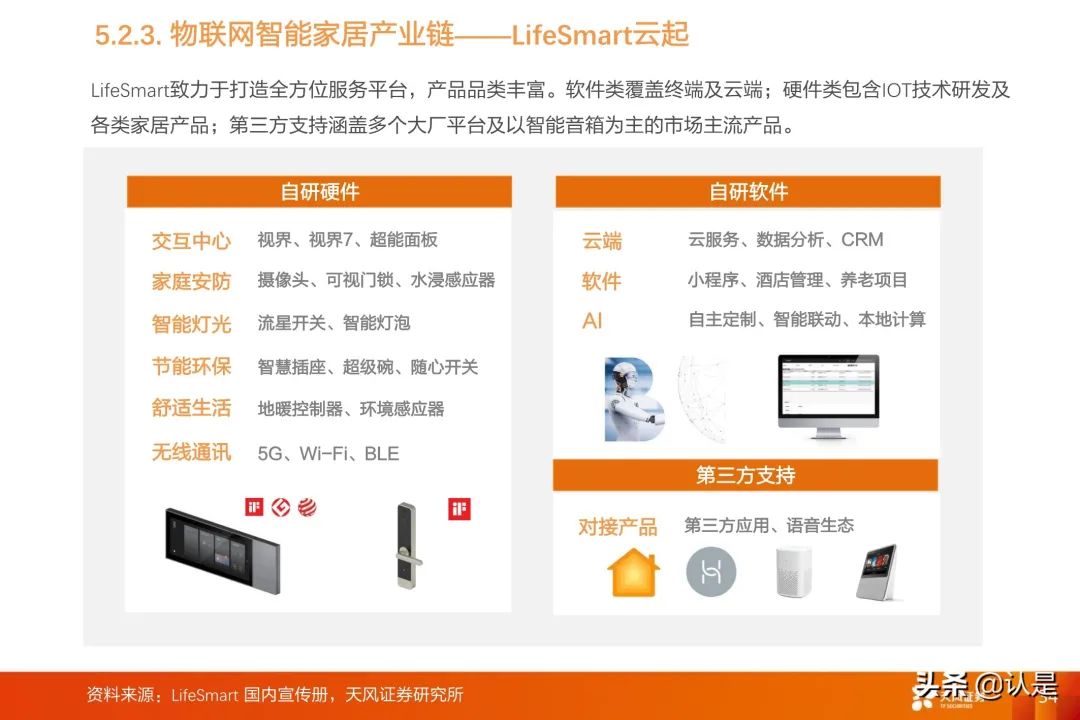
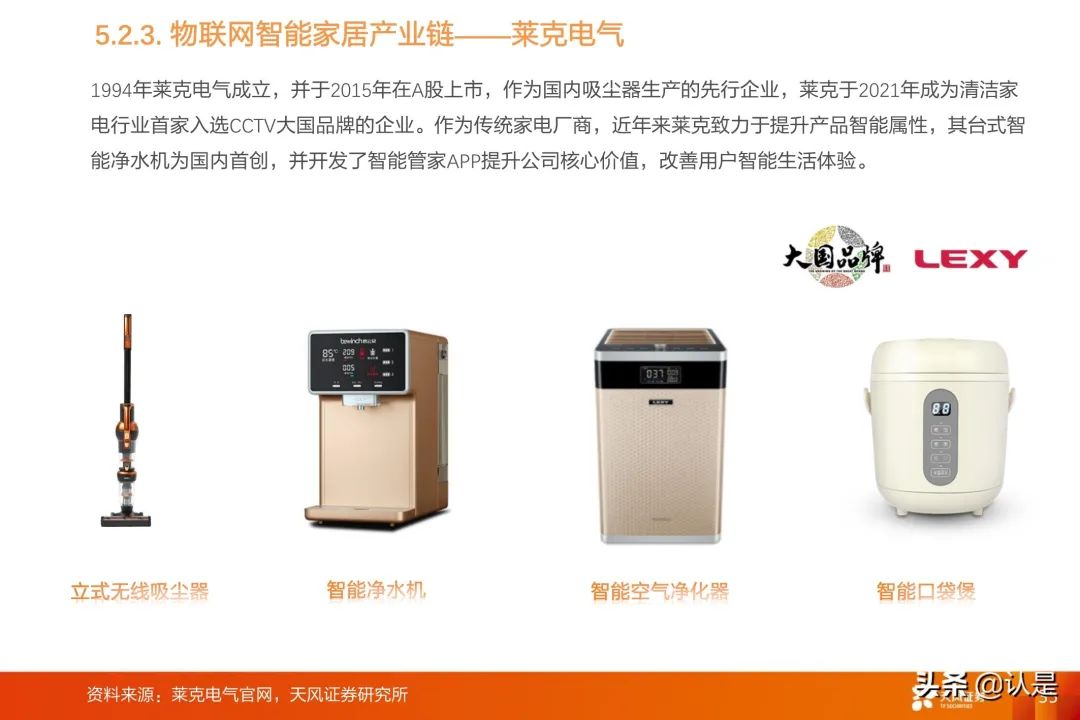
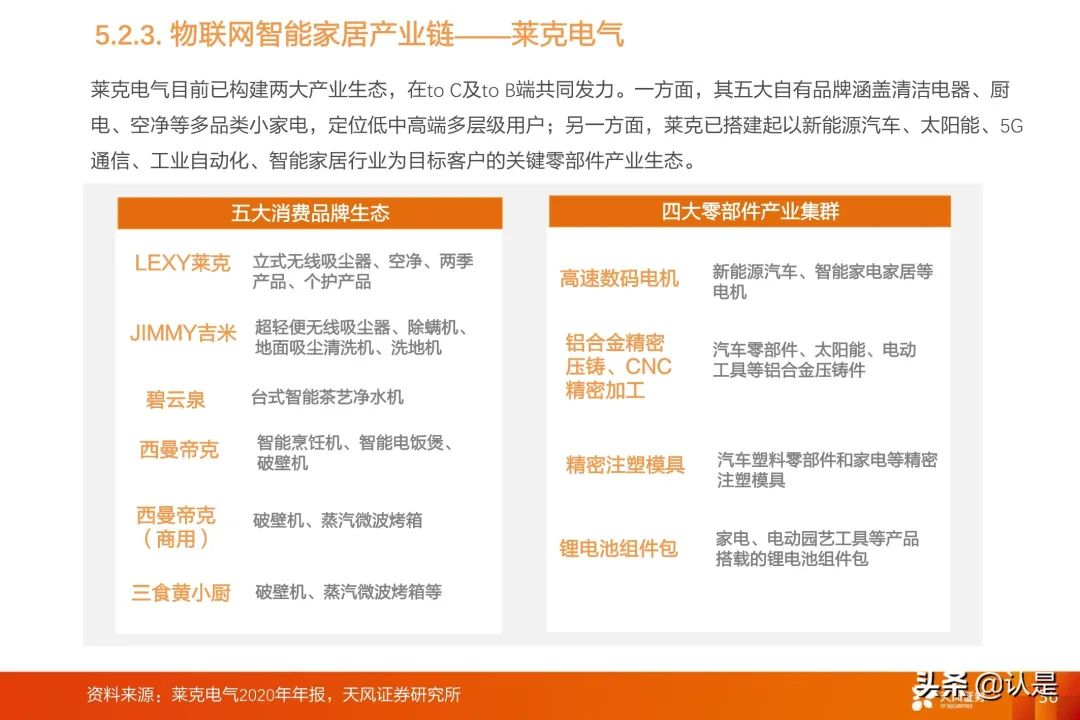
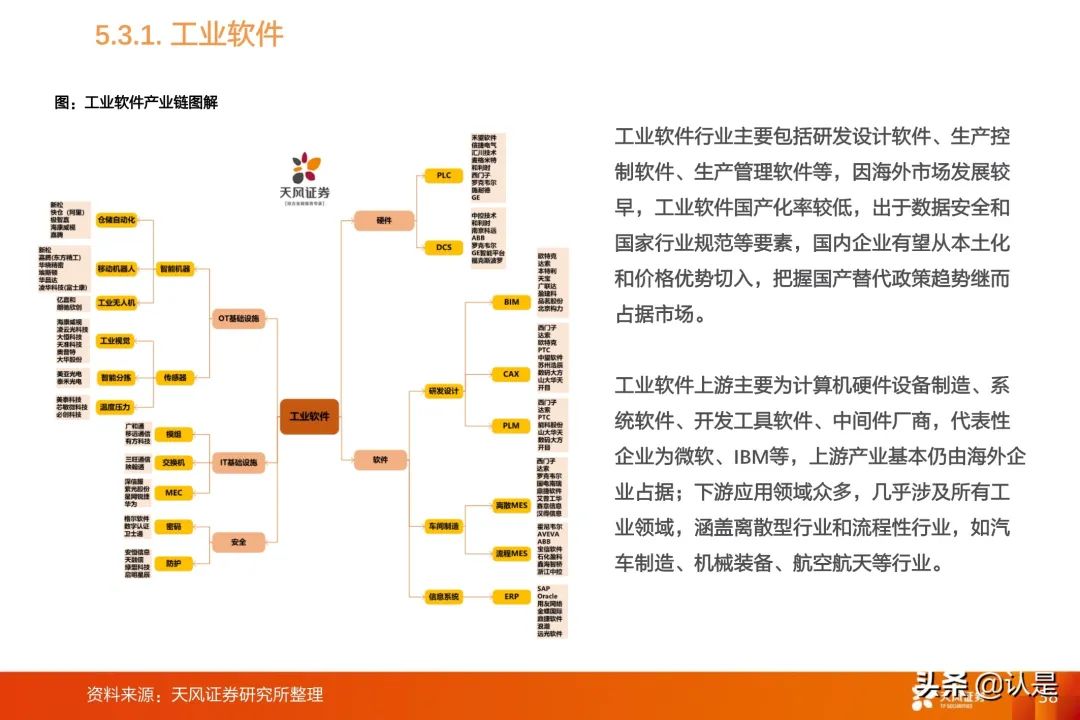
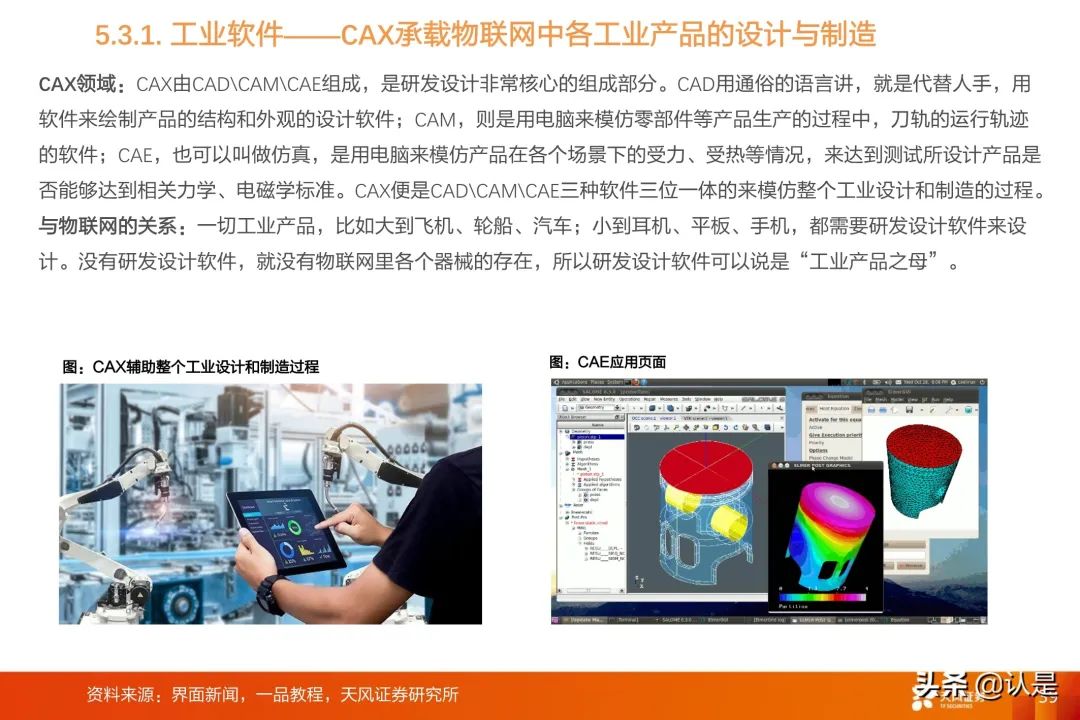
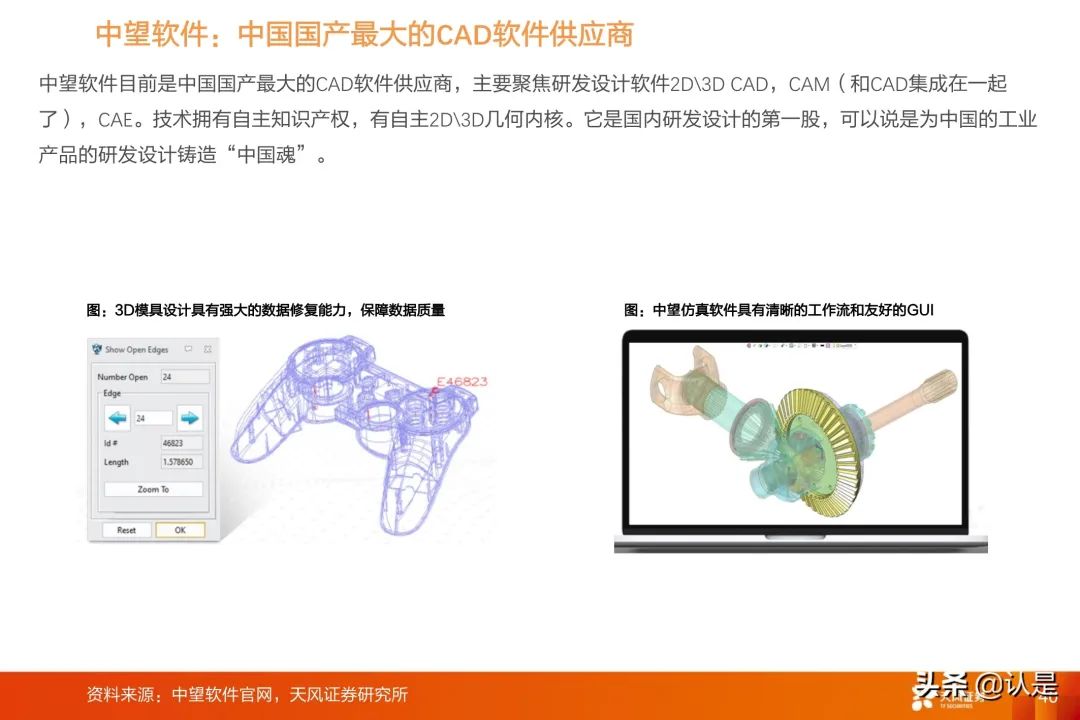
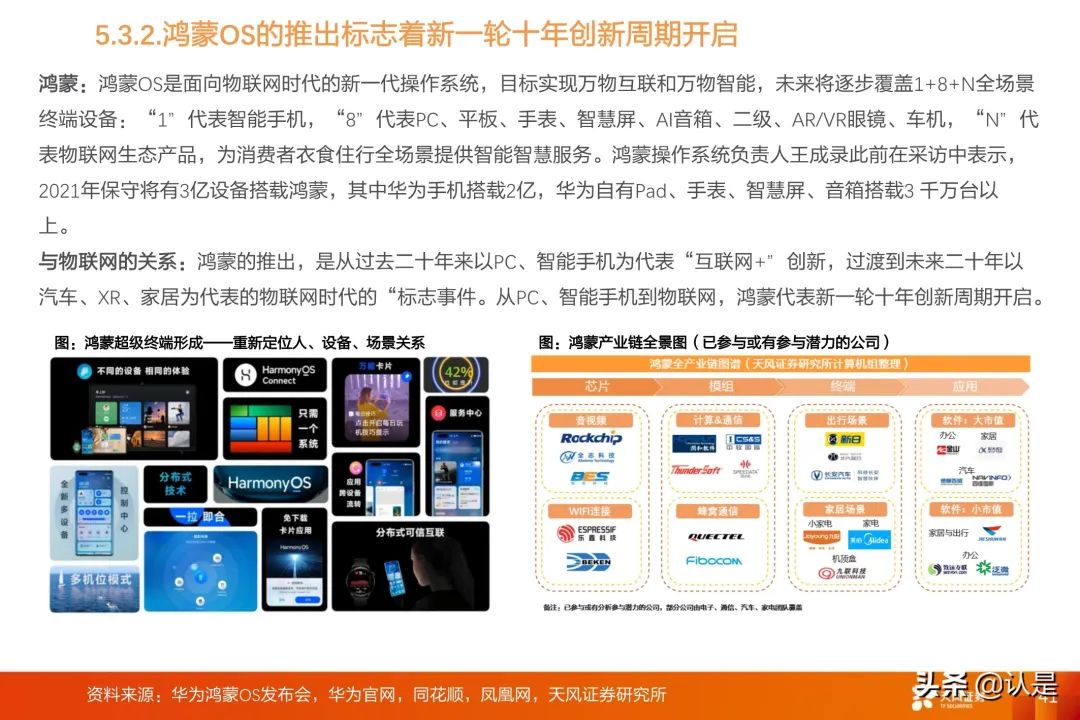
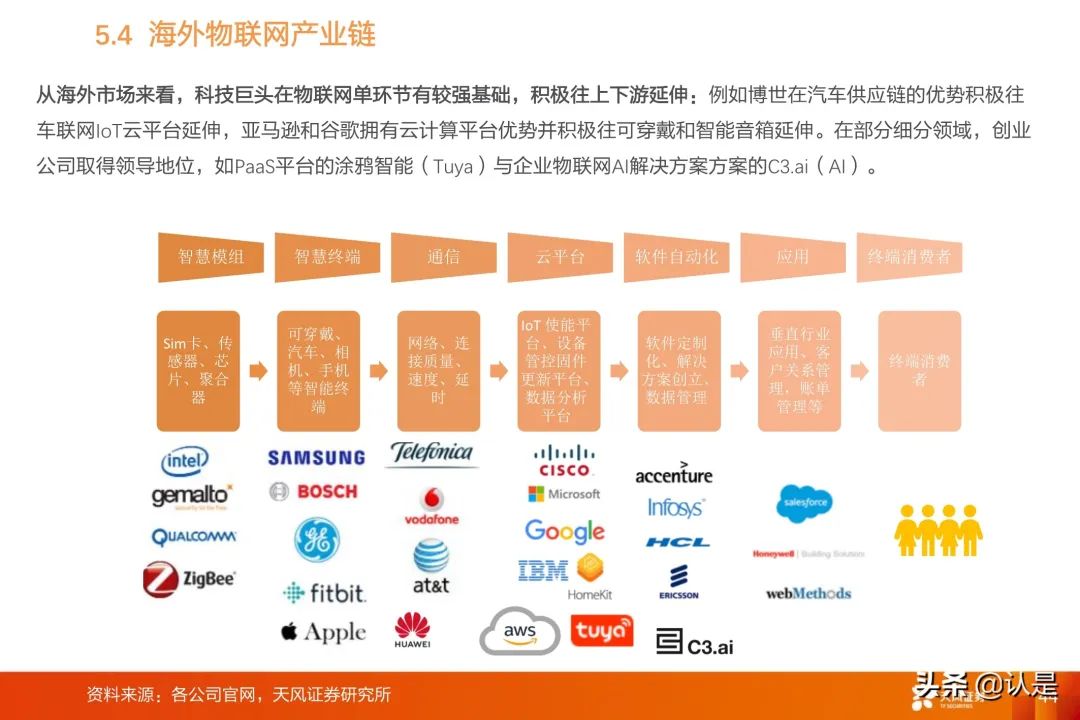
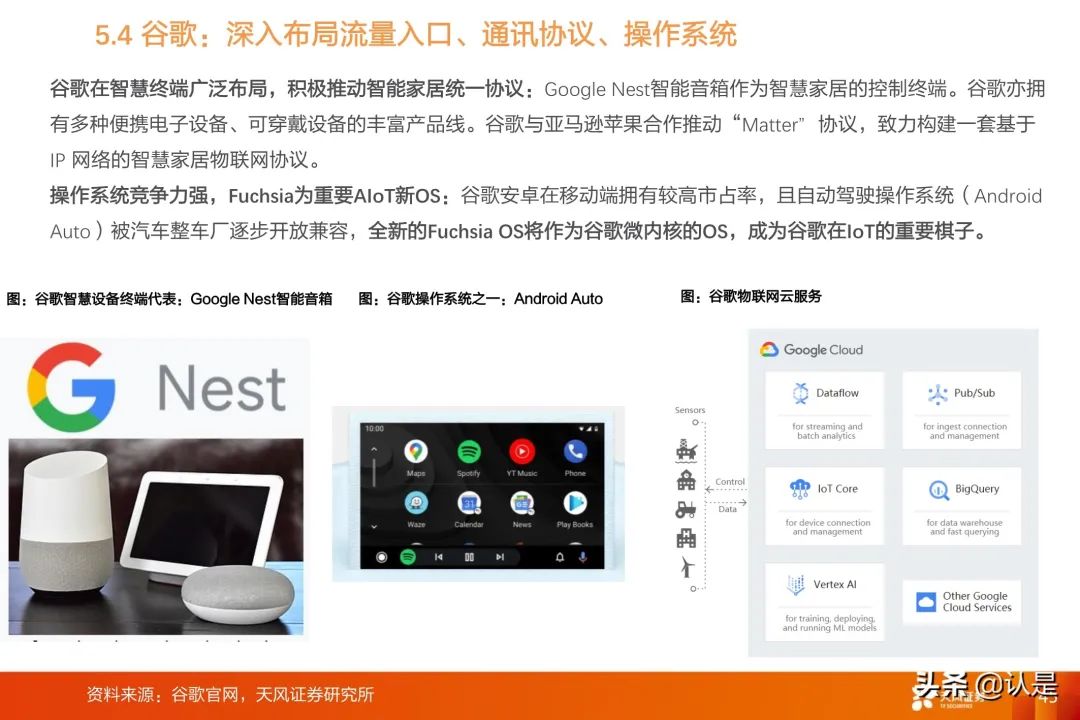
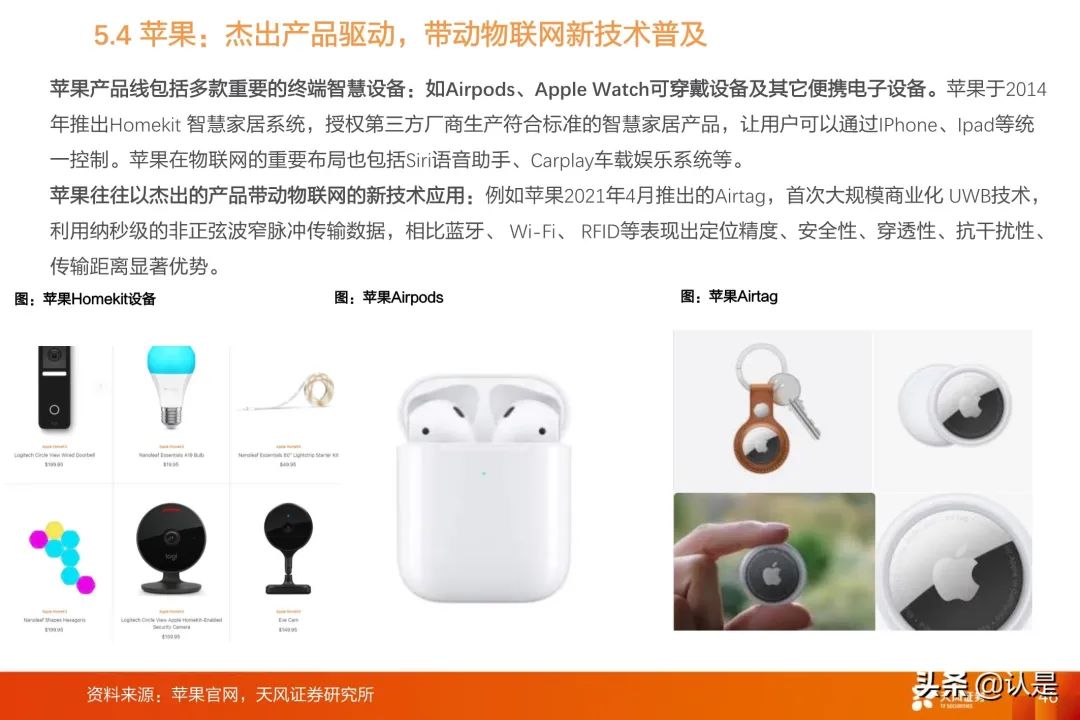
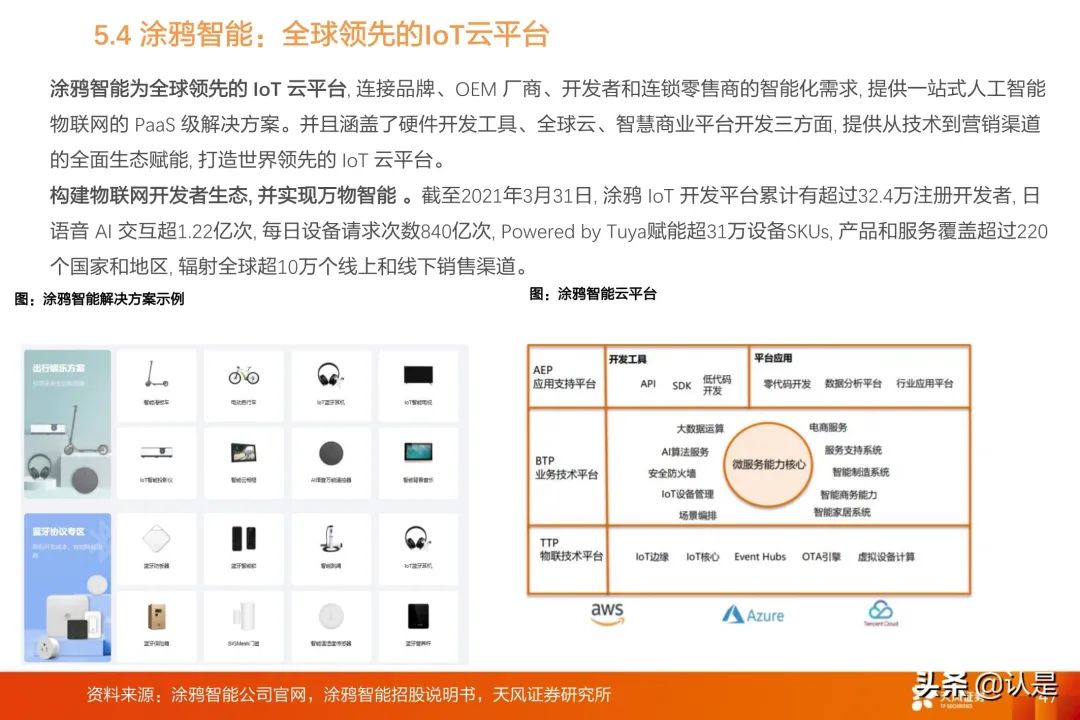
5.1 Chips Forge Diverse Downstream Applications of IoT5.1.1. Rockchip: General SoC Lays the Foundation for Applications, Comprehensive AIoT LayoutFocusing on refining smart application processors SoC for twenty years, gradually expanding the AIoT industry layout; the company focuses on expanding its product application fields, its chip application scenarios have expanded from the single tablet market to consumer electronics such as smart boxes, smartphones, and AIoT fields such as smart security. Currently, the company’s main products include smart application processor chips, power management chips, and other chips, while providing professional technical services and components related to self-developed chips.5.1.2. Amlogic: A Domestic Leader in Multimedia SoC Chips, Horizontally Expanding into Other AIoT FieldsFocusing on multimedia smart terminal SoC for twenty years, leading advantages formed in ultra-high-definition audio and video encoding and decoding technology; the company was established in 2003, with its main business focusing on designing multimedia terminal chips based on audio and video encoding and decoding technology. Since developing the RMVB decoding chip in 2004, it has continuously launched a series of competitive multimedia SoC chips. By continuously tracking and researching core technologies such as audio encoding and decoding, it has independently developed key technologies for smart set-top boxes, smart TVs, and AI audio and video intelligent terminals, forming leading advantages in ultra-high-definition audio and video encoding and decoding technology.5.2 Smart Home5.2.1. Definition and Classification of Smart Home IndustrySmart home uses residential platforms to integrate technologies such as network communication, automatic control, IoT, cloud computing, and artificial intelligence with home devices, creating a convenient, comfortable, healthy, safe, and environmentally friendly living environment. With the accelerated penetration of various technology application scenarios and the transformation and upgrading of the consumption structure of Chinese citizens, the categories of smart home products continue to innovate and expand, mainly including smart security, smart connection control, smart appliances, smart home energy management, smart lighting, and smart home entertainment.5.2.2. Scale of the IoT Smart Home IndustryThe Chinese IoT smart home market has exceeded 100 billion yuan, and it is growing rapidly, with a CAGR of 20% over the past four years. According to estimates from Yiou Think Tank, the overall market size in 2020 was approximately 435.4 billion yuan, and it is expected to exceed 800 billion yuan by 2025. From the scale of various segments in China in 2019, the appliance market, due to its large scale, early intelligent development, and high penetration rate, is the largest in the smart home market, reaching 282.2 billion yuan; smart connection control and smart home security markets rank second and third, at 36.4 billion yuan and 18.6 billion yuan respectively, while the smart home entertainment and smart lighting markets are 18 billion yuan and 9.9 billion yuan, with smart home energy management being the smallest at 7.8 billion yuan.5.3 Industrial Software and HarmonyOS5.3.1. Industrial Software – CAX Carries the Design and Manufacturing of Various Industrial Products in IoTCAX Field: CAX consists of CAD, CAM, and CAE, which are core components of R&D design. In simple terms, CAD is software that replaces manual drawing to design the structure and appearance of products; CAM is software that simulates the running trajectories of tools during the production process of components and products; CAE, also known as simulation, is software that simulates the stress, heat, and other conditions of products in various scenarios to test whether the designed product meets relevant mechanical and electromagnetic standards. CAX integrates CAD, CAM, and CAE to simulate the entire industrial design and manufacturing process.Relationship with IoT: All industrial products, from large airplanes, ships, and cars to small headphones, tablets, and mobile phones, require R&D design software for design. Without R&D design software, there would be no existence of various devices in IoT, so R&D design software can be said to be the ‘mother of industrial products’.5.3.2. The Launch of HarmonyOS Marks the Beginning of a New Decade of Innovation CycleHarmony: HarmonyOS is a next-generation operating system for the IoT era, aiming to achieve connectivity and intelligence for everything. In the future, it will gradually cover 1+8+N all-scenario terminal devices: ‘1’ represents smartphones, ‘8’ represents PCs, tablets, smartwatches, smart screens, AI speakers, secondary devices, AR/VR glasses, and in-car systems, while ‘N’ represents IoT ecological products, providing intelligent services for consumers in all aspects of life. Wang Chenglu, head of the Harmony operating system, stated in an interview that by 2021, conservatively, there will be 300 million devices running Harmony, including 200 million Huawei smartphones and over 30 million Huawei-owned Pads, smartwatches, smart screens, and speakers.Relationship with IoT: The launch of Harmony represents a transition from the past twenty years of ‘Internet+’ innovation represented by PCs and smartphones to the future twenty years of the IoT era represented by automobiles, XR, and homes, marking a ‘significant event’. From PCs and smartphones to IoT, Harmony represents the beginning of a new decade of innovation cycle.5.4 Overseas Industry ChainOverseas IoT Industry ChainFrom the perspective of overseas markets, technology giants have a strong foundation in single IoT segments and actively extend upstream and downstream: For example, Bosch is extending its advantages in the automotive supply chain towards the vehicle networking IoT cloud platform, while Amazon and Google have advantages in cloud computing platforms and are actively extending into wearables and smart speakers. In some niche areas, startups have achieved leadership positions, such as Tuya Smart in PaaS platforms and C3.ai in enterprise IoT AI solutions.Google: Deep Layout of Traffic Entry, Communication Protocols, Operating SystemsGoogle has a wide layout in smart terminals, actively promoting unified protocols for smart homes: Google Nest smart speakers serve as control terminals for smart homes. Google also has a rich product line of various portable electronic devices and wearables. Google collaborates with Amazon and Apple to promote the ‘Matter’ protocol, aiming to build a smart home IoT protocol based on IP networks.Strong competitiveness in operating systems, Fuchsia as an important new OS for AIoT: Google’s Android has a high market share in the mobile sector, and the autonomous driving operating system (Android Auto) is gradually being opened up for compatibility by automotive manufacturers. The new Fuchsia OS will serve as Google’s microkernel OS, becoming an important piece in Google’s IoT strategy.Apple: Outstanding Product Drive, Promoting the Popularization of New IoT TechnologiesApple’s product line includes several important smart terminal devices: such as AirPods, Apple Watch wearables, and other portable electronic devices. In 2014, Apple launched the HomeKit smart home system, authorizing third-party manufacturers to produce smart home products that meet standards, allowing users to control them through iPhones, iPads, etc. Apple’s important layout in IoT also includes the Siri voice assistant and Carplay in-car entertainment system.Apple often drives the application of new IoT technologies with outstanding products: For example, Apple’s Airtag launched in April 2021 commercialized UWB technology on a large scale for the first time, using nanosecond-level non-sinusoidal narrow pulse transmission data, showing significant advantages in positioning accuracy, security, penetration, anti-interference, and transmission distance compared to Bluetooth, Wi-Fi, RFID, etc.Tuya Smart: A Global Leader in IoT Cloud PlatformsTuya Smart is a global leading IoT cloud platform, connecting brands, OEM manufacturers, developers, and chain retailers’ smart needs, providing one-stop AI IoT PaaS solutions. It encompasses hardware development tools, global cloud, and smart business platform development, providing comprehensive ecological empowerment from technology to marketing channels, creating a world-leading IoT cloud platform.Building an IoT developer ecosystem and realizing intelligent connectivity. As of March 31, 2021, the Tuya IoT development platform had over 324,000 registered developers, with over 122 million voice AI interactions, 84 billion device requests daily, and powered over 310,000 device SKUs, with products and services covering more than 220 countries and regions, radiating over 100,000 online and offline sales channels worldwide.
Report Excerpt:

Since 2021, the Shenzhen Civil Affairs Bureau and the Shenzhen Social Organization Management Bureau have innovatively established service display points for social organization exchanges, selecting 30 outstanding social organizations with prominent party-building leadership, strong representation, high credibility, and significant hub functions throughout the city as demonstration benchmarks, exploring the creation of new grassroots service fronts for social organizations and promoting high-quality development of social organizations in Shenzhen.
The Shenzhen IoT Association insists on ecological layout, breaking through the positioning of intermediaries and bridges, and is committed to being the ‘link’ that connects various innovative elements. It has built one of the few IoT ecological industrial platforms in China, currently registering 4,000 quality members, including 600 high-tech enterprises, 100 listed companies, and 120 New Third Board enterprises. The Shenzhen IoT Association is operated by a team of over 50 senior PhDs and masters from the technology or industry sectors at home and abroad, driven by talent strategy and scenario-based applications, gathering various innovative elements of industry resources from ‘government, enterprise, industry, academia, research, finance, business, and use’, and establishing a six-in-one ecological service system of ‘think tank + research + industry + incubation + investment + association’, providing enterprises with integrated industrial ecological services such as ‘industrial chain, innovation chain, talent chain, capital chain, brand chain, policy chain’. The Shenzhen IoT Association holds over 200 precise resource matching industrial social events each year, providing high-level talent sharing, joint technological breakthroughs, co-building post-doctoral workstations, co-building industrial maker spaces, major technology policy consulting, IoT ecological standards training, digital factory consulting for digital transformation, intellectual property credit loans, supply chain financial solutions, market channel sales, urban investment promotion, and preferential space recommendations, providing comprehensive services to industry enterprises.