In the wave of modern technology, sensor technology plays a crucial role as a bridge connecting the physical world and the digital world. Among them, the Inertial Measurement Unit (IMU) stands out with its unique measurement capabilities and wide range of applications, becoming a core component of many high-tech products and systems. This article will delve into the principles, functions, and application scenarios of inertial sensors, and introduce several publicly listed companies that excel in the field of inertial sensors.
Principles of Inertial Sensors
The inertial sensor, formally known as the Inertial Measurement Unit, typically consists of accelerometers and gyroscopes, with some high-end models also incorporating magnetometers to enhance the accuracy of attitude calculations. The accelerometer measures the linear acceleration of an object in three directions, while the gyroscope detects the angular velocity of the object around three axes. By processing this data comprehensively, the inertial sensor can calculate the attitude, velocity, and displacement of the carrier in real-time.
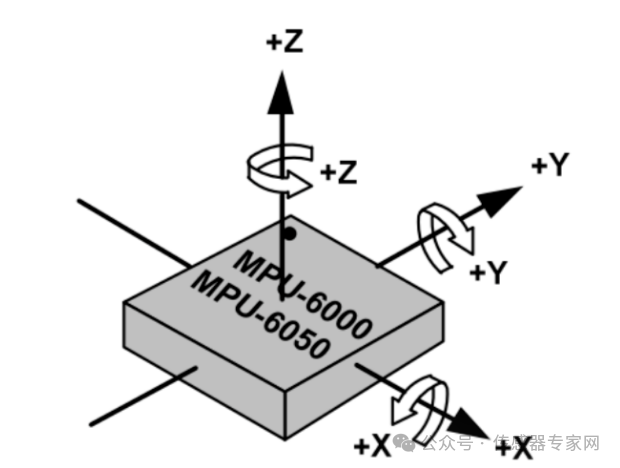
Specifically, the accelerometer uses Newton’s second law (F=ma) to infer acceleration by measuring the force acting on the object. The gyroscope, based on the principle of conservation of angular momentum, utilizes the rigidity of the gyroscope to perceive and measure the angular velocity of the object. The continuous and real-time collection and processing of this data provide reliable navigation information for the inertial system.
Functions of Inertial Sensors
Inertial sensors play an irreplaceable role in multiple fields. Firstly, they are core components of attitude control, ensuring that carriers (such as aircraft, missiles, robots, etc.) maintain stable attitudes in complex environments. Secondly, inertial sensors provide high-precision position, velocity, and attitude information for navigation systems, especially in situations where GPS signals are unavailable or interfered with, allowing the inertial system to navigate autonomously and ensure the smooth execution of tasks. Additionally, inertial sensors are widely used in motion capture, industrial monitoring, safety monitoring, etc., capturing subtle movements and attitude changes of objects to support data analysis and decision-making.
Applications of Inertial Sensors
1. Aerospace
In the aerospace field, inertial sensors are key components of navigation systems. They can provide high-precision attitude, velocity, and position information, ensuring that aircraft maintain stable flight states in complex flight environments. They also play important roles in missile guidance and satellite attitude control.
2. Autonomous Driving
With the continuous development of autonomous driving technology, inertial sensors have become standard equipment in autonomous driving systems. They can monitor the vehicle’s attitude, velocity, and acceleration in real-time, providing accurate navigation and positioning services. In situations where GPS signals are weak or unavailable, the inertial system can autonomously calculate the vehicle’s position and heading, ensuring the safety and reliability of autonomous driving.

3. Robotics
In humanoid robots and other types of robots, inertial sensors also play an important role. They can perceive and adjust the robot’s attitude and movements in real-time, ensuring stable operation in complex environments. Additionally, inertial sensors can provide high-precision positioning information, helping robots achieve autonomous navigation and obstacle avoidance functions.
4. Sports
In the sports field, inertial sensors are widely used in motion capture and analysis. By measuring athletes’ acceleration, angular velocity, and attitude, inertial sensors can capture subtle movements and posture changes, providing scientific training guidance and data analysis support for coaches and athletes.

Publicly Listed Companies in Inertial Sensors
In the field of inertial sensors, several publicly listed companies have stood out due to their leading technologies and excellent product performance. Among them, Suzhou Goodix, Huace Navigation, and Saiwei Electronics have all performed well in terms of revenue and net profit in 2023. These companies not only possess advanced R&D capabilities and manufacturing processes but also actively expand their market applications, providing comprehensive inertial sensor solutions for customers.
For example, Suzhou Goodix focuses on the R&D and production of MEMS sensors, with products widely used in automotive electronics, consumer electronics, and industrial control. Its inertial sensor products have gained widespread market recognition due to their high precision, high reliability, and low cost advantages.
Inertial sensors, as an important component of modern technology, play an irreplaceable role in various fields such as aerospace, autonomous driving, robotics, and sports. Through continuous technological innovation and application expansion, inertial sensors will provide more precise and reliable navigation and positioning services for more fields. At the same time, with the continuous expansion of the market and the ongoing technological advancements, publicly listed companies in the inertial sensor field will usher in broader development prospects.
Starred content = content you care about, according to the recommendation principles of WeChat public accounts, if you do not set the Sensor Expert Network public account homepage as 【Starred】, you will not be able to receive the latest information in the sensor industry in a timely manner!
Disclaimer:The reproduction of this article is for the purpose of conveying more information. If there are any errors in source attribution or infringement of your legal rights, please contact us, and we will correct or delete it promptly. Thank you.
If you have submission or interview needs, please email:[email protected].