In the field of industrial automation, Mitsubishi PLC and Siemens PLC are two well-known brands, each with its unique advantages and characteristics. This article will compare and analyze the two and provide suggestions for learning choices.
1. Differences Between Mitsubishi PLC and Siemens PLC
Mitsubishi PLC, originating from Japan, is known for its intuitive programming philosophy and rich instruction set. Mitsubishi PLC excels in discrete control and motion control, particularly in the precise positioning control of servo and stepper motors. However, its handling of analog signals and communication control is relatively weak, with high costs for analog modules and complex programming.
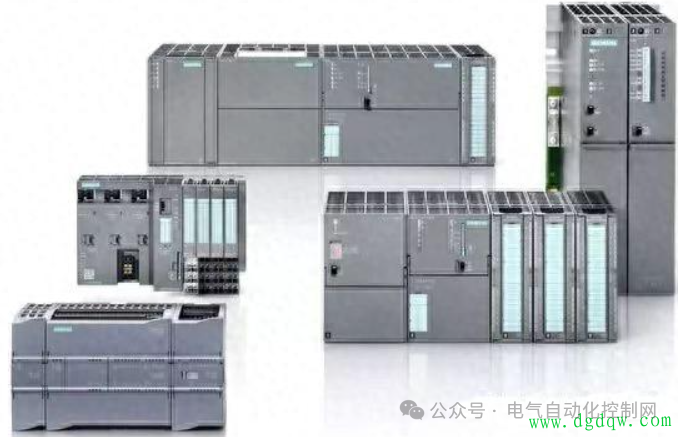
In contrast, Siemens PLC, as a German brand, has more abstract but fewer instructions, making it more challenging to learn, but once mastered, it is more efficient. Siemens PLC has significant advantages in process control and communication control, with cheaper analog modules and simpler programming. Additionally, Siemens has powerful communication capabilities, supporting various communication protocols and interfaces.
2. Advantages and Disadvantages of Mitsubishi PLC and Siemens PLC
The advantages of Mitsubishi PLC include intuitive programming, a rich instruction set, and precise positioning control; its disadvantages are the complexity of analog signal processing and relatively weak communication functions. The advantages of Siemens PLC lie in its strong process control and communication control, economical analog modules, and flexible programming software structure; its disadvantages include abstract instructions and a steep learning curve.
3. Learning Recommendations
For beginners, Mitsubishi PLC may be easier to get started with due to its intuitive programming. However, from the perspective of long-term development and career advancement, the learning value of Siemens PLC is higher. Siemens’ programming software structure is more flexible, supporting local variables and subroutine reuse, significantly reducing development difficulty and time. Furthermore, Siemens PLC’s widespread application and deep foundation in the industrial automation field provide learners with more job opportunities and development space.
4. Introduction to Mitsubishi and Siemens PLC Series
The Mitsubishi PLC series includes FX1N, FX2N, FX3U, etc., with each series differing in performance, functionality, and scalability, suitable for various scales and complexities of automation projects. The Siemens PLC series includes S7-200, S7-300, S7-400, etc., where S7-200 is suitable for small automation projects, while S7-300 and S7-400 are suitable for medium to large and complex automation projects.
5. Conclusion
In summary, both Mitsubishi PLC and Siemens PLC have their strengths and weaknesses. The choice of which brand to learn should be based on personal interests, career planning, and project requirements. Beginners can start with Mitsubishi PLC to gradually master the basics of programming; however, for those aspiring to work in the field of industrial automation as advanced technicians, it is recommended to delve into Siemens PLC to acquire broader and deeper professional skills.
(If you have different opinions, feel free to share your thoughts in the comments section)Thank you for reading this article, and don’t forget to click the bottom right toshare LookingLike👍👇Click to follow and set as a star to receive updates immediately.If you find it useful, please give me a follow, thank you!