The domestically produced LoRaWAN NS + IoT platform ThinkLink is now free. (https://thinklink.manthink.cn)
When deploying a LoRaWAN network, selecting the right gateway is a critical step. Many users feel confused when faced with the choice between “indoor gateways” and “outdoor gateways.” This article will help you better understand how to choose the appropriate LoRaWAN gateway in different scenarios by examining various dimensions such as protection level, deployment environment, coverage range, cost, and aesthetics.
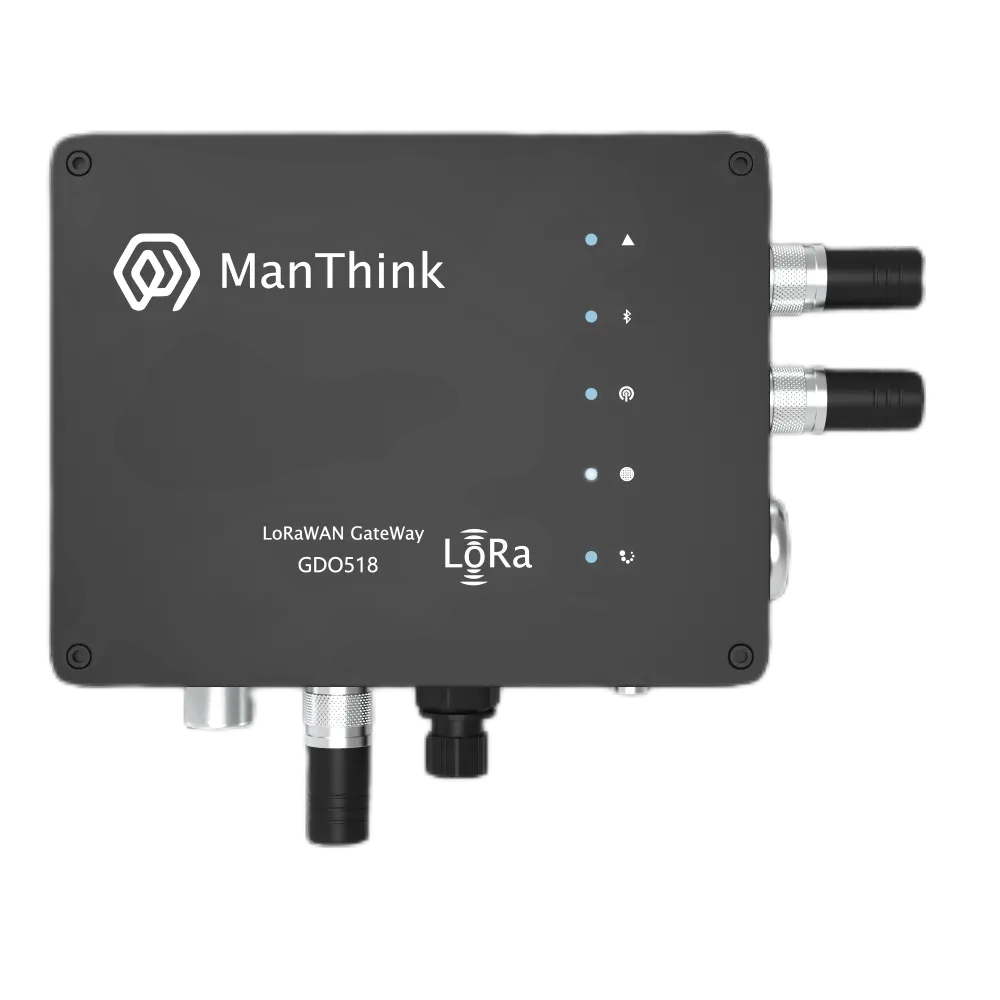
1. Differences in Protection Levels
- Indoor Gateway: Typically has a protection level of IP30 or IP54, suitable for installation in indoor environments such as offices, server rooms, and hallways, avoiding the impact of rain, dust, and other external environmental factors.
- Outdoor Gateway: Generally achieves a protection level of IP67, with dust and water resistance, suitable for outdoor installations in complex environments such as parks, streets, and factory exteriors.
The difference in protection levels determines the applicable scenarios for the gateways. If the gateway needs to be exposed outdoors for an extended period, an IP67-rated outdoor gateway must be chosen; if deployed indoors or in protected areas, an indoor gateway is more appropriate.
2. Deployment Environment and Aesthetics
- Indoor Gateway: Smaller in size, with a design that emphasizes aesthetics, suitable for installation inside buildings without affecting the overall architectural style.
- Outdoor Gateway: Larger in size, usually equipped with high-gain antennas, installed on outdoor poles, rooftops, or high points in parks, focusing more on functionality than appearance.
If your project has high aesthetic requirements, such as in office buildings, shopping malls, or schools, an indoor gateway is the better choice; while in industrial parks, logistics parks, and smart agriculture scenarios, outdoor gateways have more advantages.
3. Coverage Range and Signal Penetration Capability
Although indoor and outdoor gateways may use the same chipsets, the actual coverage effects differ significantly:
- Indoor Gateway: Due to being deployed indoors, the signal attenuates after penetrating walls, floors, and other structures, generally covering 3-5 floors, suitable for small area deployments.
- Outdoor Gateway: Typically installed at high locations or open areas, paired withhigh-gain fiberglass antennas, allowing for longer signal propagation and stronger penetration capability, suitable for large area coverage. The deployment scenario outdoors provides side coverage of buildings rather than the vertical coverage of indoor gateways, so the installation position determines better coverage effects.
Therefore, for projects requiring wide area coverage, such as smart parks, smart cities, and smart agriculture, prioritize outdoor gateways; while for indoor areas, basements, and signal blind spots, indoor gateways can be used for fill-in coverage.
4. Cost and Deployment Flexibility
- Indoor Gateway: Relatively low cost, flexible deployment, suitable for projects with limited budgets or smaller coverage areas.
- Outdoor Gateway: Higher cost but strong coverage capability, suitable for large projects requiring long-term stable operation.
It is recommended to adopt a strategy of “outdoor gateways as the main, indoor gateways as the supplement” to ensure overall coverage while effectively controlling costs.
5. Typical Application Scenario Recommendations
|
Project Type |
Recommended Gateway Type |
Reason |
|
Smart Park |
Outdoor Gateway (e.g., GDO51 series) |
Wide coverage, strong signal, suitable for outdoor deployment |
|
Smart Building |
Indoor Gateway (e.g., GDI51 series) |
Aesthetic, low cost, suitable for indoor installation |
|
Basement/Signal Blind Spot |
Indoor Gateway |
Flexible deployment, good fill-in effect |
|
Smart Agriculture |
Outdoor Gateway |
Complex environment, requires high protection and long-distance transmission |
Conclusion
In selecting LoRaWAN gateways, comprehensive judgment should be made based on the actual deployment environment, coverage needs, budget, and aesthetics:
- If the project is outdoors or requires wide area coverage, chooseoutdoor gateways;
- If the project is indoors or has aesthetic requirements, chooseindoor gateways;
- Consider using both, with outdoor gateways for main coverage and indoor gateways for signal fill-in;
- Pair with the Thinklink platform for efficient and intelligent LoRaWAN network management.
Thinklink: An open LoRaWAN application platform that accepts any brand of globally standardized LoRaWAN devices, supporting BACnet, Home Assistant, and Thingsboard integration.Cloud Version: Free forever for 1000 devices
https://thinklink.manthink.cnEdge Version: Low-cost independent deployment, supporting 1000 device connectionsMore Information:https://www.manthink.cnContact Email:[email protected]
#LoRa #LoRaWAN #Gateway #NS #Thinklink #Manthink #IoT #SmartCity #SmartPark #LoRaWANGatewaySelection