The golden period for programmers to transition has arrived. Embedded development is experiencing an unprecedented boom, yet most people remain stuck in traditional perceptions.By 2025, three high-paying tracks have quietly formed, with opportunities to easily exceed a monthly salary of 20,000 RMB right in front of us.
The overlooked technological gold mine
To be honest, many programmers still have a stereotypical impression of embedded systems as merely “microcontroller programming.” But what is the reality?
Autonomous driving systems in smart cars. Voice control in smart homes. Robotic arms in factories. These seemingly unrelated scenarios all share a common point:embedded systems are silently supporting the operation of the entire intelligent world.

The market data is quite interesting.61.8% of embedded engineers have a monthly salary between 10,000 and 30,000 RMB, with a salary ceiling reaching 50,000 RMB. But why are many still hesitant? Because they don’t know which direction to focus on.
Analysis of the three high-paying tracks
Internet of Things and Edge Computing Direction
This is the first golden track.
It is expected that the number of IoT devices will exceed 50 billion this year. Each device requires embedded systems to process data and execute commands. The rise of edge computing has shifted processing power from the cloud to the device side.
Imagine a smart security camera. Previously, it needed to upload video to the cloud for analysis; now it can recognize faces and detect anomalies directly within the camera.This demand for real-time processing is the core value of embedded engineers.
The technology stack includes: – RTOS (Real-Time Operating Systems) (FreeRTOS, RT-Thread) – Low-power design – Wireless communication protocols – Data compression algorithms
Artificial Intelligence Embedded Direction
The second track has even more imaginative potential.
AI is no longer just a cloud-based privilege.Neuromorphic chips are revolutionizing edge AI processing, enabling embedded devices to possess “thinking” capabilities.
Specific application scenarios? Voice recognition in smart speakers, path planning for robotic vacuum cleaners, obstacle avoidance algorithms for drones. All of these require running AI algorithms on resource-constrained embedded platforms.
Key skills: – Lightweight frameworks like TensorFlow Lite and ONNX – Model quantization and optimization – Neural network hardware acceleration – Algorithm porting capabilities
Industry 4.0 Automation Direction
The third route is the most stable and also offers the highest salaries.
The digital transformation of the manufacturing industry is accelerating. Every production line, every machine tool, and every robot requires embedded systems to coordinate their work. The characteristics of this field are:long project cycles, high technical requirements, and strong customer payment capabilities.
An industrial control project can easily cost hundreds of thousands or even millions. The value of core embedded engineers in such projects is self-evident.
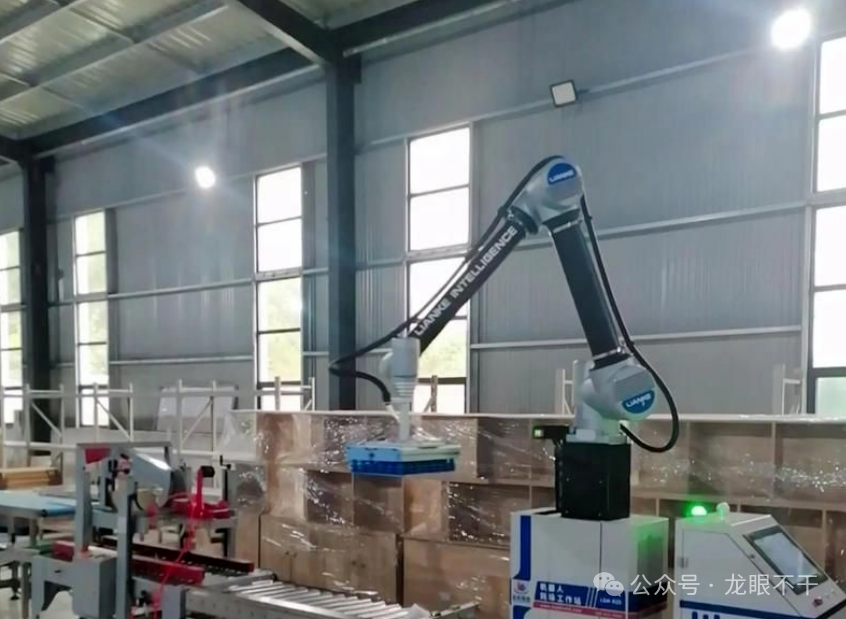
Core technologies: – Industrial communication protocols (CAN, EtherCAT, Profibus) – Real-time control algorithms – Safety certification systems – System integration capabilities
Strategies for breaking through and skill roadmap
Many people ask: How should I get started?
First, clarify one point.Embedded development is neither pure software development nor pure hardware design. It is a system engineering that combines both software and hardware. This means you need a broader knowledge base, but it also means higher competitive barriers.Basic skill set must be solid: – C/C++ programming (evolving towards Rust) – Hardware principles (at least be able to read schematics) – Debugging skills (oscilloscope, logic analyzer) – Linux system programming
Advanced directions should be chosen: Based on interest and opportunity, select one of the three directions above to delve into. Don’t try to cover too much; specializing in one direction is more valuable than having a little knowledge about everything.
Learning path suggestion: Start with development boards like Arduino and Raspberry Pi, complete a few projects, and then choose a niche direction to systematically learn the relevant technology stack.
Market opportunities and career planning
Frankly speaking, this industry is not suitable for everyone.Geographical limitations are quite obvious. Opportunities are more abundant in first-tier cities, while second and third-tier cities are relatively limited. Moreover, the requirements for education and experience are indeed stricter than for pure software development.
But from another perspective, precisely because the barriers are high, competition is relatively less intense.Once a technical barrier is established, job security will be stronger than in pure software development.
In the next five years, as the open-source ecosystem matures and security requirements increase, the entire industry will become more standardized and regulated. This is a long-term benefit for engineers with technical accumulation.
The key is tomaintain technical sensitivity, keeping up with industry changes in a timely manner. For example, security firmware updates and software bill of materials management are becoming standard requirements.
Choosing is more important than effort. At critical junctures of technological change, finding the right direction is more important than blindly working hard. The three tracks of embedded development are already clear; now it depends on your choice.