Follow Indu-Sol to Explore the World of Industrial Networks

In today’s rapidly developing industrial automation, the stability of network communication directly affects production efficiency and operational costs. Today, we will look at a real case from the chemical industry to see how Indu-Sol helps customers address hidden dangers in control networks while upgrading and optimizing communication systems.
Numerous Hidden Dangers
Frequent PROFIBUS Communication Failures
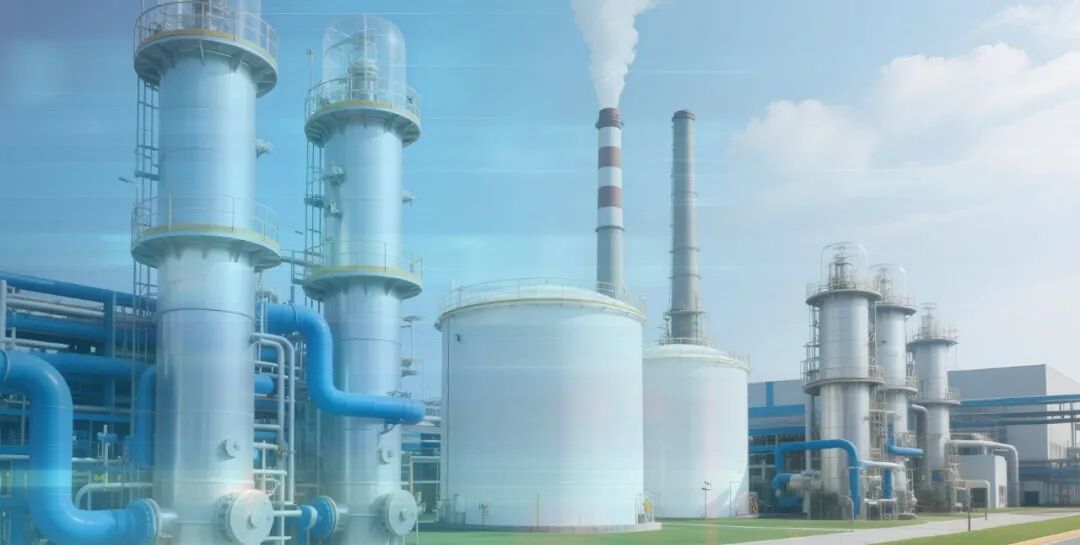
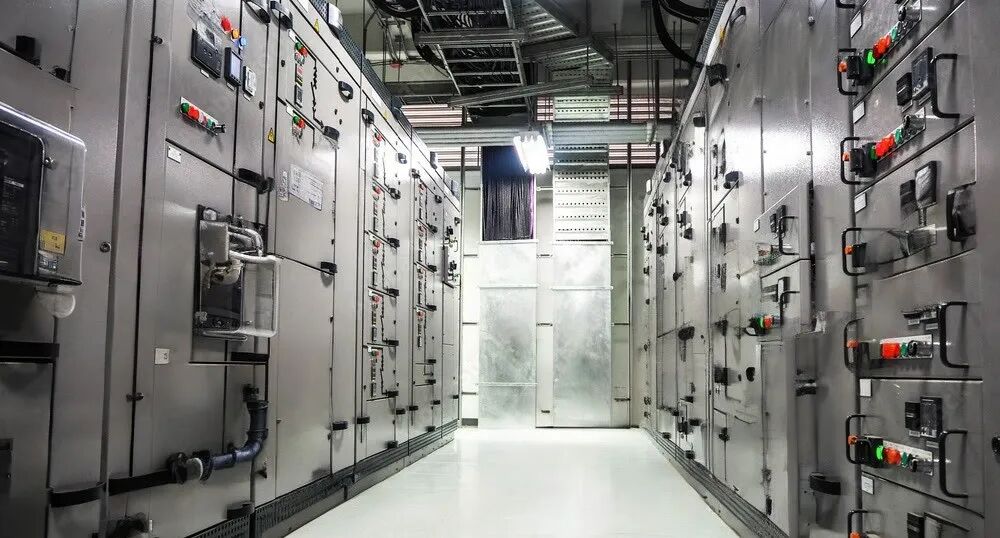
🏭 A globally renowned nylon chemical enterprise located in East China has control networks connecting a large number of MCC cabinets and high-power frequency converters in parts of its substations 0093, 0095, and 0097.
The system has always operated through a traditional structure of PROFIBUS DP networks.
This structure was widely used in early deployments due to its simple wiring and low initial costs, but its shortcomings have gradually become apparent in the high-interference, high-load chemical production environment:
-
Single point failures can cripple the entire system, and under abnormal conditions, can lead to widespread communication interruptions;
-
Coupling interference generated by high-power frequency converters frequently impacts communication signals;
-
Outdated grounding methods allow leakage currents to flow back into the communication system, posing risks;
-
Branch lines and cross-cabinet terminals become breeding grounds for signal reflections, making problem localization difficult.
In the process chain of chemical production, such a network structure is like a “fragile nerve,” causing the production line to suddenly halt multiple times.
Customer Demand: Not Just “Repair,” But Also “Prevent”
In the chemical industry, it is common for production equipment to run at full load for extended periods, and any unplanned downtime means:
-
Decreased output and delivery delays;
-
Increased maintenance costs and labor expenses;
-
Raw material waste, increased energy consumption, and even safety hazards.
Therefore, companies have prioritizedthe optimization and upgrading of industrial communication networks as one of their annual investment focuses. For customers, this is not just a network renovation, but also anupgrade of production assurance capabilities.
Indu-Sol’s Solution
Rebuilding Reliability from the Physical Layer
🔧To meet continuous production requirements, it is essential not only to resolve existing communication dropouts and instability issues but also to establish a network system that can operate stably for the long term and has high maintainability. Therefore, Indu-Sol has customized three major optimization directions for users:
-
Network Structure Reconstruction
The optimization of the PROFIBUS bus structure fundamentally involves transforming the original “linear structure” into a switch-like star structure. Using multi-channel isolation filters MULTIrep X7, replacing repeaters and terminal blocks, ensures physical isolation for each segment; eliminating signal reflection issues caused by short branches and non-standard connections.
- Grounding System Optimization
After detailed on-site measurements, the loop resistance in the equipotential system is high, which is the main reason for leakage currents flowing back through the DP system.To address this issue, adjustments were made to the original equipotential system to form an approximate Mesh-like equipotential connection structure, effectively suppressing conducted interference and capacitive coupling interference.
- Hardware Facility Upgrades
The connection and terminal characteristics of PROFIBUS significantly impact the basic state of communication signals.In the new network, metal housing DP connectors replace plastic connectors; more importantly, the new connection hardware comes with terminal resistance indicator lights and power supply indicator lights, making the identification of basic faults more intuitive and accurate.By comprehensively strengthening from structure to hardware, the performance of the PROFIBUS network is enhanced.
More Stable Communication Directly Affects Production
Compared to the previous constant worry about devices suddenly dropping offline, after the renovation, the production line can operate at full speed in a stable rhythm, and the continuity of the process operation has also significantly improved.
- Frequency converter operation is smoother: the previously intermittent “sudden dropouts” no longer occur;
- Maintenance efficiency has improved: on-site personnel can quickly identify issues through indicator lights, greatly optimizing fault response.
Through this optimization, Indu-Sol has helped customers reshape network reliability in a high-interference environment, allowing production processes to run more smoothly and efficiently. This has greatly increased the customer’s confidence in regional renovations, and they plan to further expand the scope of renovations.
🔎In the chemical industry, the stability of control networks not only relates to the degree of automation but also to output, safety, and costs. If you also have tricky communication issues that need to be resolved, feel free to contact us!