Driven by the wave of intelligence and digitalization, AI-adaptable sensor vision technology is evolving into a “digital eye” that empowers various industries.
For instance, in the field of autonomous driving, AI sensor vision technology can be used for 3D modeling of the vehicle’s surrounding environment and obstacle detection, ensuring driving safety; in the robotic vacuum cleaner sector, AI sensor vision technology helps robots accurately locate and avoid obstacles, achieving autonomous path planning; in the logistics sector, AI sensor vision technology can achieve high-precision measurement and positioning in logistics sorting and quality inspection; in consumer electronics, features like AR on smartphones and 3D facial recognition rely heavily on AI sensor vision technology.
From successfully developing the world’s first laser radar single-photon direct time-of-flight (dToF) chip designed for navigation and obstacle avoidance in robotic vacuum cleaners to creating a globally leading large-area solid-state laser radar, Nanjing Xinshi Technology Co., Ltd. (hereinafter referred to as Xinshi) is committed to deeply integrating sensors with AI technology, thereby contributing to the optimization of industrial forms and the enhancement of consumer quality of life.
Public information shows that Time-of-Flight (ToF) is a technology that utilizes the time of flight of light. By measuring the time difference or phase difference between light emitted and reflected back from an object, it calculates the distance between the object and the sensor. Direct Time of Flight (dToF) is a ranging method that calculates distance by measuring the time difference of a laser pulse from emission to reflection back to the receiver. The dToF laser radar single-photon chip that Xinshi focuses on is based on single-photon detection technology, offering advantages such as high precision, low power consumption, and strong anti-interference capabilities, widely used in autonomous driving, robotics, consumer electronics, and other fields.
Founded in 2018 with the determination to “dare to be the first in the world,” Xinshi focuses on “AI-adaptable sensor technology” and has become the first company in China to achieve large-scale production of dToF chips. With continuous breakthroughs in dToF technology, Xinshi has not only realized the industrialization of domestic laser radar chips from 0 to 1 but has also achieved large-scale applications in various fields such as robotic vacuum cleaners, smartphones, AR/VR, and robotics.
In May of this year, the Guoxin Fund keenly captured Xinshi’s technological foresight and product innovation, assisting Xinshi in completing C+ round financing aimed at supporting the mass production of chips and accelerating the promotion and application of its technology in the international market. This cooperation is not only a capital-level support but also a strategic synergy between both parties in the laser radar and intelligent driving industry chain.
Looking ahead, Xinshi will focus on three aspects in downstream scenarios: first, deepening consumer electronics; second, tackling industrial scenarios; and third, advancing autonomous driving applications. In this regard, Xinshi’s founder, Li Cheng, stated: “The company’s development plan will continue to maintain rapid iteration, supporting more industry clients (expanding from robotic vacuum cleaners to smartphones, automotive, and other trillion-level industrial chains); strengthening the combination capability of ‘AI + sensing’ to become a core sensor supplier in fields such as robotics and autonomous driving; and moving towards the vision of becoming a global leader in optical sensing in the era of artificial intelligence, expanding technological and market leadership advantages.”
The following is the transcript of an interview with Li Cheng, the founder of Xinshi, conducted by the Guoxin Fund New Media.
[ About the Company ]
“Dare to be the first in the world”
Q
What was the opportunity that initially led you to start your entrepreneurial journey? Can you share your complete entrepreneurial experience in the context of that time?
Li Cheng:At that time, artificial intelligence was beginning to rise, and I judged that the sensor vision field of AI would be a huge market in the future. Upholding the technical philosophy of “dare to be the first in the world,” I firmly believe that “the realization of personal value far exceeds personal profit returns,” and that researching technologies that can bring value to society is the core goal—this is the starting point of Xinshi.
In 2018, Xinshi was officially established. We locked our direction on “AI-adaptable sensor technology” and insisted on seeking breakthroughs from the underlying technology. For example, we successfully developed the world’s first laser radar single-photon dToF chip designed for navigation and obstacle avoidance in robotic vacuum cleaners, significantly enhancing the aesthetics, operational efficiency, and practical value of industry products.
Since then, we have continued to promote technological iteration, developing a globally leading large-area solid-state laser radar, with application scenarios gradually expanding from robotic vacuum cleaners to quadruped robots, industrial robots, and even humanoid robots for the future. By deeply integrating sensors with AI technology, we are genuinely contributing to the optimization of industrial forms and the enhancement of people’s quality of life.
Q
Currently, Xinshi’s technology has been applied to various products such as robotic vacuum cleaners, drones, smartphones, AR/VR, smart home devices, and autonomous driving. Can you share your experiences in collaborating with downstream manufacturers and expanding channels?
Li Cheng:In collaborating with downstream manufacturers and expanding channels, we always take technology as the foundation and market demand as the guide, exploring a set of effective methods.
We break through with technological strength, forming barriers through self-developed global first single-photon dToF chip and overcoming key technologies such as SPAD devices, attracting attention from leading manufacturers in various fields with our leading solutions, and establishing a foundation for cooperation as a core partner in dToF technology research and testing.
Simultaneously, we build a 1D/3D dToF product matrix, customizing solutions for different scenarios such as robotic vacuum cleaners, smartphones, and AR/VR, for example, solving the pain points of precise positioning and recharging for robotic vacuum cleaners and enabling 3D perception functions for smartphones to meet diverse needs.
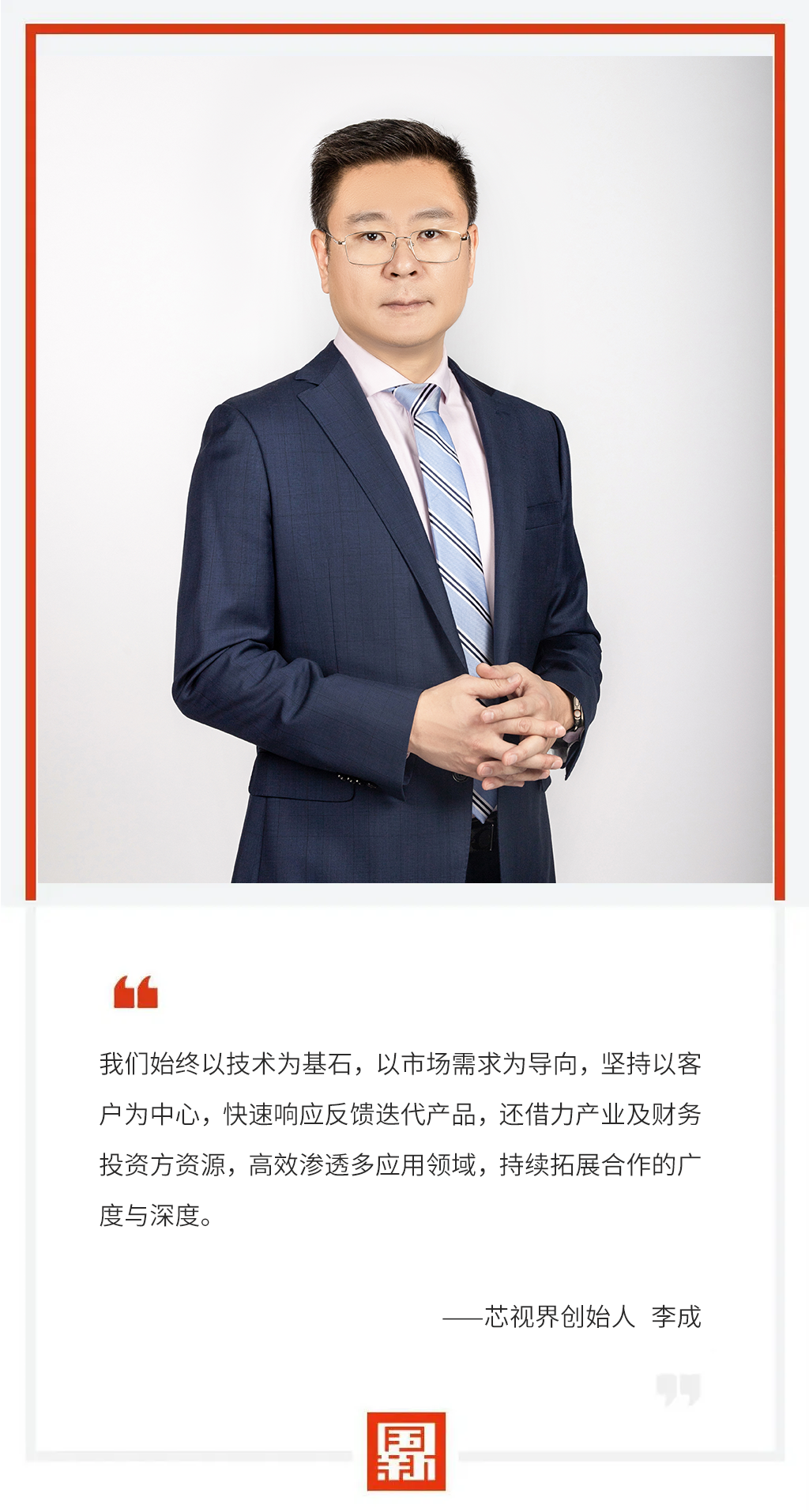
Additionally, we adhere to a customer-centric approach, quickly responding to feedback to iterate products, and leverage resources from industry and financial investors to efficiently penetrate multiple application fields, continuously expanding the breadth and depth of cooperation.
Q
What are your predictions or views on the downstream application scenarios of chip applications? Based on your predictions, what layouts will the company make for downstream application scenarios?
Li Cheng:The downstream application scenarios of chips are continuously expanding with the wave of AI and intelligence, with the core trend being the “deep integration of 3D perception and AI,” and the upgrade directions of demand in different fields are clear. In the consumer electronics field, in addition to existing devices, AR/VR will become a new growth point—the demand for immersive interaction from users will drive the popularization of high-resolution, low-latency 3D perception chips, while the demand for “active perception” in smartphones and smart home devices will require chips to achieve more precise environmental recognition and coordinated control.
In the industrial field, the deepening of industrial automation and robotics applications, whether in handling, processing, or inspection scenarios, requires laser radar chips that can stably operate under complex conditions, providing high-precision spatial positioning and obstacle avoidance data to support autonomous operation of equipment. Autonomous driving is a key incremental scenario, evolving from assisted driving to high-level autonomous driving, where existing low-resolution sensors can no longer meet the demand. Laser radar chips with millimeter-level precision and strong anti-interference capabilities will become the core support for achieving automatic parking and road condition semantic analysis.
For Xinshi, the future will focus on three aspects in downstream scenarios: first, deepening consumer electronics; second, tackling industrial scenarios; and third, advancing autonomous driving applications.
Q
Xinshi is committed to breaking through key “bottleneck” technical challenges and major scientific issues, empowering various industries with dToF technology. Can you share the breakthrough application results of the company’s products in different fields?
Li Cheng:In the smartphone field: the 1D dToF chip has been the first to achieve mass supply to top domestic smartphone manufacturers, providing core solutions for automatic focusing and distance measurement functions of smartphone cameras, breaking international monopolies; the 3D dToF chip has been implemented in international leading brand smartphones, becoming one of the first companies to commercialize 3D dToF chips on the Android platform.
In robotic vacuum cleaners: the VI4302 chip, through special algorithm design, can accurately locate the base station from different distances and directions, achieving recharging and solving industry pain points, and has been widely applied in robotic vacuum cleaners, strongly supporting the vast industrial value chain of the robotic vacuum cleaner industry.
Q
What was the moment you came closest to failure during your entrepreneurial journey? How did the team turn the situation around?
Li Cheng:I believe there are no absolute “failure moments” on the entrepreneurial path; rather, there are “life-and-death checkpoints” that require the team to break through with all their might. For Xinshi, the most critical test occurred during the transition from dToF chip technology development to market realization. To break through this checkpoint, the team quickly anchored the core strategy of “reverse engineering technology iteration based on customer needs,” supported by two key capabilities:
First, the core advantage of “rapid improvement and rapid iteration.” When issues arise during mass production, the team does not delay, responding to needs immediately and promoting optimization, using efficient iteration rhythms to resolve technical landing challenges;
Second, the firm belief in being “customer-centric.” Always addressing every issue raised by customers, deeply integrating customer needs into the entire product optimization process, ultimately successfully breaking through the bottleneck of mass production and smoothly bringing the dToF chip to market.
Q
How do you view the current development status and future trends of the domestic chip industry?
Li Cheng:From Xinshi’s practice in deepening dToF chips, the current domestic chip industry is in a pattern of “opportunity and challenge coexist.” The advantages are clear, including strong policy support, sufficient mature process capacity, and the ability to quickly respond to local demand in consumer electronics, industrial control, etc. For instance, our dToF chips have achieved mass production based on mature processes. Moreover, with the explosion of downstream industries such as AI, IoT, and smart vehicles, the demand for chips will only increase, and the growth space for the entire industry is clear.
Q
As a representative enterprise of new productive forces centered on dToF technology, what are your plans for the future development direction of this technology in the next three years? What are your development plans for the company?
Li Cheng:In the next three years, we will deepen applications in the robotics field: continuously optimizing large-area solid-state laser radar to adapt to robotic vacuum cleaners, quadruped robots, industrial robots, and future humanoid robots, enhancing the precision and efficiency of navigation and obstacle avoidance.
Expanding automotive scenarios: promoting the implementation of parking laser radar solutions to achieve millimeter-level precision for automatic parking and autonomous driving functions, upgrading laser radar from “distance detection” to “semantic analysis” to support AI decision-making.
The company’s development plan will continue to maintain rapid iteration, supporting more industry clients (expanding from robotic vacuum cleaners to smartphones, automotive, and other trillion-level industrial chains); strengthening the combination capability of “AI + sensing” to become a core sensor supplier in fields such as robotics and autonomous driving; and moving towards the vision of becoming a global leader in optical sensing in the era of artificial intelligence, expanding technological and market leadership advantages.
[ Connection with Guoxin ]
“Strategic synchronization, highly aligned direction”
Q
Can you tell us the story of the connection between Guoxin Fund and Xinshi?
Li Cheng:The connection between Xinshi and Guoxin Fund originated from the strategic synchronization in the field of automotive intelligent driving. When Xinshi initiated C+ round financing in 2024, it was focusing on the research and layout of automotive laser radar chips, with the core goal of providing more competitive solutions for laser radar through fully integrated technology—this happened to align perfectly with Guoxin Fund’s layout direction around automotive intelligent driving laser radar at that time.
As an upstream chip enterprise for laser radar sensors, Xinshi’s technological path and market positioning precisely matched Guoxin Fund’s investment logic for the core industrial chain of intelligent driving. With the introduction of Xinshi’s existing shareholders, both parties began to engage, quickly reaching a consensus through exchanges on technical direction, industrial value, and future planning, ultimately leading to Guoxin Fund’s participation in this round of financing and officially starting a cooperation chapter.
Q
Besides funding, what other aspects of support from Guoxin Fund have impressed you?
Li Cheng: The support from Guoxin Fund goes far beyond the capital level; its depth and precision in post-investment empowerment are impressive. For example, assisting in perfecting the capital layout: as the lead investor in the C+ round, Guoxin Fund proactively connected Xinshi with other potential investors, facilitating multi-party communication and helping the company efficiently complete this round of financing, solidifying the capital foundation for subsequent technology research and business expansion.
Building business collaboration bridges: Guoxin Fund fully mobilizes its resources, linking its other invested enterprises in the robotics and automotive sectors with Xinshi for business exchanges. This cross-enterprise resource integration has built a potential cooperation network for Xinshi, accelerating the adaptation of its dToF technology in scenarios such as robotics and intelligent driving.
[ About the Individual ]
“Emphasizing continuous learning and deep thinking”
Q
What work or life habits have benefited you greatly and that you continue to maintain?
Li Cheng:I place great emphasis on continuous learning and deep thinking. No matter how busy I am, I always set aside time each day to read professional books, industry reports, and keep up with cutting-edge technology news to maintain sensitivity to new technologies. When faced with complex problems, I calm down to analyze the essence of the problem deeply and seek solutions from different angles. Moreover, I always prioritize important tasks, arranging work based on the importance and urgency of tasks, focusing on key matters first to ensure efficient progress in work and orderly balance in life.
Q
If you could call your 10-year younger self, what would you say?
Li Cheng:“You in 2015, don’t hesitate—starting in 2018 with the AI sensor direction is the right choice. You will encounter challenges in mass production and the collision of technology and business, but remember ‘rapid iteration’ and ‘customer-centricity.’ Stick to the original intention of ‘daring to be the first in the world,’ and you will see this technology change the robotic vacuum cleaner, robotics, and even the automotive industry. Believe in the social value of technology; it will take you to where you want to go.”
Q
In the current environment, would you encourage young people to invest in foundational technology entrepreneurship like you did? What pitfalls would you advise them to avoid?
Li Cheng:I would encourage young people to engage in foundational technology entrepreneurship. Currently, the national policy support is strong, and there is a high demand for foundational technology in fields like AI and smart vehicles, making it a rare opportunity.
My advice is threefold: first, delve into core technologies, solidify knowledge reserves, and keep a close eye on industry frontiers; second, build a diverse team covering technology, market, and management fields to avoid going it alone; third, plan finances reasonably, reserving funds for research and emergency needs, adhering to long-termism, and steadily advancing project realization.
Recommended Reading
|
|||
|
|||
|