011. Research Background
In recent years, the number of subsidence and goaf areas formed during underground coal mining has increased significantly, which greatly impacts the safe operation of power lines. Transmission line towers bear the weight of the wires between adjacent towers. If the degree of inclination and the foundation settlement of the power lines within the subsidence and goaf areas are unclear and not detected in time, unstable tower bases can lead to tower overturning accidents, severely affecting power transmission. Therefore, relevant safety control measures need to be implemented to ensure the safe and stable operation of transmission lines.
022. Research Content
1. Technical Solution
Wireless tilt sensors are used for health monitoring of transmission line operations. The parameters transmitted back by the tilt sensors allow for real-time observation of changes in the tilt of transmission line towers, meeting the requirements for high precision and high frequency monitoring.
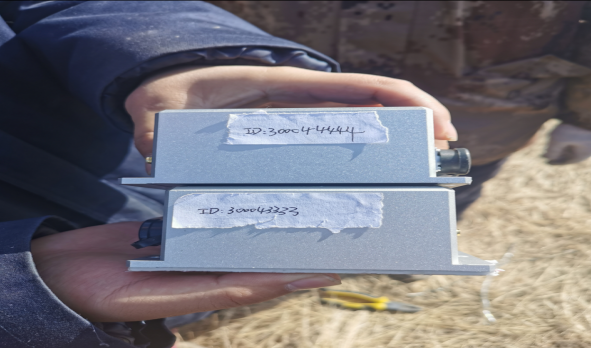
Wireless tilt sensor
2. Basic Principle
The wireless sensor is installed on the transmission line tower, and the initial angle is calibrated to ensure that the initial plane is parallel to the sensing device. A solar panel provides continuous charging for the device, which mainly measures (x, y tilt), temperature, and battery voltage parameters, with an accuracy of:

Using wireless backhaul technology, daily tower tilt parameters are uploaded to the cloud and automatically generate trend graphs. Line operation and maintenance personnel can monitor the stability of the tower in real-time through the backend, accurately reflecting the tilt changes at monitoring points by comparing the two-color curve trend graphs.
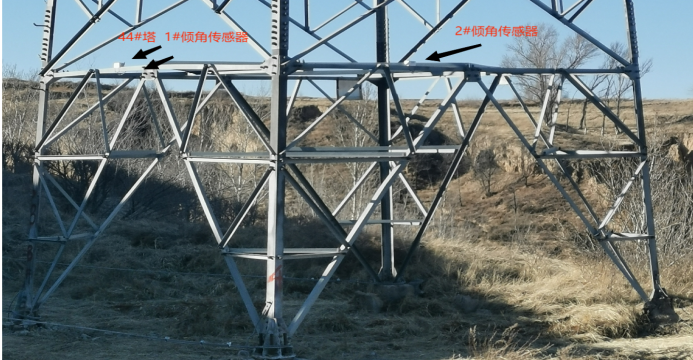
Sensor installation location (located at the 110kV coal transport line No. 2 tower in the goaf area)
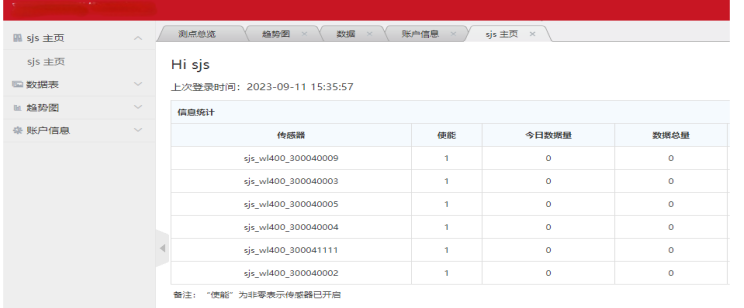
Cloud backhaul data
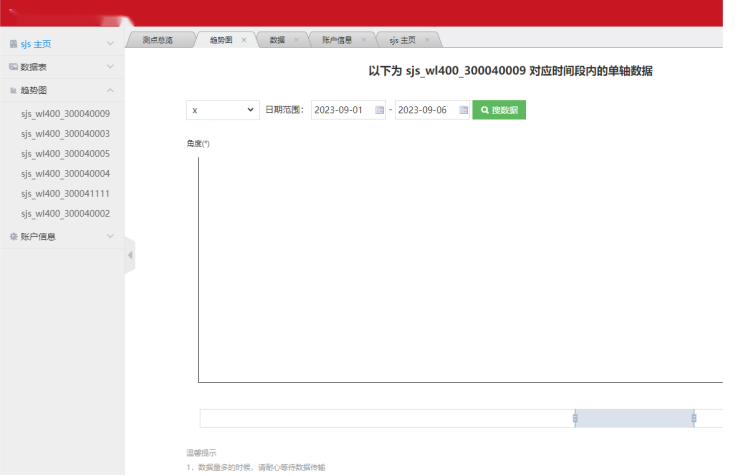
Tilt trend graph
When the device displays “Enabled” as “1”, it indicates that the sensor is activated and data transmission is normal; a returned parameter of “0” indicates no change in tower tilt.
The tilt “trend graph” reflects the changes in tower tilt over a period of time, with a flat curve indicating no tilt during that time period.
3. Main Features
(1) The wireless tilt sensor is equipped with a solar panel that continuously charges the device, uploading data once an hour, meeting the needs for long-term online monitoring.
(2) It has remote control and management capabilities, allowing for parameter backhaul and tilt trend graphs via the cloud. Line management personnel can monitor the tilt changes of transmission line towers at any time through the backend, taking timely and effective measures to ensure power supply reliability.
(3) The operating temperature range is from -40 degrees Celsius to +85 degrees Celsius, making it suitable for most environmental regions.
033. Application Effects
Tests conducted on the 110kV coal transport line No. 2 tower (43#+1-44#) in a subsidence and goaf area showed significant results. Remote comparison of tilt trend parameters is possible.
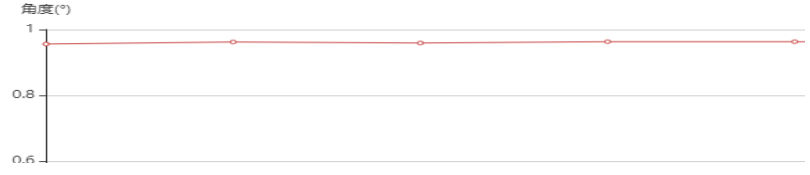
Actual observation point parameter comparison curve
Various parameters indicate that the device is operating well, achieving remote monitoring of the stability of transmission line towers in subsidence and goaf areas.
This device can timely and accurately feedback the instability factors caused by subsidence and goaf areas on the towers, reducing the workload of line operation and maintenance personnel and saving costs.
044. Promotion Prospects
By using tilt sensors to monitor the upright status of towers, line operation personnel can promptly understand the daily safety status of the towers. Especially during extreme weather and abnormal tilting caused by landslides, the timely data reports from tilt sensors facilitate maintenance personnel to quickly locate the accident site for repairs, reducing losses and ensuring stable operation of transmission lines. This technology is worth promoting widely.

 Disclaimer: The images in this article are sourced from reprints or the internet, and the copyright belongs to the author. If there is any infringement, please contact for removal. For more exciting content, please click the public account below to view.
●Development of Automatic Water Discharge Air Storage Tank
●Research and Application of Hydraulic Drill Waste Casing Reuse Technology
●Optimization and Transformation of Automatic Additive System Screw Feeder
●Application of Balancing Valve Group in the Coal Machine Industry
●Portable Telescopic Chip Collection Dust Reduction Device