
Twenty years ago, MEMS inkjet print heads were widely used in printers, replacing traditional mechanical print heads, making companies like HP and Canon giants in the MEMS field.Ten years ago, with the rise of smartphones, MEMS microphones became widely used, replacing traditional electret microphones. Several MEMS companies in China, such as GoerTek, AAC Technologies, and MEMSIC, emerged as market leaders in MEMS microphones both domestically and globally.In these waves, Chinese companies were mostly followers. Today, another traditional device is about to be disrupted by MEMS technology, and this time, Chinese companies are participating in drafting the first global standard for this MEMS technology!Multiple organizations predict that 2023 will be the year of mass shipments, and the world’s largest MEMS company, Bosch, has entered the field through acquisitions and will become its next focus, which MEMS companies will stand out?To gain knowledge and reports on sensors, please click the blue text to view《Sensor Professional Knowledge Materials 100+, there is always one suitable for you~》 content, gathering multiple authoritative sensor knowledge materials, continuously updating……
What are your views on this article?Please leave comments and discuss below this content on the Sensor Expert WeChat public account, or engage in discussions in China’s largest sensor community: Sensor Exchange Circle.
For more in-depth information and reports on the sensor industry, to understand sensor technology, sensor and testing technology, IoT sensor technology, etc., please follow the Sensor Expert WeChat public account, set it as a star mark, and check past content.

The first technical standard drafting meeting for the global MEMS speaker industry was held in Shenzhen, with China leading the compilation of the first global standard!Recently, according to a press release from the official WeChat public account of the Shenzhen Audio Industry Association, on July 16, the first group standard work seminar for the “General Technical Requirements for MEMS Speakers” was held at the Qianhai International Conference Center in Shenzhen. This group standard was initiated in April 2023, proposed and coordinated by the Shenzhen Audio Industry Association.It is reported that more than 20 experts and representatives from relevant domestic and foreign organizations, including Shenzhen Audio Industry Association, Southeast University, Luxshare Precision, Acoustic, AAC Technologies, Jingtao Liyin, USOUND, xMEMS, Huajing, Suzhou Acoustic Industry Technology Research Institute, Naxin Micro, and Linghang Micro, attended the meeting. It can be seen that many well-known domestic MEMS top ten companies, such as AAC Technologies and Naxin Micro, participated.Speakers are currently one of the few devices in smart devices that have not been replaced by MEMS, and this decades-old industry will be disrupted by MEMS in the coming years.After a long period of incubation, the global MEMS speaker industry is on the verge of large-scale production, and the global acoustic field is eagerly anticipating the arrival of mass production of this new MEMS speaker technology, as MEMS speaker technology is relatively novel, and there is currently no clear, unified industry standard globally.According to Yuan Shiming, the founder of Jingtao Liyin and an expert from the Shenzhen Audio Industry Association, the purpose and original intention of formulating this group standard is to promote the standardization and normalization of MEMS speaker production.The convening of this standard drafting work has made an important contribution to enhancing China’s international status and voice in the MEMS speaker field, marking an important milestone in the transformation of the new generation of electroacoustic industry from “quantity” to “quality”.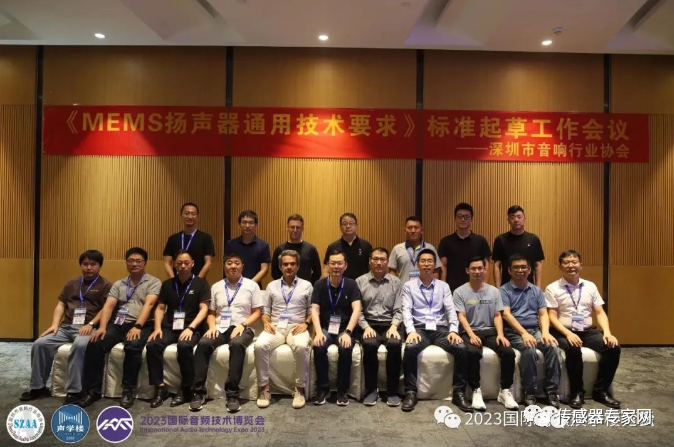 ▲Source: Shenzhen Audio Industry AssociationBosch enters the market, and global MEMS speakers will begin mass production in 2023! The next five years will be a growth highlight in the MEMS field!According to various sources, early MEMS speaker products have already started to ramp up, for example, the built-in MEMS speaker of USound’s smart glasses generated millions of dollars in revenue in the United States in 2021.Leading TWS headphone manufacturers are also adopting MEMS speaker technology. For instance, at the end of 2022, Luxshare Precision chose USound as its strategic supplier for MEMS speakers, providing a new ultra-compact hybrid audio module for its TWS headphones, which is expected to go into mass production in 2023. MEMS speakers are expected to find applications in various fields such as smartphones, TWS, PCs, and smart homes.On April 28, 2022, global MEMS leader Bosch acquired the MEMS micro speaker expert Arioso Systems, announcing its significant entry into the MEMS speaker field, which expands Bosch’s MEMS product portfolio and signals the growth of the global MEMS speaker market.Recently, in a conversation with the well-known electronic media Electronic Engineering Times and Bosch Sensortec’s global strategy and market head Sebastien Therond, it was revealed that MEMS speakers may become another focus for Bosch in the MEMS field:
“Acoustics is a new area for us” — Bosch acquired MEMS speaker manufacturer Arioso Systems last year, which should be a very important step for Bosch — “We acquired great technology through the acquisition, and the product is not yet on the market,” Sebastien repeatedly mentioned MEMS speaker products in the interview, stating that Arioso’s technology is unique, excelling in sensor size and power consumption, and we can expect something in the future.
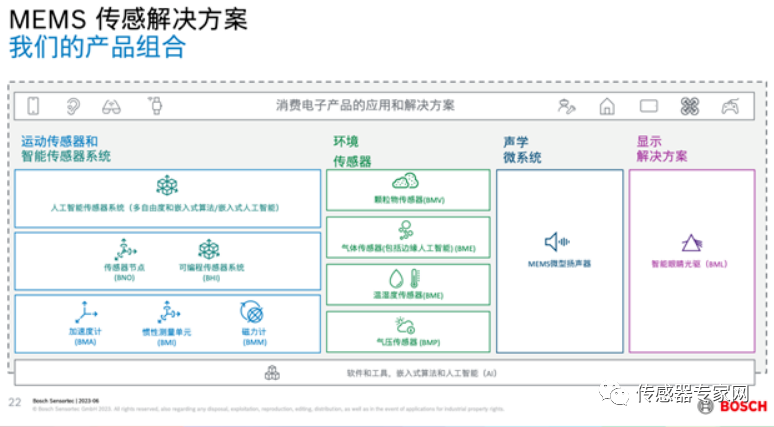 ▲Bosch MEMS sensor solution product portfolio (Source: Bosch)Arioso Systems is known for its proprietary audio transducer technology, which generates sound by moving vertical sheets within a silicon chip.According to press releases, MEMS speakers produced by Arioso Systems can achieve competitive sound pressure levels (SPL) — producing up to 120 dB SPL in an effective area of 10mm². This MEMS microsystem uses a fully silicon MEMS electrostatic actuator, maintaining battery life in audible devices and wearables.
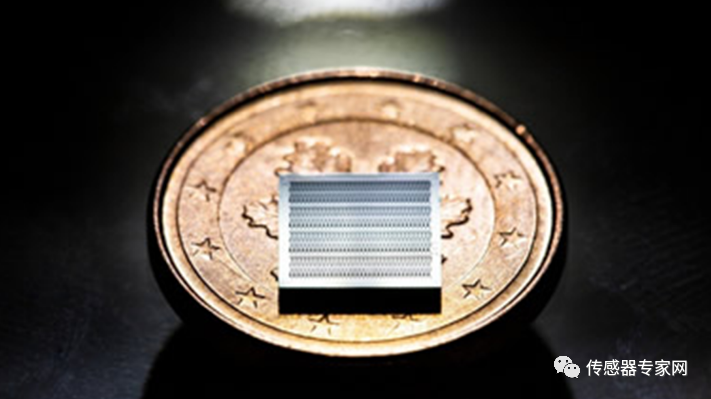 ▲Comparison of Arioso Systems’ new MEMS micro speaker and a one-euro coinAccording to foreign media SemiMedia, in April 2023, in an interview with Nora Houlihan, a senior research analyst for MEMS and sensors at the globally renowned semiconductor consulting firm Omdia, it was revealed that MEMS speakers will be the fastest-growing MEMS devices in the next five years.
Question: We continue to see some amazing growth in MEMS application research and products. Which MEMS device do you think will see significant growth in five years? Why?
Houlihan:It is expected that MEMS speakers will see significant growth in five years because this technology will become increasingly affordable, and their size, range, and quality advantages will also be consolidated. As MEMS sizes become smaller, designers can add devices and functions without increasing the overall size of the product. This is particularly important in products like wearables.
According to previous market forecasts from leading MEMS speaker company USound: Starting in 2023, the MEMS speaker market will rise sharply; from 2024, the market share of balanced armature speakers will significantly decrease; it is expected that by 2025, MEMS speakers will occupy 50% of the market share in the TWS headphone field. This rapid growth is driven by the miniaturization trend of wearable devices and the consumer electronics market’s demand for miniaturized, low-cost, and low-power components.According to well-known consulting firm Yole, MEMS speakers are the second most promising MEMS device after MEMS clocks. Their report “MEMS Industry Status 2022” indicates that the compound annual growth rate (CAGR) of MEMS speakers from 2021 to 2027 will exceed 100%. Yole believes that TWS wireless earphone devices will be the main breakthrough point for MEMS speakers, followed by applications in smartphones and automobiles.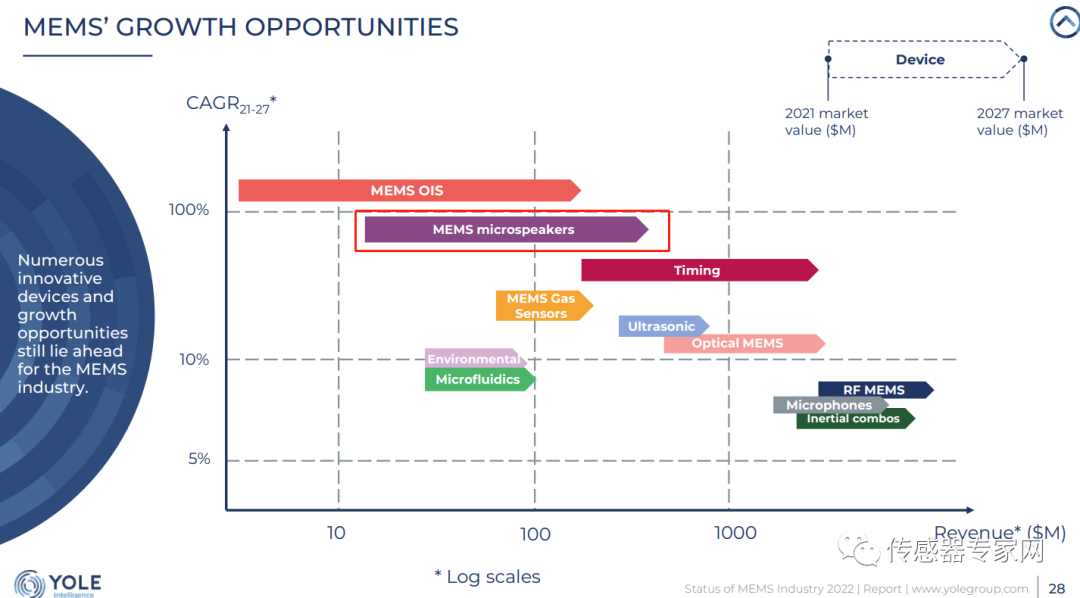 ▲Source: YoleWhat is MEMS speaker technology? What are its advantages and disadvantages compared to other technologies?There are many types of speakers, and in the personal audio and smart wearable market, mainstream applications include dynamic drivers (dynamic drivers) and balanced armature drivers (balanced armature drivers). The current mainstream solution retains dynamic drivers while MEMS speakers replace balanced armature drivers.MEMS speakers are an emerging speaker technology that converts electrical signals into sound signals using micro transducers, with core components (such as actuators/drivers, diaphragms, thermoacoustic membranes, etc.) manufactured using MEMS technology on semiconductor materials.There are four main working principles for MEMS speakers: piezoelectric, electrodynamic, electrostatic, and thermoacoustic.Currently, piezoelectric MEMS speakers dominate, with startups like USound and xMEMS continuously refining their technical capabilities and improving the supply chain, resulting in the emergence of multiple new MEMS speaker products that gradually penetrate wearable and portable devices, replacing traditional speakers like balanced armature speakers.The working principle of piezoelectric MEMS speakers is to use a piezoelectric film as an active element, which deforms when voltage is applied, causing mechanical deflection that displaces the surrounding air and generates sound waves.
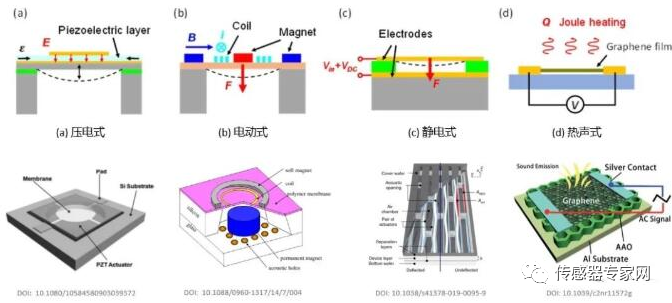 ▲Schematic diagram of MEMS speaker working principle (Source: MEMS Consulting)Compared to balanced armature speakers, MEMS speakers offer significant size advantages.One major advantage of this technology is its compatibility with silicon processes, meaning it can be produced at low cost in large volumes and extremely small sizes. For example, the MEMS motor in USound speakers is less than 0.5 mm thick, an order of magnitude smaller than its electrodynamic counterparts.Additionally, MEMS speakers can direct sound, enhancing the hands-free effect and call privacy of smartphones. Currently, MEMS speakers can drive sound at distances of 1-1.5m, ideally aiming for a driving distance of 5-8m. If MEMS speakers can achieve a sound transmission distance of 5-8m, applications in the television market and smart home market will rapidly increase.Besides size, MEMS speakers also have extremely low power consumption (due to their high inherent impedance) and excellent audio quality. MEMS speakers can also be built on the same PCB substrate as amplifiers, saving circuit board space, which is beneficial for system integrators to add more sensors for additional functionalities or to use larger capacity batteries to enhance system runtime.
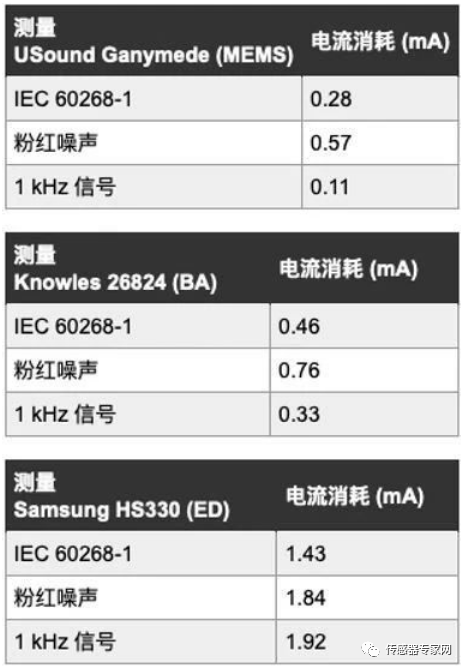 ▲Current consumption measured at 94 dB SPL using three different speakers: USound MEMS speaker, Knowles 26824 balanced armature speaker, and Samsung HS330 dynamic speaker (Source: USound)Because MEMS speakers are manufactured using fully automated production lines with silicon processes, while balanced armature speakers require manual assembly, MEMS speakers also have advantages of low cost, low power consumption, high reliability, and ease of integration as technology advances and mass production scales up.
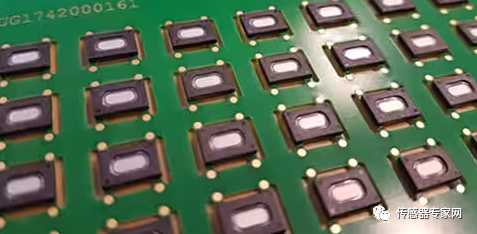 ▲MEMS speakers built into PCB substrates (Source: Usound)Some major MEMS speaker manufacturers at home and abroadUSound (悠声科技)USound is a leading global MEMS speaker and sound solutions company from Austria, founded in 2014, and completed a $30 million Series B financing at the end of 2021, with total financing exceeding $75 million.USound is one of the world’s leading MEMS speaker manufacturers, reportedly using STMicroelectronics’ MEMS manufacturing process. In August 2022, USound collaborated with Zibo High-tech Zone and Huiyou Capital to establish a microsystem IDM and industrial cluster project, with USound’s China headquarters located in Zibo High-tech Zone, relying on TDK’s world-class piezoelectric technology and USound’s world-leading MEMS speaker technology, aiming to create a full-process MEMS speaker production line and a first-class microsystem industrial cluster in China, filling industry gaps.The project will combine the existing MEMS production line in Zibo High-tech Zone with USound’s proprietary equipment to jointly create a complete process MEMS speaker production line, becoming the world’s first IDM manufacturer mastering the entire MEMS speaker process. The project is expected to achieve an annual output value of over 6 billion yuan, and it was previously reported that the project plans to go into mass production in the fourth quarter of 2022.Currently, USound has reached cooperation with several global leading downstream companies such as Luxshare Precision, AT&S, and Elemaster Electronic Technology.
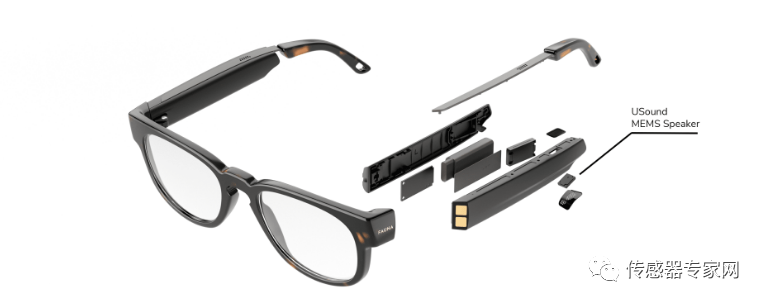 ▲Smart glasses products with built-in USound MEMS speakers, with shipments reaching million-dollar levelsxMEMS (知微电子)xMEMS was founded in 2017, headquartered in Santa Clara, California, with a branch in Taiwan, and completed a $10 million Series A financing in 2021.xMEMS is one of the world’s leading MEMS speaker companies. In July 2020, xMEMS launched the world’s first monolithic MEMS speaker, reportedly produced by TSMC, and the company has commercialized its first product.In April 2023, xMEMS launched three MEMS micro speaker solutions: Cowell, Montara Plus, and Skyline DynamicVent, which can be immediately integrated into next-generation true wireless stereo (TWS) headphones, in-ear monitors (IEM), digital hearing aids, as well as emerging personal audio electronic products like smart glasses and sleep earbuds.
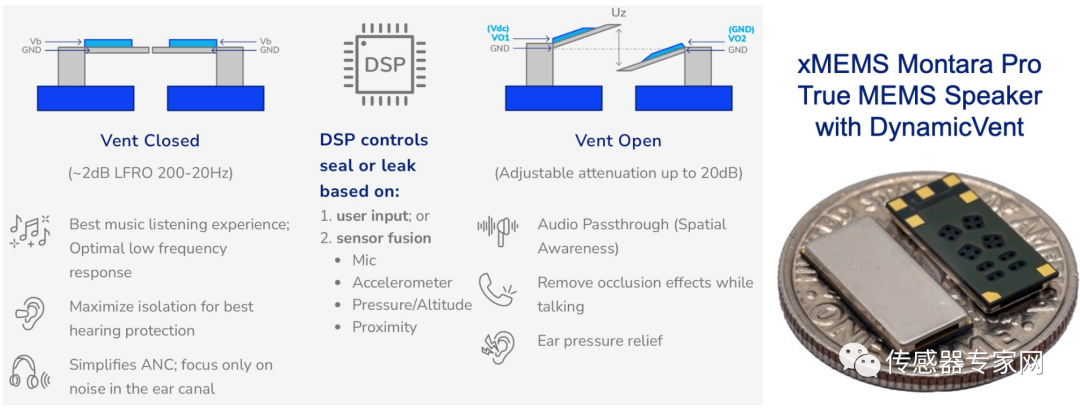 ▲xMEMS speaker product parameters and structureBosch & Arioso SystemsArioso Systems was founded in 2019 and operates independently from the Fraunhofer Institute for Photonic Microsystems (Fraunhofer IPMS) in Germany, headquartered in Dresden, and is one of the most innovative MEMS speaker technology manufacturers globally.In May 2022, Arioso Systems was acquired by global MEMS leader Bosch, and its technology will expand Bosch’s existing MEMS product portfolio, suitable for wearable and ear-worn devices.AAC TechnologiesAAC Technologies is one of China’s top ten MEMS companies, with MEMS microphones as its main MEMS product. In addition, AAC Technologies also has MEMS products such as accelerometers, gyroscopes, and RF.In 2023, AAC Technologies launched its first MEMS speaker, which can be directly driven by Bluetooth chips, eliminating the need for PA and truly achieving ultra-low power consumption, targeting Hi-res certified audio quality, using a frequency division scheme with high and low frequency units, which can greatly enhance the audio quality of headphones.
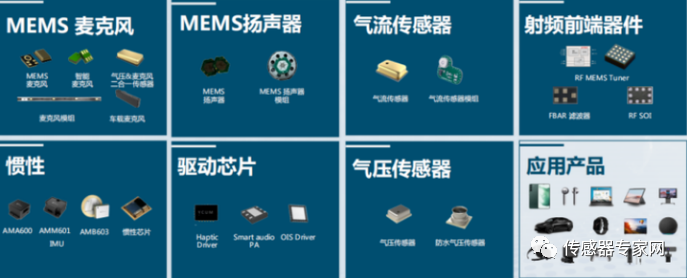 ▲AAC Technologies MEMS product seriesRunxin TechnologyRunxin Technology, established in 2000, is a leading provider of IC products and IC solutions in China, and in recent years has expanded into emerging technology fields such as MEMS sensing and AIOT edge computing.According to communication materials between Runxin Technology and investors, Runxin Technology has established a joint laboratory with the National Intelligent Sensor Innovation Center to jointly develop MEMS technology and promote its mass production. Based on the advanced sensor specialty process pilot line of the innovation center, Runxin Technology’s MEMS speakers are expected to start ramping up in the second half of 2023, likely becoming a new growth point for the company.Conclusion: Can this replicate the success of predecessors?Since its inception, MEMS technology has always been regarded as a miraculous technology that has successfully disrupted many application fields.The first MEMS microphone was integrated into the first Motorola RAZR phone, and later, with the rise of smartphones, traditional electret microphones were replaced by MEMS microphones, exiting the historical stage. Chinese MEMS companies, GoerTek, AAC Technologies, MEMSIC, etc., seized this wave and grew rapidly.Similarly, due to the innovative interaction needs of smartphones, MEMS gyroscopes and accelerometers began to become popular, and Ams AG decisively shifted from providing MEMS sensors to handheld game console manufacturers like Nintendo to launching MEMS inertial sensors for smartphones, resulting in rapid growth for Ams AG’s MEMS business.Speakers are currently one of the few devices in smart devices that have not been replaced by MEMS, and this decades-old industry will be disrupted by MEMS in the coming years.In the next five years, we may see MEMS speakers in various devices around us, such as TWS, smartphones, and computers, just like the ubiquitous MEMS microphones today.Can MEMS speakers replicate the success of their predecessors?What are your thoughts on this article? Feel free to leave comments and share!
Feel free to share & click to view, and let more people understand the dynamics of the Chinese sensor industry!
Content marked as a star = content you care about. According to the WeChat public account recommendation principle, if you do not set the Sensor Expert WeChat public account homepage as a star mark, you will not be able to receive the latest information on the sensor industry in a timely manner!
Disclaimer: The content of this article represents the author’s personal views and does not represent the views or positions of the Sensor Expert website. More opinions are welcome for comments.If you have submission, exposure, or interview needs, please send an email to:[email protected].Recommended Reading:
- Finally understood, modern warfare is all about sensors
- China’s chip tycoon actually comes from sensors
- Waking up, Chinese companies can no longer design sensors?!




 ShareCollectLikeView