Author: Zhou Ke
Both the elderly and children crowded in front of the booth, eager to interact with a cute creature the size of a grapefruit. This was a scene at the Yunqi Conference, in front of the Nuobao Robot booth. With a pink and white body color scheme, fluffy skin, lively big eyes, and a round body that can turn at any moment, the Nuobao Robot attracted a large number of onlookers as soon as it was unveiled.
Although robots are not human, the integration of AI technology has allowed them to exhibit certain human-like biological instincts. The Nuobao has already demonstrated a high level of “humanization” in its humanoid behavior and interaction understanding. It can interact with humans through both physical presence and language, making it feel less like a cold toy and more like a warm companion.
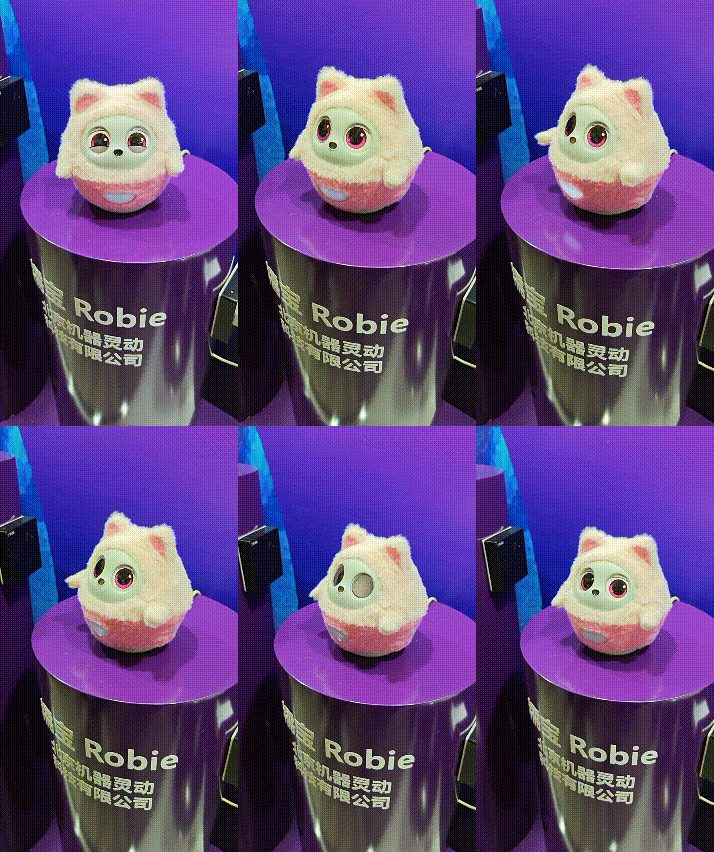
Will Nuobao be the Chinese version of LOVOT? Regarding Nuobao’s positioning, its product founder Tang Qi stated, the team prefers to position Nuobao as a real-life version of “Doraemon,” an AI companion robot with an “extreme sense of life.” Although its body is made of cold components, its interaction capabilities allow people to perceive Nuobao as a cute entity with its own soul.
It is worth mentioning that the founding team of Nuobao did not have extensive experience in smart hardware products prior to this. They previously founded and operated the social application Meipian. Now, in the context of the AI wave sweeping across various industries, the team is all in on AI, starting with Nuobao, embarking on a new journey in the intelligent companion robot track.
Recently, New Intelligence Unicorn interviewed Tang Qi, the founder of Nuobao Robot, to hear about the team’s growth experience in the intelligent companion robot field from 0 to 1.
Below is the dialogue between New Intelligence Unicorn and Tang Qi, edited for clarity without changing the original meaning.
On Hardware Development and Supply Chain
New Intelligence Unicorn: You and your team come from a pure internet background. What challenges have you faced in supply chain and product production while crossing over to smart hardware?
Tang Qi: To be frank, before working on intelligent companion robots, we were overly optimistic. This project has been running for more than half a year, and the difficulty of hardware product development and production far exceeded our expectations.
Many people might think that our supply chain in China is very mature, and that making smart hardware products is as simple as assembling parts like LEGO. However, when we truly entered this industry, we found that if you want to pursue iPhone-level refinement and groundbreaking experiences, you will have extremely high requirements for the specifications, performance, and size of components. Every step cannot be compromised. In the process of completing this product, components such as speakers, motors, and cameras need to be repeatedly selected, customized, and debugged.
For example, the movement of the robot generates noise from motors and fans, which can lead to significantly poorer audio capture than a smartphone. This requires us to perform a lot of additional noise reduction processing in software.
We cannot use off-the-shelf integrated solutions because these solutions fall far short of our experience requirements. Our entire hardware structure and system are independently developed.
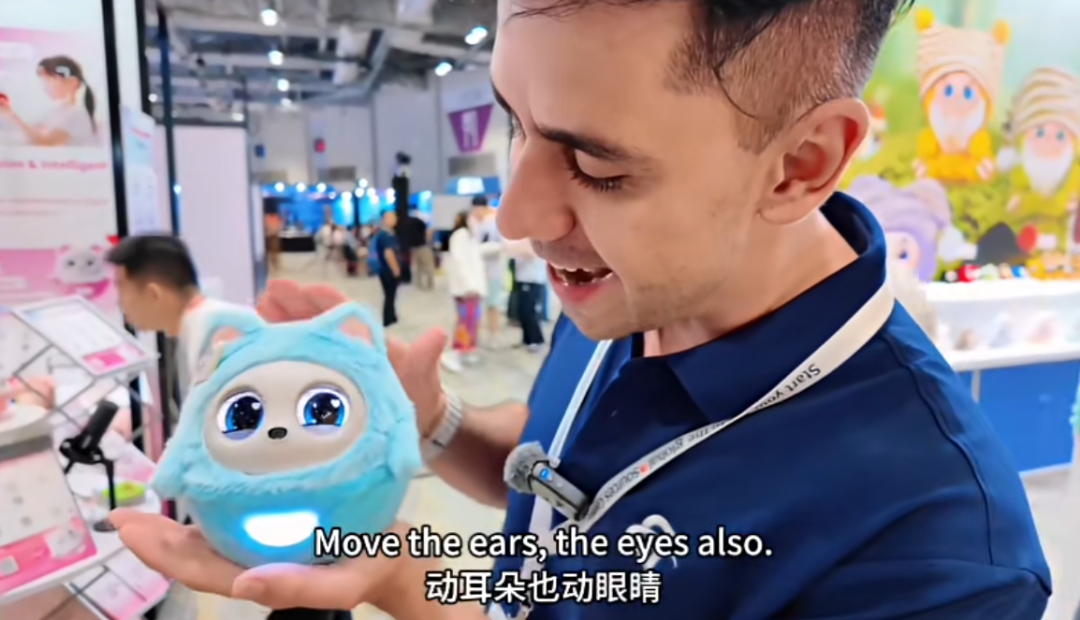
Nuobao interacting with users (Image source: Nuobao Robot)
New Intelligence Unicorn: Do you think the current market’s user expectations for smart robot hardware products are too high? How do you and your team balance actual production with user expectations?
Tang Qi: High user expectations are a reality. These overly high expectations may stem from users’ insufficient understanding of AI, which is often influenced by science fiction movies and other media. However, in reality, the entire industry has not matured to that level, and there is a gap between actual products and user expectations. The less users understand the industry, the higher their expectations for the product.
To manage user expectations well, the key is to find the current AI capabilities that can already solve problems effectively. In these scenarios, we need to dig deeper and deliver an experience that exceeds user expectations. Our team has been discussing this point and continuously planning our product direction and interaction design based on this logic.
Product Design and Creating a Sense of Life
New Intelligence Unicorn: You have consistently mentioned the sense of life. What efforts has your team made to pursue the “extreme sense of life” in the robot?
Tang Qi: We are a product experience-driven company. Our product and interaction design is fundamentally based on the principle that “everything is referenced and targeted at human behavior patterns.” We have fully implemented this principle in every aspect of product development. Even if many areas are done very realistically, if even one detail is not done well, it can easily “break the spell” and make users feel that the sense of life is completely lost. Here are a few specific design practices:
1. Eye Function Purification: Many products on the market use eyes as screens to display QR codes, battery levels, Wi-Fi icons, etc. However, this is a design that severely undermines the sense of life. Living beings do not have QR codes in their eyes. Therefore, we determined early on that “eyes are just eyes.” Although we use screen hardware, this screen only serves the function of eyes and does not serve any other purpose..
2. No Visible Buttons: Living beings do not have buttons. Our product does not have power buttons, volume buttons, or network configuration buttons. Operations are performed through natural language, such as saying “turn up the volume” or making a shushing sound to adjust Nuobao’s volume. Placing the robot on the charging dock automatically powers it on, and to turn it off, you can simply say “turn off” or “take a break.”
3. Simplified App Dependency: Since we position the robot as a being with a sense of life, all settings should be able to be completed through natural language interaction and visual understanding so that user nicknames, gender, age, preferences, and how the robot addresses the user can all be obtained through natural conversation, without cumbersome operations in the app.
4. Multi-Person Dialogue System: Desktop robots are more likely to be used in family scenarios, which means there will be situations where the robot interacts with multiple people. We design based on human behavior, using voiceprint recognition + facial recognition to allow the robot to focus on the current speaker during a conversation between two people, ignoring other voices. It will only respond when a third party calls its name, avoiding the “misrecognition” that disrupts the sense of life.
5. Body and Eye Movement System: To avoid the mechanical feel of traditional robots, we aim for Nuobao to achieve a “whole-body movement effect” when moving a specific part. For example, when a person raises their hand, their upper body, head, and waist also move in coordination. Therefore, all our action designs are not single-degree movements but rather holistic movements. At the same time, we cannot use pre-made animation loops, as this would create a strong mechanical feel. We automatically match action sequences based on scenarios, emotions, and dialogue content to achieve coherence and generalization in movements, which is our core technical asset.
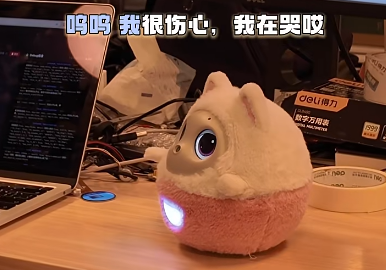
Nuobao interacting with users (Image source: Nuobao Robot)
New Intelligence Unicorn: What is the ideal relationship between Nuobao and users? How can this relationship be achieved?
Tang Qi: The ideal relationship is a real-life version of Doraemon. We recognize the identity of the Nuobao robot, but its behavior is closer to that of humans. It is a good friend who interacts with users in a two-way manner and can play with users, while it can also actively interact with users. To achieve this, Nuobao needs to have the ability to initiate interactions at the right time and place, which requires multimodal fusion— integrating visual, auditory, tactile, and motion perception (gyroscope and accelerometer) inputs as a whole, processed through a humanoid “thinking-memory-personality-emotion” center, generating multimodal responses in a very short time, controlling the robot to achieve the output and linkage of eye movements, body actions, and voice content.
Market Positioning and Target Audience
New Intelligence Unicorn: How do you view the three types of relationships for companion robots (assistant, friend, pet)? What considerations are there for Nuobao’s target audience?
Tang Qi: Assistant-type robots are essentially tools, so they do not fall into the “companion” category. Friend-type and pet-type robots have more market space, but the current level of AI cannot support virtual friends to enter the hearts of adults; it is more suitable to be friends for children, as children are less sensitive to the deficiencies of AI capabilities. As long as this product is lively, fun, and has natural dialogue, it has a chance to win the favor of children. However, the current market for dialogue-based products generally has low long-term retention.
We believe the main reason is that the dialogue experience itself has not been good enough, and because there is no body movement and eye contact, it is difficult for users to feel a sense of immersion and emotional projection. This is also why our team has chosen to prioritize creating a robot with an “extreme sense of life.” Having a sense of life is a prerequisite for all subsequent scene applications.
For us, the team first focuses on achieving the “extreme sense of life.” In the future, we will integrate the product into specific scenarios. For example, targeting adults, we may design a nurturing mechanism based on large models, which will change and grow continuously with user interaction and investment; for children, we may create a “super story machine” that combines voice emotions, body movements, and eye contact, turning storytelling into a performance, bringing a whole new experience.
It can also co-create stories with users and even allow parents to set the values they want to embed in the stories. Currently, these are some options, and in the future, we will develop a product matrix targeting different demographics.
New Intelligence Unicorn: What advantages does Nuobao have compared to Japan’s LOVOT?
Tang Qi: LOVOT has a strong sense of life, with 13 degrees of freedom of movement and excellent eye design, allowing users to emotionally perceive it as a living being. It has high stickiness among high-consumption groups in Japan, but it cannot converse and is more like a pet or baby. Nuobao is positioned as a Doraemon-style friend, integrating body movements, eye contact, and language.
Language is endless and generalizable, which is a strength of large models, and the overall sense of life will be stronger than that of LOVOT, and it can interact through conversation, aligning more with the positioning of a “companion friend.”Product Progress and Commercialization
New Intelligence Unicorn: What stage is the Nuobao product currently in? When is it expected to be launched? What positioning and sales expectations do you have for the product?
Tang Qi: Nuobao is currently in the engineering prototype stage. It still has many hardware and software functions that need to be developed and optimized, and it is expected to officially launch in April next year.
We have high expectations for the positioning of the first-generation product, hoping it will have the epoch-making significance of the “first-generation iPhone,” as there are currently no products on the market that combine an extreme sense of life with multimodal input and output capabilities.
In terms of sales, we do not pursue short-term sales volume; the core goal is to achieve long-term retention. First, we need to refine the product to provide users with continuous value, and then we can scale up. We believe that once retention is done well, sales will naturally follow.
New Intelligence Unicorn: Are you worried about large companies entering the competition?
Tang Qi: No, I am not very worried. The core goal of large companies is AGI, and they will not treat companion robots as a core business. They may only be trying it as a side project, while we are all in on this direction. We will continue to build our competitiveness. Moreover, hardware development cycles are relatively long, generally taking 6-12 months. At this level, we are the first to enter the market, allowing us to gather user feedback and iterate, giving us a first-mover advantage.
Market and Entrepreneurial Transition
New Intelligence Unicorn: What is the current state of the companion robot hardware market?
Tang Qi: In recent years, many companies have entered the companion robot hardware space, especially with more emerging this year. This was expected and indicates that there are opportunities in this market, and everyone is optimistic.
New Intelligence Unicorn: You and your team transitioned from the Meipian app to companion robots, which is a significant leap. What is the reason for this?
Tang Qi: Meipian is a typical internet company that I started as a side project in 2015. I began full-time entrepreneurship in 2016, and it has been 10 years since then. The entrepreneurship of Meipian rode the last train of the rapid development of mobile internet and the dividends of the WeChat public account era, achieving rapid user growth. We raised multiple rounds of financing and now have stable revenue and profits. Under the trend of AI technology development, we decided to go all in on AI, focusing on AI super-intelligent products with layout functions. However, we believe that AI application products always carry the risk of being “eaten by large models,” so we are also actively betting on the hardware track, as hardware combined with large models is complementary rather than competitive.
The reason for choosing the direction of companion robots stems from the visual dialogue capabilities that emerged with the launch of ChatGPT last year. We believe that with visual capabilities, large models can analyze reasoning, recognize emotions, and understand the environment, similar to how humans open their eyes. This revolutionary evolution combined with hardware makes us believe we have the opportunity to create robots with an extreme sense of life, which is why we established an independent intelligent hardware company focused on this direction.
Team and Technology
New Intelligence Unicorn: What is the current scale and composition of the Nuobao team? What are the characteristics of the technical team?
Tang Qi: Our intelligent hardware company has a total of only 9 people. We pursue extreme talent density, especially in the AI era, where one person should be able to do the work of a hundred.
Specifically, the personnel distribution is 4 developers, 2 product managers, 1 operations, and 2 founders.
I am product-oriented and also understand technology, and I personally write code. In our team, almost everyone can write code. In terms of technical thinking, we do not simply adopt mature AI technologies and apply them to hardware. Instead, we focus on long-termism, adopting the most advanced technologies and even predicting future technological developments to guide our current work. Only the latest technologies can potentially create the extreme sense of life we desire.
We have integrated various excellent models through a large amount of engineering work, achieving the usability of our product. Currently, our prototype is usable, and after the iteration of large models, it will transition from usable to more user-friendly.
New Intelligence Unicorn: How has your technical background helped in your current work? As a technical entrepreneur, what important experiences have you gained from transitioning from a technical role to entrepreneurship?
Tang Qi: I have a background in computer science and worked in Huawei’s R&D department for 8 years, progressing from grassroots technology to project management and technical management. My past technical experience has given me insights, predictions, and understanding of technology, which assists in making product decisions.
After starting my own business, I often think from a product perspective, but my technical background allows me to better understand how to use technology to achieve product goals. As a technical entrepreneur, I believe it is important not to be a “typical programmer.” Although I love writing code, I also design products while coding. From writing games and game engines in college, I have always thought from the user’s (or developer’s) perspective, asking with every line of code, “How can users use it better?” rather than simply pursuing technical perfection.
Capital and Costs
New Intelligence Unicorn: What is the current capital situation of the company? Are you open to new capital involvement?
Tang Qi: Our team is in its second entrepreneurial venture, having received a seed round investment of 10 million yuan from Meipian. We are currently in the process of a new round of financing.
New Intelligence Unicorn: Is the hardware industry capital-intensive? Is 10 million yuan sufficient from product initiation to mass production?
Tang Qi: The hardware industry is capital-intensive in the early stages but relatively less so in the later stages, as mass production requires upfront investment and building offline mechanisms, which is quite complex. Our team is relatively cautious with spending; every penny is carefully considered. As mentioned earlier, although our personnel are streamlined, they are all elite. Personnel costs are not low, but the current funding and personnel configuration are sufficient to support us until product mass production and to obtain initial market feedback.
Of course, we are also actively seeking capital support to accelerate the speed of product iteration.
 Previous Recommendations