The Distributed Feedback Laser (DFB Laser) is a type of semiconductor laser known for its high single-mode performance. Its core feature is the introduction of a periodic refractive index modulation structure (i.e., a Bragg grating) within the laser, which enables optical feedback and wavelength selection, resulting in the output of a single wavelength laser.
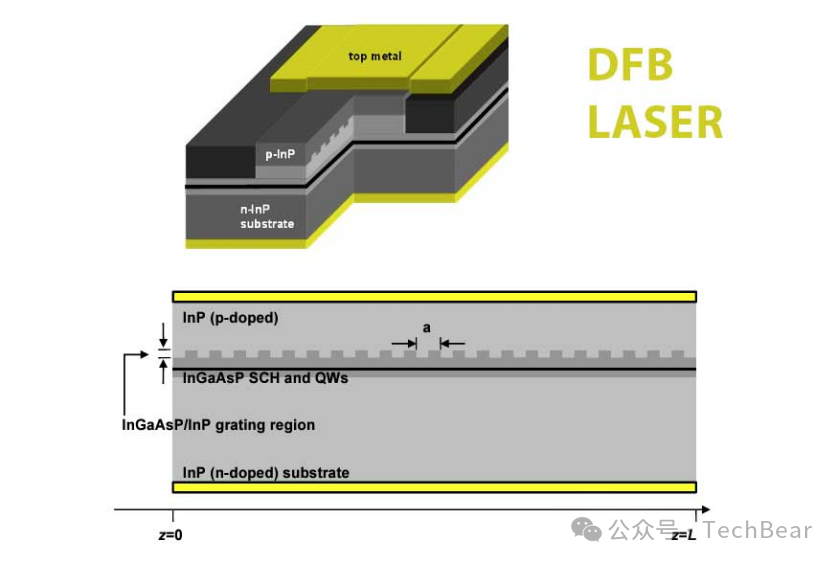
DFB Laser
In 1975, the research group led by Professor Yariv at the California Institute of Technology (Caltech) first developed the DFB laser. This single-wavelength laser, which can be mass-produced on wafers, quickly found widespread applications. Before the advent of DFB lasers, the multi-wavelength emission characteristics of FP lasers limited the signal transmission rates for medium to long-distance optical communications (due to fiber dispersion). The introduction of DFB lasers perfectly addressed this issue (in wavelength division multiplexing systems). It can be said that without DFB lasers, there would be no high-speed optical communication networks as we know them today, and the internet era would not have been possible. In 2010, then-President Obama awarded Professor Yariv the National Medal of Science, recognizing his outstanding contributions to the field of semiconductor lasers.
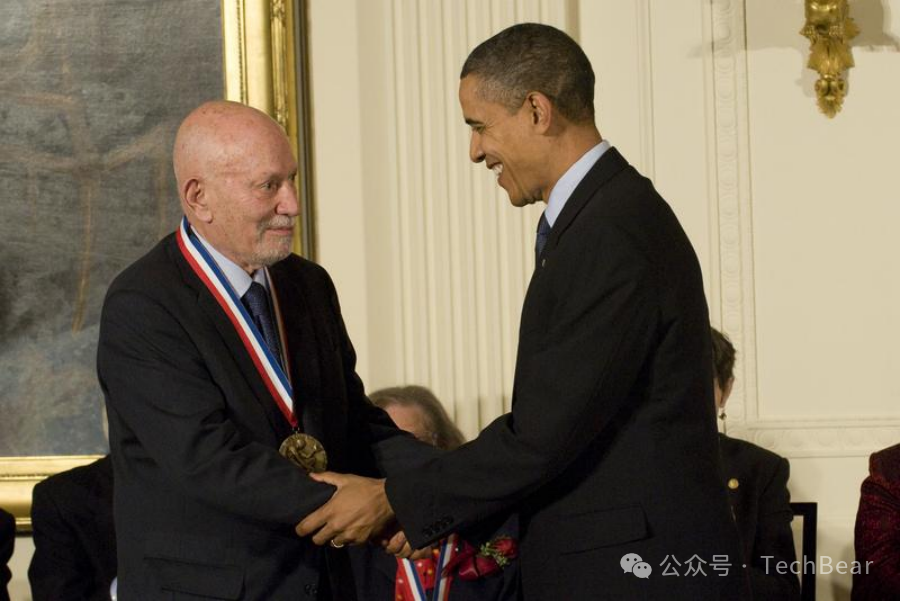
Award Ceremony
Since the introduction of the DFB laser, inspired by its working principle, various single-wavelength lasers have emerged, including: DBR lasers (e.g., fiber lasers), VCSELs, and external cavity lasers. These single-wavelength lasers are widely used in optical communications, optical sensing, laser radar, and spectral analysis, contributing to the booming optoelectronics industry.
Today, the technology for manufacturing DFB lasers has been commercialized, and various commonly used wavelength semiconductor lasers can be easily procured. In the field of optoelectronics, fewer people are choosing to engage in the research and development of semiconductor lasers, as it seems this direction has been thoroughly explored, with more focus on selecting lasers based on specific R&D needs.
So, is there still potential for development in the field of semiconductor lasers?
We can find answers from Professor Yariv’s research work. Throughout his career, Professor Yariv has focused on the development of semiconductor lasers, with his research group’s final direction being: silicon-based high-coherence integrated semiconductor lasers, aimed at applications in coherent optical communication!
The logic behind developing this new type of semiconductor laser is simple: in an era of exponential data transmission growth, coherent optical communication may replace traditional incoherent optical communication as the mainstream, as coherent optical communication can enhance signal transmission rates by loading information in phase. Currently, coherent optical communication is more commonly applied in long-distance optical communication networks, while incoherent communication, which is more cost-effective, dominates in medium to short-distance networks. One major reason for the high cost of coherent optical communication is the expensive high-coherence lasers (coherent optical communication uses external cavity lasers, while traditional DFB lasers are difficult to apply in coherent optical communication due to high phase noise). Therefore, if high-coherence semiconductor lasers can be developed, it would significantly reduce the cost of coherent optical communication, making it more widely applicable in medium to short-distance optical communication networks.
Professor Yariv’s research group has chosen the Si/III-V integrated technology route to manufacture high-coherence integrated semiconductor lasers. These lasers (which are compact) can be mass-produced on wafers, but due to the maturity of Si/III-V heterogeneous integration technology, they have not yet been commercialized. (Even Intel’s Si/III-V heterogeneous integration technology has been questioned regarding yield issues.)
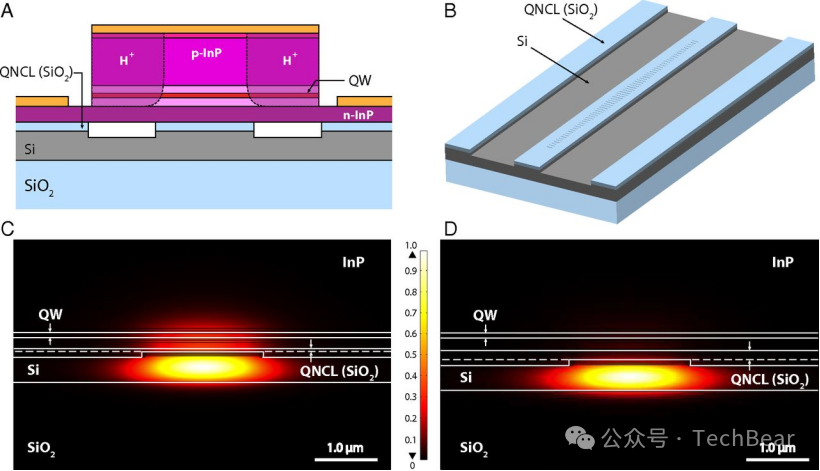
High Coherence Si/III-V Integrated Semiconductor Laser
Perhaps, by drawing on the principles of this Si/III-V integrated semiconductor laser, new, low-cost high-coherence semiconductor lasers can be developed. Just as the advent of DFB lasers completely transformed the field of optical communication, commercially viable low-cost, high-coherence integrated semiconductor lasers could also disrupt the entire optical communication industry. Professor Yariv has retired; who will take up the torch to further advance the field of semiconductor lasers? We shall wait and see.