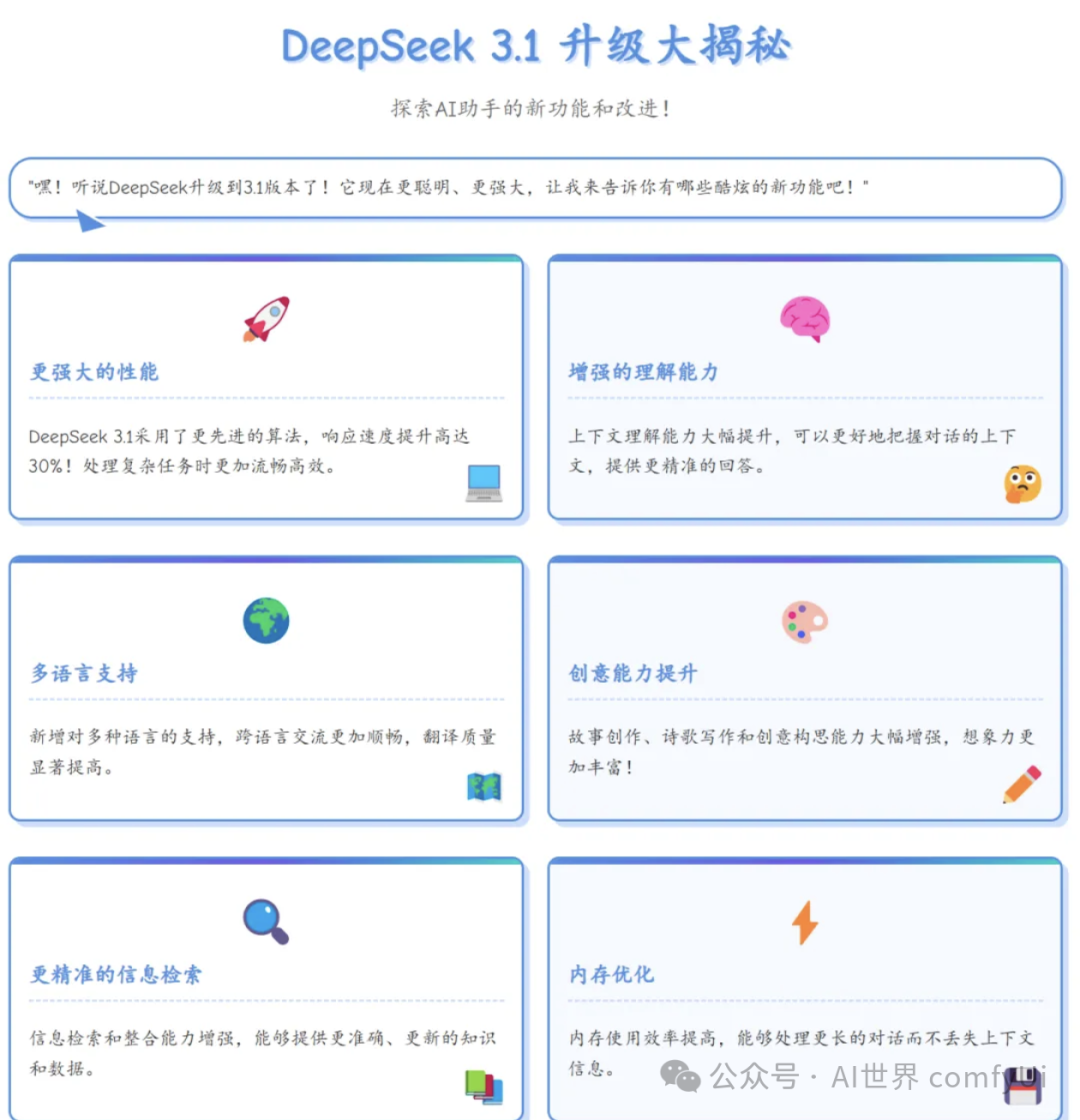
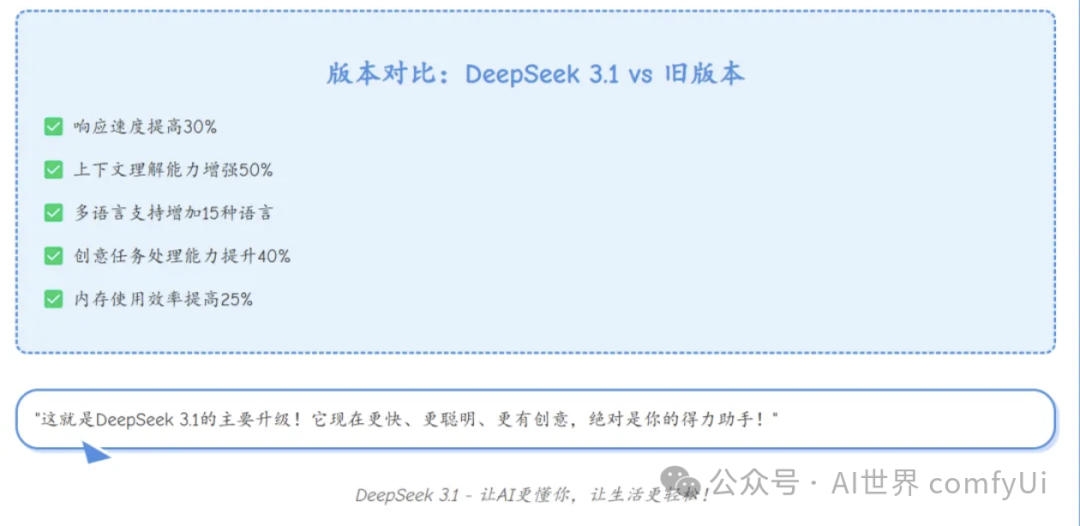
The release of DeepSeek-R1 has attracted widespread attention in the industry. Although the version number indicates a cautious evolution, its coding capabilities have reached world-class standards, and this version has significantly enhanced support for agent scenarios. For instance, it can autonomously generate summaries and output them in HTML format. All of this reflects DeepSeek’s philosophy of ‘making AI understand you better and making life easier.’
Crucially, DeepSeek-R1 has significantly enhanced optimization support for domestic AI chips. At its core, it adopts the UE8M0 FP8 Scale parameter precision scheme, which is specifically designed for the computational characteristics of the new generation of domestic AI chips. This means that DeepSeek-R1 has undergone deep adaptation at the computational format level to fully leverage the architectural advantages of domestic chips.
Reportedly, DeepSeek-R1 has completed deep adaptation and joint optimization with several leading domestic chip manufacturers:
* Huawei Ascend: The DeepSeek model has been deployed on the Ascend 910B chip, reportedly reducing inference output costs by nearly 90%. The R1 version is expected to further optimize compatibility with the Ascend series of chips.
* Muxi: The Muxi C600 chip, based on the self-developed XCORE1.5 architecture, natively supports FP8 tensor instructions; its C550 series chips also support efficient inference of DeepSeek’s large models.
* Enflame: Its L600 chip is the first domestic AI chip to natively support FP8 low-precision computation, capable of efficiently accelerating FP8 training tasks for large models like DeepSeek.
* Zhonghao Xinying: The ‘Taize®’ GPTPU AI server, built on the self-developed ‘Shan’ TPU AI chip, has successfully completed adaptation testing for the DeepSeek large model, becoming one of the first eight companies to pass the evaluation.
* Moore Threads: Its new generation of fully functional GPUs, based on the MUSA computing architecture, has native FP8 computing capabilities and provides functional support optimized for DeepSeek training and inference through the DeepGEMM library.
* Cambricon: Reports indicate that Cambricon plans to achieve a doubling of computing power at FP8 precision through Chiplet packaging technology and the MLUarch instruction set, and is conducting joint adaptation work with DeepSeek.
The deep support of DeepSeek-R1 for domestic computing power chips has far-reaching strategic significance:
1. Breaking through computing power bottlenecks and ensuring supply chain security: In the current international environment, this move effectively reduces dependence on international high-end GPUs (such as NVIDIA products) and helps build a self-controllable AI computing power supply chain system.
2. Enhancing the international competitiveness of domestic chips: The deep collaborative optimization between top AI models and domestic chips will comprehensively promote the iterative upgrades of domestic chips in design, manufacturing, software ecology, and other aspects, enhancing their competitiveness in the international market.
3. Significantly reducing AI application costs: The efficient computing and energy consumption advantages brought by the FP8 format can greatly reduce the training and inference costs of large models, thereby lowering the threshold for the large-scale application of AI technology across various industries.
4. Building a complete domestic AI full-stack technology ecosystem: Successfully creating a complete closed-loop ecosystem of ‘domestic AI chips – domestic open-source large models – downstream industry applications.’ This is particularly important for sectors such as government affairs, finance, and energy, which have high requirements for data security and self-control.
These positive developments have also had corresponding impacts on the capital market, being seen as a signal of potential competitive pressure on related international competitors (such as NVIDIA).