An Overview of the HTTP Protocol
An Overview of the HTTP Protocol

1. Introduction to HTTP 1.1 Versions of HTTP HTTP/0.9 Overview Released in 1991, it has no headers and is very simple, supporting only GET requests. HTTP/1.0 Released in 1996, it has poor security for plaintext transmission and large headers. It has the following enhancements over 0.9: Added headers (decoupling metadata from data) Introduced status codes … Read more


Understanding the HTTP Protocol

Understanding the HTTP Protocol

Understanding the HTTP Protocol 1. Concept of HTTP Protocol: Concept: Hypertext Transfer Protocol, which specifies the rules for data transmission between browsers and servers. 2. Characteristics of HTTP Protocol Based on TCP protocol: connection-oriented and secure. Based on request-response model: one request corresponds to one response. HTTP is a stateless protocol: it has no memory … Read more

MQTT 5.0: 7 New Features and Migration Considerations

MQTT 5.0: 7 New Features and Migration Considerations

The MQTT protocol (Message Queuing Telemetry Transport) is a lightweight messaging protocol designed for resource-constrained devices and low-bandwidth, high-latency networks. It is particularly suitable for remote connections that require minimal code footprint or limited network bandwidth. MQTT 5.0 is the latest version of this protocol, featuring numerous improvements over previous versions. New functionalities include: reason … Read more

A Quick Overview: Can We Discuss HTTP and HTTPS?

A Quick Overview: Can We Discuss HTTP and HTTPS?

Interview Background Hello everyone, I am Xia Yi. Today I will continue to share my interview experience at Kuaishou, this is the 9th question. Kuaishou First Interview (48min) Experience: Interviewer: Please introduce yourself briefly. I: I will briefly outline my work, highlighting the key points (understanding the importance of selection). Interviewer: Can you talk about … Read more

Modbus-RTU Protocol Response Example

Modbus-RTU Protocol Response Example

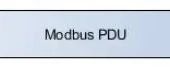
Click 👆 aboveFollowEngineer Yan Ji and ★ Star Mark ★. Modbus-RTU Protocol The RTU ADU is shown in the figure below. In addition to the core PDU, this ADU contains only two pieces of information. First, the address is used to define the slave device corresponding to the PDU. In most networks, address 0 is … Read more

In-Depth Analysis of the MQTT Protocol: Fixed Header, Variable Header, and Payload

In-Depth Analysis of the MQTT Protocol: Fixed Header, Variable Header, and Payload

Introduction MQTT (Message Queuing Telemetry Transport) is a lightweight messaging protocol widely used in the Internet of Things (IoT), mobile applications, and other fields. It is based on a publish/subscribe model, providing an efficient messaging mechanism. This article will provide a detailed analysis of the fixed header, variable header, and payload in the MQTT protocol, … Read more

What is the MQTT Protocol?

What is the MQTT Protocol?

Recently, while testing the integration of Mobotix cameras with HomeAssistant, I found that the Mobotix camera images could be successfully integrated into HomeAssistant via the Onvif protocol or RTSP. So how can the alarm signals from the Mobotix camera be integrated into HA? Since the Mobotix camera supports the MQTT protocol, and HA also supports … Read more

Detailed Explanation of Modbus Protocol and Data Types

Detailed Explanation of Modbus Protocol and Data Types

Click 👆 above to follow Engineer Yan Ji and ★star★. Protocol Definition 1. Modbus is a request-response protocol implemented using a master-slave relationship. 2. The Modbus protocol introduces different application data units to change the packet format used in serial communication or to allow the use of TCP/IP and User Datagram Protocol (UDP) networks. Its … Read more

Understanding the Relationship Between TCP, Sockets, and HTTP

Understanding the Relationship Between TCP, Sockets, and HTTP

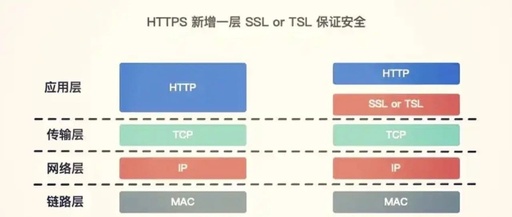
Recently, I needed to implement an HTTP interface for a project. So, I took this opportunity to explain the relationship between HTTP and sockets, as well as their connection to TCP. First, it’s essential to understand that in the network layer architecture, the HTTP protocol belongs to the application layer, while the TCP protocol belongs … Read more

HTTP 3.0 Completely Abandons TCP: What Went Wrong?

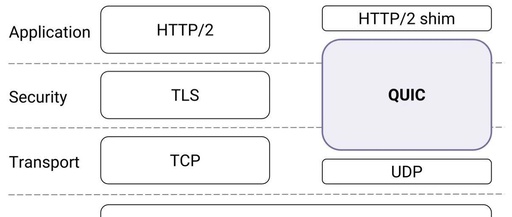
Author l Hollis Source l Hollis (ID: hollischuang) Since HTTP/1.0 and up to HTTP/2, regardless of how the application layer protocol has improved, TCP has always been the foundation of the HTTP protocol mainly because it provides a reliable connection. However, starting from HTTP 3.0, this situation has changed. Because, in the newly released HTTP … Read more