Which is More Promising for Embedded Development: MCU + RTOS or Linux?

Which is More Promising for Embedded Development: MCU + RTOS or Linux?

First, it is important to understand the differences between the two.Starting from the job perspective,RTOS direction: Positions such as driver development, automotive electronics, or medical device firmware place a strong emphasis on C language and hardware debugging skills. Proficiency in systems like FreeRTOS/ThreadX is essential, and knowledge of CAN bus and low-power optimization is also … Read more
FreeRTOS – Simple LCD Operations on STM32H573I-DK

FreeRTOS - Simple LCD Operations on STM32H573I-DK

This article introduces simple operations of the <span>LCD</span> on the <span>STM32H573I-DK</span> development board under <span>FreeRTOS</span>. Hardware Introduction <span>ST</span> provides a development board that uses a <span>1.54"</span> <span>TFT LCD</span> and is designed with <span>CTP</span>. This article only introduces the <span>LCD</span> part. From the schematic, it can be seen that a backlight circuit designed with <span>STLD40DPUR</span> is … Read more

FreeRTOS Learning: Data Types and Coding Style

FreeRTOS Learning: Data Types and Coding Style

Scan to FollowLearn Embedded Together, learn and grow together FreeRTOS defines its own set of data types primarily to ensure portability across different processor architectures and compilers. These data types are defined in the <span>portmacro.h</span> file, and the specific implementation will be adjusted according to different compilers and processors. Basic Data Types FreeRTOS defines the … Read more

MuditaOS: A Lightweight Real-Time Operating System Based on FreeRTOS Designed for Minimalist Phones

MuditaOS: A Lightweight Real-Time Operating System Based on FreeRTOS Designed for Minimalist Phones

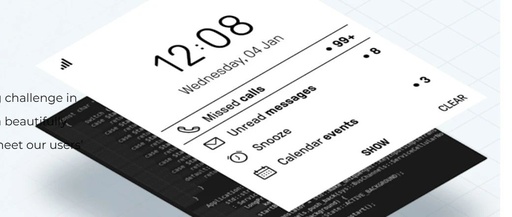
Hello, friends! Today, I want to introduce you to a recent “black technology” that has been gaining popularity—MuditaOS. This name might sound a bit unfamiliar, but its capabilities should not be underestimated! If you appreciate simplicity and purity, and want to avoid being overwhelmed by notifications and ads, you definitely need to learn about this … Read more

Methods and Techniques to Keep Embedded Systems Robust!

Methods and Techniques to Keep Embedded Systems Robust!

Embedded systems are becoming smarter, more interconnected, and certainly more complex than ever before. To keep embedded systems robust and as error-free as possible, development teams need effective methods for testing and validating that the system works as intended. The most critical and often the most challenging aspect of testing is running software on microcontrollers. … Read more

From Bare Metal to Real-Time Operating Systems (RTOS): When to Make the Switch?

From Bare Metal to Real-Time Operating Systems (RTOS): When to Make the Switch?

Kunvar Chokshi is an embedded development engineer with over ten years of embedded experience. The Edian team provided the translation. Embedded developers typically start their projects in the bare metal domain—without an operating system, no multitasking, just raw code running directly on the hardware. This approach is all about direct register manipulation and peripheral control … Read more

Task Scheduling in FreeRTOS – Startup

Task Scheduling in FreeRTOS - Startup

One of the core tasks of an operating system is task scheduling. Tasks have different names in different operating systems, such as task, thread, or process, with processes typically associated with independent address spaces. The goals of scheduling are to ensure fairness, real-time performance (for real-time systems), maximize CPU utilization, and meet task priority requirements. … Read more

Chapter 18 of FreeRTOS: Multi-Core Scheduling (SMP Extension)

Chapter 18 of FreeRTOS: Multi-Core Scheduling (SMP Extension)

Table of Contents 1. Overview of SMP Architecture 1.1 Basic Concepts 1.2 FreeRTOS-SMP Features 2. Inter-Core Task Migration Experiment 2.1 Experiment Objectives 2.2 Experiment Steps 2.3 Experiment Result Analysis 3. Protection of Shared Resources in Multi-Core Systems 3.1 Common Issues 3.2 Comparison of Solutions 3.3 Example Code 4. Key API Analysis 4.1 SMP Extension APIs … Read more

Chapter 25 of ‘Getting Started with FreeRTOS’: Practical Memory Leak Detection

Chapter 25 of 'Getting Started with FreeRTOS': Practical Memory Leak Detection

Table of Contents Course Objectives 1. Custom malloc/free Hook Functions 1.1 Basics of FreeRTOS Memory Management 1.2 Principles of Hook Function Implementation 1.3 Practical: Implementation of Memory Tracking Hook 2. Memory Fragmentation Monitoring Solutions 2.1 Causes of Memory Fragmentation 2.2 Fragmentation Detection Methods 2.3 Comparison Table of Optimization Strategies Practical Project: Memory Monitoring System 3.1 … Read more

FreeRTOS Learning: System Porting

FreeRTOS Learning: System Porting

Scan to FollowLearn Embedded Together, learn and grow together This series of articles on FreeRTOS aims to help beginners quickly get started and master the basic principles and usage methods of FreeRTOS while organizing knowledge for themselves. FreeRTOS Quick Start – Initial Exploration of the System FreeRTOS Official Chinese Website is Now Live FreeRTOS Coding … Read more