Hello everyone, I am Little Jujube.
Today, I want to talk to you about the future of networks.
Those who know a little about communications must understand that mobile communication networks, although consisting of many components, can essentially be divided into two sides: one is the wireless side and the other is the network side.
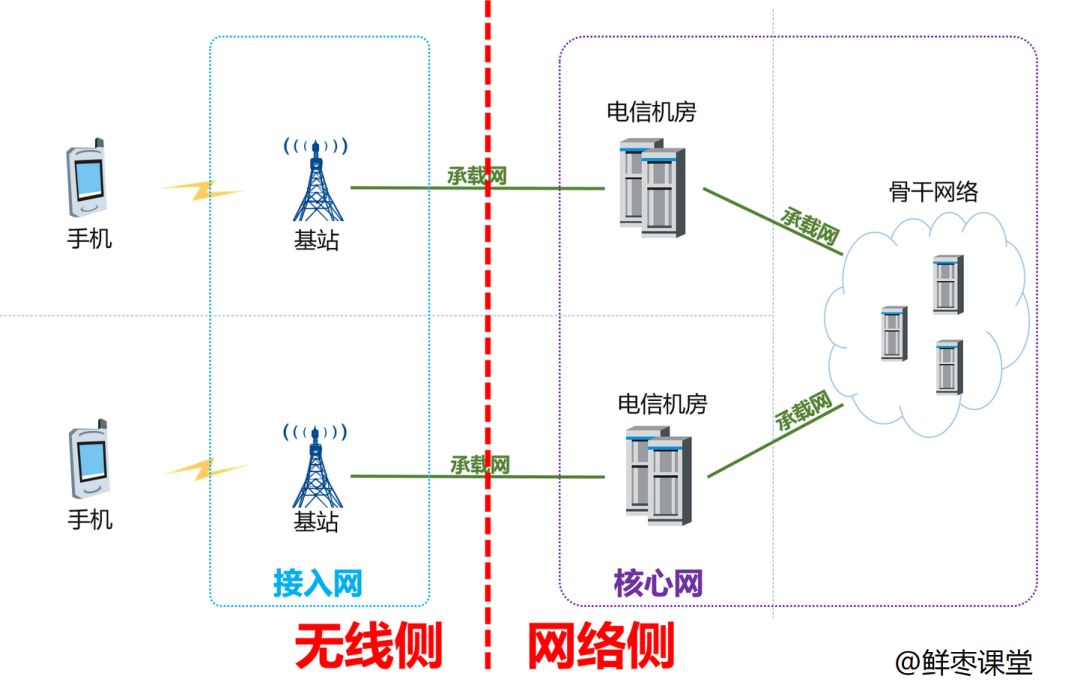
Wireless Side & Network Side
The wireless side focuses on the wireless interface, which is the signal quality and network coverage. The network side focuses on routing, forwarding, and data processing, which is essentially business management.
The network side is commonly referred to as the core network side, composed of various functional core network devices.
For a long time, the content of articles in the Fresh Date Classroom has mainly focused on the wireless side. However, Little Jujube is actually an experienced core network veteran with over ten years of experience.
The reason I rarely introduce core networks is that this stuff is just too TMD difficult… As a public account for knowledge dissemination, explaining the core network in simple terms is harder than killing me.
Don’t believe it? Just throw out a network diagram and feel it:
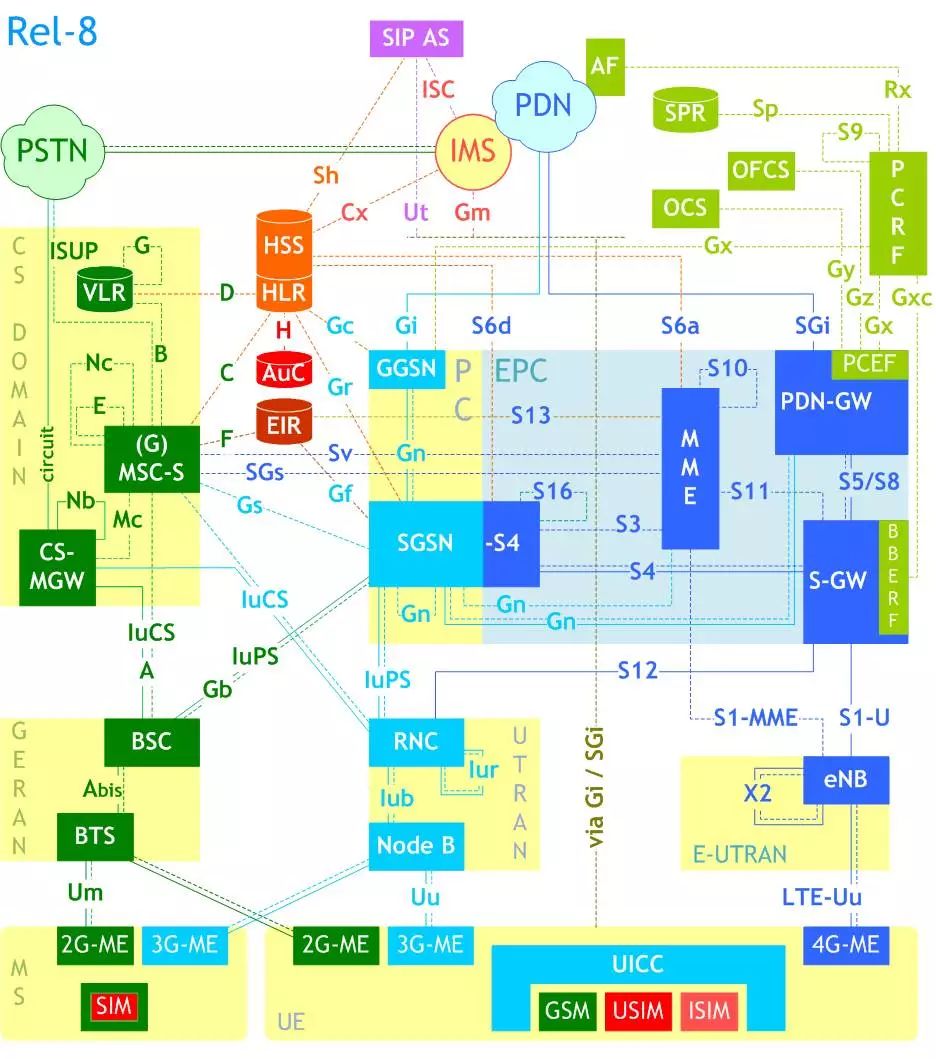
This is still a simplified version; you can see a yellow circle labeled IMS. In reality, these three simple letters represent a whole lot of things:
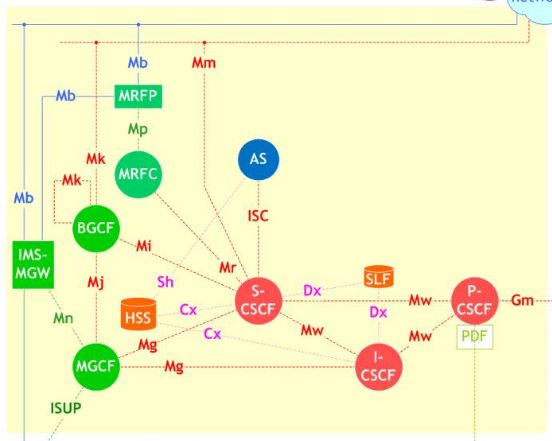
Isn’t it complicated?
The complexity of communication networks is an inevitable result of the continuous development of communication technology. The 2G network was simple, but then 3G and 4G were built, and now 5G is coming; these many networks do not transition immediately but will coexist for a long time. The coexistence of multiple networks inevitably leads to a large and complex network scale.
More and more demands…
More and more functions…
More and more networks…
More and more devices…
More and more interfaces…
More and more signaling…
The complex network is transparent to mobile users, but it brings many problems to operators:
Unreasonable hardware resource utilization ✘
Network maintenance is becoming increasingly difficult ✘
Operating costs continue to rise ✘
Interoperability between different manufacturers is cumbersome and inefficient ✘
Slow speed for launching new services ✘
Business applications are rigid and inflexible ✘
………………
Little Jujube can’t help but think of a song:

(Did you unconsciously sing along? Did you?)
In such a fiercely competitive era, these problems severely affect the operating costs and efficiency of operators, reducing their profits and weakening their competitiveness.

Thus, a new solution was proposed—

What is virtualization?
What we usually refer to in the communication industry as virtualization is actually short for Network Function Virtualization (NFV, Network Function Virtualization).
Why emphasize the communication industry?
Because the initial concept of virtualization actually originated in the IT industry. With the continuous integration of IT and CT (Communication Technology), leading to ICT (Information Communications Technology), virtualization technology has started to enter the traditional communication industry.
Definition of Network Function Virtualization (NFV):
Using virtualization technology, based on X86 and other general-purpose hardware to achieve the softwareization of service function nodes.
Feeling a bit confused? Well, let’s first take a look at how NFV came about.
The initial architecture of communication devices was like this:
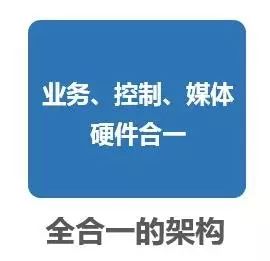
Business: the functional role of the network
Control: overall management of the network
Media: the data flow of users
In other words, all functions are done in one device, managing everything.
Later, in order to be more flexible and cost-effective, it changed to this:
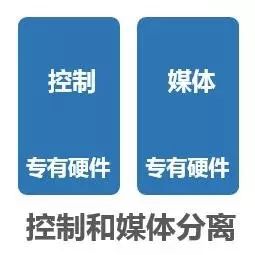
It looks like one became two; how can that save money?
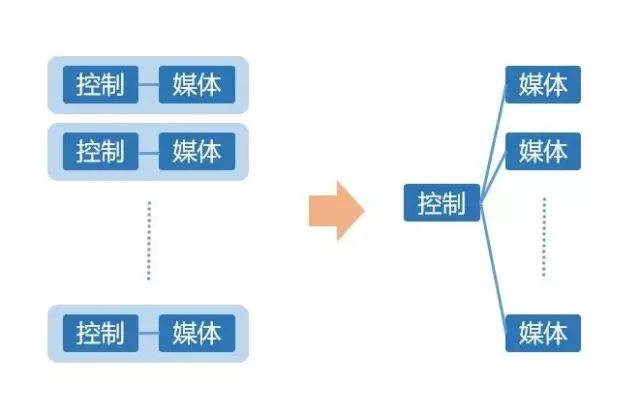
In fact, N instances of “control + media” have been transformed into one “control” plus N instances of “media”. (This is a simplified example for understanding convenience; in reality, it can be “many-to-many”)
Here’s a diagram for better understanding:
Later, for even more flexibility and cost savings:
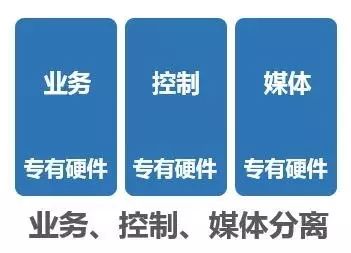
Business functions were also separated from control. Everyone has their own roles and specializes in their tasks.
Now, the concept of virtualization has been proposed, which separates them even more thoroughly:
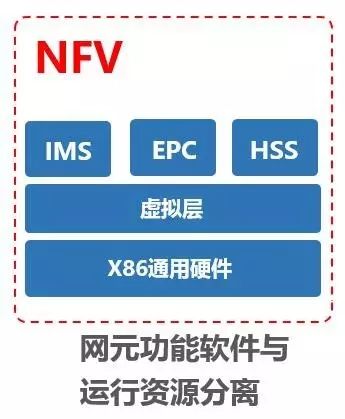
Simply use general-purpose hardware from the IT industry (like the HP and DELL servers you see in telecom or enterprise data centers, either blade or tower type) to replace the self-developed hardware from traditional communication vendors (like ATCA, ETCA).
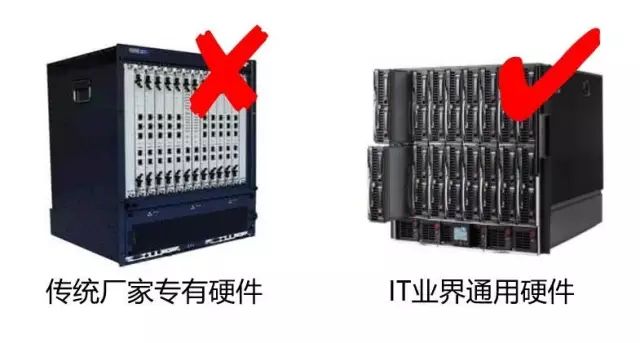
Of course, virtualization is not just about changing the hardware platform.
On top of the hardware platform, there is a very powerful virtualization software platform for management. This software platform is also an open-source platform from the IT industry (where the source code is publicly available for everyone to develop), such as the well-known OpenStack.
Device vendors customize and develop their own systems based on the open-source platform.
To put it simply, think of it this way:
The virtualization platform wraps a layer around the hardware, making the actual hardware invisible to you, providing many virtual hardware resources for your use.
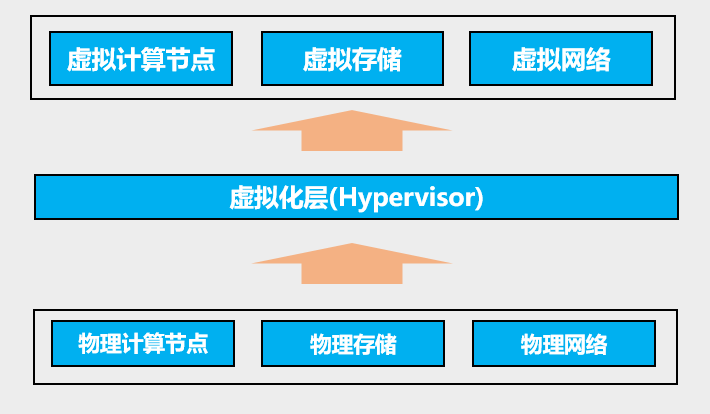
You can flexibly utilize these virtual resources (CPU, storage, network), install systems, and programs on top of them.
Thus, these programs can implement the functions of your telecom network elements (MME, SGW, PGW, CSCF, AGCF, etc.).
To exaggerate a bit, with some tinkering, even your desktop PC can serve as telecom equipment…
How about that? Isn’t it amazing?

Making everything virtual allows for extreme flexibility…
The following is the overall structure diagram of Network Function Virtualization (NFV):
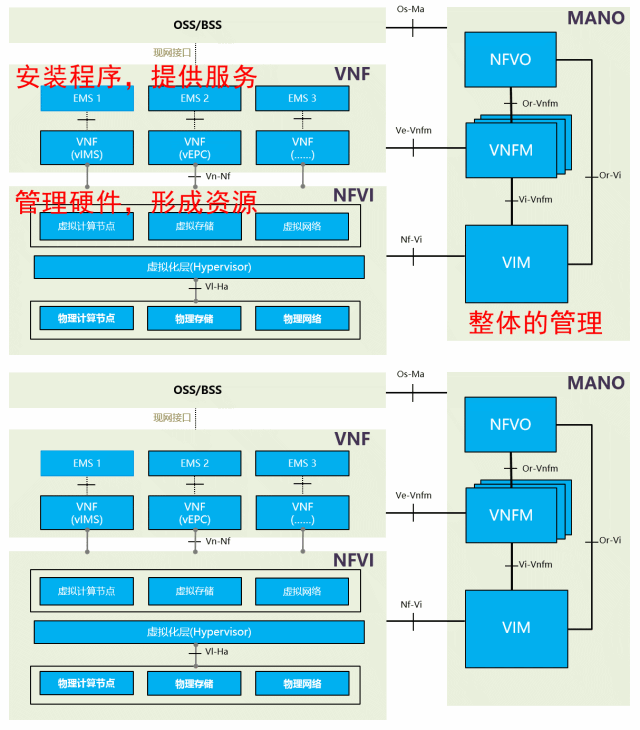
Don’t worry if you don’t understand it; I will introduce it specifically later.
After virtualization, calling upon hardware resources becomes very convenient and free.
If the network workload is too high:
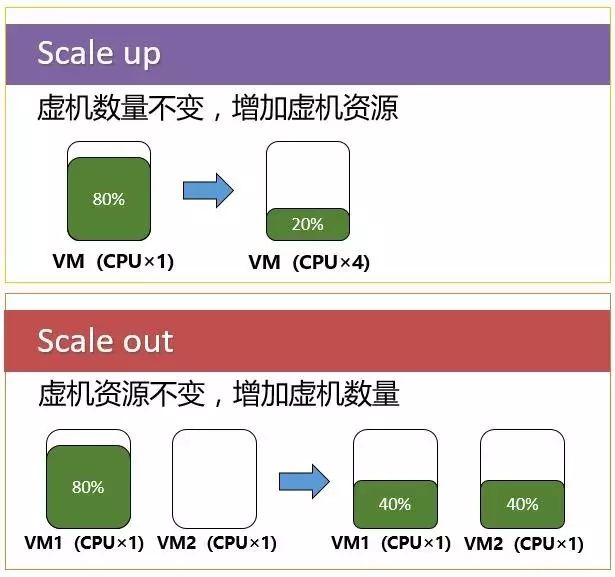
Dynamic increase in CPU quantity
If the workload is too low:
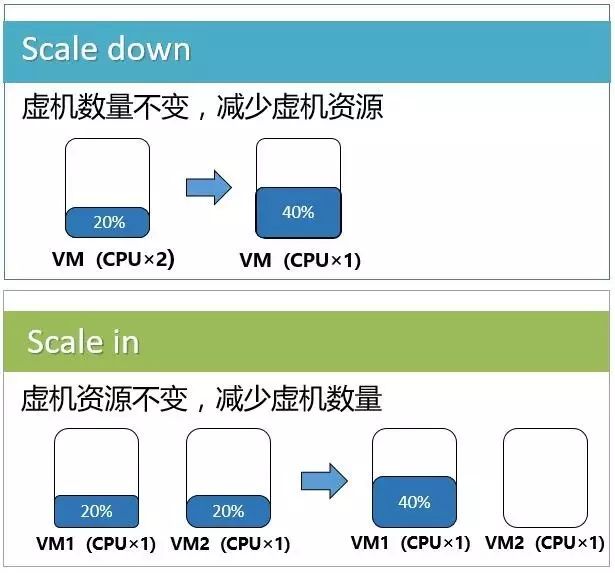
Dynamic decrease in CPU quantity
Got it? With the help of virtualization, the system becomes more flexible and resource-efficient.
Moreover, the system’s disaster recovery capability is greatly enhanced. If physical hardware fails, it can respond and handle issues quickly.
What to do if the hardware fails? Look at the diagram below:
Little Jujube presents a super cool animation technology demonstration.
Alright, that’s roughly what virtualization is.
However, although virtualization seems impressive, it is still in the developmental stage. From its inception to maturity, it will definitely require some time.
Opportunities? Challenges?
Although virtualization brings many benefits, it is really not necessarily a good thing for colleagues in the communication industry.
Because the already brutal competition is about to become even more bloody…
Previously, it was only a battle between a few telecom companies like Huawei, ZTE, Ericsson, and Nokia. Now, those rogues from the IT industry are also joining in…

If it was previously the advantage of using proprietary hardware that established industry barriers, now, after softwareization, such advantages will vanish.
Profits from selling hardware were already thin; now it’s even harder, facing the more brutal competition from established manufacturers like DELL and HP.
As for software, think about the strength of internet giants like BAT in software; it’s a headache. Moreover, there are also GOOGLE, FACEBOOK, and AMAZON eyeing the market…
Even more unfortunately, it was previously thought that only the network side would fall. Now, the wireless side is also starting to support virtualization. So, in the end, perhaps only antennas cannot be virtualized, and all communication devices will support virtualization.
Faced with such a situation, communication equipment vendors really have a lot of grievances to express…

What’s coming will eventually come; traditional communication companies can only wish for good luck…
OK, that’s all for today! Thanks again for your support!
As always, if you like our articles, please share them widely and follow us diligently!

Those who can see this are true love!