You must have heard this “mystical phrase,” especially in driving schools or when you first start driving. There’s always someone with experience telling you, “Look at the A-pillar when turning, look at the C-pillar when reversing,” which sounds like a martial arts secret. It seems that mastering it will allow you to become one with the car and never scratch it again.
But in reality, you often find yourself driving into a narrow underground parking lot, frantically reciting this phrase in your head, eyes glued to the A-pillar, only to hear a “scrape” as your right front wheel hits the curb. At that moment, you must have a thousand questions in your mind: who invented this phrase? It’s misleading!
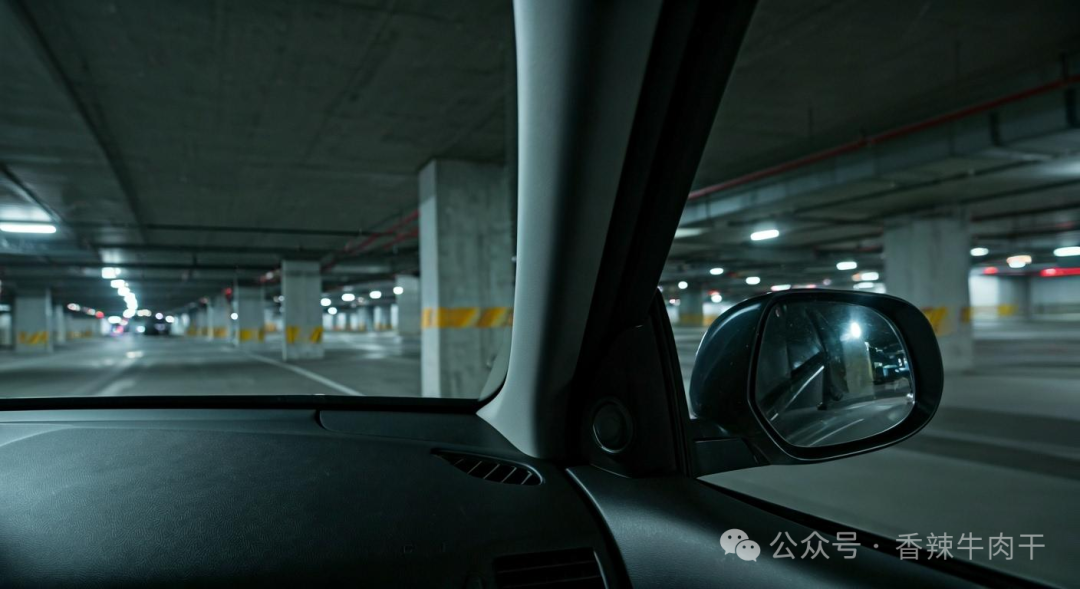
Let’s start with a conclusion: this phrase is essentially a “beautiful misunderstanding”.
It is useful, but its value is definitely not in its literal meaning. If you blindly “look at the pillars,” you are not far from scratching your car.
When I first got my driver’s license, I regarded this phrase as a guiding principle. Once, I was entering a right-angle turn in an old community where the road was very narrow. I remembered to “look at the A-pillar,” and my eyes never left the left A-pillar. I felt it was aligned with the wall corner, so I suddenly turned the steering wheel. What happened? The front of the car passed, but the right side door left a beautiful arc on the wall. I still remember that sound, and it made my heart ache.
From that day on, I realized that the essence of this phrase is not to look at the “pillar” itself, but to understand one thing—“wheel position awareness”.
The A-pillar and C-pillar are merely tools to help you establish “wheel position awareness,” serving as a reference for a “virtual connection line”.
01. Let’s talk about the A-pillar: it is not your eyes, but the “extension line” of your front wheels.
First, let’s discuss turning, especially at right angles or when exiting a parking space.
Why look at the A-pillar? Because at the driver’s seat, the base of the A-pillar, which is near the dashboard, is spatially very close to the position of your front wheels.
Therefore, the true meaning of the phrase is that you should treat the A-pillar as a “virtual indicator” for your front wheels.
When the base of your A-pillar just crosses the edge of an obstacle (like a curb or wall corner), it is approximately equal to your front wheels also crossing that obstacle. At this point, when you turn the steering wheel, the turning radius of the front of the car will be just right, ensuring that you neither scrape the front nor hit the side of the car against the obstacle due to turning too early.
However, there is a critical point: the A-pillar itself creates a significant blind spot, especially when turning left, where a pedestrian can be completely blocked. Therefore, while “looking at the A-pillar,” you must perform another action—“leaning your head out”.
Move your body back and forth or stretch your neck around the A-pillar to check that there is nothing in the blind spot. This is a thousand times more important than any phrase; it is a life-saving technique.
So, stop staring at the A-pillar blindly. Treat it as a “ruler” to help you judge the position of your front wheels, and always lean out to observe the blind spot. This is the correct way to use the A-pillar.
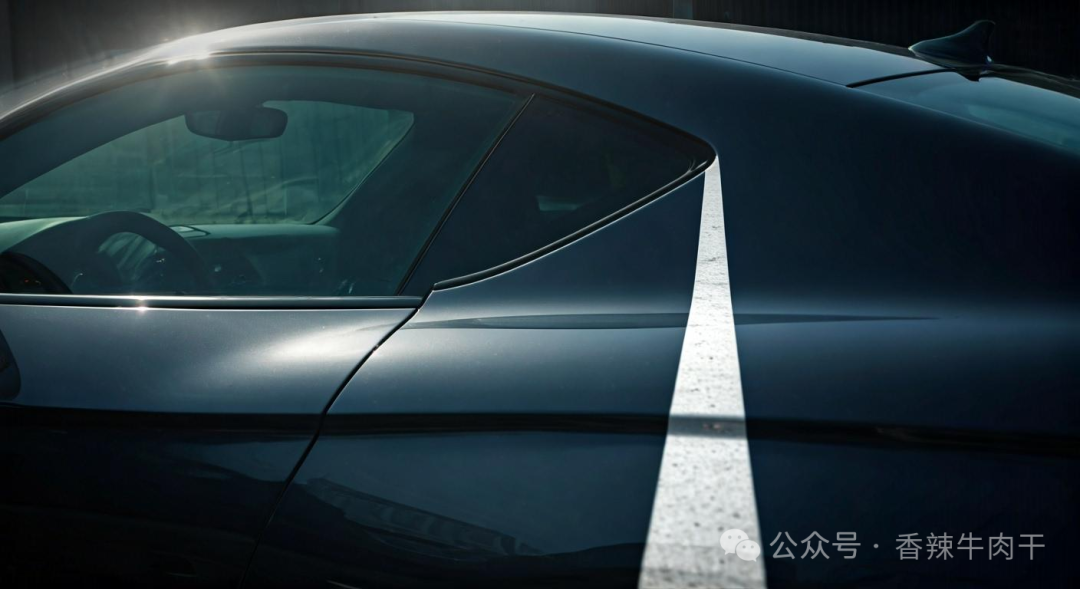
02. Now let’s talk about the C-pillar: it is your “invisible eye” behind you.
Looking at the C-pillar when reversing is mainly applied in parallel parking and backing into a garage.
Like the A-pillar, the C-pillar (and the small rear triangle window next to it) is not meant for you to stare at constantly; it also helps you judge the position of your rear wheels.
When you are reversing, you need to quickly switch between looking at the rearview mirror, left and right side mirrors, and turning your head to look at the C-pillar.
When should you look at the C-pillar?
Take the most common scenario of backing into a garage: when you are reversing to the right rear, you need to turn your head to look at the right rear C-pillar triangle window. When you see the parking line or the front of the adjacent car in that small window, it indicates that your rear wheels are almost at the point where you can fully turn the steering wheel.
This point varies for each car; you need to practice to find it accurately, and once you do, you will know it for future reference.
Its greatest value is that it compensates for the shortcomings of the rearview mirror. When the rearview mirror sees the parking line, the rear of the car is often already halfway in, while through the unique perspective of the C-pillar’s small window, you can judge the relative position of the rear wheels to the parking line earlier and more accurately.
Now many cars have 360-degree panoramic imaging, which is indeed a great tool. But have you noticed that the image is from a wide-angle lens, which can cause distortion? Sometimes it looks like there is still distance, but you are actually close to scraping.
Therefore, the safest way is to primarily rely on the 360-degree imaging to judge the approximate position, but in the final crucial centimeters of entering the garage, you must combine the rearview mirror and look at the C-pillar for final confirmation.
Ultimately, whether it’s the A-pillar or the C-pillar, these phrases are merely “techniques”—experiences summarized by predecessors to help novices quickly establish their “car sense”.
Once you become proficient, you will find that you no longer need to consciously remember these; your body will naturally know where the four corners of the car are, when to turn the steering wheel, and how much to turn. This is a form of muscle memory, an internalized feeling.
And high-tech tools like 360-degree imaging and parking sensors should assist your skills, not replace them.
So, next time you drive, don’t treat these phrases as gospel. Try to understand the principles behind them and use them to feel where your wheels are.
Besides “looking at the A-pillar and C-pillar,” have you heard or come up with any other quirky yet useful driving phrases? Share them in the comments so that new drivers can learn!