Recently, I’ve received numerous messages from students asking, “I made a smart car/temperature detector/electronic clock, can I include it in my resume?” Seeing these familiar questions reminds me of myself ten years ago. Today, let’s discuss what kind of embedded projects are worthy of a prime spot on your golden resume!
Beware of These ‘Ineffective Projects’
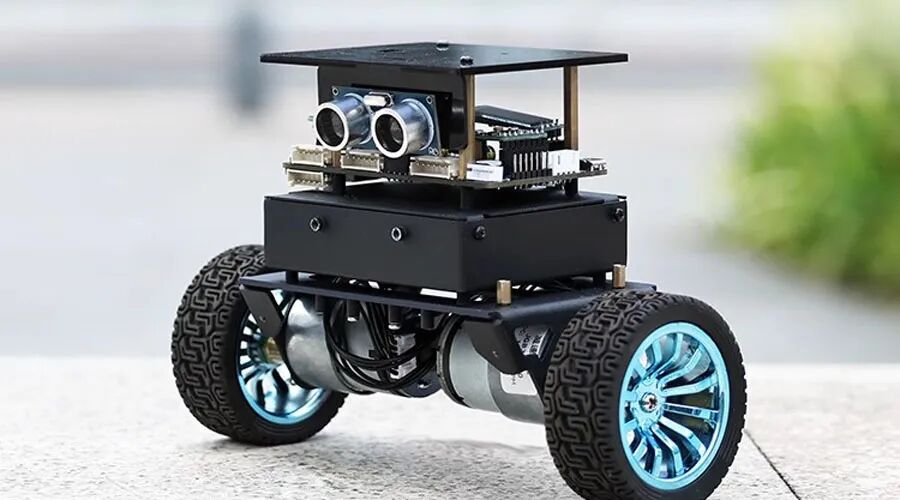
If you’re still piling up the same old “line-following car” and “running lights” on your resume, you should be cautious! Just like a restaurant menu that only offers scrambled eggs with tomatoes, no matter how delicious, it can lead to aesthetic fatigue. I remember a junior who came to me with his nth generation smart car last year. It had all the features: ultrasonic obstacle avoidance, Bluetooth remote control, and even an OLED display. But when I asked him, “What problem does this project solve?” he was stumped and eventually admitted, “Because there are the most tutorials…” Projects that exist purely for practice are like near-expiry food in a supermarket—edible but definitely at the back of the line in HR’s eyes.
The truly valuable projects should be born out of a mission! They must meet four core criteria, none of which can be missing. Quickly check if your project meets the standards!
 Anchor to Real BattlefieldsFirst Method
A good project starts with a real pain point. Stop focusing on the syllabus for experiments! Think about it: Does the router always restart after a power outage in the dorm? Then create a smart socket management system; are laboratory devices often misoperated? Design an IoT gateway with access control. Just like my aquarium’s automatic water change device, though simple, it solves a real problem—no more worrying about fish flipping over while I’m on a business trip.
The key is to clearly articulate the project’s “past and present”: Why did you do it? (What pain point did you discover?) How did you make decisions? (What was the process of selecting solutions?) What changes did it ultimately bring? (Quantified results). When you can explain the project’s background in three sentences, the interviewer’s eyes will light up!
“We noticed that the laboratory’s constant temperature box often fails due to human negligence, so we developed a remote monitoring + automatic alarm system, reducing the abnormal response time from hours to minutes.”
Isn’t this expression more persuasive than simply listing features?
 Showcase Full-Stack SkillsSecond Method
True experts never stop at the code level. From requirement documents to PCB design, from component procurement to soldering and debugging, every step is a test of capability. Last time I took students to a competition, the judges asked, “Why did you choose STM32F4 instead of the F1 series?” “How was the power module designed?” “What electromagnetic interference issues have you encountered?” These questions dive deep into the project’s development.
I recommend creating your own project portfolio: ① Requirement analysis report ② Schematic + BOM ③ Key code comments ④ Test report. When you can confidently answer questions like “Why did you choose LoRa instead of WiFi?” or “How did you troubleshoot signal attenuation?” you have already outperformed 80% of your competitors.
Reveal Your Hardcore CardsThird Method
When it comes to temperature and humidity monitoring, some can only call the DHT11 library function, while you design a watchdog to prevent the sensor from crashing; others use simple serial communication, while you implement CRC checks + sliding window retransmission mechanisms. This is the key difference between a novice and an engineer!
Try to incorporate these advanced techniques into your project: ① State machine management for complex logic ② FreeRTOS for multitasking scheduling ③ Custom application layer protocols ④ Exception handling mechanisms (reconnection on network failure, watchdog feeding). Just like equipping a weapon with a scope, these details will help your project hit the interviewer’s knowledge blind spots accurately.
Build a Trust ChainFourth Method
The era of empty words is over! Visualize your results: ① Dynamic waveform graphs when connecting the programmer ② Real-time curve interface of the mobile app ③ Exquisite 3D printed shell. Even if you can’t bring physical objects, be prepared with video demonstrations and detailed manuals.
Special reminder: Your GitHub repository should be regularly maintained, and the README file should be written like a technical white paper, with comments as detailed as a textbook. Many companies’ initial screenings involve directly browsing your code repository!
Standing at the forefront of the times, embedded development is no longer just a physical task of soldering boards, but a smart track that integrates AI and IoT. Projects that allow you to talk for two hours during an interview are not toys pieced together from ready-made kits, but technological artworks crafted with dedication. Before starting a new project, ask yourself: Can this project become a preview of my future professional identity?
ENDPrevious Recommendations:
C language can also play with object-oriented programming!
Want to learn embedded development? These majors are “golden partners”!
Essential “frequency hopping” black technology for embedded engineers!
How to answer “the biggest challenge of the project” to secure offers!
Three essential tools for embedded systems that make switch registers so simple!
 Douyin Video QR Code