Yesterday, Zhihui Dog shared with everyone the origin of the “cool and warm screen” on mobile phones. Today, we will talk about things related to the “Yin-Yang screen”.
The “cool and warm screen” belongs to the category of “no pain, no gain”; usually, we find it hard to notice the impact of the “cool and warm screen” on display effects. It is only when two phones, one with a “cool screen” and the other with a “warm screen”, are placed side by side that we become aware of it. However, the “Yin-Yang screen” is an unbearable design flaw that can seriously affect our mood while using the device.
What Is The “Yin-Yang Screen”?
When judging the quality of a display, we often come across the term “light leakage”, which refers to white backlight leaking out from the edges of the screen against a pure black background.
The “Yin-Yang screen” on mobile phones is similar but more severe: against a pure black background, there exists a large area of whiteness on the screen; against a pure white background, there are areas on the screen that appear yellow or dim.
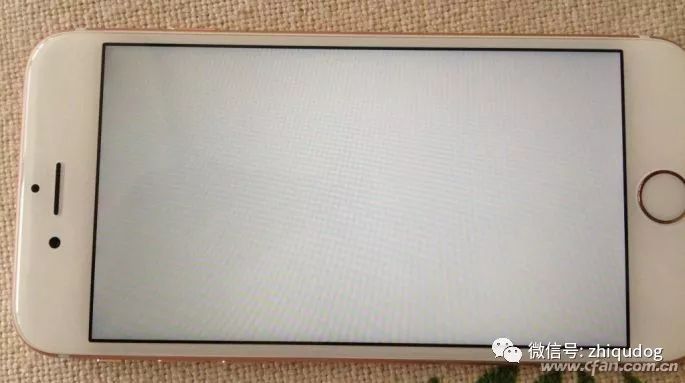
In other words, any screen with uneven brightness and color performance can be classified as a “Yin-Yang screen”.
Mobile phones using LCD (IPS) materials are the hardest hit by the “Yin-Yang screen” (especially the iPhone 6 and iPhone 6s series), because unlike OLED screens, LCD requires an independent backlight module.
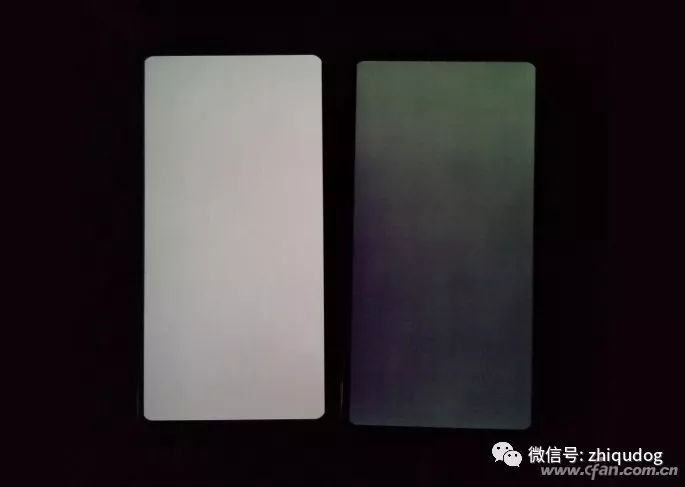
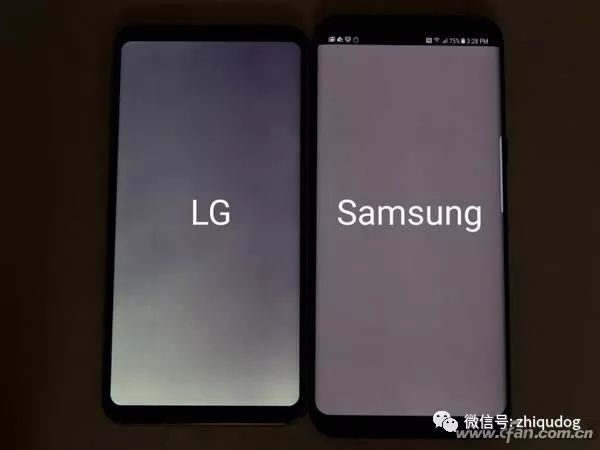
The general consensus in the industry is that OLED screens, which emit light by themselves, will not experience the “Yin-Yang screen” issue due to insufficient backlight uniformity. However, Google’s Pixel 2XL has broken this viewpoint, as this new device using an LG OLED screen also exhibits the “Yin-Yang screen”! The phenomenon of “Yin-Yang screen” in OLED is considered an anomaly; generally, OLED screens only face this issue after some pixels age over a long period. Seeing this problem in a newly released device can only be classified as a manufacturing defect.
How Is The “Yin-Yang Screen” Produced?
We all know that LCD (liquid crystal display) screens do not emit light by themselves. The reason we can see the content displayed is that there is a backlight module beneath the LCD, which illuminates the LCD from behind to display the image. The essence of the “Yin-Yang screen” issue is that the light source of the backlight module is unevenly distributed behind the LCD.
Theoretically, placing the backlight module directly beneath the LCD, perpendicular to it, allowing light to penetrate through the liquid crystal panel, is the best solution to ensure high brightness and good uniformity. However, this vertical arrangement will inevitably make the entire screen module too thick, which is why only a few high-end displays and televisions adopt this “direct-lit” backlight design.
For mobile devices that prioritize thinness, there is simply no space to accommodate vertically arranged LCDs and backlight modules. To fit both components into a slim device, the “edge-lit” backlight design emerged, where the light source enters from the sides of the screen and is transmitted to all corners of the liquid crystal panel’s back via a “light guide plate”.
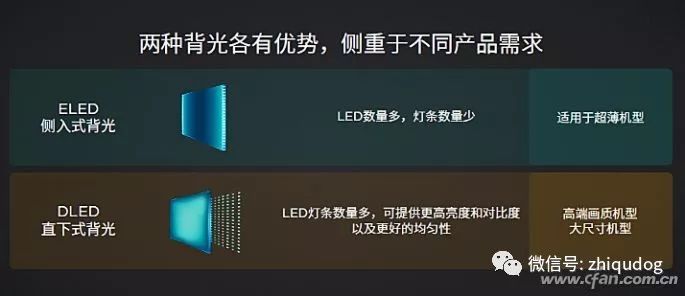
In simple terms, the backlight module of mobile phones is generally located at the top and bottom of the screen, while tablets may place it on the left and right sides of the screen. The problem arises because light does attenuate as it propagates; the farther the distance, the lower the brightness.
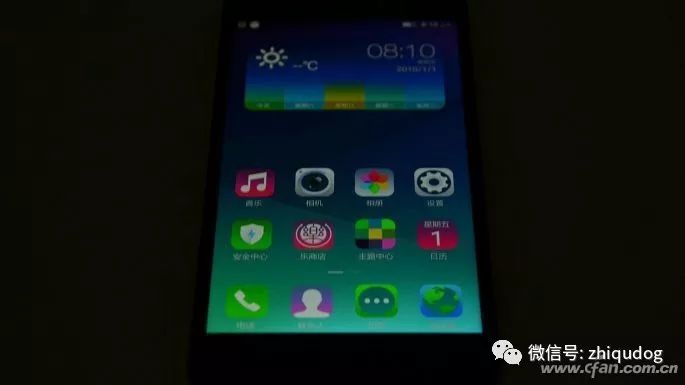
If the position of the backlight module is unreasonable or the brightness is insufficient, there will naturally be brightness unevenness at positions closer and farther from the light source, specifically manifested as the so-called “Yin-Yang screen” phenomenon.
Some readers may wonder, if we are afraid of uneven brightness, why not just add backlight modules on all four sides of the screen? Unfortunately, backlight modules are not cheap, and with the current mobile phone screens having extremely narrow side frames, there is simply no space to install them. Moreover, even if backlights are added to all four sides, it can easily cause the center of the screen to appear dim, which would look even stranger.
In summary, to solve the “Yin-Yang screen” caused by backlight issues, higher requirements must be placed on the position and brightness of the backlight lamps (the higher the brightness, the better). Since the “Yin-Yang screen” problem is not a common fault, it means that with more attention to the manufacturing process, it can be avoided.
Pay Attention To Screen Lamination Technology
In addition to backlight factors, the lamination technology of mobile screens can also easily become a trigger for the “Yin-Yang screen”. We know that mobile screens are composed of multiple layers, including LCD, touch screens, protective glass, etc. If there is a flaw in the lamination process, it can lead to bubbles between the layers, severely affecting the display effect. Therefore, nowadays most mobile screens choose to use user glue to laminate the multi-layer panels.

These glues are not initially transparent but are slightly yellowish. After being laminated onto the screen, they need to undergo a series of processes (such as UV exposure) to cure the glue and make it “invisible”. The problem arises when due to cost or urgency to market, factories sometimes reduce the curing time for the screen lamination glue, and since lamination also has a certain degree of manufacturing tolerance, it can lead to instances where a batch of phones is not sufficiently cured.
Most of the “Yin-Yang screen” issues during the iPhone 6 era were caused by uncured glue. As usage time increases (with the phone heating up accelerating glue curing), the “Yin-Yang screen” phenomenon will often alleviate or even disappear.
After reading this article, 99% of readers also clicked: