This article introduces Siemens PLC data types, which are fundamental for learning PLCs, making it easier for friends to study. A link to the official user manual is provided at the end.Question: What is a data type?A data type refers to the property that specifies the form and range of variable values.Different data types ensure different memory sizes when declaring variables.
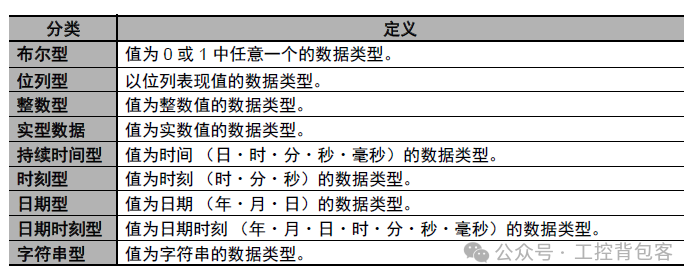
Basic data types can be classified as follows:
 1. Bit and Bit Sequence Data Types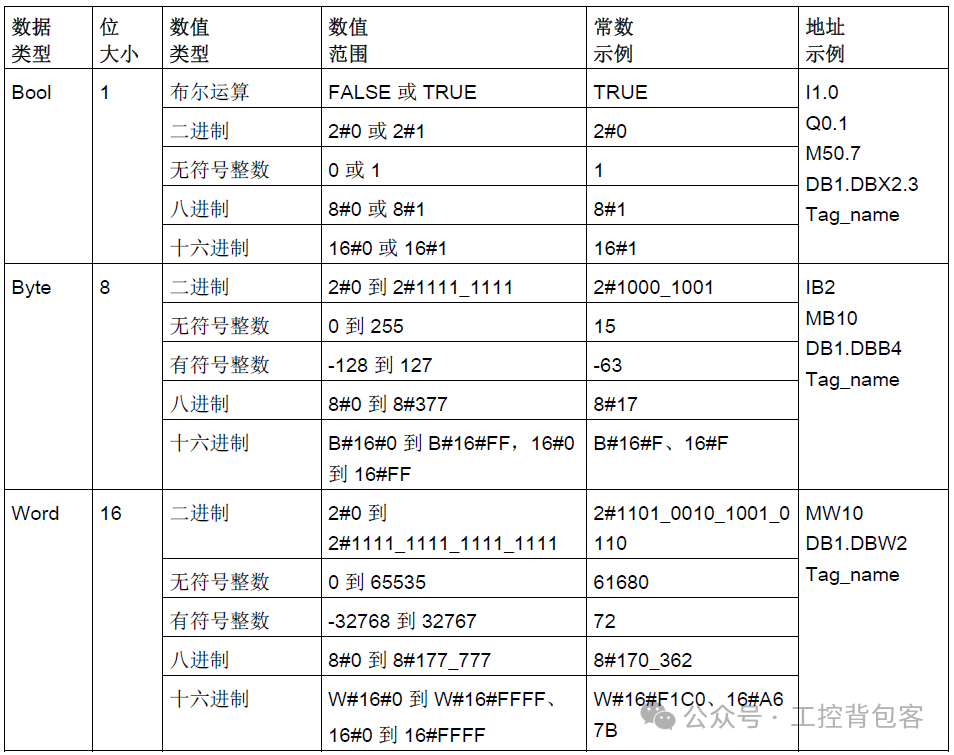
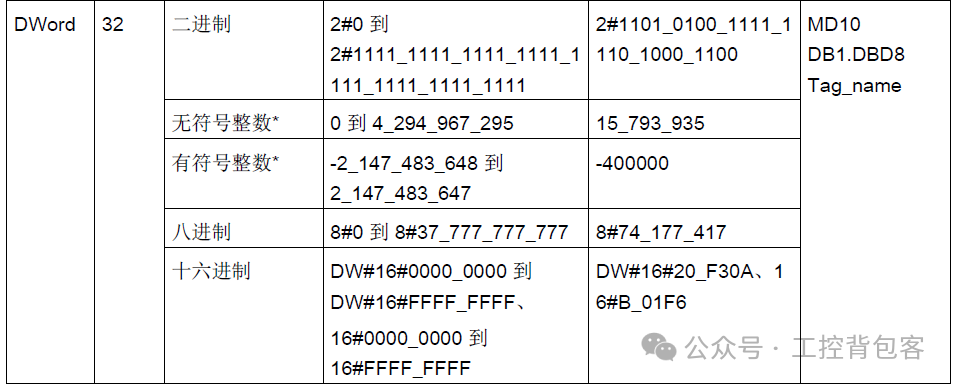
* The underscore “_” is used as a thousands separator for numbers greater than 8 digits for better readability.
2.Integer Data Types (U = Unsigned, S = Short, D = Double)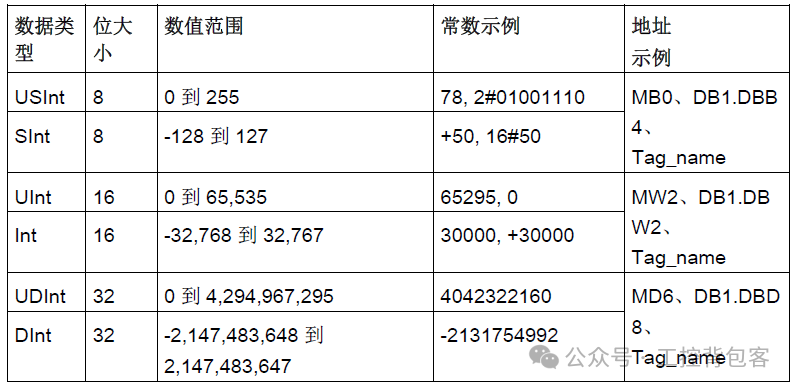 3.Floating Point Data Types
According to the ANSI/IEEE 754-1985 standard, real (or floating-point) numbers are represented as 32-bit single precision (Real) or 64-bit double precision (LReal). The precision of single precision floating-point numbers is up to 6 significant digits, while double precision floating-point numbers can have up to 15 significant digits. When entering floating-point constants, a maximum of 6 (Real) or 15 (LReal) significant digits can be specified to maintain precision.
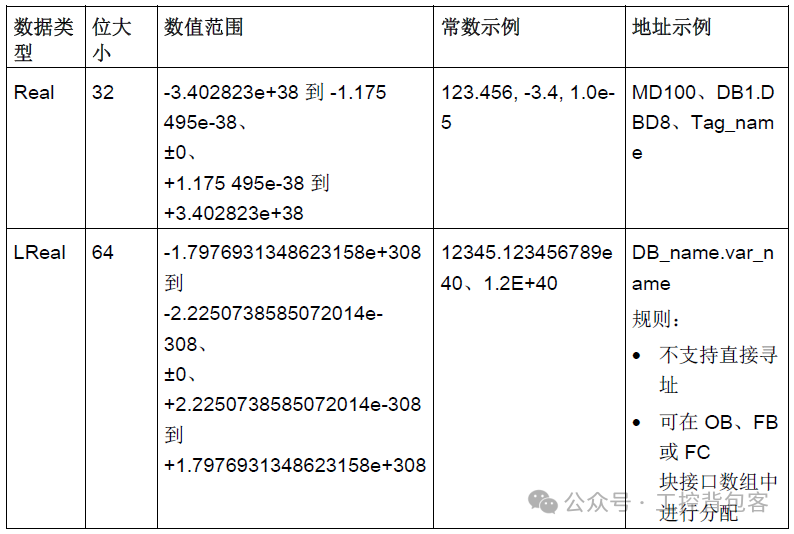
Calculations involving a long string of values that include very large and very small numbers may yield inaccurate results. This occurs if the numbers differ by a factor of 10 raised to the power of x, where x > 6 (Real) or 15 (LReal). For example (Real): 100,000,000 + 1 = 100,000,000.
4. Date and Time Data Types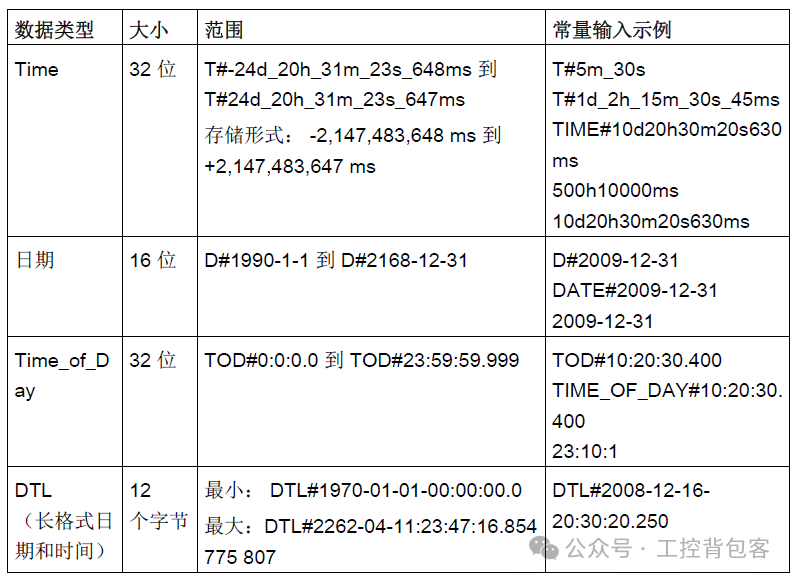
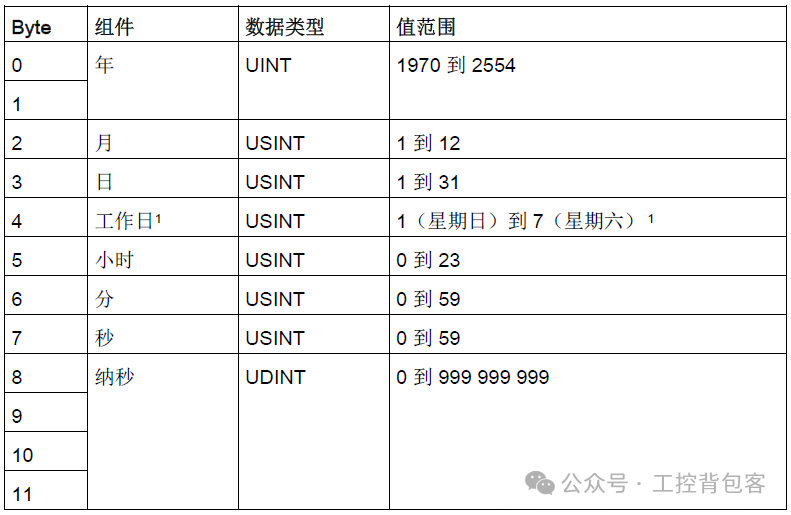
Note: The DTL data type uses a 12-byte structure to store date and time information, as shown in the figure below.
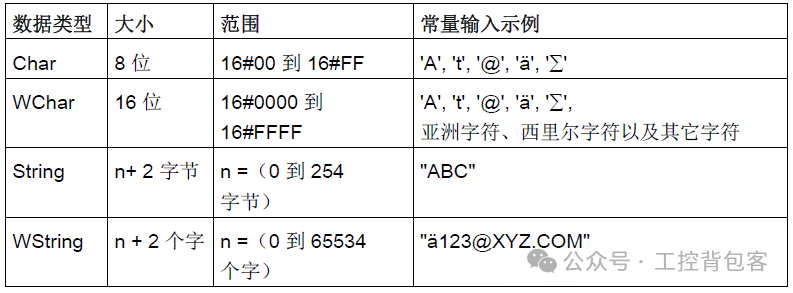
5. Character and String Data Types
 6. ARRAY Data Types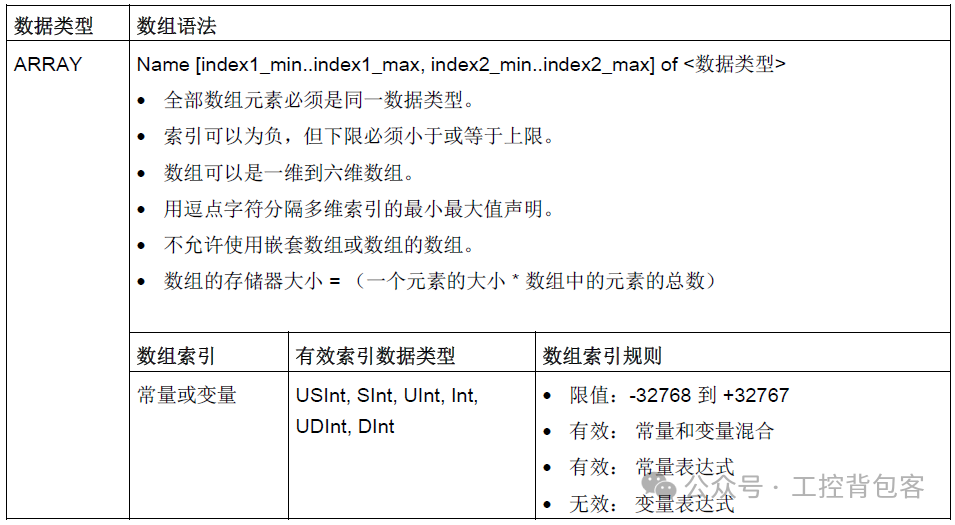
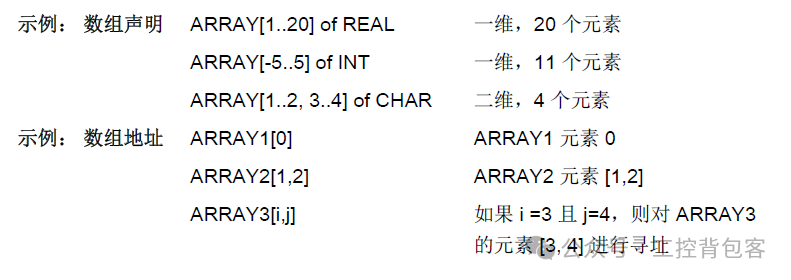
That’s all for the discussion on data types. Feel free to like, comment, and share!
The resource link is as follows:
https://pan.baidu.com/s/1rLoeu-8eTv5idxkUscrl6g?pwd=8888
Extraction code: 8888