Source | Learning Times
General Secretary Xi Jinping pointed out the importance and urgency of promoting the development of quantum technology, emphasizing the need to strengthen strategic planning and systematic layout for quantum technology development, grasp major trends, and make proactive moves.
Recently, Learning Times invited Academician Pan Jianwei’s team to write three popular science articles on the theme of quantum information technology: “Quantum Communication: An Important Guarantee for Future Autonomous and Controllable Information Security Ecosystem”, “Quantum Precision Measurement: Breaking the Limits of Classical Measurement Technology”, and “Quantum Computing: Solutions for Enhanced Computing Power in the Post-Moore Era”, providing a comprehensive introduction and outlook on quantum information technology.
The Learning Times WeChat public account “Changchun Bridge No. 6” studio is now releasing this collection of three articles for readers.
Quantum Communication: An Important Guarantee for Future Autonomous and Controllable Information Security Ecosystem
Authors: Xu Feihu, Peng Chengzhi, Pan Jianwei
Information security is a major strategic field related to national economy and people’s livelihood. Traditional information security relies on encryption algorithms based on computational complexity, but with the rapid development of computing power, traditional encryption algorithms face increasing security risks.
Quantum secure communication based on quantum key distribution is currently the only communication method that is unconditionally secure in principle. Quantum key distribution refers to the use of quantum states to load information and generate keys through specific protocols. The basic principles of quantum mechanics ensure that the keys are unstealable, thus achieving secure quantum communication. The security of quantum secure communication is based on fundamental principles of physics and is independent of computational complexity; even with the advent of powerful quantum computers in the future, its security will not be threatened.
Quantum secure communication is the first quantum information technology to achieve practicality and industrialization. The secure keys generated through quantum key distribution can not only be used in the unconditionally secure one-time pad encryption method but can also be combined with classical symmetric encryption algorithms to balance security and communication speed. For example, with current technology, combining quantum key distribution with the AES (Advanced Encryption Standard) encryption algorithm can achieve Gbps (exchange bandwidth) communication speeds while significantly increasing the seed key update rate, effectively enhancing communication security. Additionally, it can also be combined with next-generation PQC (Post-Quantum Cryptography) to enhance security for identity authentication and other applications.
Development Route of Wide-Area Quantum Communication
The goal of quantum communication development is to construct a global wide-area quantum communication network system. The development route of the wide-area quantum communication network involves realizing metropolitan quantum communication networks through optical fibers, connecting neighboring cities via repeaters, and ultimately achieving long-distance connections through satellite platforms.
In the field of metropolitan quantum communication networks, the University of Science and Technology of China has established the world’s first fully connected metropolitan quantum communication network, the first quantum government network, and the first large-scale metropolitan quantum communication network, maturing related technologies in the process. The domestically developed quantum secure communication equipment has already provided information security guarantees for many important activities.
In the intercity quantum communication network based on trusted relays, the world’s first long-distance fiber quantum secure communication backbone network, the “Beijing-Shanghai Line”, was fully connected at the end of 2016. The backbone is over 2000 kilometers long, connecting Beijing and Shanghai, passing through Jinan, Hefei, and other places. In collaboration with financial, governmental, and power sectors along the route, technical verification and application demonstrations of long-distance quantum secure communication have been conducted. Based on the application demonstration of the “Beijing-Shanghai Line”, the National Development and Reform Commission approved the “National Wide-Area Quantum Secure Communication Backbone Network” project in February 2018, which will cover important areas such as Beijing-Tianjin-Hebei, the Yangtze River Delta, the Guangdong-Hong Kong-Macao Greater Bay Area, and Chengdu-Chongqing, promoting the large-scale application of quantum secure communication.
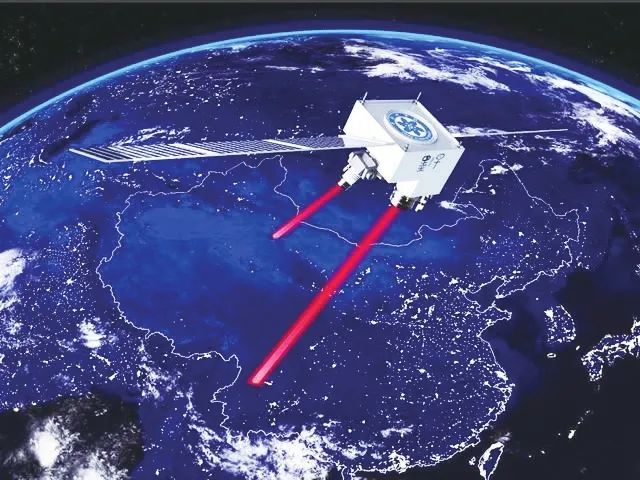
In terms of space-based free-space quantum communication, with the support of the Chinese Academy of Sciences, the University of Science and Technology of China, in collaboration with the Shanghai Institute of Technical Physics of the Chinese Academy of Sciences and the Institute of Small Satellite Innovation, successfully developed the world’s first quantum science experimental satellite “Mozi”. Launched in August 2016, “Mozi” was the first to achieve star-ground quantum communication internationally, realizing intercontinental quantum communication over a distance of 7600 kilometers, fully validating the feasibility of achieving global quantum communication based on satellite platforms. Utilizing the successful experience accumulated by “Mozi”, the development cost of quantum satellites has dropped from hundreds of millions to tens of millions, and it is expected that a miniaturized quantum satellite will be launched in early 2022, laying the foundation for a low-cost satellite constellation. The weight of ground receiving stations has also been reduced from over ten tons to around 100 kilograms, which can initially support mobile quantum communication.
By combining the “Mozi” quantum satellite with the “Beijing-Shanghai Line”, China has taken the lead in constructing a prototype of an integrated wide-area quantum secure communication network, marking a significant event in international quantum information research in recent years.
Promotion of Quantum Communication Technology Applications
On October 16, 2020, the Central Political Bureau held its 24th collective study on the research and application prospects of quantum technology, chaired by General Secretary Xi Jinping, who pointed out, “We must coordinate basic research, cutting-edge technology, and engineering technology research and development, cultivate strategic emerging industries such as quantum communication, seize the commanding heights of international competition in quantum technology, and build new development advantages.” The “Beijing-Shanghai Line” and the “Mozi” quantum satellite are engineering integration and verification projects based on over a decade of basic and applied research results in China, providing a good demonstration effect for the independent research and development of core devices, the formulation of related application standards, and the future large-scale application, steadily advancing the application of quantum secure communication in commercial and national security fields.
In terms of core quantum communication devices, China Electronics Technology Group Corporation, the University of Science and Technology of China, and the Shanghai Institute of Microsystem and Information Technology of the Chinese Academy of Sciences have achieved preliminary domestication of key devices such as single-photon detectors and quantum random number generators, breaking the barriers of foreign embargoes. In the next 2 to 3 years, through the chipization of key devices, the size of quantum encryption equipment can be reduced to the size of a mobile phone, significantly lowering costs.
Regarding the formulation of related application standards, with the active participation of over 50 research institutions and enterprises in China, national standard organizations such as the China Communications Standards Association, the National Information Security Standardization Technical Committee, and the Cryptography Industry Standardization Technical Committee have compiled multiple national and industry standards focusing on the interconnection, security evaluation, and application services of quantum secure communication technology. Chinese scholars have broken through the obstacles posed by Western countries such as the US and Canada, initiating the establishment of the world’s first standardization organization covering the entire field of quantum information under the International Telecommunication Union, and are currently leading the compilation of multiple international standards.
Prospects for Quantum Communication Technology Development
In recent years, Chinese scholars have achieved a number of internationally influential results in the field of single-photon radar: breaking the quantum efficiency limit for detecting infrared single photons at room temperature, achieving long-distance infrared single-photon atmospheric radar detection; realizing continuous day-and-night detection of atmospheric wind fields, and setting a world record for the longest distance of single-photon imaging at 200 kilometers. At the same time, single-photon radar can observe objects hidden from view, enabling “non-line-of-sight imaging” and achieving “seeing through walls”, which has broad application prospects in anti-terrorism, emergency rescue, and other fields; it has achieved long-distance non-line-of-sight imaging, raising the imaging distance from meters to kilometers, greatly promoting the practical development of non-line-of-sight imaging technology. The single-photon detection technology developed in quantum communication research can also greatly enhance the detection sensitivity, distance, and resolution of traditional laser radar, known as “single-photon radar”. Single-photon radar can detect long-distance, high-precision soft targets (atmosphere) and hard targets (objects), and has played an important role in fields such as terrestrial mapping, long-range early warning, global situational awareness, atmospheric pollution detection and forecasting, and aerospace operations.
Thanks to China’s pioneering efforts in the technical verification and application demonstration of wide-area quantum communication, network technology has initially met practical requirements, and the domestication and miniaturization of core devices have been preliminarily achieved, creating conditions for early trials in key departments. In the intense international competitive environment, now is the best time for China to accelerate the application of quantum secure communication and form an asymmetric advantage in information security as soon as possible. With about 10 years of effort, China is expected to build a complete wide-area quantum communication network technology system, providing important guarantees for forming a future autonomous and controllable national information security ecosystem.(This article was published in Learning Times on January 19, 2022, page 6)
Quantum Precision Measurement: Breaking the Limits of Classical Measurement Technology
Authors: Lu Zhengtian, Pan Jianwei
Precision measurement is the foundation of scientific research. It can be said that the entire modern natural science and material civilization have developed alongside the continuous improvement of measurement accuracy. Taking time measurement as an example, from ancient sundials and water clocks to modern quartz and atomic clocks, the continuous improvement of time measurement accuracy has enabled the continuous development of technologies such as communication and navigation, bringing great convenience to social life and providing tools for new scientific discoveries. Therefore, higher measurement accuracy has always been a goal pursued by humanity.
With breakthroughs in fundamental research in quantum mechanics and advancements in experimental technology, people have continuously improved their ability to manipulate and measure quantum states, allowing for the use of quantum states in information processing, transmission, and sensing. Quantum precision measurement utilizes the laws of quantum mechanics, particularly the coherence of fundamental quantum systems, to achieve high-precision and high-sensitivity measurements of some key physical quantities. Using quantum precision measurement methods, unprecedented measurement precision can be achieved for physical quantities such as time, frequency, acceleration, and electromagnetic fields. It is precisely due to the development of quantum control and quantum information technology that the 26th International Metrology Conference officially passed a resolution in 2018 to implement a new definition of international units starting in 2019, transitioning from physical measurement standards to quantum measurement standards, marking the entry of precision measurement into the quantum era.
Precision Measurement of Time Frequency
High-precision time frequency measurement and applications support the development of related scientific research, the operation of the economy and society, and the construction of national security systems. High-precision time-frequency service systems are national strategic resources.
The frequency and time standards provided by atomic clocks are currently the most precise basic physical quantities measured. Meanwhile, improvements in atomic clock precision have also driven enhancements in the measurement of other basic physical quantities, the definition of physical constants, and the precision of verifying physical laws, promoting the discovery of new physics and advancements in science and technology. Atomic clocks operating in the microwave band have been widely used in navigation, communication, and other fields. Every satellite in widely used satellite positioning systems (such as China’s BeiDou Navigation System and the US Global Positioning System GPS) carries several microwave atomic clocks, providing user positioning information through precise measurement of signal arrival times. Due to their critical role in navigation systems, spaceborne atomic clocks are referred to as the heart of satellite navigation systems. Chinese scientists are actively developing the next generation of higher-precision spaceborne microwave atomic clocks, achieving the world’s first space-cooling atomic clock using laser cooling technology in 2018.
Due to breakthroughs in quantum precision measurement methods, atomic clocks operating in the optical band (referred to as optical clocks) have higher accuracy and stability, expected to reach the level of (i.e., an error of no more than 1 second in a trillion years). Optical clock technology has rapidly developed over the past two decades; for example, the strontium atomic optical clock developed by the National Institute of Standards and Technology has achieved uncertainty at the level and stability at the level, representing an advancement of at least two orders of magnitude compared to microwave atomic clocks; the calcium ion optical clock developed by Chinese scientists has achieved both uncertainty and stability at the level. Meanwhile, China has laid out plans to develop space optical clocks, aiming to improve time frequency measurement precision by two orders of magnitude in space. The new generation of time measurement and transmission technology will contribute to intercontinental optical clock comparisons, the establishment of international definitions of the second, and provide new methods for future gravitational wave detection and dark matter detection, while high-precision phase control and measurement of optical signals will greatly enhance the information transmission speed of future integrated quantum communication networks.
Quantum Navigation
The inertial navigation system is a self-contained navigation system that does not rely on external information or emit energy externally, offering advantages of high concealment and operation in all-time and space, making it of significant application value in national security and other fields.
According to publicly reported current best classical inertial navigation technology, the positioning error after 100 days of underwater navigation will reach the order of 100 kilometers, insufficient for long-term fully autonomous navigation. By manipulating atoms using quantum control, quantum gyroscopes and gravimeters based on atomic spin and cold atom interference effects can achieve ultra-high sensitivity inertial measurements, expected to achieve positioning errors of less than 1 kilometer after 100 days of underwater navigation, enabling long-term fully autonomous navigation. Therefore, navigation systems based on quantum gyroscopes and gravimeters have important applications in long-duration high-precision autonomous navigation and frontier physics. In addition, high-precision gravity measurements can also be widely used in geodesy, resource exploration, and other fields.
Currently, the prototype of an atomic spin gyroscope developed by Chinese researchers has performance indicators comparable to the highest publicly reported standards abroad; the precision of mobile atomic gravimeters is nearing international first-class levels, and small mobile cold atomic gravimeters have achieved the best level of continuous gravity observation internationally in field conditions, laying the foundation for achieving high-precision autonomous navigation systems.
Single Quantum Sensitivity Detection
High-sensitivity detection of single photons, single electrons, single atoms, single molecules, and other quantum systems has broad application value and has become a hot frontier in international physics research in recent years.
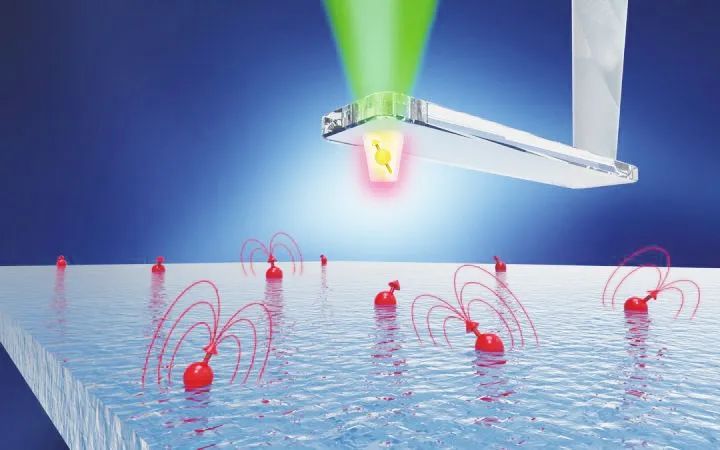
Single spin detection technology has broad applications in quantum computing, life sciences, materials science, and other fields. Chinese researchers have achieved high spatial resolution and high sensitivity magnetic field detection using solid-state single spin systems represented by diamond NV centers, obtaining the world’s first magnetic resonance spectrum of a single protein molecule under room temperature atmospheric conditions, providing a measurement basis for studying biological issues at the single molecule and single cell level. This technology can also be used to explore magnetic properties, magnetic structures, etc., at the microscopic scale.
Single atom detection technology has broad applications in earth sciences, environmental monitoring, and other fields. Chinese researchers have developed a new generation of laser atom trap single atom sensitivity detection methods, capable of counting extremely small amounts of isotopic atoms in environmental samples, including the krypton-81 isotope with a concentration of only one part in ten billion in the air. This natural tracer is used to help understand global and regional water and ice cycle processes, dating million-year-old ancient groundwater and glaciers, and providing key data for climate change research and water resource management.
Molecules contain multiple quantum degrees of freedom, including electronic motion, vibration, and rotation, and single-molecule quantum systems exhibit rich and novel quantum effects due to strong spatial confinement, structural symmetry breaking, and significant discrete energy level structures. Chinese researchers have utilized a combination of scanning electron microscopy, atomic force microscopy, and Raman spectroscopy to comprehensively reveal the structure and changes of individual molecules on the surface, achieving comprehensive characterization of single molecules with multiple specificities at the precision of single chemical bonds.
In recent years, Chinese scholars have continuously caught up with international advanced levels in quantum precision measurement, achieving rapid technological advancements and remarkable results. For example, key technologies in atomic clocks, quantum gyroscopes, etc., are nearing international advanced levels; in quantum radar, trace atomic tracing, weak magnetic field measurement, etc., they have reached international advanced levels and achieved a number of internationally leading results. With the continuous improvement of research levels and the further enhancement of core competitiveness, China’s quantum precision measurement field will play an important role in major strategic needs such as scientific research, economic life, and national security.(This article was published in Learning Times on February 16, 2022, page 6)
Quantum Computing: Solutions for Enhancing Computing Power in the Post-Moore Era
Authors: Zhu Xiaobo, Lu Chaoyang, Pan Jianwei
Quantum computing is a new computing model based on quantum mechanics, possessing powerful parallel computing capabilities that far exceed classical computing in principle, providing solutions for large-scale computational challenges in artificial intelligence, cryptanalysis, weather forecasting, resource exploration, drug design, and revealing complex physical mechanisms such as quantum phase transitions, high-temperature superconductivity, and quantum Hall effects.
Unlike traditional computers that use bits of 0 or 1 to store information, quantum computing uses quantum bits as the basic unit for information encoding and storage. Based on the superposition principle of quantum mechanics, a quantum bit can simultaneously exist in a coherent superposition of both 0 and 1 states, which allows it to represent both numbers. Extending this, n quantum bits can represent combinations of numbers, enabling a single quantum operation to theoretically perform parallel computations on combinations of numbers at once, which is equivalent to a classical computer performing operations. Therefore, quantum computing provides a fundamentally new approach to achieving parallel computation, with the potential to greatly surpass the computational capabilities of classical computers.
Similar to classical computers, quantum computers can also utilize the framework of Turing machines, executing programmable logical operations on quantum bits to perform universal quantum operations, thus achieving a significant enhancement in computing power, even exponential acceleration. A typical example is the quantum algorithm for fast integer factorization (Shor’s algorithm) proposed in 1994. The computational complexity of integer factorization is the basis for the security of widely used RSA public key encryption systems. For instance, if a classical computer capable of a trillion operations per second were used to factor a 300-digit large number, it would take over 100,000 years; however, if the same computational speed were used with a quantum computer executing Shor’s algorithm, it would only take 1 second. Therefore, once quantum computers are successfully developed, they will have a tremendous impact on the classical information security system.
Stages of Quantum Computing Development
The computing power of quantum computers grows exponentially with the number of quantum bits, so the core task of quantum computing research is the coherent manipulation of multiple quantum bits. Based on the scale of coherent manipulation of quantum bits, the international academic community recognizes the following stages of quantum computing development:
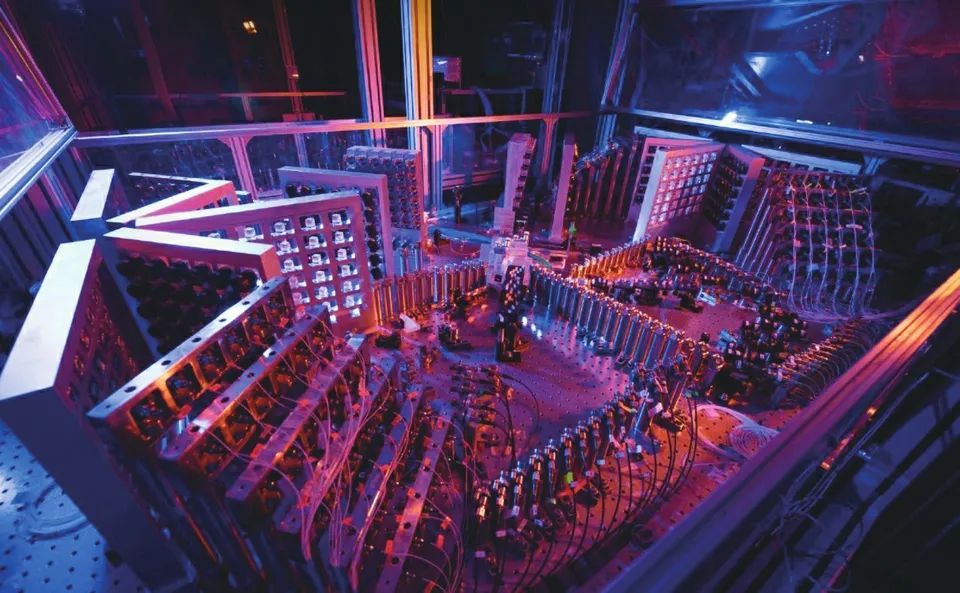
The first stage is to achieve “quantum computing superiority”, where quantum computers surpass classical supercomputers in computational capabilities for specific problems, which requires coherent manipulation of about 50 quantum bits. Google was the first to achieve “quantum computing superiority” in 2019 with its superconducting circuit system. China achieved “quantum computing superiority” in 2020 with its photonic quantum system and in 2021 with its superconducting circuit system. Currently, China is the only country in the world to achieve this milestone in two different physical systems.
The second stage is to achieve dedicated quantum simulators, which involve coherent manipulation of hundreds of quantum bits, applied to specific problems such as combinatorial optimization, quantum chemistry, and machine learning, guiding material design and drug development. This stage is expected to be reached in 5 to 10 years and is the current main research focus.
The third stage is to achieve programmable universal quantum computers, which require coherent manipulation of at least millions of quantum bits, capable of playing a significant role in classical cryptography, big data search, and artificial intelligence. Due to the susceptibility of quantum bits to environmental noise, ensuring the correct operation of large-scale quantum bit systems through quantum error correction is an inevitable requirement and a major challenge faced in the near future. Due to the technical difficulties, it is unclear when a universal quantum computer will be realized; the international academic community generally believes it will take another 15 years or more.
Currently, systematic research is being conducted on various physical systems that are expected to achieve scalable quantum computing. China has completed research layouts for all important quantum computing systems, becoming one of the three countries (regions) with a complete layout, alongside the EU and the US.
Superconducting Quantum Computing Achievements
Currently, Google, IBM, and the University of Science and Technology of China are the top three in global superconducting quantum computing research. In October 2019, after more than a decade of heavy investment in quantum computing, Google officially announced experimental proof of “quantum computing superiority”. They constructed a quantum processor containing 53 superconducting quantum bits, named “Sycamore”. In the specific task of random circuit sampling, “Sycamore” demonstrated computational capabilities far exceeding those of supercomputers. In May 2021, the University of Science and Technology of China constructed the world’s largest quantum bit superconducting quantum computing prototype at 62 bits, achieving programmable two-dimensional quantum walks. Building upon this, the 66-bit “Zuchongzhi 2” was further realized. “Zuchongzhi 2” has the capability to execute any quantum algorithm and has achieved rapid solutions for quantum random circuit sampling. According to currently published optimized classical algorithms, “Zuchongzhi 2” processes quantum random circuit sampling problems 10 million times faster than the fastest supercomputer, with a computational complexity 1 million times higher than Google’s “Sycamore”.
Research on Other Quantum Computing Systems
Physical systems such as ions and silicon-based quantum dots also have the potential for multi-bit extension and fault tolerance, and are currently hot research directions in international quantum computing. China started later in quantum computing research based on ion systems and is currently in a catch-up phase. Key research units in China include Tsinghua University, the University of Science and Technology of China, and the National University of Defense Technology, among others, which have accumulated a wealth of key technologies in the preparation of ion traps, coherence retention time of single ions, high-precision quantum logic gates, multi-bit quantum entanglement, and other basic elements of quantum computing. In the direction of silicon-based quantum dots, China is on par with the main international research forces. Furthermore, due to the superior fault tolerance of topological quantum computing, achieving universal quantum computing using topological systems is an important long-term research goal internationally. Currently, efforts are being made both domestically and internationally to achieve the breakthrough of a single topological quantum bit from “0 to 1”.
Future Development of Quantum Computing
After achieving the stage goal of “quantum computing superiority”, the future development of quantum computing will focus on two aspects: first, continuing to enhance quantum computing performance. To achieve fault-tolerant quantum computing, the primary consideration is how to accurately scale up quantum computing systems. When expanding the number of quantum bits, both the quantity and quality of bits are extremely important, requiring each step of the experiment (preparation, manipulation, and measurement of quantum states) to maintain high precision and low noise. As the number of quantum bits increases, errors due to noise and crosstalk also increase, posing significant challenges for the design, fabrication, and control of quantum systems, necessitating extensive collaborative efforts in science and engineering. Second, exploring applications of quantum computing. It is expected that in the next five years, quantum computing will likely exceed one thousand bits. Although fault-tolerant universal quantum computing cannot yet be achieved, scientists hope to explore applications in machine learning, quantum chemistry, and other fields during the noisy intermediate-scale quantum (NISQ) stage, forming near-term applications.(This article was published in Learning Times on March 2, 2022, page 6)
 Reprinted from the “Learning Times” public account
Due to the trial random push of WeChat public accounts, you may no longer receive timely notifications for Mozi Salon. To avoid losing contact with Mozi, please set “Mozi Salon” as a starred account and frequently click the “Looking” button at the bottom right corner of the article.
If you reprint original articles from WeChat, please leave a comment after the article; replying “Reprint Instructions” in the background can help you view.To provide better services, “Mozi Salon” has staff dedicated to answering various matters:For matters related to new media platforms, please contact WeChat ID “mozi-xinmeiti”;For offline events and online live broadcast matters, please contact WeChat ID “mizi-huodong”;For other cooperation matters, please contact[email protected].
Mozi Salon is a large public welfare science popularization forum named after the ancient Chinese sage Mozi, hosted by the Shanghai Institute of the University of Science and Technology of China, with co-sponsorship from the New Alumni Foundation of the University of Science and Technology of China, the Education Foundation of the University of Science and Technology of China, the Pudong New Area Association for Science and Technology, the China Association for Science and Technology, and the Pudong New Area Science and Economy Committee.
Mozi was a famous philosopher and scientist in ancient China, and his thoughts and achievements reflect the early scientific germination in China. The establishment of “Mozi Salon” aims to inherit and promote scientific traditions, build a society that values science, enhance public scientific literacy, and advocate and promote scientific spirit. The target audience for science popularization is the general public who love science, have a spirit of exploration and curiosity. We hope to enable the public with at least a secondary school education to understand and appreciate the most cutting-edge scientific developments and ideas globally.
About “Mozi Salon”