Click the blue text to follow us
 On March 21, 2024, Professor Guo Chuanfei from the Department of Materials Science and Engineering at Southern University of Science and Technology (SUSTech), along with Assistant Professor Yang Canhui from the Department of Mechanics and Aerospace Engineering at SUSTech, reported that their research team has developed a drift-free flexible pressure sensor, addressing the widespread issue of inaccurate static pressure measurement due to creep in soft materials. The related paper titled “Creep-free polyelectrolyte elastomer for drift-free iontronic sensing” was published in Nature Materials. The corresponding authors are Yang Canhui and Guo Chuanfei, with He Yunfeng and Cheng Yu as co-first authors.
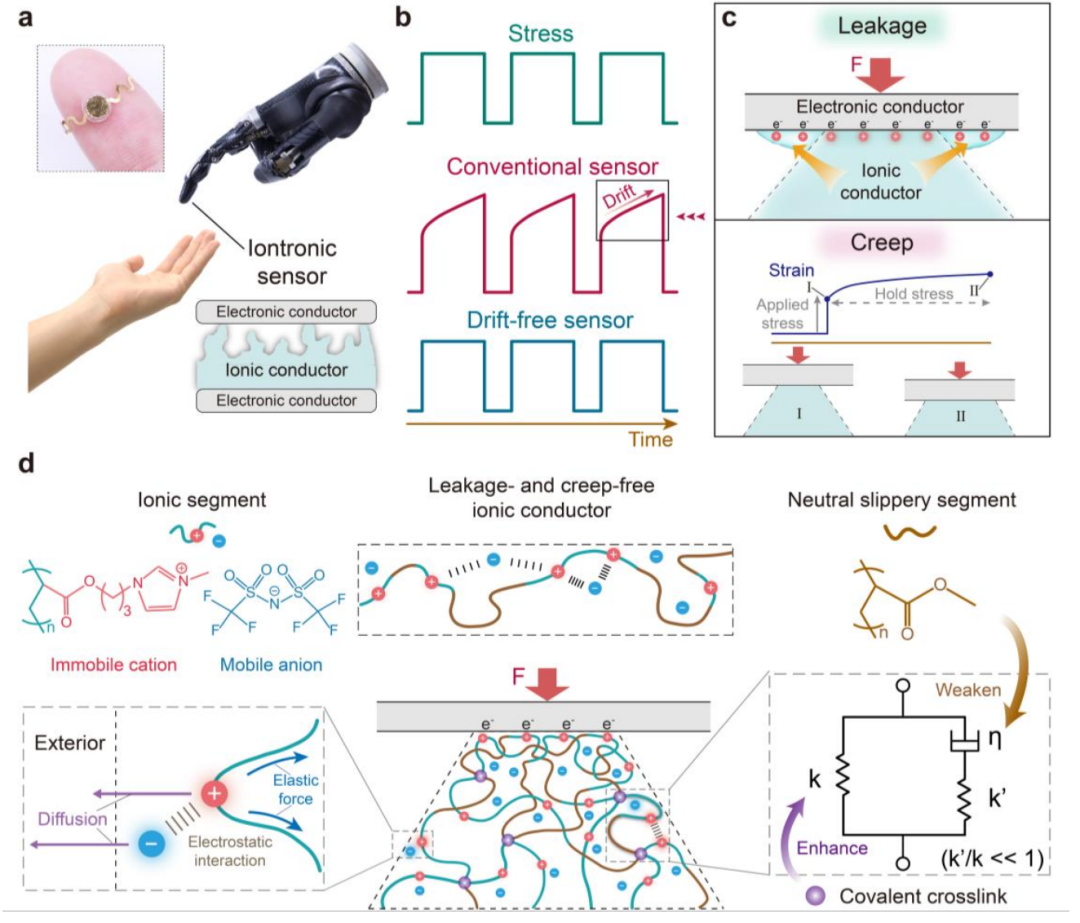 Figure 1: Principles, materials, and chemical composition of the drift-free flexible pressure sensor.
Flexible pressure sensors can convert pressure into electrical signals, and the “ion-electronic” flexible pressure sensor—a device with extremely high sensitivity—has significant application value in fields such as robotic tactile sensing, virtual reality, and wearable devices (Figure 1a). However, existing flexible pressure sensors generally exhibit significant signal drift (Figure 1b). Signal drift arises from both the leakage of ionic gels and the creep of soft materials (Figure 1c). Therefore, flexible pressure sensors are often “sensitive” but “inaccurate”, making them unsuitable for precise measurement of static or quasi-static pressures, which prevents these devices from replacing traditional rigid sensors in many fields.
To address these challenges, the research team designed and prepared a leak-free, low-creep polyelectrolyte ion-conducting elastomer based on the principles of soft material mechanics, effectively suppressing signal drift in ion-electronic flexible pressure sensors. This material is a copolymer that contains charged molecular chain segments and uncharged lubricating neutral chain segments (Figure 1d). The former binds cations to the molecular chains, impeding the outward diffusion of ions through network elasticity, effectively avoiding ionic leakage; the latter effectively reduces the electrostatic attraction between molecular chains, significantly lowering the material’s creep. Based on this molecular structure, the team increased the crosslink density, further reducing the material’s creep.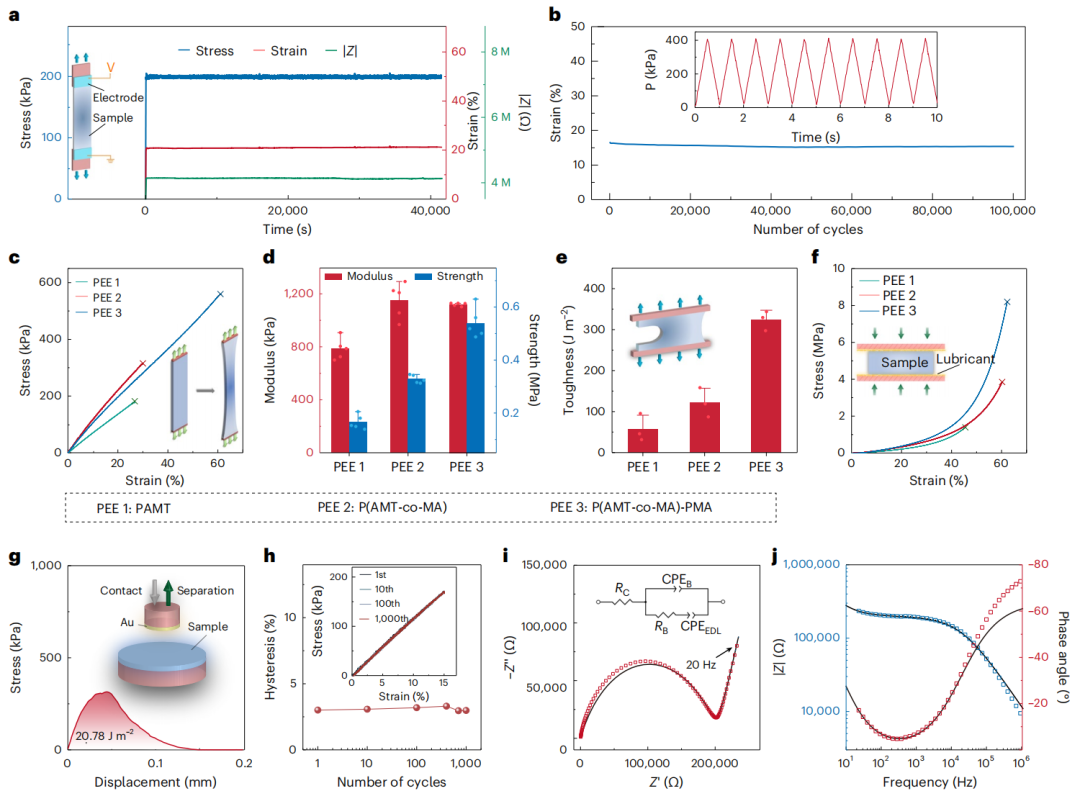 Figure 2: Characteristics of the polyelectrolyte elastomer.The prepared ionic conductor is a polyelectrolyte elastomer (PEE), P(AMT-co-MA)-PMA, with anti-creep properties. Under a tensile stress of 200kPa, the samples maintained stable mechanical and electrical performance (e.g., tensile strain and impedance) (Figure 2a); when subjected to a triangular wave cyclic load with a peak stress of 400kPa and a frequency of 1Hz, the peak strain showed almost no change over 100,000 cycles (Figure 2b). The research team prepared three types of PEE: PEE1, which contains only charged molecular chain segments; PEE2, which contains both charged molecular chain segments and uncharged lubricating neutral chain segments; and PEE3, which is based on PEE2 with added long-chain PMA for toughness. The uniaxial tensile curves of the three materials are shown in Figure 2c. The toughness-enhanced PEE3 exhibited significantly improved performance, with a fracture strain of 61.3%, tensile strength of 560kPa (Figure 2d), fracture energy of 323.5 J m-2 (Figure 2e), and compressive strength of 8.2 MPa (Figure 2f). PEE has a non-sticky surface and shows low hysteresis. The adhesion energy of PEE to gold electrodes is 20.78 J m-2 (Figure 2g), and in the loading-unloading cyclic tests, the stress-strain curves of the first and 1000th cycles nearly overlap, with an average hysteresis of <3% over 1000 cycles (Figure 2h). The electrical performance of the ionic conductor is also crucial, and the team conducted AC impedance measurements on PEE3, plotting its Nyquist plot (Figure 2i) and Bode phase plot (Figure 2j).
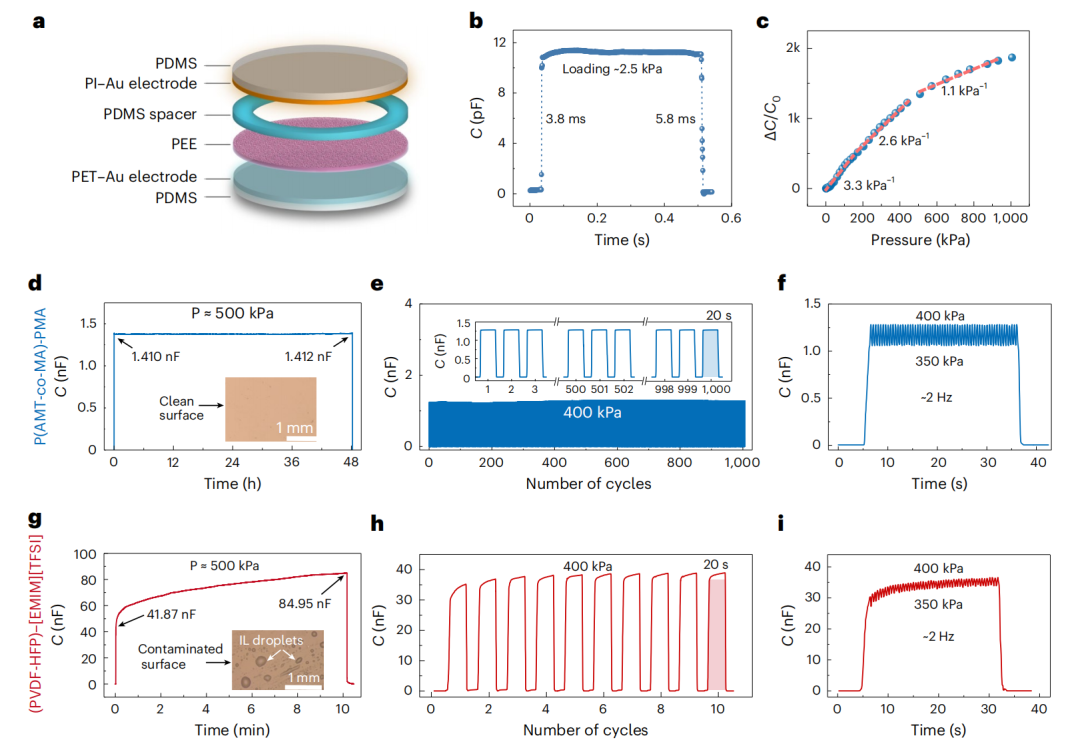 Figure 3: Characteristics of the ion-electronic sensor.The team constructed the sensor by sandwiching a layer of PEE between two layers of gold electrodes (Figure 3a). When subjected to an instantaneous load of 2.5 kPa, the sensor’s response time is approximately 3.8 ms, and the recovery time is about 5.8 ms (Figure 3b). The sensor exhibits high sensitivity across a range of 0-1000 kPa (Figure 3c). When approximately 500 kPa of static pressure is applied to the sensor, its capacitance drifts less than 1% within 48 hours (Figure 3d). Applying a square wave cyclic load of 400kPa, the sensor correspondingly outputs a square wave signal in each of the 1000 cycles (Figure 3e). The team also validated the sensor’s drift-free performance under more complex conditions by superimposing 50 kPa periodic fluctuations on a static pressure of 375 kPa, with the sensor’s response in phase with the stimulus (Figure 3f). In comparison, the research team selected the currently widely used ionic gel (PVDF-HFP)-[EMIM][TFSI] for comparison, which exhibited a capacitance signal drift of approximately 102.9% within 10 minutes under 500kPa static compression (Figure 3g). Its signal also drifts under square wave cyclic loads (Figure 3h) or under a combination of static and dynamic loads (Figure 3i).
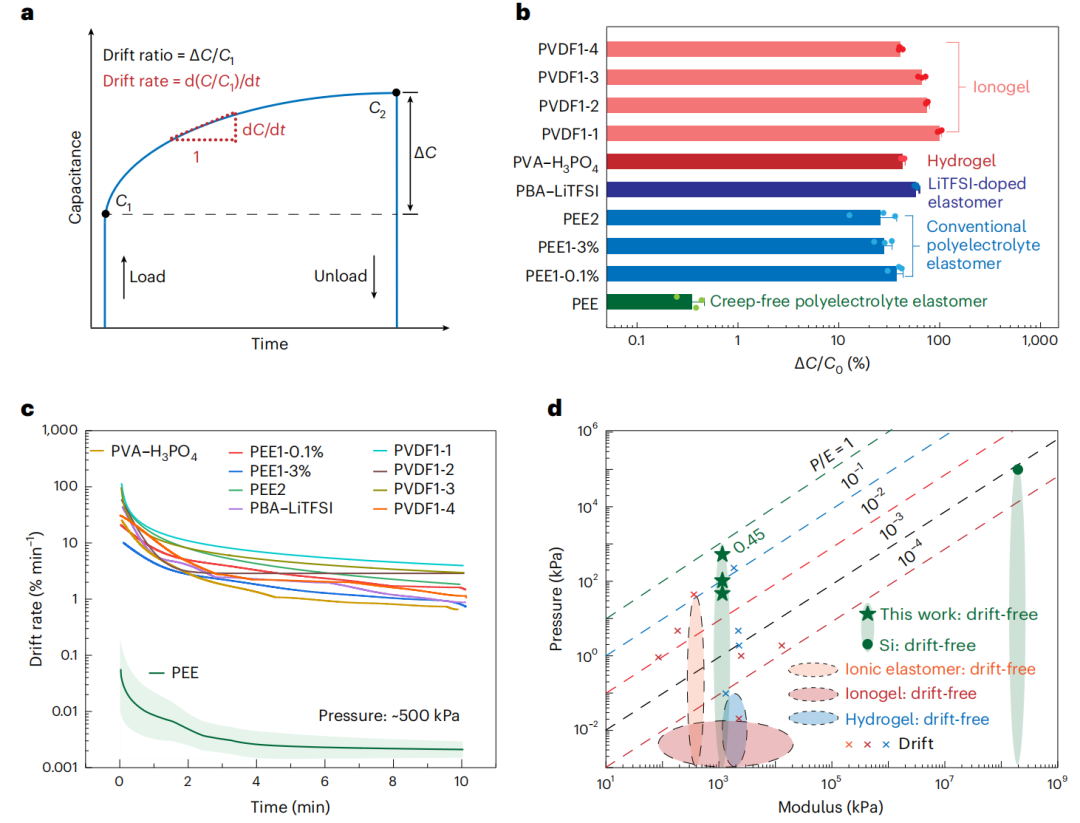 Figure 4: Drift ratios and drift rates of various ion-electronic sensors.The team proposed two metrics, drift ratio and drift rate, to quantitatively characterize the signal stability under static pressure (Figure 4a). They fabricated ten types of sensors, with ionic conductors including optimized PEE, three unoptimized PEEs, four ionic gels, one hydrogel, and one lithium salt-doped elastomer. Under continuous testing at 500kPa static pressure for 10 minutes, the sensor based on optimized PEE exhibited an average drift ratio of about 0.33% over 10 minutes, which is two orders of magnitude lower than all other sensors (Figure 4b). Additionally, the drift rate of the sensor based on optimized PEE is 2-4 orders of magnitude lower than other sensors’ drift rates (Figure 4c). The researchers used the ratio of the pressure to the sensor’s modulus, denoted as P/E, to characterize the allowable pressure at which the sensor operates without signal drift. The sensor based on optimized PEE can operate at a P/E of 0.45, whereas sensors using traditional soft materials and traditional silicon-based sensors only achieve drift-free sensing at P/E values below 10-4 and 10-3, respectively (Figure 4d).Finally, the researchers integrated the sensor into a mechanical gripper to demonstrate an accurate sensing-control-drive integrated system. The mechanical gripper is driven by a motor and equipped with a commercial sensor for force monitoring (Figure 5a). An Arduino board is used to drive the motor to adjust the degree of closure of the gripper (DGC), and the sensor’s signal is used as input to control DGC using a PID program (Figure 5b). This work demonstrates precise control using a mechanical gripper integrated with a drift-free sensor. It can stably grasp steel blocks under high clamping pressures of 350 kPa. When the gripper starts to operate, the capacitance rises upon contact with the held object, and once the set capacitance value is reached, DGC is fixed, sending a command to the mechanical gripper to lift the steel block. The mechanical gripper can stably hold the steel block for 20 minutes, during which both DGC and clamping force remain stable (Figure 5c,d). In contrast, when integrating a drift-prone ionic gel-based sensor into the mechanical gripper, the PID program continuously adjusts DGC under a fixed pressure of 350 kPa, causing the capacitance to approach the set value and resulting in the steel block slipping (Figure 5e). Based on the precise detection of force by the drift-free sensor, the mechanical gripper can safely operate fragile objects, as demonstrated by stably holding a small tomato for 1500 seconds (Figure 5f). In contrast, when using a hydrogel-based sensor, dehydration of the hydrogel leads to a decrease in electrical signal, causing an increase in DGC, ultimately crushing the small tomato (Figure 5g).
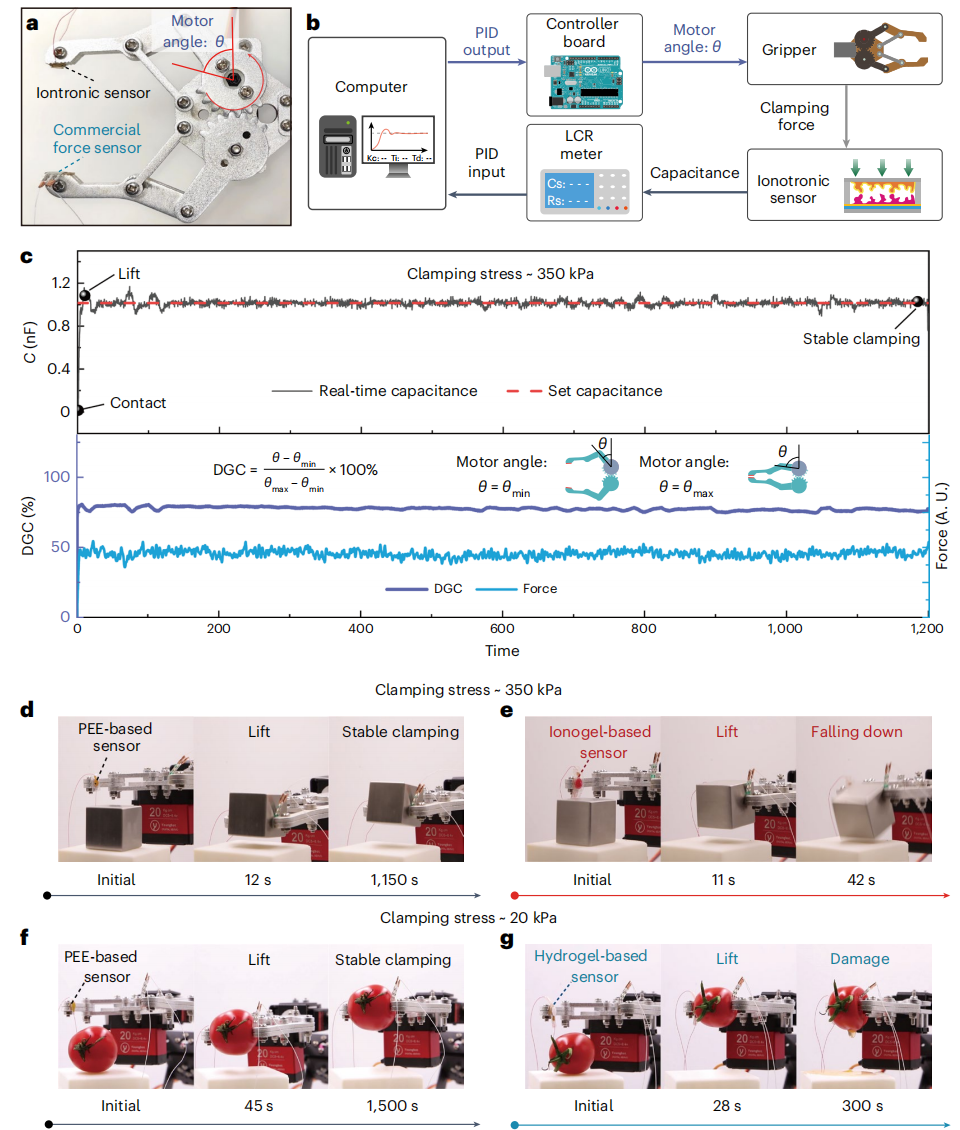 Figure 5: Application of drift-free flexible pressure sensors in mechanical gripping operations.Accurate measurement of flexible pressure sensors has significant engineering application value, with broad prospects in fields such as smart wearables and humanoid robots.
Original link
https://doi.org/10.1038/s41563-024-01848-6
Related Progress
Professor Guo Chuanfei’s team at SUSTech and Professor Tang Jigeng’s team published in Nano Lett.: A tough hydrogel adhesive for cultural relic restoration.
Professor Jiang Lélun from Sun Yat-sen University, Professor Guo Chuanfei from SUSTech, and Professor Wu Zhigang from Huazhong University of Science and Technology published in Nat. Commun.: Large-scale fabrication of magnetically actuated origami robots.
Professor Guo Chuanfei’s team at SUSTech published in Adv. Mater.: Research progress in implantable bioelectronics.
Professor Guo Chuanfei’s team published in Nat. Commun.: Proposed a skin-electrode interface sensing mode.
Guo Chuanfei’s research group at SUSTech published in sci. bull.: Wide-range, high-linearity, high-sensitivity electronic skin.
Guo Chuanfei’s research group at SUSTech published in ACS Nano: Foldable, real-time monitoring salt deposition efficient shape memory solar evaporators.
Professor Guo Chuanfei’s team published in Nat. Mater.: Adhesive bioelectronic interfaces achieving stable and efficient human-machine interaction.
Professor Guo Chuanfei’s research group at SUSTech achieved significant progress in the field of bionic microstructured flexible electronic skin.
Yang Canhui and Wang Min from SUSTech published in Adv. Mater.: High-sensitivity, high-stability ion-electronic flexible pressure sensors based on polyelectrolyte elastomers.
Yang Canhui and Ge Qi published in Nat. Commun.: Ion capacitive sensors with multi-modal sensing functions.
SUSTech Soft Mechanics Laboratory published in ACS AMI: Stretchable, low-hysteresis, strong adhesive tape.
SUSTech Soft Mechanics Laboratory published in ACS AMI: Impact-resistant tough hydrogel composites.
SUSTech Yang Canhui’s research group: Fatigue-resistant amorphous hydrogels | Long-term recruitment of direct doctoral students, master’s and doctoral students, research assistants, and postdoctoral researchers.
SUSTech Yang Canhui’s research group: Tough porous nanocomposite hydrogels for water body restoration.
SUSTech Yang Canhui’s research group: Enhanced hydrogel adhesion based on large-scale bridging mechanisms.
SUSTech Soft Mechanics Laboratory: DIW 3D printing compatible with dilute solutions.
SUSTech Soft Mechanics Laboratory: Wrinkle-based tunable hydrogel adhesion.
SUSTech Soft Mechanics Laboratory: Bionic design strategies for elastomer-hydrogel composite structures.
SUSTech Soft Mechanics Laboratory collaborated with Professor Lock Zhigang’s team at Harvard University, published in Adv. Mater.: Hydrogel ion devices with complex configurations.
Disclaimer: Some information may be sourced from the internet, and the purpose of reproduction is to convey more information and share, which does not mean endorsement of its views or verification of its authenticity. It also does not constitute other suggestions. It only provides a communication platform and is not responsible for its copyright. If there is any infringement, please contact us for timely modification or deletion. Original articles are welcome for individual forwarding and sharing; for publications or media, please contact us for reprints. Contact email: [email protected]

Scan the QR code | Follow us
WeChat ID: Chem-MSE
We sincerely invite submissions
Experts and scholars are welcome to provide manuscripts in the areas of chemical engineering, materials science and engineering, and biomedical engineering to [email protected], and please indicate detailed contact information. The Chemical and Materials Science Society will promptly select and push.