"IT Chat" is a professional information and service platform under the Mechanical Industry Press, dedicated to helping readers acquire more professional and practical knowledge and skills in the broad field of IT, quickly enhancing their workplace competitiveness. Click the blue WeChat name to follow us quickly!With the end of the college entrance examination, the enrollment process has begun. As a popular engineering major in recent years, what are the development directions of the automation major? What kind of students is it suitable for? Let’s explore!
[Major Introduction]
Automation is the science and technology of the automatic, intelligent, autonomous, efficient, and safe operation of artificial and natural systems. As an important component of information science, automation focuses on intelligent systems, centering on “system theory, control theory, and information theory.”
It is widely applied in core areas of national strategy, such as intelligent manufacturing, intelligent robotics, aerospace, economic finance, and cyberspace. Automation is a vibrant discipline and one of the important symbols of modern human civilization.

[Training Features]
The automation major fully utilizes the characteristics and capabilities of interdisciplinary talent training, leveraging its strong research strength in international academic frontiers with obvious interdisciplinary characteristics, such as brain and cognition, intelligent unmanned systems, and general artificial intelligence, to establish a “Automation +” general talent training model.
The automation major has specifically set up courses for undergraduates in brain and cognitive science, general artificial intelligence, multimodal intelligence, and intelligent robotics, cultivating high-level talents in intelligent and automation science and engineering with international competitiveness.

[What Does the Automation Major Study]
The automation major falls under the category of engineering, with a standard study period of 4 years, after which a Bachelor of Engineering degree is awarded. Automation involves many fields such as electronic engineering, computer science, mechatronics, networks, and communications, so its scope is very broad, and the course content is extensive.
Students need to master knowledge in areas such as automatic control theory, signal and system analysis, circuit principles, power electronics technology, digital electronics technology, sensor technology, network and communication technology, advanced programming languages, and computer software technology applications, as well as some knowledge in chemical engineering, mechanics, and management.
Some industry insiders summarize the characteristics of the automation major in one phrase: “Control and management combined, strong and weak current balanced, software and hardware both applied.” This sufficiently indicates that automation is a multidisciplinary, broad-spectrum engineering major.

[Sub-Directions of the Automation Major]
■ Process Control Direction
Supported by automatic control and computer technology, this direction aims to achieve automatic control of actual industrial production processes, consisting of core courses such as signal detection and transformation, process control, computer control systems, intelligent control, and field bus control technology.
■ Embedded Systems and Robotics Direction
This direction emphasizes the cultivation of design and software design capabilities for embedded systems, combining theory with practice through various learning forms such as classroom teaching and experiments, training professionals in the embedded systems direction; core courses include embedded system design, embedded real-time operating systems, DSP technology, advanced display technology, and control motors.
■ Motion Control Direction
This direction focuses on cultivating students’ abilities in motor system analysis and control, linking theory with practice, and through experiments, training professionals in the robotics direction, laying a solid foundation for students’ future employment and further education in related fields; core courses include electronic control technology, mechanics, motor drive, and motion control theory.
■ Artificial Intelligence Direction
This direction centers on the theoretical techniques of image processing and pattern recognition, using mathematical methods and computers as primary tools to study methods for processing, classifying, and understanding various media information, and on this basis, constructing systems with certain intelligent characteristics; core courses include computer programming languages, machine learning, artificial neural networks, introduction to pattern recognition, and applied statistics.
[Current Development Status of the Automation Major]
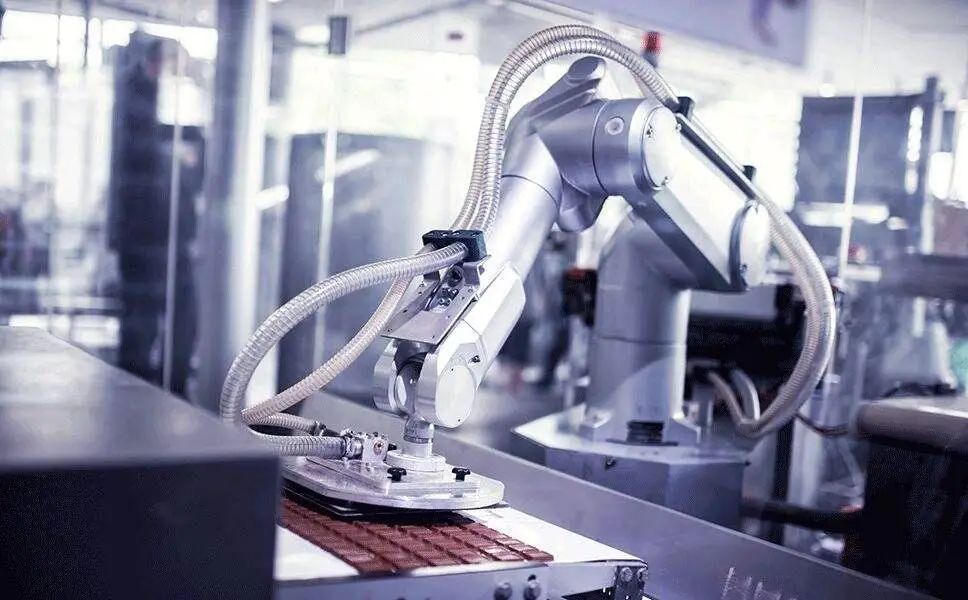
The education of the automation major has arisen alongside the widespread application of automation technology in social production and life. It mainly studies the principles and methods of automatic control, unit technology, and integration technology in various control systems.
In China’s modernization and reform, the automation major has provided the country with a steady stream of well-grounded, capable talents who are dedicated to the country’s modernization efforts, contributing to the transition from manual to mechanization, then to electrification, and the ongoing digitalization and intelligence initiatives.
With the popularization of artificial intelligence technology and the continued process of digitalization and intelligence, the demand for talents in the automation major in society has also increased accordingly. Therefore, it can be expected that there will be ample development space for the automation major in the foreseeable future.

[Employment Directions]
Graduates of the automation major can engage in engineering design, technical development, system operation management and maintenance, enterprise management and decision-making, scientific research, and teaching in areas related to motion control, process control, manufacturing system automation, automation instruments and equipment, robot control, intelligent monitoring systems, intelligent transportation, intelligent buildings, the Internet of Things, and more.
The employment fields are also very broad, including high-tech companies, research institutes, colleges and universities, finance, communications, taxation, foreign trade, commerce, railways, civil aviation, customs, industrial and mining enterprises, modern agriculture, national defense, and government and technology departments.
[Professional Qualities of Automation Talents]
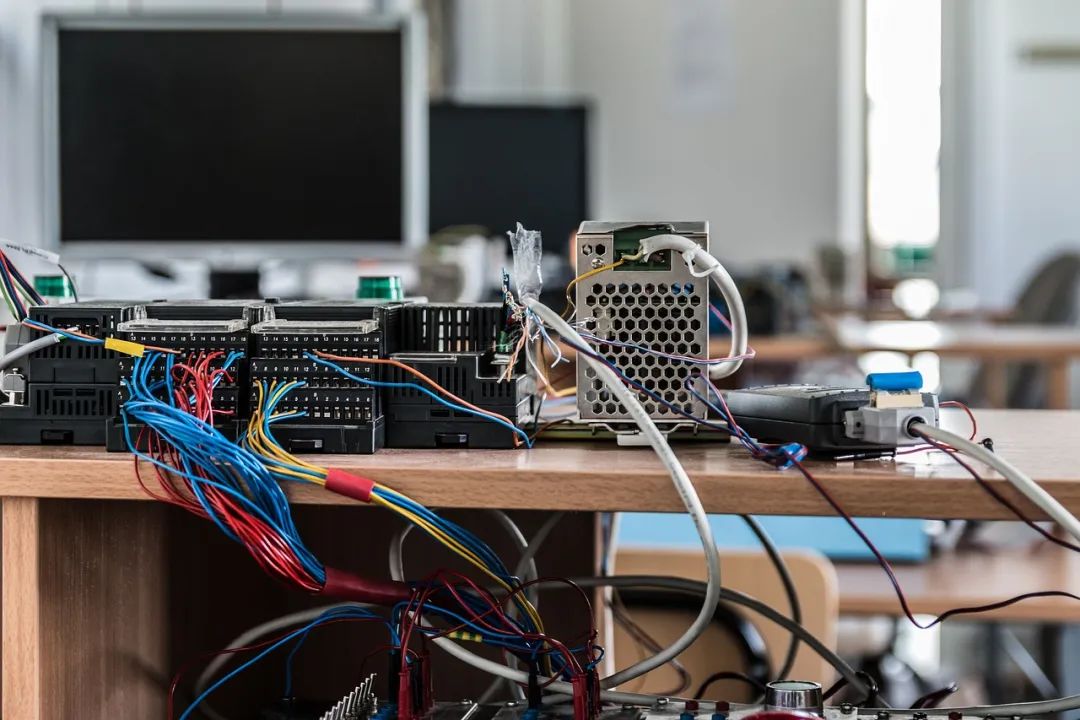
Professional quality refers to the specialized knowledge and skills that a person must possess to smoothly engage in a specific social profession, as well as the ability to continuously update existing knowledge and skills during social professional activities.
■ Master the natural science knowledge required for work in the automation field, such as mathematics and physics, as well as foundational technical knowledge in electronics, electrical engineering, computer science, and communications, and possess preliminary knowledge in humanities and sociology;
■ Master the basic principles of “information, control, and systems” in this major, and understand the basic methods of information processing and the principles of optimization design, while being aware of the frontier dynamics of the discipline;
■ Master general methods for analyzing and designing engineering control systems, possess the ability to proficiently solve general control system problems on engineering sites, and have the basic ability to independently engage in the operation, management, and maintenance of control systems in engineering practice;
■ Have the ability to analyze, improve, optimize, and independently design technologies in automation systems or products;
■ Have innovative awareness and preliminary ability to research, develop, and design new automation products, processes, technologies, and equipment;
■ Understand the technical standards in the field of automation and the regulations of related industries.
Therefore, from the perspective of professional quality, every automation major student must embody knowledge, abilities, and qualities. Through the four years of training in the automation major, they should possess a fundamentally complete knowledge structure in the automation field, basic abilities in practice and innovation, and the basic qualities to become engineers or scientists.

Recommended Reading
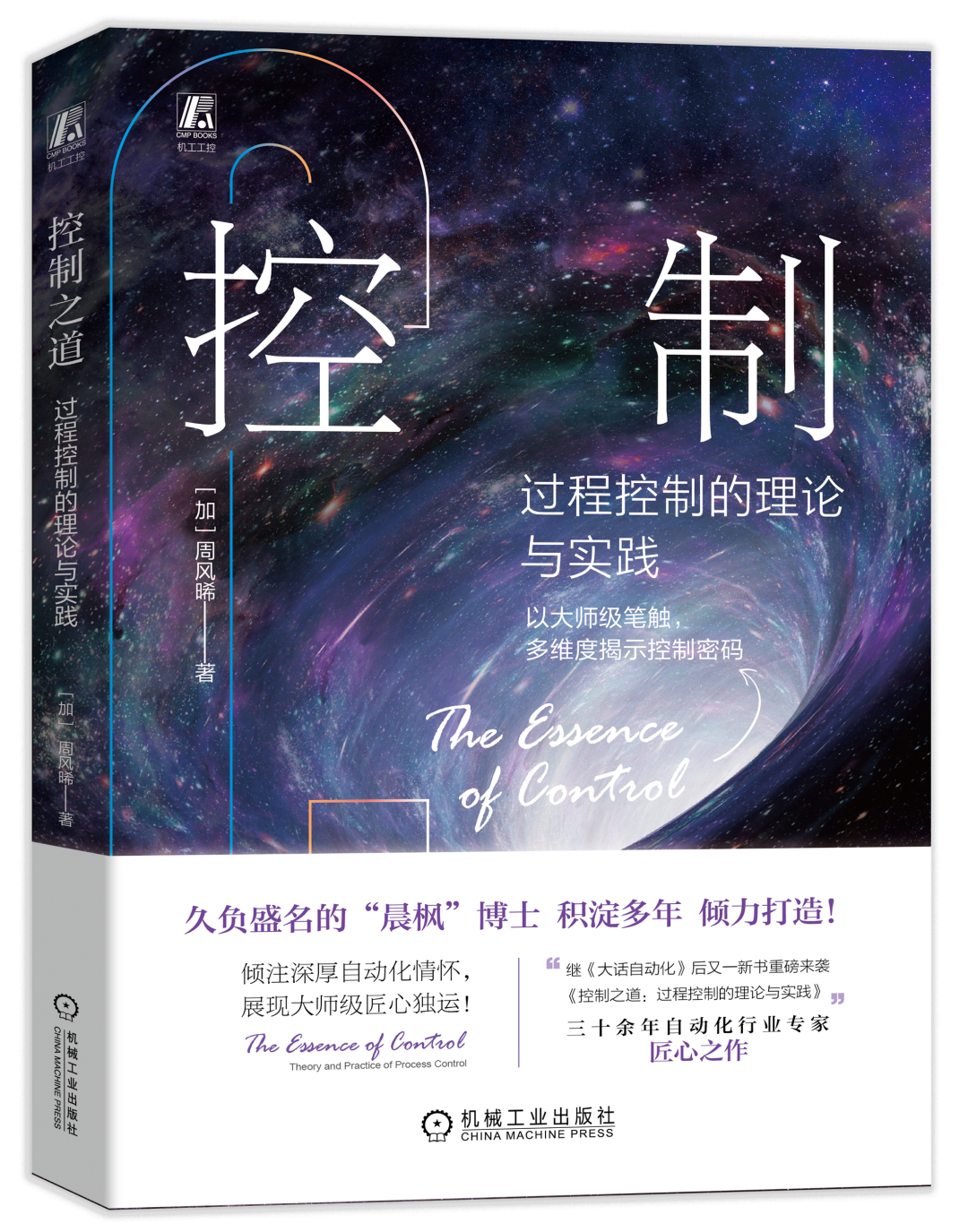
This book combines professionalism, thoughtfulness, and practicality, having both depth and accessibility. It serves as a practical reference book for readers new to the self-control industry and holds high reference value for undergraduates or graduates in the automation major.
The book is divided into six parts. The first part briefly describes basic feedback, dynamic systems, and stability analysis. The second part introduces single-loop PID control. The third part discusses complex PID control with multiple loops. The fourth part focuses on controlling chemical process unit equipment. The fifth part introduces model predictive control. The sixth part discusses the resolution and prevention of control system faults and anomalies, and discusses the role of artificial intelligence.
Note: This article is reprinted from the WeChat public account “Win in New GAOKAO”. All copyrights belong to the original author. If there are any copyright issues, please contact us, and we will negotiate copyright issues or delete content promptly! The content reflects the author’s personal views and does not represent this public account’s endorsement of their views or responsibility for their authenticity.
Author: Yang Jianting
Editor: Li Xinxin
Reviewer: Cao Xinyu