

The pharmaceutical and biotechnology industry is currently the fastest-growing sector for 3D printing technology. This technology can provide more comprehensive personalized solutions for the medical and biological industries; bioprinting technology will promote research in regenerative medicine related to artificial living tissues and organs. In terms of personalized solutions, typical applications include 3D surgical planning models, surgical guides, 3D printed implants, prosthetics, hearing aids, and other rehabilitation medical devices. In the field of regenerative medicine, researchers have made significant progress in using bioprinting technology to cultivate artificial organs. This article mainly observes the latest advancements in medical 3D printing technology in the following seven areas during the first quarter of 2017.
1 Surgical Planning Models
For high-risk and complex surgeries, preoperative planning is crucial. Traditionally, obtaining patient data through imaging devices such as CT and MRI is the basis for doctors’ surgical planning. However, the medical images obtained are two-dimensional, and software is required to convert the two-dimensional data into realistic three-dimensional data. A 3D printer can directly print the three-dimensional model, assisting doctors in precise surgical planning, improving the success rate of surgeries, and facilitating intuitive communication between doctors and patients regarding the surgical plan. Furthermore, even in the event of treatment failure, 3D printing can provide traceable evidence for both doctors and patients.
The World’s First MR Technology-Assisted Breast Reconstruction Surgery Completed
In March 2017, a doctor at the Hunan Cancer Hospital wore HoloLens glasses that had input the patient’s three-dimensional imaging information during surgery. The preoperative 3D vascular data was personalized and precisely designed to cut an area of 22cm x 14cm for a free flap transplantation to reconstruct the breast, and the surgery was completed safely and successfully in six hours.
3D Printed Liver Models for Tumor Surgery Expected to Become Common, Costing Less Than $150
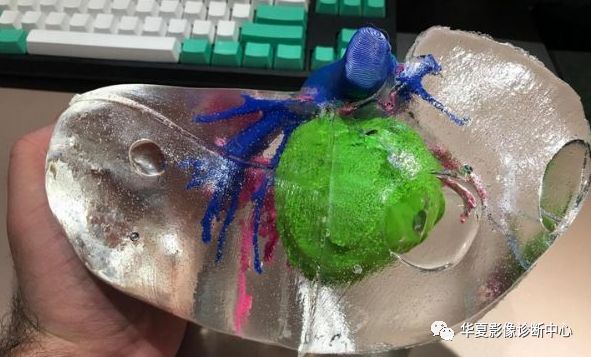
In early March, a medical team in Krakow, Poland, demonstrated the internal tumors of the liver, the internal circulatory system, and various problems that surgeons may face. Researchers used the liver of a 52-year-old female patient as a sample, first obtaining a CT scan of her liver, then using a standard 3D printer with PLA colored material to print six components. They then constructed a “liver parenchyma scaffold” and filled it with silicone material. The completed model clearly shows the liver’s shape, quality, as well as the tumors and some internal blood vessels. The total cost was about 160 hours, and the model cost less than $150. Compared to a study by a research team at Tsukuba University in Japan in 2015, this 3D liver model has brought costs down to an acceptable level, making customized treatment plans more accessible and enhancing the success rate of surgeries.
3D Printed Heart Models Save Infant’s Life in Los Angeles
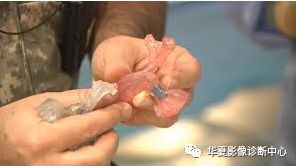
When 18-month-old Nate Yamane faced life-threatening conditions due to narrowed pulmonary arteries, pediatric cardiologist Frank Ing realized he needed a stent, a small mesh tube used to treat narrowed or weak arteries. Using Nate’s heart CT scan data, the hospital team created a 3D printed model of the obstructed area. Dr. Ing crafted a special small stent to fit the 3D model of the narrowed artery. The result was successful: Nate’s oxygen levels improved overnight.
Guangdong Completes First 3D Printed Vertebral Replacement
At the Third Affiliated Hospital of Southern Medical University (Guangdong Provincial Orthopedic Hospital), a team from the bone tumor department successfully removed a vertebra from a patient with a chordoma and implanted a 3D printed artificial vertebra, marking Guangdong’s first 3D printed vertebral replacement surgery. The personalized 3D printed artificial spine is more conducive to protecting nerves and promoting postoperative bone healing.
2 Surgical Guides
Surgical guides are auxiliary surgical tools that accurately implement the surgical planning scheme during surgery. They have applications in multiple disciplines, such as joint guides, spinal guides, oral implant guides, and guiding positioning templates for implanting internal radiation source particles in tumors.
Materialise’s Pediatric 3D Printed Surgical Guide Receives FDA Approval
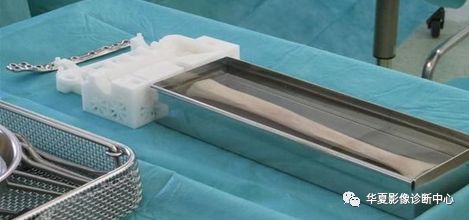
This means that children with congenital bone diseases or bone injuries can receive better treatment. The 3D printed guide is three-dimensional and generated based on the patient’s bone scan data, allowing doctors to obtain the most realistic information for better surgical planning. Moreover, its manufacturing cost is low, making it affordable even for ordinary patients.
3 Implants
Some implants are manufactured through casting or traditional metal processing methods, requiring molds to be created first. This can make single-piece production very expensive for those that only need one or a few implants. Additionally, the high price of biocompatible implant materials adds to the overall manufacturing cost of orthopedic implants. For special implants with complex structures, it is also challenging to use traditional techniques. The use of 3D printing technology for manufacturing orthopedic implants can effectively reduce the manufacturing costs of customized, small-batch implants and can produce more structurally complex implants. In recent years, the medical industry has increasingly adopted metal 3D printing technology (Direct Metal Laser Sintering or Electron Beam Melting) to design and manufacture medical implants. With cooperation between doctors and engineers, 3D printing technology can produce more advanced and qualified implants and prosthetics. 3D printing technology has also improved the delivery speed of customized implants, allowing a customized implant to be designed and manufactured in as little as 24 hours. Engineers create three-dimensional models and design implants using medical imaging files provided by hospitals, such as X-rays, MRIs, and CT scans, and ultimately manufacture the design files through metal 3D printing equipment.
OPM’s 3D Printed Bone Implant Receives European Patent Approval
Oxford Performance Materials (OPM)’s “Custom Implants for Bone Replacement” will utilize the emerging OsteoFab implant manufacturing process. OPM will now apply its high-performance additive manufacturing process to 3D printed custom implants for bone replacement procedures. This European patent was initially submitted at the end of 2011, became effective on December 21, 2016, and will last until August 7, 2029. Currently, OPM remains the first and only company to receive FDA 510(k) approval for patient-specific polymer-based implants.
Australia Successfully Performs First 3D Printed Titanium-Polymer Sternum Implant Surgery
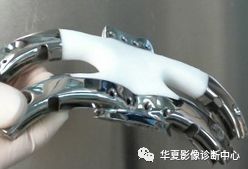
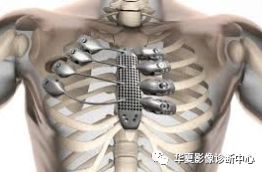
The Commonwealth Scientific and Industrial Research Organisation (CSIRO) in Australia, in collaboration with Melbourne medical implant company Anatomics and UK doctors, performed a 3D printed titanium-polymer sternum implant surgery on a 61-year-old British patient, Edward Evans, marking a global first. Previously, such implants were typically made of pure titanium, but the new sternum implant is better at helping to reconstruct both “hard and soft tissues” in the human body. Evans was discharged just 12 days after surgery and is currently recovering rapidly.
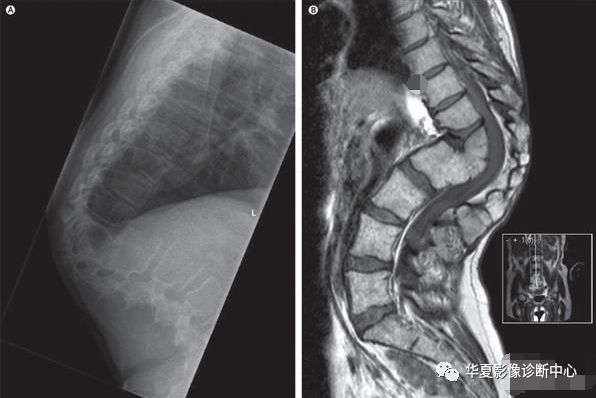
Doctors at Medanta The Medicity Hospital in India helped a 32-year-old woman who had been suffering from spinal tuberculosis to walk again. This was also the first such surgery in India. The patient’s first, second, and third cervical vertebrae were severely damaged, meaning there was no skeletal support between her skull and lower cervical vertebrae. Using advanced metal 3D printing technology, the doctors 3D printed a titanium vertebra and used it to replace the damaged part of the patient’s spine, effectively filling the gap between the first and fourth cervical vertebrae. The surgery lasted a total of 10 hours. This was also the third such surgery in the world.
The First Patient with a 3D Printed Spine Implant Can Now Drive and Ride a Bike
On June 12, 2016, the world’s first 3D printed spinal implant surgery was completed at Peking University Third Hospital. In early January 2017, a CT scan of the patient showed that the 19 cm long 3D printed implant was securely connected to his existing spine, with high-density images visible at the connection point, indicating signs of bone fusion.
Gulou Hospital Innovates 3D Printed Navigation for Maxillary Nerve Pain
The team at Nanjing Gulou Hospital performed a thin-slice CT scan of the patient’s skull, designed, and 3D printed a personalized maxillary ganglion interventional navigation template, guiding the puncture to the target point with minimal local anesthesia to accurately complete the maxillary ganglion block. The patient immediately felt significant relief from nasal congestion and eye discomfort, and the persistent pain on the left side of the face improved significantly. Subsequently, the team used the navigation template for a pulsed radiofrequency treatment and two block treatments, resulting in the complete disappearance of the patient’s left facial pain. The 3D printed personalized navigation template not only greatly shortened the surgery time but also reduced surgical trauma, providing significant help for patients requiring multiple surgical procedures.
4 Rehabilitation Medical Devices
Similar to 3D printed titanium alloy customized aircraft parts and supercar personalized components, prosthetics, hearing aids, and other rehabilitation medical devices also have demands for small batches and customization, and their designs are complex. Traditional CNC machines often struggle to achieve this due to processing angles and other limitations. Additionally, using 3D printing technology to produce single customized rehabilitation aids will significantly reduce costs.
The promotion of 3D printed rehabilitation medical devices requires professional medical device service providers to intervene, conducting professional operations in data collection, design, forming, and product certification.
The Smallest 3D Printed Custom Titanium Hearing Aid in History is Released

Phonak, in collaboration with the German 3D printing company EnvironTEC, has developed the custom titanium hearing aid Virto B – Titanium. The highlight of this custom model is that both the shell and main parts are 3D printed, and the shell is made of titanium, which is lighter and stronger than the traditional acrylic hearing aid shells, reducing the thickness of the shell by 50% (0.2 mm) while maintaining the same level of safety. Through 3D printing technology, the time for customizing hearing aids has been greatly shortened (it is reported that this device can produce 65 hearing aid shells or 45 ear molds in one hour), and it will fit the ear canal shape of hearing-impaired individuals more precisely, with this technology being less affected by the technical differences of traditional ear mold makers.