
Click the above⬆ to follow us
In June this year, OpenAI announced a partnership with toy giant Mattel to integrate AI technology into traditional toys. In the same month, ByteDance’s Volcano Engine launched the AI toy development kit “EchoEar Meow Companion”; in July, JD Group released the smart brand JoyInside, providing AI toys with large model-driven conversational interaction capabilities… Meanwhile, this year, executives from major companies like Alibaba and Meituan have resigned to start their own businesses, choosing the emerging field of AI toys. Data shows that in the first half of this year, the sales of AI toy products increased sixfold compared to the previous period, with a year-on-year growth rate exceeding 200%.
The consumer group for AI toys is expanding to all age groups.
On August 26, a reporter visited the “Toys R Us” store in Chengdu IFS, where a staff member recommended an AI toy called “Fibi the Elf”. “This toy has over 600 sound effects and is suitable for children aged 6 and above,” the staff member said. Since the beginning of this year, the store has introduced several AI toys, which have sold well. “Some AI toys integrate AI large models like DeepSeek and Doubao, providing children with learning assistance and multilingual interaction services.”
Searching on Taobao and JD Apps, the reporter found that the AI toys currently on the market mainly include AI plush toys, AI pendant toys, anime IP toys, and AI group robot toys, with prices ranging from hundreds to thousands of yuan. Among them, AI plush toys, AI early education machines, and AI pets have a higher order rate. Not only are they “baby-soothing artifacts”, but the consumer group for AI toys is expanding to all age groups.
Chengdu Yuzhilingdong Technology Co., Ltd. is a company in Chengdu focusing on “AI + IP + trendy toys”. In October this year, it will launch a growth-type AI smart plush companion named “walulu”. “The toy is aimed at urban young women aged 18-35, integrating emotional companionship, intelligent interaction, and nurturing gameplay functions,” said CEO Gu Xiaomao.
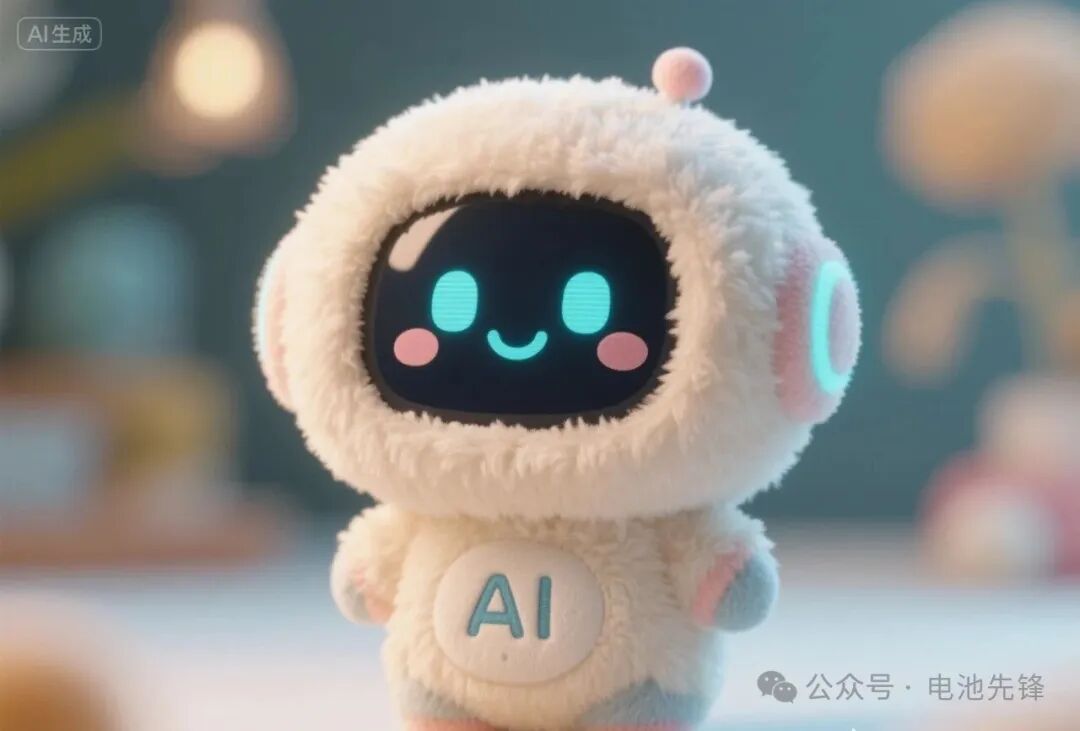
“We use large models to collect hundreds of cat movements for modeling,” Gu Xiaomao said. At the same time, using AI emotional recognition engines and AI multimodal interaction technology, it can achieve thousands of action and emotion responses, with an emotion judgment accuracy rate of over 90%; the toy can also store 100 emotional events, having a memory function.
Gu Xiaomao stated that more importantly, it has social attributes. The toy will be paired with a mini-program, where players can share moments with their cats in a pet social circle and interact with other users.
Guangdong is a region where the growth of AI toys is particularly rapid. Wu Yongsheng, the business manager of Shenzhen Elephant Robot Technology Co., Ltd., told reporters that the best-selling products are Mita Cat and Mita Dog, targeting the elderly population. “Aiming at the ‘silver economy’ blue ocean, we provide ’emotional value’ for the elderly,” Wu Yongsheng said. The company’s newly launched hand-held pet pawbots series was showcased ahead of this month’s robot conference, with over 500 people pre-ordering on-site via WeChat.
“The advantage of AI toys is that they provide a more ‘vivid’ experience than traditional toys and are a ‘lighter burden’ than real pets. They are very suitable for people like me who are ‘i-people’,” said Li Zixin, a post-00s reporter. “I can express my feelings without worrying about the other party’s feelings; everything becomes very easy.”
The ‘Companionship Economy’ Promotes the Transformation and Upgrade of the Toy Industry
“The explosive popularity of AI toys is driven by emotional value and the companionship economy,” Gu Xiaomao said. For example, targeting young people and office workers, AI toys are gradually becoming their ‘electronic pets’ to relieve stress, which brings significant growth potential. High demand, high unit price, and high profit make AI toys a key point for the toy industry to seek new growth.
Different product forms have different gross profit margins. For example, the ordinary version of Pleasant Goat and Big Big Wolf is priced at 69.9 yuan, while the AI smart version is priced at 399 yuan, about 5.7 times the ordinary version; the ordinary version of Talking Tom’s story machine is priced at 75 yuan, while the AI companion robot is priced at nearly 2000 yuan, about 26 times the ordinary version.
According to Wu Hao, deputy director of the Key Laboratory of Intelligent Perception and Control in Sichuan Province, the popularity of AI toys is also due to the open-source nature of large models like DeepSeek, which has lowered the development threshold and costs for AI toys, allowing more companies to enter the field.
“I am very optimistic about the prospects of AI toys,” Wu Hao said. From market data, this year, China’s AI toy market is expected to exceed 30 billion yuan, with emotional companionship products experiencing an annual growth rate of 173%. “This explosive growth is not a short-term trend but is driven by the dual rigid demands of ‘upgraded family companionship needs’ and ‘AI technology scenario implementation.'”
“To achieve the long-term development of AI toys, in addition to model evolution, the core is to return to the essence of toys and user value,” Wu Hao said. AI toys should become companions that are warm, valuable, and respectful of boundaries. Only by deeply integrating technological innovation with user needs and ethical norms can the industry move from short-term ‘explosion’ to long-term healthy development.”
Current Status of Humanoid Robot Toys: Competition Among Players and Product Iteration
As market potential gradually releases, the AI trendy toy field has attracted many players, and product forms and functions are rapidly iterating. Currently, several representative humanoid robot toy products have emerged in the market, showcasing different technological paths and product positioning.
As a “traffic leader” in the technology field, Tesla once launched a 1:10 scale model based on the second-generation humanoid robot. This product consists of over 40 independent parts and has 20 movable joints, with its appearance and motion design highly replicating the prototype. With Tesla’s brand influence and exquisite craftsmanship, it has attracted many technology enthusiasts and collectors. However, this product only has a “display function” and cannot achieve electric control or human-machine interaction, leaning more towards a traditional static model in trendy toys, and has not truly integrated AI technology.
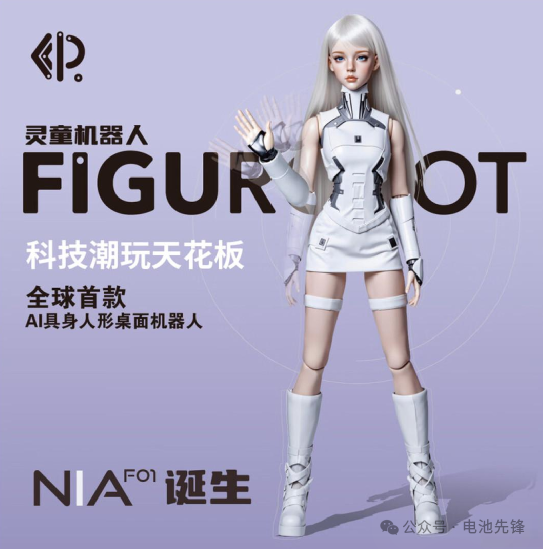
In contrast to Tesla’s “test water”, Lingdong Robot’s products are more aligned with the positioning of “AI trendy toys”. Lingdong Robot has independently developed a standard hardware platform for humanoid robots and launched the world’s first consumer-oriented desktop humanoid figurine robot – Lingdong NIA-F01, which is now officially listed on JD. This 56cm tall humanoid robot has 34 degrees of freedom (the higher the degree of freedom, the more flexible the movement), made of skin-friendly silicone material to enhance user comfort during touch; on the software side, it is equipped with self-developed LingShu neural framework (LSNA), ECE multimodal emotional resonance engine, and character customization system, enabling it to perceive user emotions, interact with users, and even customize character images based on user preferences, truly achieving “intelligent companionship”. Additionally, Lingdong Robot plans to establish a dedicated robot game and application store ecosystem, attempting to build a complete user experience loop through a “hardware + software + content” model to enhance user stickiness.
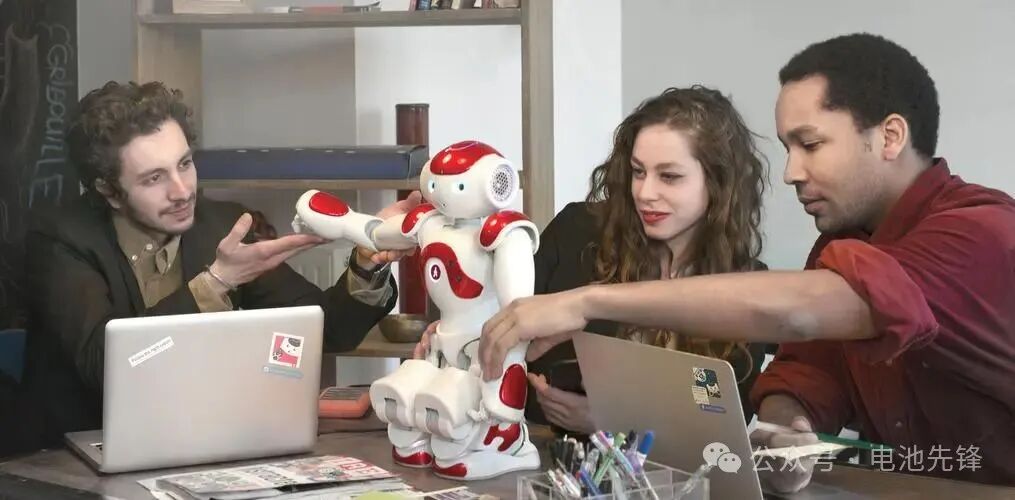
Shengshi Technology’s entry will undoubtedly inject new vitality into this track. Relying on its multimodal large model technology and Aldebaran’s core robotic assets, Shengshi Technology’s AI trendy toy products are expected to achieve breakthroughs in “interaction accuracy” and “emotional understanding depth”, such as more precise emotion recognition, more natural voice interaction, and more flexible action responses. At the same time, Shengshi Technology’s accumulated “scenario-based service experience” in smart ports may bring new functional imaginations to AI trendy toys, such as integrating navigation and information inquiry functions, allowing products to have more practical value beyond “emotional companionship”.
It is worth mentioning that the development of AI trendy toys has also brought new opportunities to the upstream and downstream of the industry chain. Among them, the role of battery manufacturers is particularly critical – AI trendy toys require continuous power support to ensure interaction experience, which raises higher requirements for battery endurance, fast charging speed, size, safety, etc. Currently, leading battery manufacturers such as Ningde Times, Yiwei Lithium Energy, Zhongchuang Innovation, Changhong Energy, and Funeng Technology have begun to pay attention to this emerging scenario, increasing their R&D investment in miniaturized, high energy density, and long-lasting batteries, attempting to provide more suitable energy solutions for AI trendy toy products, which will not only promote the upgrade of AI trendy toy product experiences but also open up new market space for battery manufacturers.
Challenges Behind Opportunities: The Triple Test of Technology, Market, and Content
Despite the broad prospects of the AI trendy toy track, companies still face multiple challenges during their entry, which come from both technical and market and content aspects.
On the technical side, the limitations of AI technology in “emotional understanding” and “natural interaction” remain the biggest bottleneck. Currently, most AI trendy toys’ interactions are still at the “command response” level, for example, when a user says “sing a song”, the robot plays a song; when a user says “tell a joke”, the robot outputs a preset joke, without truly realizing the “understanding of the user’s emotional needs behind the request”. For instance, when a user feels down due to work pressure, can the AI trendy toy accurately identify the user’s “implicit emotions” and provide appropriate comforting words or actions, rather than simply playing a “happy song”? Achieving this goal requires companies to invest significant R&D resources and time in algorithm optimization, data accumulation, and model training to continuously enhance the AI model’s “emotional understanding ability” and “interaction naturalness”. Additionally, hardware upgrades are also indispensable – smaller sensors, more precise joint motors, and thinner displays all require continuous technological breakthroughs to find a balance between “product size” and “functional experience”.
On the market side, the “preference volatility” of trendy toy consumption is another major test for companies. The core attraction of the trendy toy market lies in its “trendy attributes” and “IP value”, and trends often change rapidly, making consumer preferences easily shift over time. For example, a certain IP image may become popular in a short period but is quickly replaced by a new IP. This requires companies to have keen market insight, able to capture trends in a timely manner and quickly adjust product strategies; at the same time, they also need strong IP incubation and operation capabilities to enhance the lifecycle and influence of the IP through continuous content creation and fan interaction. If companies rely solely on a single IP or product form, they may face risks of “product obsolescence” and “user attrition”.
On the content side, the “sustained supply of emotional value” is key to whether AI trendy toys can retain users. Consumers purchase AI trendy toys primarily for “emotional companionship”, which requires products to not only have “interaction functions” but also continuously provide emotional support through content output. For example, targeting young users, products can offer a “listening ear” function to hear users’ troubles and provide comfort; for child users, products can integrate “early education content” to help children learn knowledge through interaction; for the elderly, products can provide “health reminders” and “family connections”. However, how to continuously produce high-quality, personalized content to avoid user “interaction fatigue” remains a long-term consideration for companies. Additionally, the “safety of content” cannot be ignored – especially for products aimed at children, it is essential to strictly control content quality to avoid harmful information while protecting users’ privacy data to prevent information leakage.
Conclusion: AI Trendy Toys, a Key Step for Humanoid Robots to Enter the Consumer Market
From a market perspective, with continuous technological advancements and the ongoing upgrade of consumer demands, AI trendy toy products will develop towards being “smarter, more personalized, and more emotionally resonant”. In the future, AI trendy toys may no longer be limited to the forms of “desktop ornaments” or “small robots”, but will achieve “on-demand shaping” based on user needs – such as wearable AI trendy toys, transformable AI trendy toys, etc., while deeply integrating “emotional companionship” and “practical services” in functionality, becoming indispensable “smart partners” in users’ lives.
Of course, the development of the AI trendy toy track still needs to overcome multiple challenges in technology, market, and content, which requires the joint efforts of companies, the upstream and downstream of the industry chain, and regulatory agencies. For companies, it is essential to adhere to the dual drive of “technological innovation” and “user needs”, continuously breaking through technical bottlenecks to enhance product experiences while deeply understanding consumer needs and continuously providing valuable content; for the industry chain, it is necessary to strengthen collaborative cooperation to improve the supply chain system, reduce production costs, and promote technological implementation; for regulatory agencies, it is crucial to accelerate the formulation of industry standards, regulate market order, protect user rights, and ensure the healthy development of the industry.
Overall, the AI trendy toy track is on the “verge of explosion”. Despite facing challenges, the prospects are promising. The entry of numerous companies will accelerate the industry’s technological iteration and market education, and with more players joining and the industry chain maturing, AI trendy toys are expected to become the “first blue ocean” for the commercialization of humanoid robot technology, injecting new momentum into the development of the entire intelligent robot industry.
END
Note: The article materials are sourced from professional research institutions and the internet, for readers’ learning and exchange only. If there are any infringement issues, please contact us promptly for modification or deletion; if there are any textual omissions or data errors, please provide feedback for discussion.
Deep Insights into the Electric Two-Wheeler Industry: Growth Driven by High-End and Intelligent TrendsIn-Depth Research Report on the Solid-State Battery Industry ChainComprehensive Overview of Lithium Battery Basics: Core Knowledge ConsolidationMilitary Unmanned Equipment: Technology Empowerment, Reshaping Battlefield PatternsBBU Igniting the New Energy Track: Why Can Small Cylindrical Batteries Become the “New Favorite”?The Future is Here! Why Solid-State Batteries are Called the “Next Generation Revolution in the Battery World”?Comprehensive Analysis of Solid-State Batteries: Technical Routes, Implementation Challenges, Future Scenarios, and Manufacturer DynamicsSolid-State Batteries: Detailed Explanation of the Sulfide Electrolyte RouteThree Major Battery Form Factors: Square, Soft Pack, and Cylinder, Which Will Be the Mainstream Choice of the Future?Low Altitude Economy Industry Chain Systematic Overview, Recommended for Collection!