
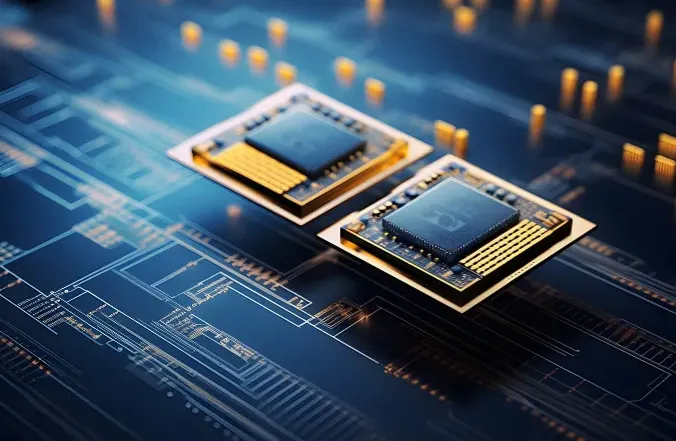
Back in 2010, during the process of technological exploration, a research team at the University of California, Berkeley found themselves in a dilemma. At that time, practitioners in the entire chip research field faced the same problem: the mainstream processor architectures, such as x86, had extremely complex instruction sets, which not only increased the difficulty of chip design and development but also posed significant challenges in achieving efficient performance in specific scenarios. On the other hand, the Arm architecture, while advantageous, had prohibitively high licensing fees, deterring many companies and research institutions. More critically, both x86 and Arm struggled to meet the unique research needs of these teams, as their established architectural models lacked flexibility and could not be deeply customized for specific research tasks.
In this context, the research team resolutely embarked on a challenging path of innovation, deciding to design a brand new instruction set architecture from scratch. This decision seemed risky, yet it was like a stone thrown into a calm lake, creating ripples that ultimately triggered a revolution in the chip field, and the result they created—RISC-V—thus began its magnificent development chapter.
Breaking the Monopoly: The Birth of an Open Instruction Set
From its inception, RISC-V exhibited distinct characteristics by choosing a path that few had ventured into at the time—complete open-source. This decision sharply contrasted with the closed commercial models represented by x86 and Arm. In the commercial ecosystems built around x86 and Arm, companies wishing to use their architectures faced either complex technical restrictions (like x86) or had to pay exorbitant licensing fees (like Arm), which undoubtedly posed significant barriers for many innovative ideas from resource-limited companies and developers.
The emergence of RISC-V completely shattered this situation. Any company, research institution, or even individual was granted the freedom to use, modify, and implement the RISC-V architecture without paying any licensing fees. This openness injected fresh blood into the chip field, attracting attention from around the globe.
2015 was a milestone year for RISC-V. That year, RISC-V was officially released, and its simplicity was remarkable. The base instruction set contained only about 40 instructions, which significantly reduced the complexity of learning and implementation compared to the thousands of instructions in the x86 architecture and the hundreds in the Arm architecture. Such a simple and efficient design allowed developers to quickly grasp its core principles and rapidly focus their efforts on practical application development, laying a solid foundation for its subsequent widespread application.
Modular Design: Reshaping the Customization Paradigm of Chips
The greatest innovation of the RISC-V architecture lies in its unique modular and extensible design philosophy. It combines a base instruction set with extension modules, allowing users to freely choose to add different extension modules based on the specific application scenario, thus customizing the chip architecture that best suits their needs.
For example, the RVV vector extension is a crucial extension within the RISC-V architecture. In today’s digital age, high-performance computing and AI inference demand high data processing capabilities, with data-intensive applications emerging continuously. The RVV vector extension is designed to meet these needs, enabling a single instruction to operate on large amounts of data, significantly enhancing the processing efficiency of AI workloads. For instance, in image recognition tasks, traditional architectures may require multiple instructions to process an image, while a RISC-V architecture chip utilizing the RVV vector extension can complete the same task in a very short time due to its powerful parallel processing capabilities, greatly improving the overall system’s operational efficiency.
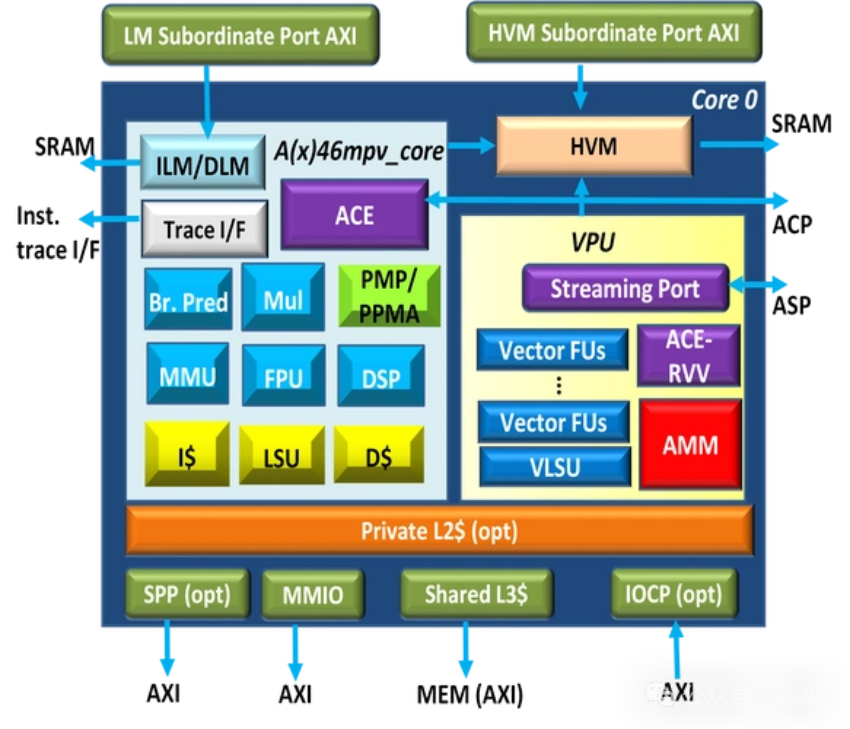
Similarly, in industrial control scenarios where real-time requirements are extremely high, developers can choose to add specific real-time control extension modules based on actual control needs, enabling the chip to respond quickly to external signals and precisely control the operation of industrial equipment, avoiding response delays caused by redundant instruction sets. This highly customizable design allows the RISC-V architecture to find its place in various fields, meeting diverse market demands.
Application Implementation: From AIoT to Automotive Electronics
In the AIoT (Artificial Intelligence of Things) field, the customization advantages of RISC-V have been fully realized. With the rapid development of IoT technology, various smart devices have emerged, from smart bulbs and smart locks in smart homes to sensors and smart controllers in industrial IoT, each application scenario has different chip requirements. Some scenarios demand extremely low power consumption, hoping the chip can operate for long periods at very low power; others require certain processing capabilities, needing the chip to quickly process data collected by sensors.
The emergence of the RISC-V architecture provides manufacturers with a perfect solution. Manufacturers can flexibly add or remove functional modules based on specific IoT application scenarios. For example, for a smart home sensor node that only needs to perform simple data collection and transmission, manufacturers can use a streamlined instruction set configuration, removing unnecessary functional modules to significantly reduce the chip’s power consumption and extend the device’s battery life; whereas for smart camera devices that require local data processing and analysis, manufacturers can add relevant computational extension modules to enhance the chip’s processing performance, enabling it to perform real-time analysis of video data, identify abnormal behaviors, and issue alerts promptly. Through this approach, the RISC-V architecture achieves an optimal balance between performance and power consumption, rapidly gaining widespread application in the AIoT field.

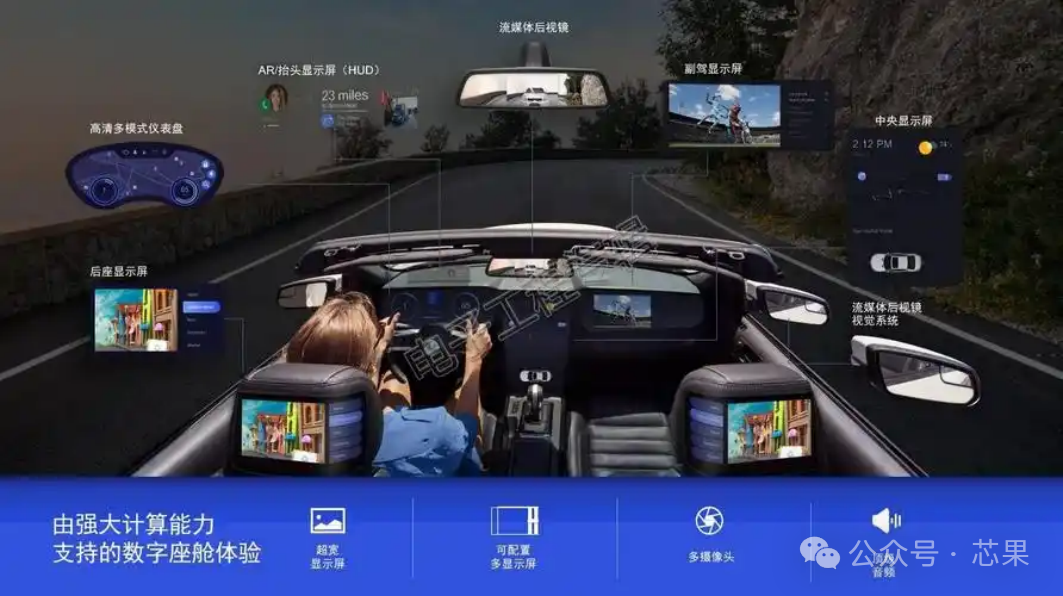
In recent years, automotive electronics have become a new battleground for RISC-V. With the trends of automotive intelligence and electrification, automotive electronic systems have become increasingly complex, ranging from cockpit infotainment systems to advanced driver-assistance systems (ADAS) and core computing platforms for autonomous driving, with diverse and high-performance chip demands. Meanwhile, the intensifying geopolitical risks have made global automakers realize the importance of supply chain autonomy. European automakers have taken the lead in actively promoting the development of autonomous controllable chips based on RISC-V.
The customizability of the RISC-V architecture demonstrates unique advantages in the automotive electronics field. In cockpit infotainment systems, automakers can customize the multimedia processing capabilities and display interfaces of chips based on different vehicle models and user needs. For high-end models that emphasize luxury experiences, the chip’s graphics processing capabilities can be enhanced to provide users with a smoother and more realistic in-car entertainment experience; while for economy models, the chip can be optimized for cost and power consumption while ensuring basic functionality. In advanced driver-assistance systems (ADAS), the RISC-V architecture can customize the chip’s computational power and data processing speed based on different sensor configurations and algorithm requirements, ensuring that the system can quickly and accurately perceive and analyze the environment around the vehicle, providing timely and reliable decision-making assistance to the driver.
The Collaborative Power of the Open Source Ecosystem
The success of RISC-V relies not only on its outstanding technical advantages but also on its open ecosystem. The RISC-V ecosystem brings together hundreds of organizations from around the world, from innovative startups to powerful tech giants, all working together to promote the development and improvement of the RISC-V architecture.
Industry giants like Google, Meta, and NVIDIA have all engaged in the development and application of RISC-V, leveraging their technological strength and large user bases to drive the development of RISC-V in cutting-edge fields such as AI and big data processing. Google has adopted RISC-V-based chips in some of its data center servers, optimizing chip performance and power consumption to reduce operational costs; NVIDIA has applied the RISC-V architecture in its edge computing products, combining its powerful graphics processing capabilities and AI algorithms to provide more efficient and flexible solutions for edge intelligence applications.
This collaborative innovation model acts like a powerful engine, greatly accelerating the technological advancement and ecological maturity of RISC-V. In just a few years, RISC-V has transformed from an academic research project into a mainstream architecture capable of competing with Arm and x86. Today, the RISC-V architecture is widely used in embedded systems, IoT, data centers, automotive electronics, artificial intelligence, and many other fields, demonstrating tremendous development potential in each area.
Looking Ahead: The Value of Customization Paradigm Emerges
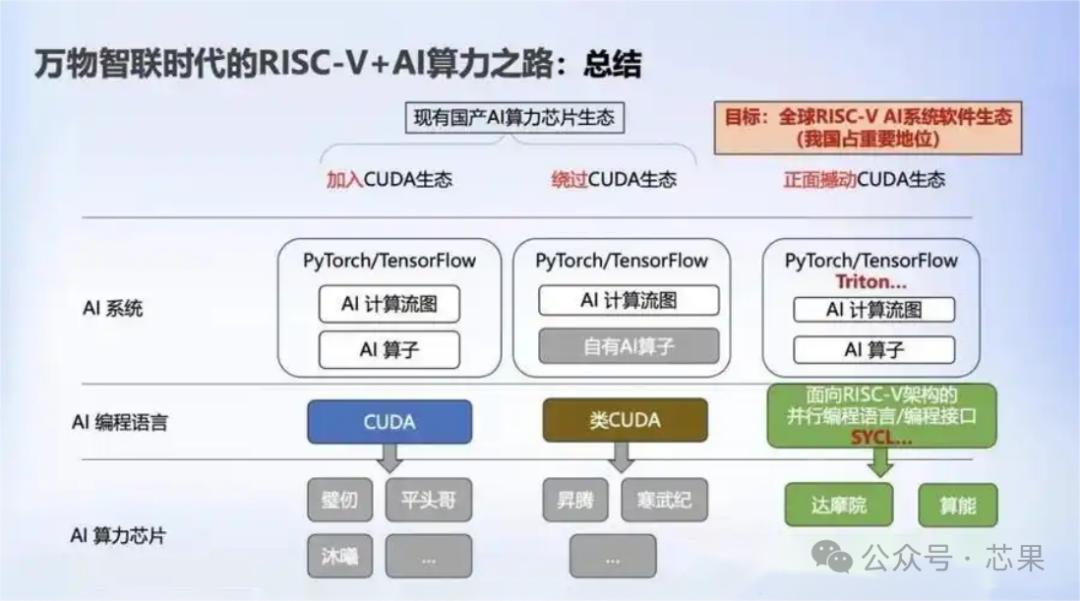
The rise of RISC-V is quietly rewriting the rules of the chip industry. In traditional chip design concepts, hardware often defines software; once the chip architecture is determined, software development must adapt and optimize around the established hardware architecture, which somewhat limits the freedom of software innovation and makes it difficult to respond quickly to diverse market demands. RISC-V brings a new concept—application-defined hardware. In the world of RISC-V, developers can customize the most suitable hardware architecture based on the specific application scenario, and then develop software around this customized hardware, achieving deep integration and collaborative optimization of hardware and software.
With the full arrival of the AI, IoT, and smart automotive era, this tailored chip design paradigm will demonstrate increasing value. In the AI field, different AI algorithms and application scenarios have vastly different requirements for chip computing power, memory bandwidth, and power consumption. For example, image recognition algorithms may require high parallel computing capabilities and image processing units, while natural language processing algorithms focus more on optimizing logical operations and storage capabilities of the chip. The customizable features of the RISC-V architecture enable developers to design specialized chip architectures for different AI algorithms, significantly enhancing the operational efficiency and performance of AI applications.
RISC-V is leading the chip industry into a new era with its unique charm and innovative concepts. In this era, openness, customization, and collaboration will become key words, and chip design will be more closely aligned with application needs, providing continuous momentum for innovative development across various industries.