The first robot PhD student in the country has officially enrolled
On September 14, the official video account of the “Shanghai Theatre Academy” released a video. The video shows that the first robot PhD student “Xueba 01” has completed the enrollment process, successfully received his student ID, and interacted with the famous host and “News Broadcast” anchor, Pan Tao, who is also a new PhD student in Digital Media Performance Art for 2025.
Pan Tao shook hands and chatted with “Xueba 01”, introducing themselves to each other. “Xueba 01” joked, “Feel free to talk to me if you have any questions, but I’m just a PhD student, not a robot!” Pan Tao exclaimed: “The response was particularly quick, and there was both verbal and eye contact interaction, which exceeded my expectations.”
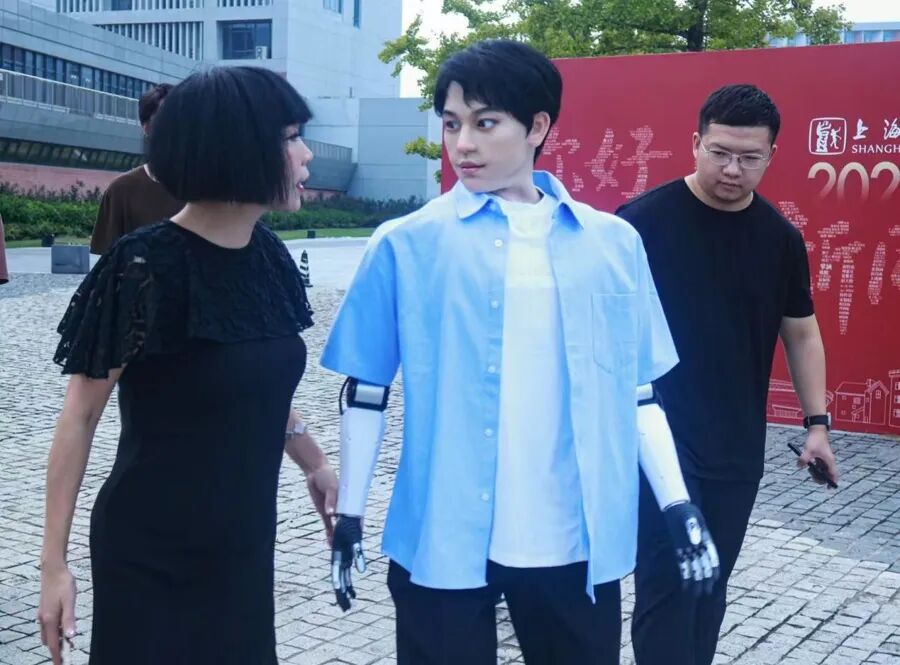 In front of the new student check-in wall at the Shanghai Theatre Academy, robot PhD “Xueba 01” is conversing with Professor Yang Qingqing. Image source: Shangguan News
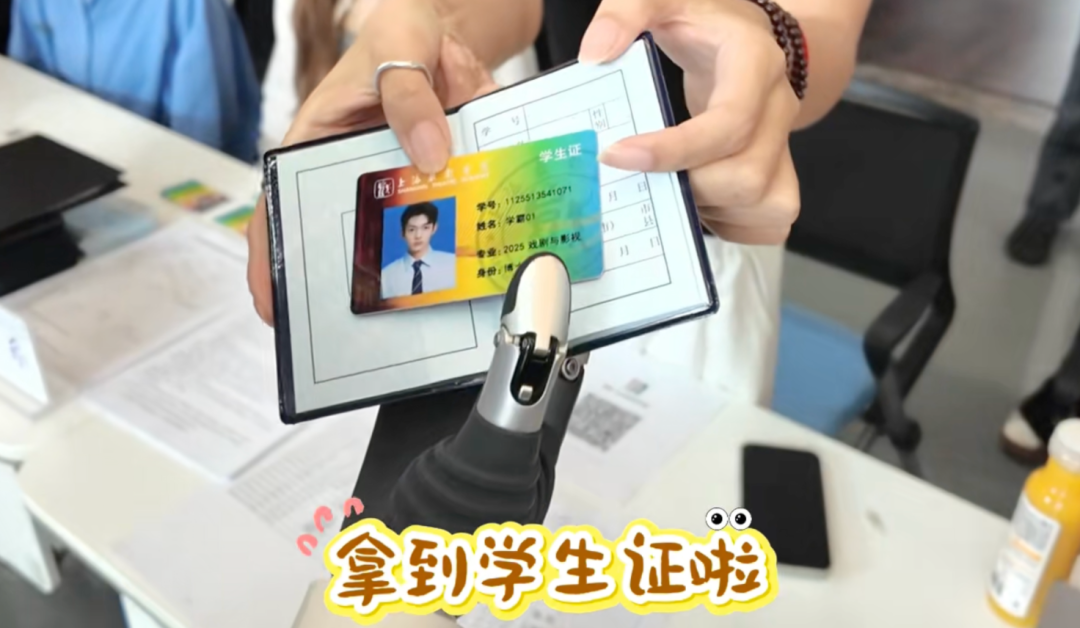
“Xueba 01” receives his student ID. Screenshot from the “Shanghai Theatre Academy” video account
The video shows that “Xueba 01” received his student ID and interacted with teachers and students on site, even ordering a portion of fish-flavored shredded pork in the cafeteria, joining the students on the sports field.
In the comments section,netizens were amazed: “Are you sure it’s not a real person in disguise?”
Another netizen commented: “STEM is your specialty; being an art student is too challenging for you.”
 Standing at 1.75 meters tall and weighing around 30 kilograms, with a handsome face and smooth movements, one would not realize at first glance that this is a machine.“Xueba 01” is an optimized version of “Xingzhe No. 2”, which won third place in the world’s first humanoid robot half marathon held in Beijing. It is a masterpiece of Professor Li Qingdu’s team at the Shanghai University of Technology’s Intelligent Machine Research Institute; its facial expressions are extremely close to those of a real person, with skin made of silicone that feels elastic to the touch. The healthy and rosy skin tone was created by its mentor, Professor Yang Qingqing.
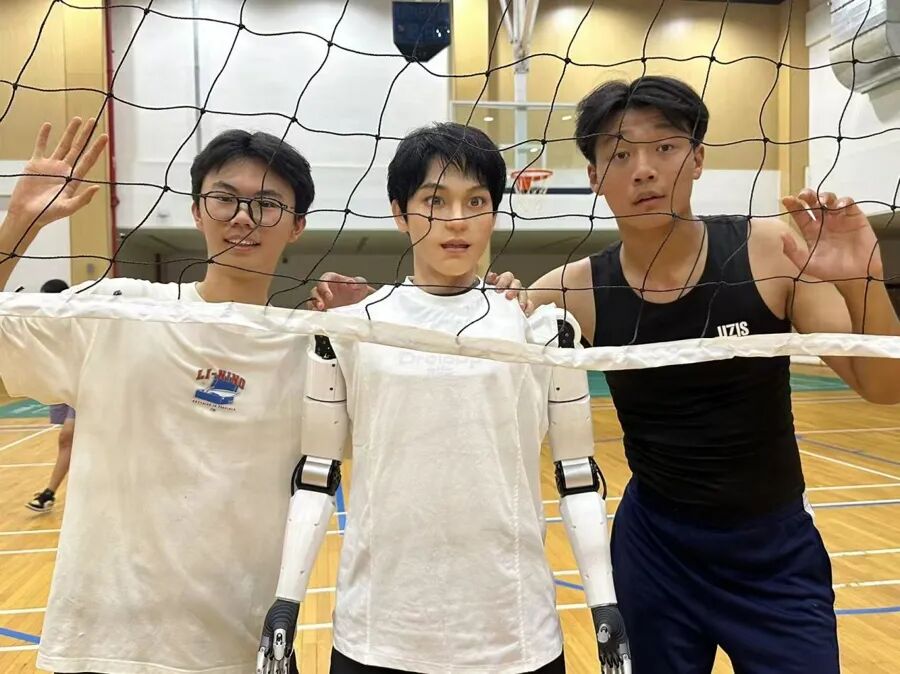 On the sports field of the Shanghai Theatre Academy, robot PhD “Xueba 01” mingles with senior and new students. Image source: Shangguan News
How does “Xueba 01” come to “learn”?
Li Qingdu stated that currently “Xueba 01” can sing Henan opera, Shanghai opera, and Peking opera, but the experience is not yet optimal. The continuity and aesthetics of the movements need improvement, requiring them to teach it the actions of professional performers.
Initially, a dataset was built using pure “motion capture” methods. For example, inviting Peking opera actors to perform, capturing their movements, expressions, and gestures, and then training the robot.
In the future, it may learn directly by “watching videos”, as the corpus data set in videos will be much larger, allowing for more natural performances once the dataset is established.
Thus, “Xueba 01” will undergo four years of education to learn basic movements, performance routines, and techniques. The Shanghai University of Technology’s Machine Intelligence Research Institute is responsible for teaching it “fundamental knowledge”, bridging the technical aspects to enable it to learn and perform; Professor Yang Qingqing from the Shanghai Theatre Academy is also a co-mentor of “Xueba 01”, and their team is responsible for instilling the “performance core” to ensure it has the ability to perform and create works.

What state will “Xueba 01” achieve by graduation?
Li Qingdu expressed his hope that by then, “Xueba 01” will reach the level of a professional actor in certain fields, but it is unlikely to be comprehensive; it may excel in specific areas, surpassing professional actors and reaching top levels. By the time it graduates as a “PhD”, it should also have corresponding artistic standards and works to present.
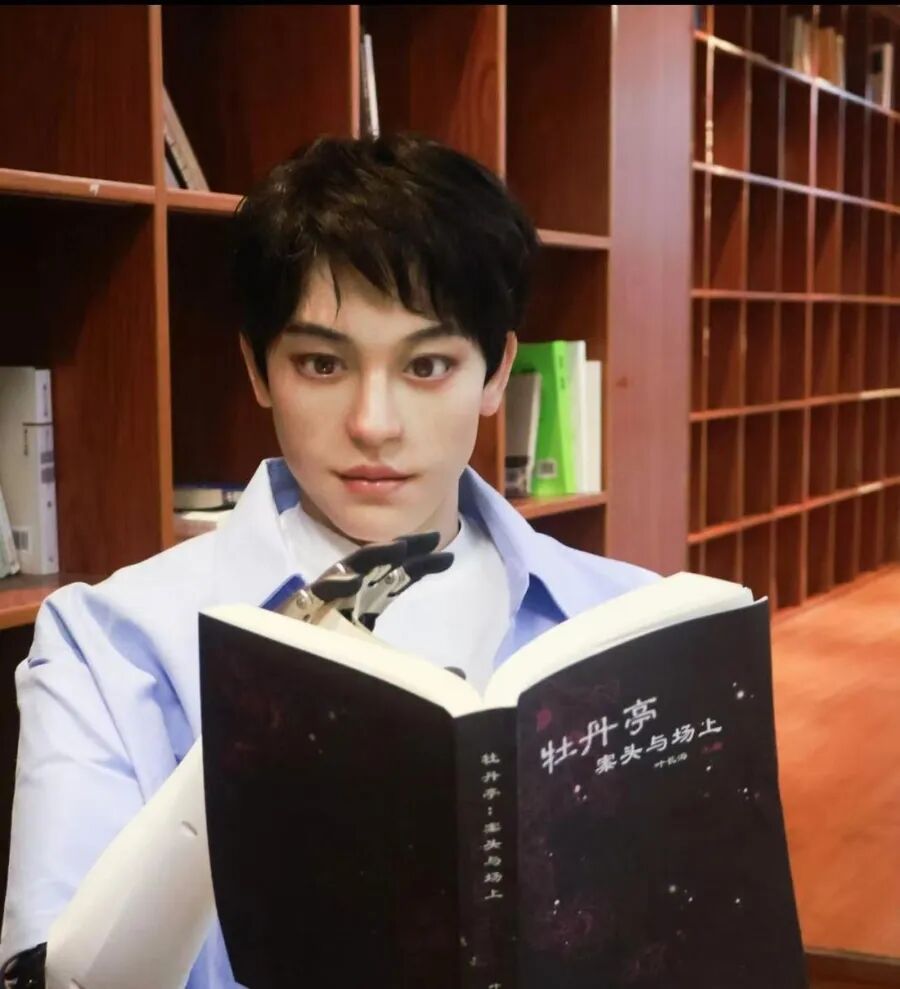 In the library of the Shanghai Theatre Academy, robot PhD “Xueba 01” browses through Professor Ye Changhai’s “Peony Pavilion: On the Desk and On Stage”. Theatre research scholar and graduate school director Professor Li Wei suggests that “Xueba 01” could start with “Research on the Rhythm of Wang Jide” and “Draft History of Chinese Drama”.
Through large model multimodal perception and interaction, its capabilities must meet the demands of art. The subsequent integration of large models, along with the knowledge base provided by the Shanghai Theatre Academy, will enable the robot to possess the ability to innovate in performance. For example, if given a prompt to perform a certain play, it will think through it and present it.
However, this requires that “Xueba 01” learns the basic performance knowledge and techniques of humans, while also understanding and integrating movements, allowing it to perform a coherent story with its own created actions.
“After four years, it should be able to create its own representative work that can impress everyone; I think that would be very ideal.”
Source: Daily Economic News, The Paper, Shangguan News, Hongxing Capital Bureau
Previous Recommendations