Please click [Your AI Application Collection] to follow
Ten Major Development Trends of Embodied Intelligent Robots in 2025
The development of embodied intelligent robots focuses on the interaction between physical entities and the environment, integrating multidisciplinary technologies such as artificial intelligence, materials science, and life sciences. China’s “14th Five-Year Plan” clearly proposes to promote the upgrade of intelligent manufacturing. The Ministry of Industry and Information Technology and 17 other departments jointly issued the “Implementation Plan for the ‘Robot +’ Application Action,” which requires that by 2025, the density of robots in manufacturing will double compared to 2020, and the application depth of service robots and special robots will be significantly enhanced. Against this backdrop, embodied intelligent robots are moving from the laboratory to industrial implementation, and their ten major trends reflect a deep coupling of technological breakthroughs and industrial demands.
The perception layer of embodied intelligent robots is undergoing revolutionary upgrades. Multimodal fusion technology allows robots to perceive their surroundings like humans—stereo vision can recognize transparent objects, electronic skin provides millimeter-level tactile feedback, and bionic fingers can even distinguish a gap of 0.1 millimeters between parts, which is equivalent to perceiving the thickness of an A4 paper with a fingertip. The decision-making system presents a symbiotic model of “large models + lightweight,” retaining the general intelligence of large language models while achieving real-time responses through expert systems. For example, a hybrid architecture from a certain company can increase fault diagnosis speed by 20 times in industrial scenarios.
1. General Industrial Operations
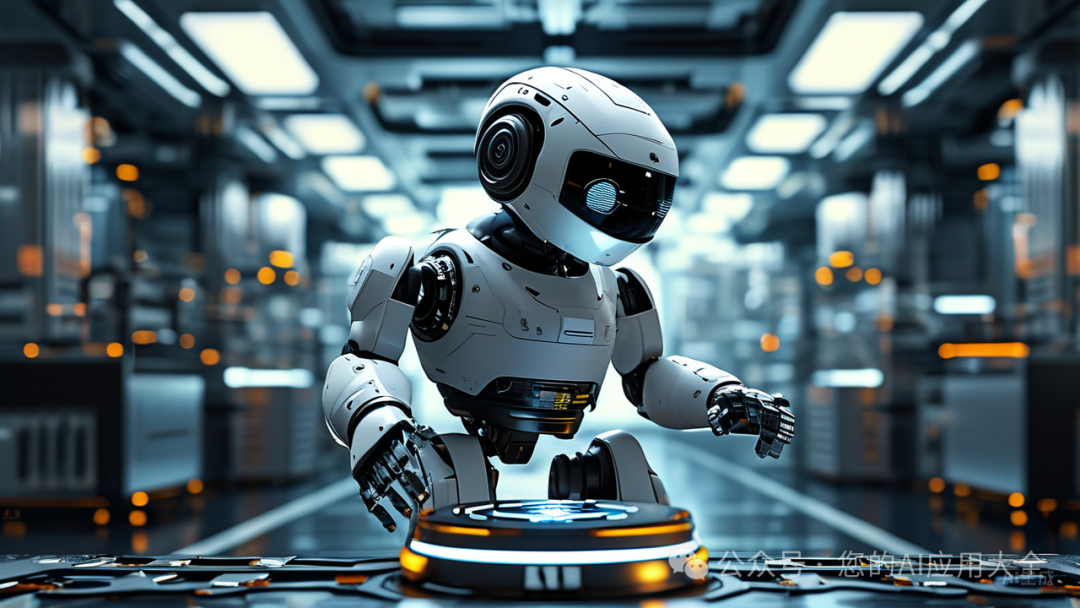
Core Trend: Generative AI drives the collaborative optimization of hardware and algorithms, achieving consistent design between software and hardware.
Typical Application: The GR00T N1 humanoid robot base model developed in collaboration between Guanglun Intelligent and NVIDIA achieves part handling and quality inspection in automotive factories through synthetic data technology, improving handling efficiency by 180% and maintaining a good product rate of over 99.5%. This model adopts a dual-system architecture (vision-language model + Diffusion Transformer), supports multi-task generalization, and can quickly adapt to different robot bodies through simulation environments, solving the problems of data scarcity and environmental generalization in industrial scenarios.
2. Automotive Manufacturing
Core Trend: Multi-level end-to-end decision-making and bionic control technology enhance adaptability to complex environments.
Typical Application: The GR00T N1 model achieves collaborative handling with left and right hands by visually identifying the positions of loading frames and quality inspection stations in automotive factories, reducing task time by 70% compared to manual labor. Its technical path integrates multimodal large models with real-time control modules, achieving closed-loop optimization of path planning and action execution in unstructured environments, providing a paradigm for flexible production in automotive manufacturing.
3. 3C Manufacturing
Core Trend: High-precision perception and no-code deployment technology drive flexible production.
Typical Application: The Fuwai Intelligent Composite Robot achieves an hourly processing of 200 pieces in iPad shell processing through a 3D vision system (repeat positioning accuracy ±0.02mm) and flexible fixtures, improving efficiency by 180% and achieving a labor replacement rate of over 70%. Its ForwardFlow platform supports drag-and-drop programming, completing new product line switching within 15 minutes, meeting the production needs of small batches and multiple models in the 3C industry, confirming the trend of generative AI-driven hardware-algorithm collaborative optimization.
4. Shipbuilding
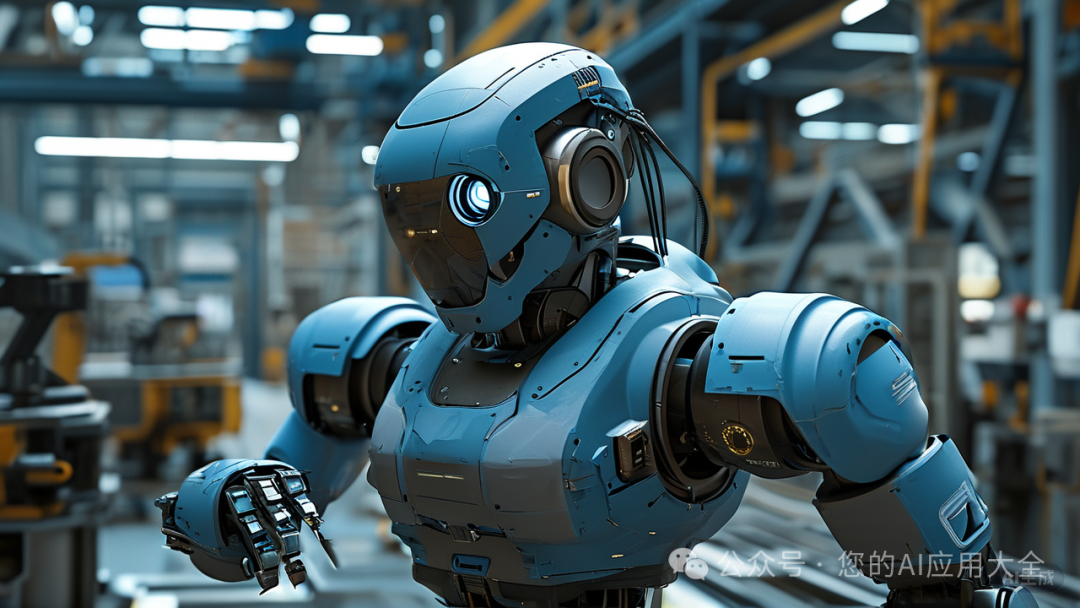
Core Trend: Cluster collaboration and human-machine cooperation technology break spatial limitations.
Typical Application: The Yujiang collaborative robot uses a magnetic base and drag teaching technology to achieve one-click fixation and trajectory generation in ship welding, shortening the welding period by 70% and improving weld consistency by 40%. Its anti-shake algorithm ensures repeat positioning accuracy of ±0.02mm, allowing for various types of welding such as horizontal, vertical, and arc welding in narrow ship cabins, demonstrating the advantages of physical practice and simulator collaborative training.
5. Petrochemical
Core Trend: Explosion-proof design and multimodal perception technology ensure safety in hazardous environments.
Typical Application: The Beijing Lingtian tracked explosion-proof robot, equipped with a 6-degree-of-freedom hydraulic arm, can perform valve closure and leak source localization at petrochemical leak sites, with an explosion-proof rating of Ex db II C T6 Gb and an IP67 protection level, supporting wireless remote control from kilometers away. This robot integrates a radar life detection system that can penetrate rubble to locate survivors, successfully identifying trapped individuals buried 6 meters deep during the Tianjin chemical leak incident.
6. Power Generation
Core Trend: End-to-end decision-making and high-precision operation technology achieve autonomous operation and maintenance of power equipment.
Typical Application:: The “Tiangong” humanoid robot developed by the National Innovation Center performs partial discharge detection and switching operations in distribution rooms, achieving movement in complex environments such as steps and narrow passages through visual sensors and operational control algorithms, with a closing and opening precision of ±0.01mm. Its upper and lower limb collaborative control technology solves the operational challenges of dense equipment and limited space in power scenarios, becoming the first embodied intelligent robot in the domestic power industry to achieve a closed loop of inspection and operation.
7. Safety and Emergency Response
Core Trend: Multi-agent collaboration and safety assessment systems enhance disaster response capabilities.
Typical Application: The Beijing Lingtian explosion-proof robot can overcome 40cm vertical obstacles during earthquake rescue using a tracked + pendulum arm structure, equipped with a radar life detection system to locate deeply buried survivors, and combined with a high-energy explosive disposal device for remote hazardous source handling. Its modular design supports rapid integration of thermal imaging cameras and toxic gas detectors, completing valve closures in high-risk areas during the Tianjin chemical leak incident, demonstrating the necessity of cluster collaboration and ethical norm construction.
8. Commercial Services
Core Trend: Ecological integration of scenarios and social intelligence technology reconstruct service models.
Typical Application: The Haier smart home ecosystem proposes a three-layer architecture of “cloud-based large model – family intelligent agent – ground AI terminal,” where its housekeeping robot provides services such as home cleaning and health monitoring through multi-source perception, with costs expected to drop to 50,000 yuan within 5 years, only 1/7 of the cost of a live-in nanny. Products like iFlytek’s “Alpha Egg” provide educational companionship through natural language interaction, promoting the transition of commercial services from “single product intelligence” to “scenario ecology.”
9. Home Services
1. All-in-one Butler: Home robots integrate cleaning, cooking, security, and other functions, becoming the control center of smart homes.
2. Elderly Care: Equipped with health monitoring, emergency calling, and companionship chat functions, alleviating the pressure of elderly care.
3. Children’s Education: Assisting children with homework and language training through interactive learning, providing personalized teaching content recommendations.
10. Agricultural Production
Core Trend: Bionic perception and generative AI technology drive the implementation of precision agriculture.
Typical Application: The embodied intelligent breeding robot developed by Chen Jian’s team at China Agricultural University achieves an effective collection rate of 92% for maize and wheat phenotype detection through an eagle-eye vision camera and disturbance control technology, and conducts field trials in Jiz County, Hebei. The InsightOS operating system from Shanghai Gushi Intelligent shortens the agricultural robot development cycle from 10 person/month to 3 person/day, supporting applications such as fruit and vegetable sorting and weeding.