An unexpected incident involving a robot at a robotics competition has sparked a global discussion about the potential for robots to replace humans. As the noise subsides, we find that the answer is far more complex than we imagined.In August 2025, at the first World Humanoid Robot Games, a robot running at a speed of 3.8 m/s suddenly veered off course during the final 200 meters and collided with a staff member at the sidelines, generating an impact force of 120 kg. This incident and the attention it garnered reflect the deep concerns and worries people have about whether and to what extent robots can replace humans.As a researcher in the field of robotics, I believe that: robots can indeed replace humans in specific areas, but a complete replacement is neither realistic nor desirable. In the medium to short term, human-robot collaboration will become the mainstream model. The true value of robots lies not in replacing humans, but in extending and enhancing our capabilities, working together to build a safer and more efficient social system.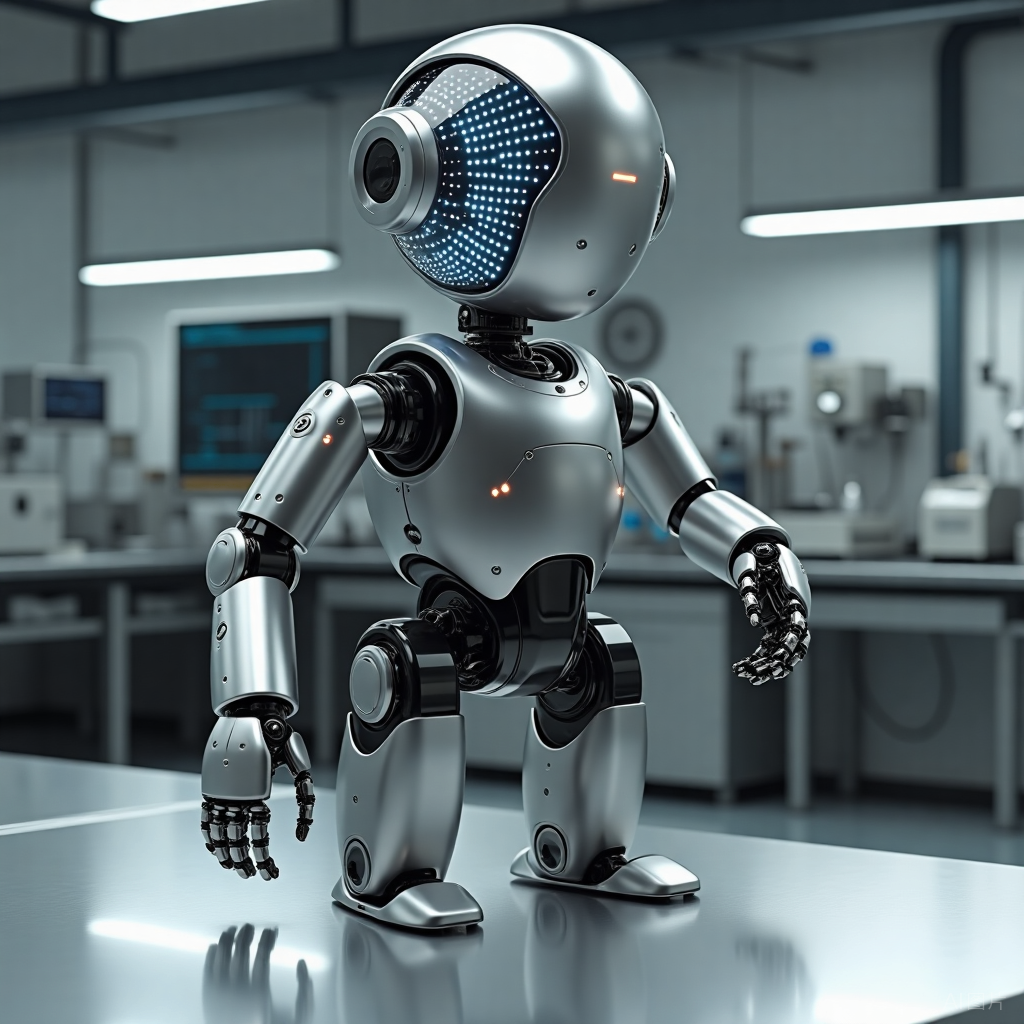 01 Robots Replacing Humans: Current Status and Capability BoundariesRobots replacing humans is no longer a science fiction scenario; it has become a reality in multiple fields. In repetitive labor sectors, industrial robots have been widely used in automotive manufacturing and electronic assembly, with a single device capable of replacing 2-3 workers, especially demonstrating advantages in harsh environments with dust and noise.Robots are also appearing in high-risk workplaces. Welding robots are performing tasks in hazardous scenarios in the petrochemical and rail transportation sectors, automatically matching welding programs through visual recognition to complete large equipment welding that is difficult for humans to achieve.The medical field is also seeing significant involvement from robots. Surgical robots assist doctors in achieving surgical precision to within 0.1 mm, significantly reducing surgical risks and trauma.However, the replacement capabilities of robots have clear boundaries. Currently, the gait control error rate of humanoid robots remains as high as 15%, with insufficient stability in walking on complex terrains, and limb flexibility is only 60% that of humans.
 02 Technical Bottlenecks: Overcoming Replacement BarriersDespite rapid advancements, robots face multiple technical bottlenecks that need to be overcome to truly replace humans.Hardware performance limitations are currently the most direct obstacle.Humans possess full-body tactile sensation, while robots’ tactile sensing and force feedback are still far from being sufficiently refined. Although the Yuzhu G1 can perform difficult spinning kicks in combat scenarios, and the Tiangong 2.0 can run continuously on a treadmill for hours, this is under conditions that do not consider energy consumption and cost. The cost of high-end humanoid robots exceeds 500,000 yuan, and commercial applications depend on large-scale production.Challenges in software and algorithms are equally significant. Embodied intelligence requires the development of full-stack capabilities, with hardware and software algorithms evolving in tandem. Especially in dynamic environmental perception, multi-modal information fusion, and complex decision-making, robots still have a long way to go.Safety and reliability issues cannot be overlooked. The incident involving the Yuzhu robot colliding with a person, mentioned at the beginning of the article, exposed the current lack of safety redundancy in robots.Cost and reliability are also factors that must be considered for commercialization. Currently, node devices and servo motors remain expensive, and cost reduction requires collaboration across the industry chain. Additionally, robots need to maintain stable operation under different network conditions, which places high demands on communication technology.The cognitive limitations of artificial intelligence are also a major challenge. Robots lack comprehensive intelligence such as emotional understanding and emergency decision-making, and effective pathways for simulating creative thinking have yet to be found. Robots can perceive the environment through sensors, but they lack the subjective experience and emotional perception that humans possess.
 03 Human-Robot Collaboration: The Mainstream Development Trend of the FutureRather than discussing replacement, it is more productive to focus on how to achieve effective human-robot collaboration. In intelligent warehousing systems, human-robot interaction has increased efficiency by 40%. This collaborative model is taking root in various fields.In the medical field, a “human decision + machine execution” model is forming. Doctors make decisions based on their rich clinical experience and keen judgment, while surgical robots execute tasks with high precision.In the elderly care sector, robots are taking on basic services to alleviate labor shortages. They can perform basic functions such as health monitoring and companionship, allowing professionals to focus on providing higher-value services.Human-robot collaboration not only improves efficiency but also creates new job opportunities. It is estimated that by 2030, 20 million new jobs related to robots will be created globally. Every deployment of 10,000 industrial robots will generate 300 new positions in operations, programming, and more.
 04 Ethics and Social Impact: An Unignorable DimensionThe development of robotic technology brings not only technical issues but also ethical and social challenges.In the summer of 2025, a concept product for an artificial womb robot showcased by a Chinese tech company raised global ethical concerns. While the company claimed that this technology could solve fertility issues at a lower cost, critics pointed out that it completely overlooks the importance of emotional connections between mothers and infants.The risk of weakening emotional connections is a concern that needs to be addressed. In the fields of elderly care and education, while robots taking on basic services alleviate labor shortages, they may weaken interpersonal emotional connections.Adjustments in employment structure are also an inevitable social impact. Automation replacement is driving proposals for “universal basic income,” forcing a shift in vocational skills towards creative management and ethical oversight.In the face of these challenges, we need to establish legal frameworks to limit the autonomy of robots, preventing the risks of misuse such as deepfakes and autonomous weapons. Additionally, university robotics programs should introduce courses on “Introduction to Machine Ethics” to cultivate engineers’ respect for the value of life.
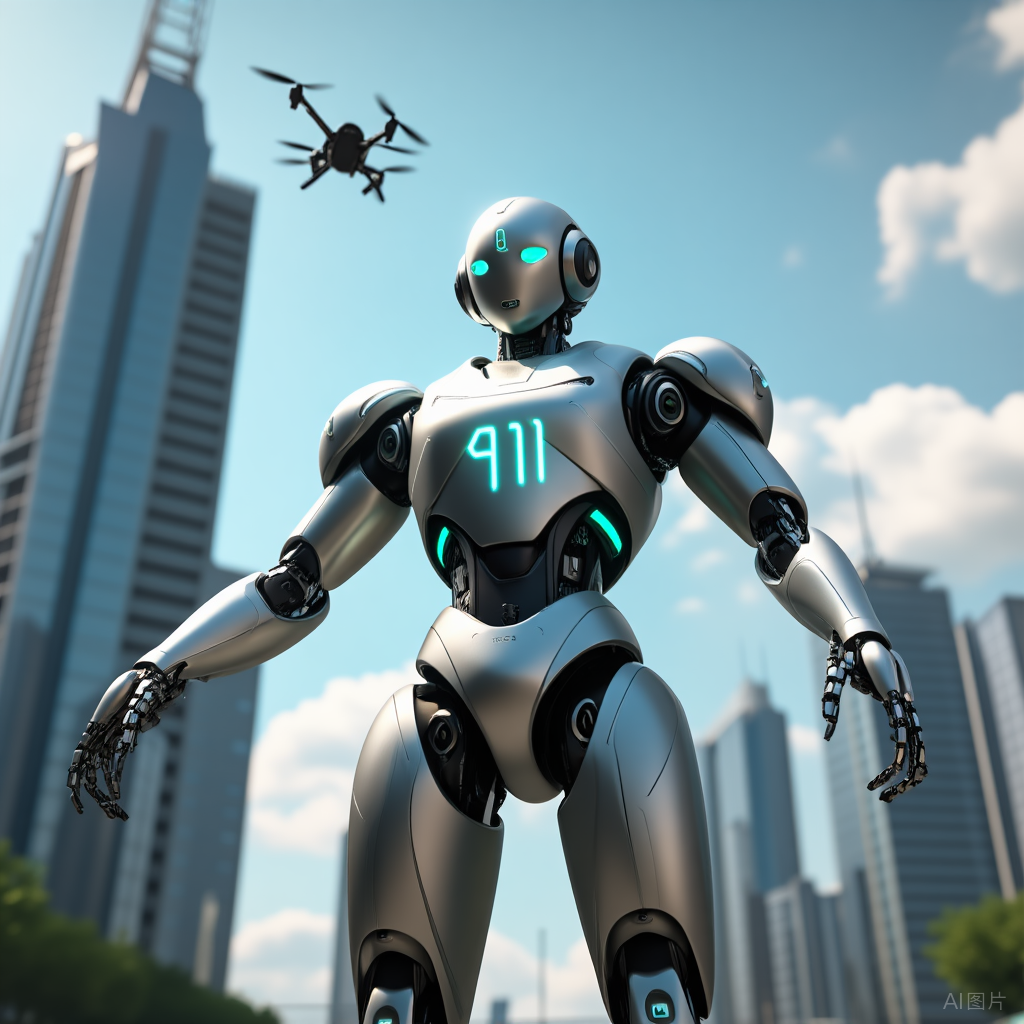 05 Future Outlook: Directions for the Development of Robot TechnologyThe future development of robot technology will exhibit multiple trends.Upgrading general capabilities is an important direction. Specialized robots are shifting towards building cross-scenario general operational capabilities, expanding market space and adaptability through common technologies.The deep integration of AI and the Internet of Things will significantly enhance robots’ cognitive abilities. The surge in investment in artificial intelligence is driving improvements in robots’ autonomous decision-making levels, with software robots gradually taking over rule-based workflows.Cost reductions will accelerate the popularization of robots. The reduction in costs of core components is speeding up large-scale implementation, and the production costs of humanoid robots are continuously optimized, driving the commercialization process.By 2035, the market size for humanoid robots in China’s industrial and service sectors is expected to exceed 3.5 trillion yuan. Robots will become the “next generation of mass intelligent terminals” following mobile phones and automobiles.
 Robot technology is developing at an unprecedented speed. From industrial production to medical care, from extreme environment operations to daily household services, they are becoming indispensable partners in our work and lives.As reflected in the industry’s reflection after the Yuzhu robot incident, true intelligence is not about how fast one can run, but about understanding the weight of life. The future of the robotics industry is not about creating machines to replace humans, but about developing partners that enhance human capabilities.In the near future, we may see humanoid robots assisting in nursing homes, completing tasks in extreme environments with temperatures of 61 degrees that are unbearable for humans, and even venturing into space to operate in environments devoid of oxygen, water, and food.As Wang Chuang, an executive at Zhiyuan Robotics, said, robotic technology is like a high-speed train, “When it is far away from you, it seems slow; when it rushes past you, you can never catch up with it.” This robotic revolution is accelerating, and it deserves the attention and contemplation of each of us.But no matter how advanced technology becomes, the emotions, creativity, and values of humans will always be invaluable traits that robots cannot replace. The future world will not be one where robots replace humans, but a new era of coexistence and collaboration between humans and robots.