AbstractDepressive disorders are among the most common mental illnesses globally, with over 40% of patients with chronic somatic diseases also exhibiting depressive symptoms, significantly increasing the burden of disease and affecting treatment outcomes.Increasing research indicates that factors such as chronic inflammation, metabolic disorders, and blood flow disturbances can induce depression by damaging the central nervous system.However, is there a common central nervous mechanism among these different types of somatic diseases? Which brain regions act as a bridge between “somatic diseases and emotional disorders”? Currently, there is no definitive conclusion.To address these scientific questions, on July 25, 2025, Professor Yuan Yonggui’s team from Southeast University Affiliated Zhongda Hospital and Professor Zhou Zhenhe’s team from Jiangnan University published a research paper titled “Interoceptive Neural Circuits Mediating the Progression from Somatic Diseases to Comorbid Depression” in the top international academic journal Psychotherapy and Psychosomatics (IF: 17.4 / Q1). This study focuses on the neural mechanisms of comorbidity between various somatic diseases and depression, revealing for the first time through large-scale genetic data analysis that the interoceptive neural circuit (INC) plays a key mediating role, providing potential neural targets for cross-disease prevention and intervention.
Main Content & Results
This study is based on large-scale genome-wide association study (GWAS) data, utilizing Mendelian randomization (MR) methods to systematically explore the causal effects of four representative somatic diseases (ulcerative colitis, hypertension, chronic pain, type 2 diabetes) on morphological changes in the interoceptive neural circuit; further assessing the impact of INC morphological changes on the risk of depression; and analyzing the mediating role of INC in the progression from somatic diseases to depression.Additionally, the study conducted cross-validation using independent databases and extended analyses in asthma cohorts to verify the robustness and cross-disease universality of the results.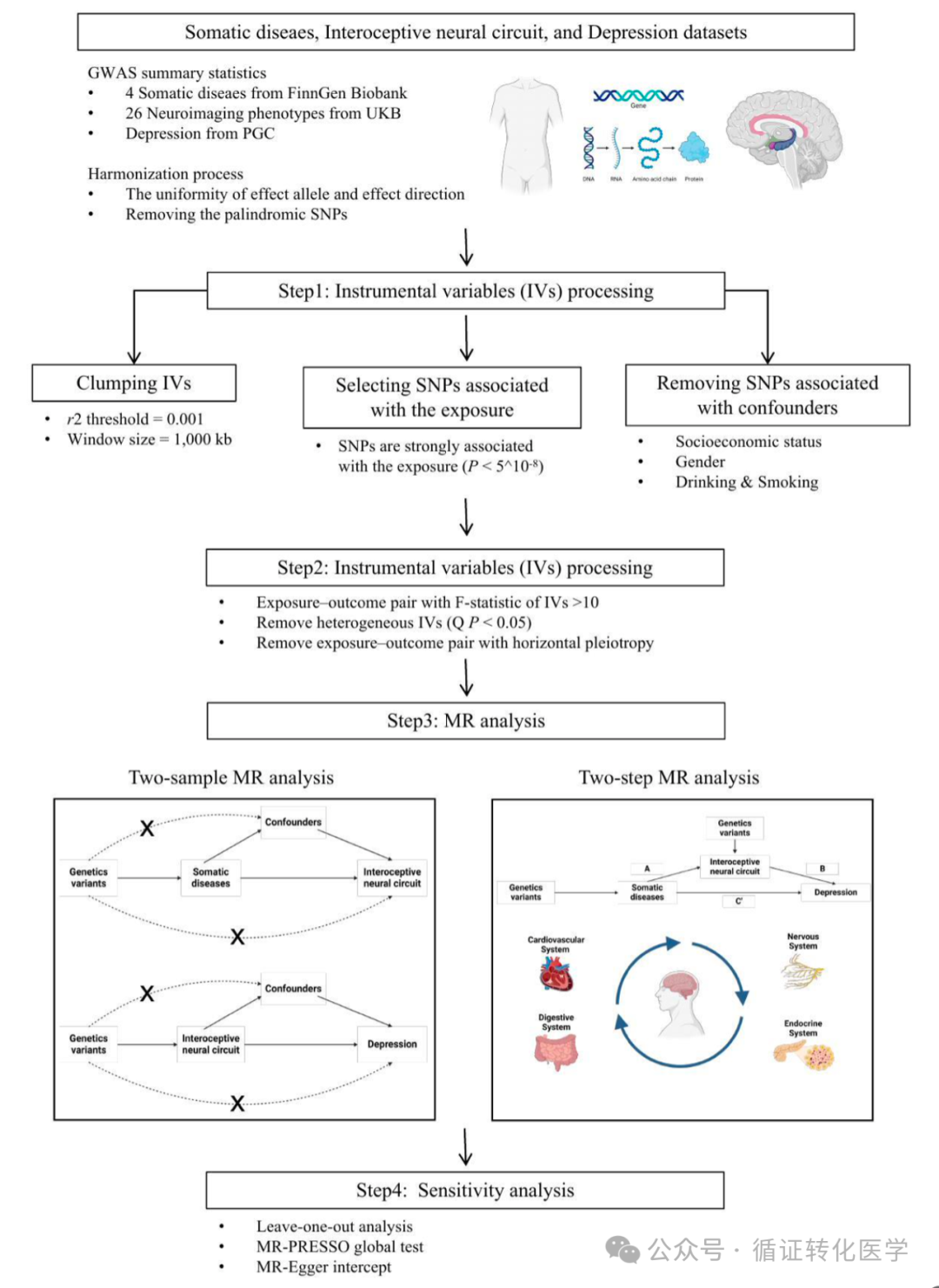 The research results reveal for the first time that various somatic diseases can lead to a reduction in the volume of a key node in the interoceptive neural circuit—the left ventral diencephalon (L-VDC), which is a characteristic of central nervous damage shared by multiple systemic diseases.Further analysis shows that morphological damage to the INC significantly increases the risk of depression, suggesting that interoceptive dysfunction may participate in the onset of depression before clinical symptoms appear.Mendelian randomization mediation analysis indicates that L-VDC plays a key bridging role between somatic diseases and depression, a result consistently validated across multiple independent datasets.The study suggests that the interoceptive neural circuit is a core hub in the interaction process between “somatic diseases and emotional disorders,” providing new neurobiological evidence for understanding brain-body interactions and offering potential targets for early identification and intervention of depression comorbid with multiple diseases.
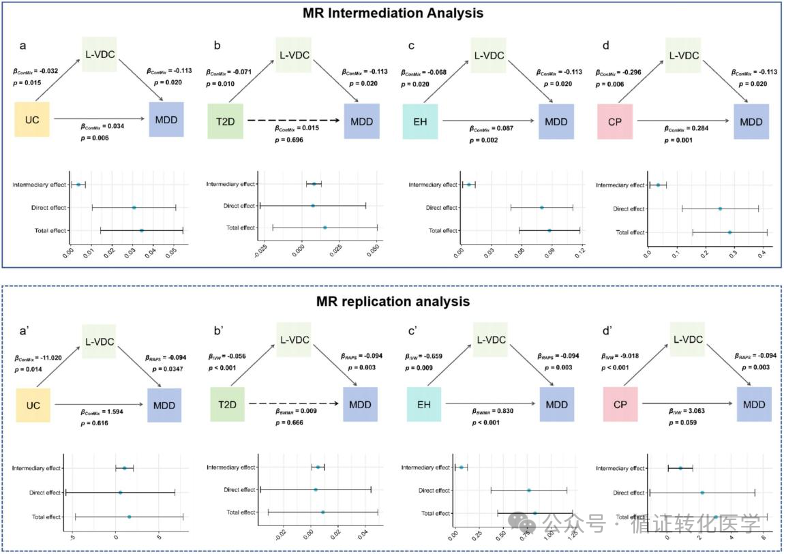 In summary, this study finds that structural abnormalities in the interoceptive neural circuit are not only an important risk factor for major depressive disorder but also a shared neural injury mechanism for comorbid depression in various somatic diseases.This finding provides a new perspective for further exploring the mechanisms of brain-body interaction and offers potential strategies for cross-disease prevention, diagnosis, and treatment of depression, promoting the development of precision medicine and comprehensive health management.
Expert Profiles
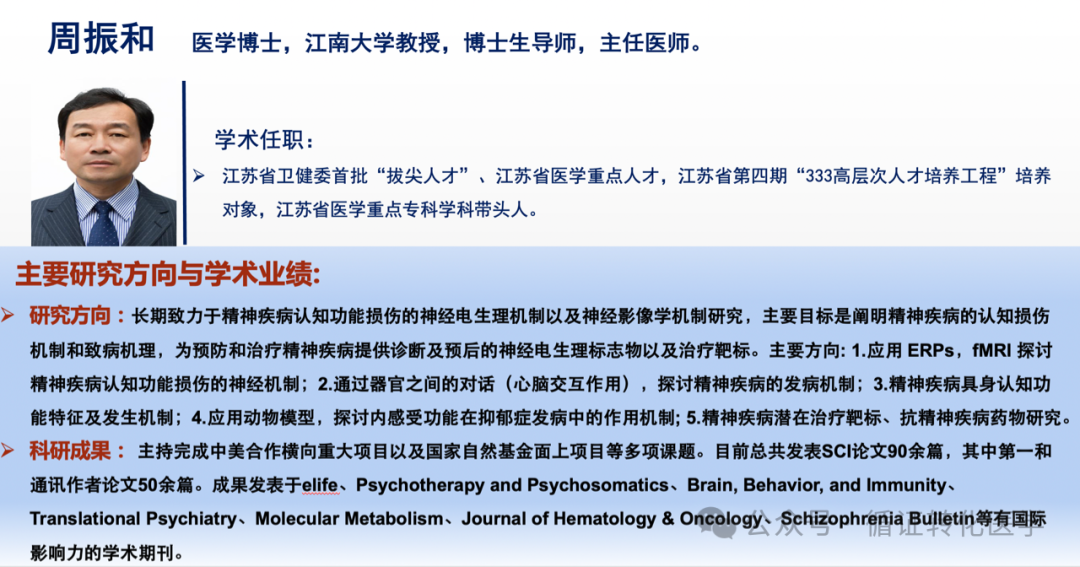
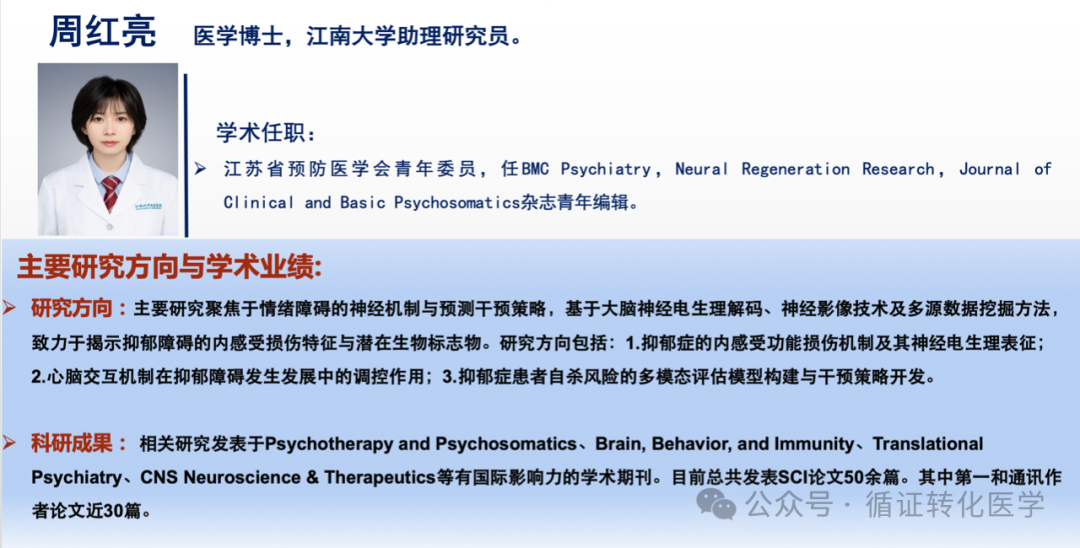

 [Nat Hum Behav] Southeast University teams with Luo Xiong Jian/Zhang Zhi Jun/Yuan Yong Gui/Zhejiang University’s Li Tao, discovering new functional genes associated with genetic variations in depressive disorders through multi-ethnic GWAS.[Adv Mater] Southeast University’s Xie Chun Ming and Xuzhou Medical University’s Gao Feng Lei team, utilizing extracellular vesicles to mediate a dual delivery system for precise targeting and regulation of microglial function to reverse the depression process.[Nat Commun] Zhang Zhi Jun, Hu Gang, and Wu Fang Fang’s team reveal the circuit mechanism regulating mouse depressive-like behavior from the primary visual cortex to the lateral posterior nucleus of the thalamus.[Sci Bull] Southeast University’s Zhang Zhi Jun’s team discovers the biological function and clinical value of circFKBP8, a new endogenous regulatory factor protein in major depressive disorder.
[EBio Medicine] Southeast University’s Zhang Zhi Jun’s team publishes in The Lancet’s sub-journal, indicating that peripheral blood circular RNA can serve as a diagnostic and therapeutic marker for major depressive disorder.
[PNAS] Southeast University’s Gao Shan’s team reveals that renal cancer cell-derived EV C3 promotes metastasis by recruiting bone marrow cells with immunosuppressive functions.
[Genes & Diseases] Southeast University’s Zhang Zhi Jun’s team identifies plasma biomarkers for the diagnosis of depressive disorders: vitamin D binding protein in microglia-derived exosome vesicles.
[Adv Sci] Southeast University’s Zhang Zhi Jun and Kong Yan’s team discovers that microglia-derived VDBP is a key molecule in microglia-neuron interactions involved in the mechanisms of depression.
Driving innovation for better life